Who Are Mauritians? Origins, Ancestry and Culture

Mauritians are the people of Mauritius, a population shaped by several centuries of migration from Africa, Madagascar, India, Europe and China. Unlike many countries, Mauritius had no known permanent indigenous human population before colonial settlement. The society that exists today developed through Dutch and French colonisation, slavery, Indian indentured labour, Chinese migration and generations of people building new lives together on a small Indian Ocean island.
That is why there is no single “Mauritian ethnicity” that neatly describes everyone. A Mauritian may have Indian, African, Malagasy, European, Chinese or mixed ancestry, and many families identify culturally with terms such as Indo-Mauritian, Creole, Sino-Mauritian or Franco-Mauritian. These labels are useful for understanding history, but modern Mauritian identity crosses all of them.
The strongest common threads today are nationality, everyday culture and especially language. According to the 2022 census, 90% of people reported speaking only Mauritian Creole at home. Someone may pray in a temple, mosque or church, eat completely different food at home and trace their family roots to another continent, yet still speak the same Creole with neighbours, friends and colleagues.
So where did Mauritians come from, and how did such a diverse population develop? The answer begins with an island that, for most of its natural history, had no permanent human inhabitants at all.
How the Population of Mauritius Was Formed
Mauritius was known to sailors long before anybody established a lasting settlement. Arab navigators are believed to have known of the island during the Middle Ages, and Portuguese sailors visited the region during the early sixteenth century. Neither group created a permanent colony.
The Dutch arrived at Grand Port in 1598 and named the island Mauritius after Prince Maurice of Nassau. However, they did not establish their first settlement until 1638. Their attempts at colonisation struggled, and the Dutch eventually abandoned the island in 1710.
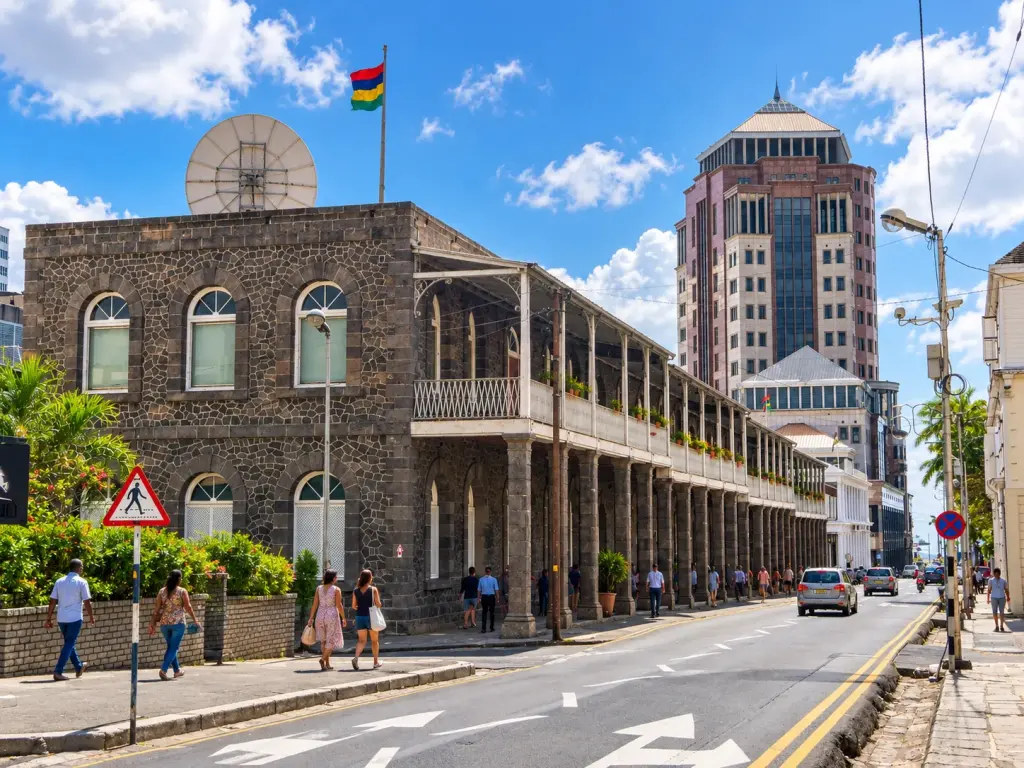
France took possession of Mauritius in 1715, renamed it Isle de France, and began permanent occupation in 1721. Under French rule, Port Louis developed into an important naval and trading centre, agriculture expanded and the island’s permanent population grew rapidly.
That growth came at an enormous human cost. Enslaved people were brought primarily from Madagascar and different parts of Africa, as well as from elsewhere around the Indian Ocean, to work on plantations, in households, at the port and across the colonial economy.
By 1767, government historical records indicate that roughly 15,000 of the island’s population of around 20,000 were enslaved. By 1797, around 50,000 of a population approaching 60,000 were enslaved. The scale of slavery means African and Malagasy ancestry became fundamental to the development of Mauritian society.
The resistance of enslaved people is remembered most powerfully at Le Morne Brabant. Runaway enslaved people, known as maroons, used the mountain’s remote caves and steep slopes as a refuge during the eighteenth and early nineteenth centuries. UNESCO today recognises Le Morne Cultural Landscape as a symbol of resistance to slavery and the struggle for freedom.
You can explore that history in more detail in our guide to Le Morne Brabant and its history of resistance.
| Period | What Happened | How It Shaped Modern Mauritius |
|---|---|---|
| Before permanent settlement | Arab and Portuguese sailors visited, but no lasting human settlement developed | Mauritius had no known permanent indigenous human population |
| 1598–1710 | Dutch period; first settlement attempted in 1638 | The island received its present name and early colonial settlement began |
| 1715–1810 | French rule and plantation expansion | French language and institutions became deeply established; large numbers of enslaved Africans and Malagasy people were brought to the island |
| 1810–1835 | British rule began while many French laws and customs remained | Mauritius developed its unusual mixture of British administration and strong French cultural influence |
| 1834–1920 | Large-scale indentured migration, mainly from India | Indian languages, religions, food traditions and communities became central to Mauritian society |
| 19th–20th centuries | Chinese traders and families established businesses and communities | Sino-Mauritian culture became part of commerce, food and urban life |
| 1968 onward | Independence followed by the Republic in 1992 | Different ancestral communities increasingly shared one national Mauritian identity |
From Slavery to Indian Indentured Labour
Britain captured Mauritius from France in 1810. The island returned to the name Mauritius, but the British agreed to respect many existing laws, customs and traditions. This helps explain something visitors still notice today: Mauritius was under British rule for more than 150 years, yet French remains extremely influential in everyday life.
Slavery was formally abolished in Mauritius on 1 February 1835. Formerly enslaved people did not receive compensation for generations of forced labour; compensation was instead paid to people who had claimed ownership over them.
Many freed people moved away from plantation estates and established livelihoods through fishing, farming, craftwork and other activities. Their descendants became an important part of what is broadly described today as the Mauritian Creole population, although Creole identity in Mauritius is complex and should not be treated as a single racial or genealogical category. Plantation owners, meanwhile, still needed workers for the expanding sugar industry. This led Mauritius to become the first major testing ground for a new system of contracted labour.
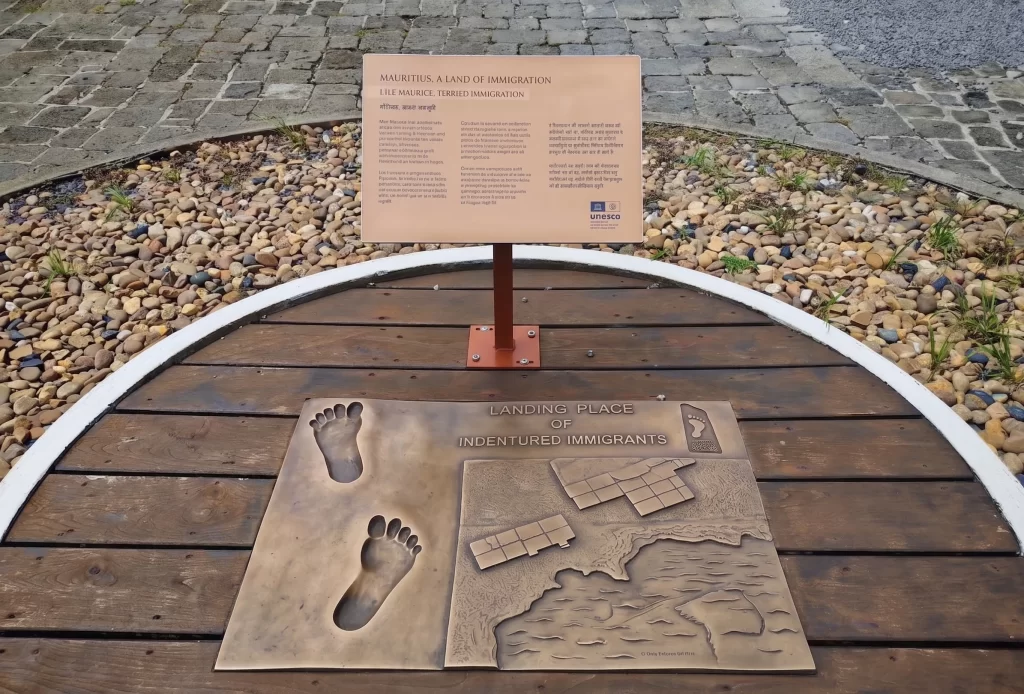
In 1834, the British government selected Mauritius for what it called the “Great Experiment”: replacing enslaved plantation labour with indentured workers recruited under contracts. The scale of what followed was enormous. UNESCO records that between 1834 and 1920, almost half a million indentured labourers arrived from India through Mauritius. Many remained on the island, while others were transferred to destinations elsewhere in the British colonial world.
The immigration depot where many of those workers passed through is now Aapravasi Ghat in Port Louis, a UNESCO World Heritage Site. The workers did not all come from the same place or share the same religion and language. They arrived from different parts of the Indian subcontinent and included Hindus and Muslims as well as speakers of Bhojpuri, Hindi, Tamil, Telugu, Marathi, Urdu and other languages.
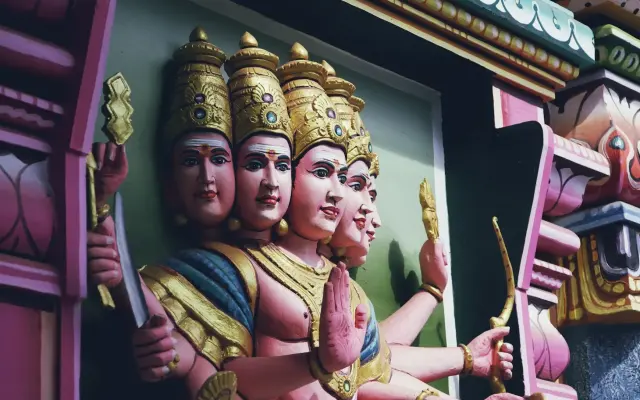
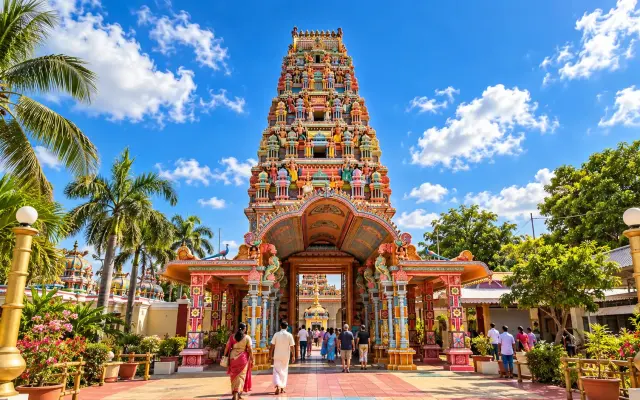
That migration profoundly changed Mauritius. Hindu temples and mosques multiplied, Indian festivals entered the national calendar, new foods and agricultural traditions developed, and villages grew around sugar estates and labour camps. Today, the influence of Indian migration is visible everywhere from Ganga Talao and Thaipoosam Cavadee to dholl puri, briani and the rhythms of a Hindu Mauritian wedding.
Sugar is the link connecting much of this history. The industry depended first on slavery and then on indentured labour, while also shaping land ownership, villages, transport and political power. Our article on how sugar shaped Mauritius explores that story in much greater detail.
The Chinese and European Communities
Chinese migration to Mauritius was smaller in scale than Indian indentured migration but had an outsized influence on commerce, food and everyday village life.
Chinese traders arrived during the British period, with later migration particularly associated with southern China. Hakka and Cantonese communities became established, and Chinese-run grocery shops, commonly known simply as laboutik sinoi, became familiar features of towns and villages.
For generations, these small shops sold everything from rice and canned food to household goods and school supplies. Many older Mauritians still associate the traditional neighbourhood Chinese shop with everyday village life. Port Louis developed a Chinatown that remains one of the oldest Chinese districts in Africa. Today you can still see Chinese temples, family businesses, restaurants and cultural associations concentrated around Royal Road and the surrounding streets.
Chinese influence on Mauritian food is equally important. Fried noodles, fried rice, boulettes, mine bouillie and bol renversé are not treated as foreign Chinese dishes in Mauritius; they have become ordinary Mauritian food. Our guide to the history of Mauritian food shows how African, Indian, Chinese and European cooking traditions gradually became something distinctly local.
European ancestry also remains part of the Mauritian story, particularly through families descended from French settlers. Although the British governed the island from 1810 until independence in 1968, much of the French-speaking population remained, as did French property law, cultural traditions and economic influence.
This is one reason Mauritius can initially seem contradictory to visitors. Government institutions have a strong British legacy and English has an important official role, yet French dominates much of the media and is widely spoken, while the language you hear most often in homes and everyday conversation is neither English nor standard French.
Creole: The Language That Connects Mauritius
If ancestry explains why Mauritians can look, worship and eat so differently from one another, Mauritian Creole explains how much of the country communicates as one society. Creole developed during the colonial period in a multilingual society where people with very different linguistic backgrounds needed a common means of communication. Most of its vocabulary comes from French, but the language developed its own grammar, pronunciation and expressions through centuries of use in Mauritius.
Today it is overwhelmingly the language of everyday life. The 2022 Population Census found that 90% of people reported speaking only Creole at home. Bhojpuri was the next most frequently reported home language at 5.1%, followed by French at 4.4% and English at 0.6%.
That statistic is perhaps the clearest answer to the question of what connects Mauritians. A Hindu family whose ancestors came from Bihar, a Catholic family with African and Malagasy ancestry and a Sino-Mauritian family whose grandparents spoke Hakka may all use Creole as their normal language with friends and neighbours.
English and French are still extremely important. English is used extensively in government, Parliament and education, while French dominates much of television, radio, newspapers and business communication. Many Mauritians move easily between Creole, French and English depending on the situation.
If you are visiting Mauritius, even a few words of Creole are useful. You can start with our Mauritian Creole vocabulary or work through the Creole lessons.

Religion, Food and the Modern Mauritian Identity
The same history is visible in religion. According to the latest detailed census, Hindus make up roughly 47.9% of the population of the Republic of Mauritius, Christians around 32.3% and Muslims approximately 18.2%, with smaller Buddhist, Chinese and other religious communities.
Those numbers reflect the island’s migration history, but religion is not the same thing as ethnicity. Mauritian families can share similar ancestry while belonging to different religions, and religious traditions themselves contain considerable diversity.
Our dedicated guide to religion in Mauritius explains the latest census figures, major faiths and festivals in more detail. Food may be an even easier way to understand how Mauritian identity works.
Dholl puri has Indian roots, rougaille carries Creole and French influences, boulettes reflect Chinese migration and briani developed through Muslim Indian traditions. Yet asking a Mauritian which of those foods is “foreign” would sound strange. All of them are simply part of Mauritian cuisine.
The mixing does not mean every cultural difference disappeared. Families still preserve ancestral languages, religious rituals, wedding traditions and food associated with particular communities. What developed alongside those traditions was a second layer: a shared Mauritian culture.
You see it at school, at work, in street food, in Sega music, in Creole conversation and even in the way people celebrate one another’s festivals. A Hindu neighbour may deliver Divali cakes, a Muslim family may share food around Eid, and Christmas decorations appear well beyond strictly Christian households.
That coexistence should not be romanticised as though Mauritius has never experienced communal tension or political disagreement. Like any diverse society, questions of ethnicity, religion, class and representation have sometimes been sensitive. But the modern country was built around the reality that no single ancestral community can tell the whole Mauritian story.
So, What Does “Mauritian” Mean Today?
Being Mauritian today is a nationality and a shared cultural identity more than a single ancestral background. A person’s grandparents may have come from India, their neighbour’s ancestors may have been enslaved people from Madagascar, another family may trace itself to China or France, and all of them can be equally Mauritian.
This is why trying to divide the modern population into exact percentages of “Indian”, “African”, “Chinese” and “European” ancestry can be misleading. Those categories do not capture mixed families, evolving identities or the way Mauritians themselves may identify culturally.
The modern Statistics Mauritius census provides excellent data on religion, home language, citizenship and other demographic characteristics, but the story of Mauritian identity is better understood historically than through a simplistic ethnic pie chart.
The historical sequence matters:
An uninhabited island became a colonial settlement. Enslaved Africans and Malagasy people were forcibly brought into that settlement. Indian workers later arrived in enormous numbers through indenture. Chinese traders and families established new communities. European settlers remained. Their descendants eventually moved from being subjects of a colony to citizens of one independent country.
Mauritius gained independence on 12 March 1968 and became a republic exactly 24 years later on 12 March 1992. You can read the full story in our guide to Mauritius Independence Day.
The informal description “rainbow nation” makes sense when looking at this diversity, but the interesting part is not simply that Mauritians have different origins. It is what happened after generations of those communities living on the same island.
Creole became a shared language. Foods crossed community boundaries. Religious holidays entered the national calendar. Music and vocabulary mixed. Families intermarried. People kept parts of their ancestral identities while also developing something that belonged only to Mauritius.
That is ultimately who Mauritians are. Not one ethnicity transplanted to an island, but a population formed on the island itself from several histories that eventually became one national story.
If you are visiting and want to understand that culture beyond its history, continue with our guide to Mauritian culture or our updated Ultimate Guide to Mauritius.
Official Sources
Tours and activities in Mauritius
Hand-picked from GetYourGuide. Free cancellation on most bookings.
Some links on this page are affiliate links. If you book through them we may earn a small commission, at no extra cost to you. It helps keep Creole Mauritius free.

Questions and tips