
How Sugar Shaped Mauritius: From Plantations to L’Aventure du Sucre
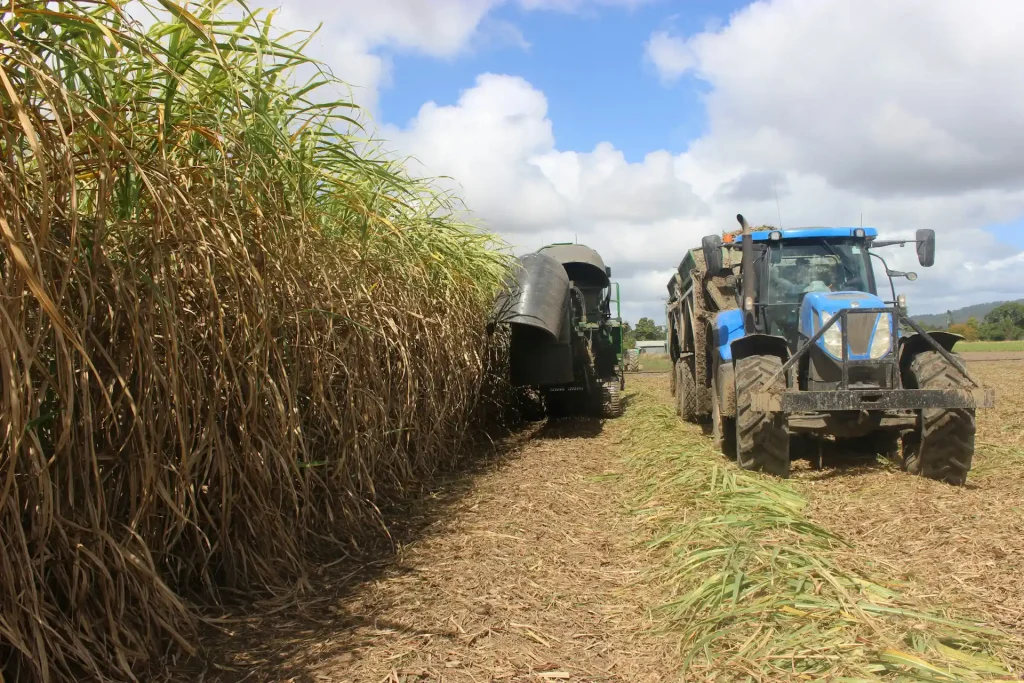
Drive through Mauritius and you will rarely be far from a sugarcane field. For generations, the tall green crop covered much of the island, filled the air with smoke during the harvest season and supported an industry that influenced almost every part of Mauritian life.
Sugar helped build roads, railways, ports and fortunes. It financed the early development of industries that later transformed Mauritius into a more diverse economy. But this prosperity came at an enormous human cost. Sugar plantations depended first on enslaved labour and later on hundreds of thousands of indentured workers brought mainly from India.
To understand modern Mauritius, its population, villages, cultures, food, economy and inequalities, you must first understand sugar.
Today, much of this complex history is preserved at L’Aventure du Sucre, a museum housed inside the former Beau Plan sugar factory. Its story takes visitors from the earliest sugarcane fields to the modern products, industries and communities that grew around them.
Table of Contents
A Brief Timeline of Sugar in Mauritius
| Year | What Happened |
|---|---|
| 1639 | Dutch settlers introduced sugarcane to Mauritius. |
| 1696 | Sugar was manufactured on the island for the first recorded time. |
| 1715 | Mauritius came under French rule and was renamed Isle de France. |
| 1797 | A sugar mill was established at Beau Plan. |
| 1810 | Britain took control of Mauritius, while allowing many French customs and institutions to continue. |
| 1834 | The first group of Indian indentured labourers arrived under the new labour system. |
| 1 February 1835 | Slavery was formally abolished in Mauritius. |
| 1849 | The immigration depot now known as Aapravasi Ghat became operational. |
| 1968 | Mauritius became independent, with sugar still dominating exports and agricultural land. |
| 1999 | The Beau Plan sugar factory closed after more than two centuries of operation. |
| 2002 | The former factory was converted into L’Aventure du Sucre. |
The Dutch Introduce Sugarcane to Mauritius
The history of sugar in Mauritius began during the Dutch colonial period. According to the Mauritius Sugarcane Industry Research Institute, Dutch settlers introduced sugarcane to the island in 1639.
At first, sugarcane was only one of several crops tested for its economic potential. Early production was small and was linked partly to the manufacture of arrack, an alcoholic drink made using sugarcane products. Sugar was first manufactured on the island in 1696, but there was not yet a plantation industry on the scale that would later dominate Mauritius.
The Dutch abandoned Mauritius in 1710. By then, however, they had introduced the crop that would eventually transform the island’s land, economy and population.
Sugar Expands Under French Rule
France formally claimed the island in 1715 and renamed it Isle de France. Sugarcane production expanded more seriously under French administration, particularly during the governorship of Mahé de La Bourdonnais in the 18th century.
Sugar estates were established, milling methods improved and more land was cleared for cultivation. The island’s location also made it a useful naval and trading base between Europe and Asia.
This expansion depended heavily on enslaved labour. Enslaved men, women and children were brought mainly from Madagascar and different parts of Africa, although people were also transported from India and other areas around the Indian Ocean.
They worked on plantations, in mills, in domestic service and across the colonial economy. The wealth associated with sugar cannot be separated from the violence, displacement and forced labour on which the plantation system was built.
The resistance of enslaved people is today remembered most powerfully at Le Morne Brabant, where escaped enslaved people, known as maroons, sought shelter in the mountain’s caves and inaccessible slopes. You can explore this history further in our guide to Le Morne Brabant and its legacy of resistance.
The British Era and the Rise of a Sugar Colony
Britain took control of Mauritius in 1810. Rather than dismantling the existing plantation economy, British rule allowed it to expand.
Demand for Mauritian sugar grew, land under cultivation increased and hundreds of sugar mills appeared across the island. By the middle of the 19th century, Mauritius had become one of the British Empire’s most productive sugar colonies.
Sugar began to determine the physical shape of the island. Estates controlled large areas of land, while roads, railways and harbour facilities were developed to move sugarcane from fields to mills and finished sugar from factories to Port Louis for export.
Many villages grew around sugar estates and labour camps. The daily rhythm of life was tied to planting, cutting and milling seasons. Estate owners also became powerful figures in the island’s economy and politics.
Sugar, Slavery and Abolition
Slavery was formally abolished in Mauritius on 1 February 1835. The date is now marked every year as a national public holiday and day of remembrance.
Abolition was a major legal turning point, but it did not immediately create economic equality. Formerly enslaved people received no compensation for generations of unpaid labour. Compensation was instead paid to people who had claimed ownership over them.
Many freed people left the estates, created independent communities or attempted to build livelihoods through fishing, farming, craftwork and other activities. Plantation owners, meanwhile, sought a new source of inexpensive labour to maintain and expand sugar production.
This demand led to one of the largest movements of contracted workers in modern history.
The Arrival of Indentured Labourers
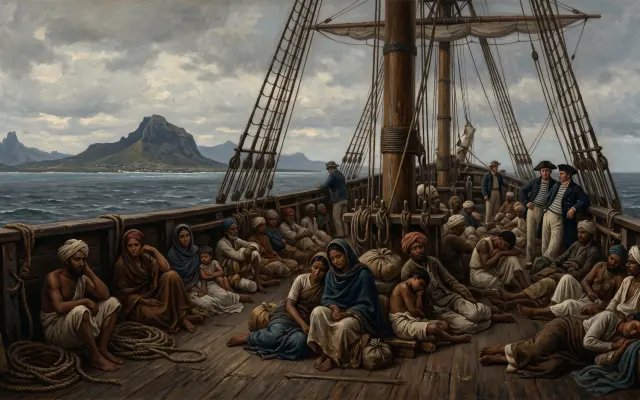
In November 1834, even before slavery was formally abolished in Mauritius, the ship Atlas arrived with an early group of Indian indentured workers.
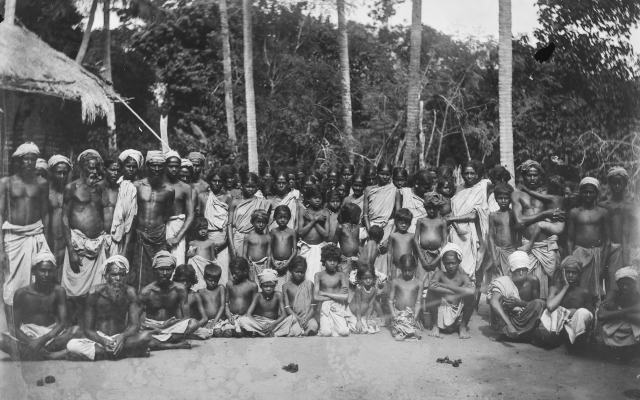
Indenture was presented as a system of contracted rather than enslaved labour. Workers generally signed agreements specifying a period of service, wages, housing and rations. In reality, many experienced low wages, restrictive regulations, poor living conditions, punishment and limited freedom to leave their estates.
The British treated Mauritius as the testing ground for what became known as the “Great Experiment”, the use of indentured labour across plantation colonies after the abolition of slavery.
According to UNESCO’s history of Aapravasi Ghat, almost half a million indentured labourers arrived from India between 1834 and 1920. Some remained in Mauritius, while others were sent onward to places including Réunion, Africa, Australia and the Caribbean.
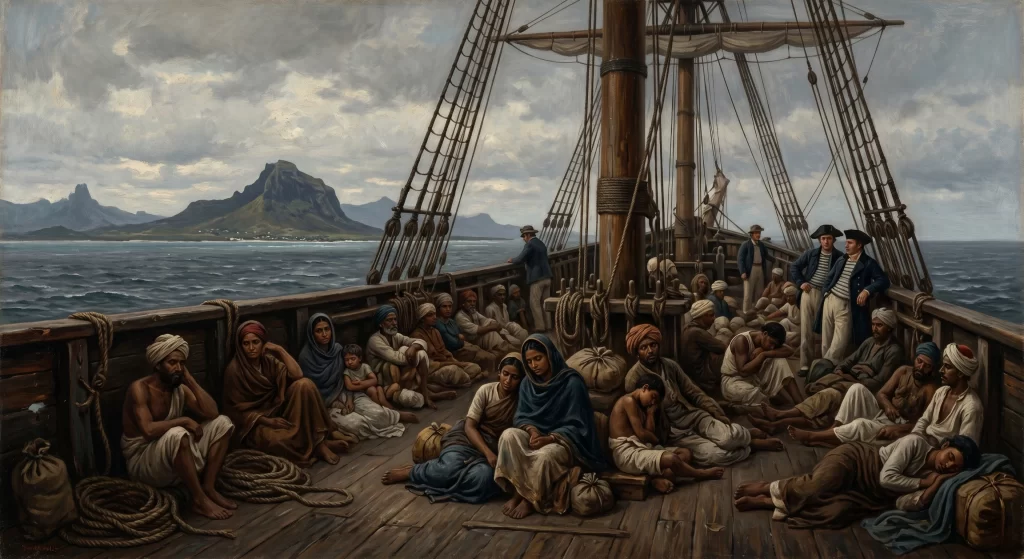
The immigration depot at Trou Fanfaron in Port Louis became operational in 1849. Newly arrived workers passed through the depot for registration and health checks before being allocated to sugar estates or other employers.
Aapravasi Ghat was inscribed on the UNESCO World Heritage List in 2006. Today, it remains one of the most important places for understanding Mauritius’ population and history.
How Indenture Changed Mauritian Society
Most indentured workers who arrived in Mauritius came from India, including regions now located in Bihar, Uttar Pradesh, Tamil Nadu, Andhra Pradesh and other parts of the subcontinent. Smaller numbers came from China, Madagascar, East Africa and Southeast Asia.
Many remained in Mauritius after completing their contracts. Some continued as estate workers, while others acquired land, became small sugarcane planters or moved into trade and skilled occupations.
Their languages, religions, food traditions and family structures became central to Mauritian society. Hindu and Muslim religious traditions expanded, new temples and mosques were established and Indian festivals became embedded in the island’s cultural calendar.
This history helps explain why modern Mauritius is so culturally diverse. Read our guide to Mauritian culture for an introduction to the island’s communities, traditions and everyday customs. Our guide to Hinduism in Mauritius also explores how migration and indenture shaped the island’s religious landscape.
Sugar Shaped More Than the Economy
For much of Mauritian history, sugar was not simply an agricultural product. It shaped where people lived, how land was distributed, who held political influence and which infrastructure was built.
Land and villages
Large sugar estates controlled extensive areas of cultivable land. Many rural villages developed beside estate camps, mills and cane fields. Even today, former estate names remain visible in village names, road signs and neighbourhoods across Mauritius.
Transport and ports
Railways were constructed partly to move workers, sugarcane and processed sugar between plantations, mills and Port Louis. Roads and harbour facilities were also expanded around the requirements of the sugar trade.
Food and culture
Sugar and its by-products became part of Mauritian food culture. Molasses, rum, cane syrup and different types of brown sugar found their way into drinks, desserts and traditional recipes.
At the same time, plantation migration brought together African, Malagasy, Indian, European and later Chinese culinary influences. The result is the multicultural cuisine explored in our article on the history of Mauritian food.
Labour and politics
Conditions in the sugar industry also contributed to the growth of organised labour and political activism. Plantation and dock workers played important roles in campaigns for better wages, representation and social rights.
Our article on Labour Day in Mauritius explains how workers’ movements became connected to the development of democracy and the modern Mauritian state.
How Sugar Helped Build Modern Mauritius
During the 20th century, preferential trade agreements gave Mauritian sugar access to British and later European markets at more stable prices.
These arrangements generated revenue and encouraged investment in modern mills, research, irrigation and agricultural technology. After independence in 1968, sugar remained the island’s dominant export industry.
However, Mauritius did not rely on sugar forever. Capital, experience and institutions developed through the sugar economy helped support investment in textiles, tourism and financial services.
This diversification became part of Mauritius’ transformation from a plantation economy into a country with multiple economic sectors. For more on this wider transition, read our guide to Mauritius’ independence and national development.
Why Sugar Became Less Dominant
From the late 20th century onward, sugar’s position weakened. Production costs increased, the agricultural workforce declined and land was converted to housing, tourism and other developments.
The greatest pressure came from changes to European trade arrangements. Reforms introduced from 2006 reduced preferential sugar prices, while the Sugar Protocol was abolished in 2009.
The Mauritius Chamber of Agriculture reports that the EU sugar reforms resulted in a 36% price reduction. This forced the Mauritian industry to consolidate factories, improve efficiency and find more value in the entire sugarcane plant.
Many smaller mills closed, leaving production concentrated in a limited number of large factories. The Beau Plan mill was among the historic factories affected by this restructuring.
From Sugar Industry to Sugarcane Industry
Mauritius now speaks increasingly of a sugarcane industry rather than simply a sugar industry.
Sugarcane can be used to produce:
- Refined and speciality sugars
- Rum and other alcohol products
- Molasses
- Electricity generated using bagasse
- Biofertilisers
- Animal feed
- Potential renewable fuels and biomass products
Bagasse is the dry fibre left after juice is extracted from sugarcane. Mauritian factories burn it to produce steam and electricity, allowing part of the crop to contribute to the national energy supply.
This circular approach has allowed sugarcane to remain relevant even as raw sugar has become less economically dominant.
Does Mauritius Still Produce Much Sugar?
Yes. Although sugar is no longer the main pillar of the economy, sugarcane remains one of the country’s most important crops and continues to shape the landscape.
According to Statistics Mauritius, the country produced approximately:
- 2.32 million tonnes of sugarcane in 2025
- 220,305 tonnes of sugar in 2025
- Sugarcane was harvested from approximately 33,805 hectares
These figures are far below the industry’s historical peaks, but they show that cane remains a major part of Mauritian agriculture and rural life.
Beau Plan: From Sugar Factory to Museum
The story of L’Aventure du Sucre begins at Beau Plan in the north of Mauritius.
The estate was originally known as Forges de Mon Désir and was involved in activities including saltpetre and indigo production before sugarcane became dominant.
Sugarcane cultivation became established at Beau Plan during the 1790s, and a sugar mill was founded in 1797. Over the following two centuries, the factory expanded and modernised as Mauritius developed into a major sugar producer.
The Beau Plan factory finally closed in 1999 during a period of centralisation and restructuring across the industry. Rather than demolishing the site, its industrial buildings and machinery were preserved and transformed into a museum.
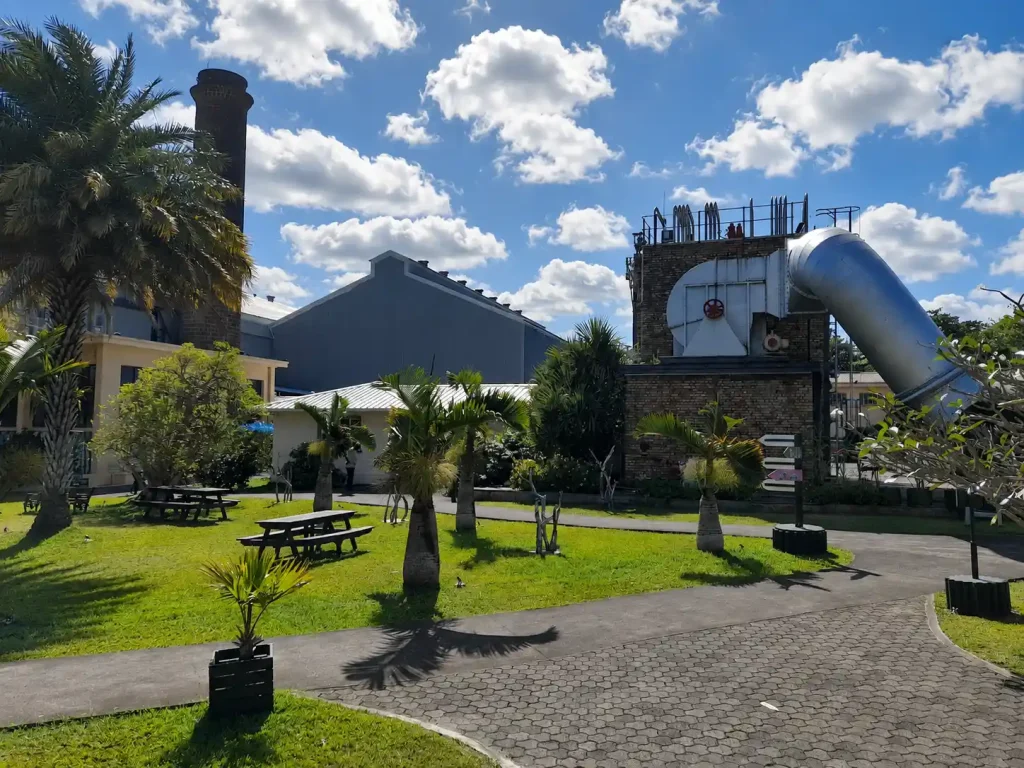
Inside L’Aventure du Sucre
L’Aventure du Sucre is far more than a museum about how sugar is made. It uses sugar as a way to tell the wider story of Mauritius.
Inside the former factory, visitors can explore large pieces of original industrial equipment and follow the process from harvesting and crushing sugarcane to evaporation, crystallisation and refining.
The museum also examines:
- The Dutch, French and British colonial periods
- The growth of plantation agriculture
- Slavery and resistance
- The arrival and experiences of indentured labourers
- The role of sugar in international trade
- The development of the modern Mauritian economy
- Rum, molasses, bagasse and other sugarcane products
In March 2026, L’Aventure du Sucre unveiled a redesigned visitor experience after more than two years of work. The updated route includes new interpretation, an immersive multilingual audio guide and a new section dedicated to the New Grove Distillery.
Visitors can also sample several types of Mauritian sugar and selected local products. The Village Boutik sells speciality sugars, rum, jams, honey, sweets and gifts, while the on-site Le Fangourin restaurant serves Mauritian-inspired food.
Is L’Aventure du Sucre Worth Visiting?
Yes, particularly if you want to understand Mauritius beyond its beaches.
The museum is suitable for:
- Visitors interested in Mauritian history
- Families looking for an educational indoor attraction
- Travellers interested in food, agriculture or rum
- Anyone researching slavery, indenture or colonial history
- Visitors looking for an activity near Pamplemousses or Grand Baie
The preserved machinery gives the museum a strong sense of place. You are not simply reading about a former factory, you are walking through one.
Families should note that parts of the exhibition discuss slavery, forced labour and difficult working conditions. These themes are essential to the story, although parents may wish to explain them to younger children in age-appropriate language.
L’Aventure du Sucre Tickets and Opening Hours
The following information was checked against the museum’s official website in July 2026. Opening hours and prices can change, so check the official practical information page before travelling.
| Location | Beau Plan, 21001 Pamplemousses, Mauritius |
|---|---|
| Museum opening hours | Monday to Saturday, 10am–4pm, including most public holidays |
| Last recommended entry | 3pm |
| Sunday | Closed |
| General adult ticket | Rs 1,200 |
| Child aged 6–13 | Rs 600 |
| Child under 6 | Free |
| Youth aged 13–18 | Rs 600 |
| Student aged 18–25 | Rs 600 with valid identification |
Preferential prices are available for Mauritian citizens and residents upon presentation of valid identification. A family discount may also be available.
The Village Boutik and Le Fangourin restaurant can be visited without purchasing a museum ticket.
What to Visit Nearby
L’Aventure du Sucre is located close to Sir Seewoosagur Ramgoolam Botanical Garden, commonly known as the Pamplemousses Botanical Garden. The two attractions can easily be combined in a half-day trip.
You can also build a broader history-focused itinerary around:
- Aapravasi Ghat: the UNESCO-listed immigration depot in Port Louis
- Le Morne Cultural Landscape: a place associated with maroon resistance to slavery
- Port Louis: markets, museums, historic streets and the waterfront
- Grand Baie: beaches, restaurants and activities in the north
Our 7-day Mauritius itinerary includes Port Louis and other cultural stops. You can also use our guides to Port Louis street food and things to do in Grand Baie when planning your day.
A History of Sweetness and Struggle
Sugar brought enormous economic change to Mauritius. It created export wealth, developed infrastructure and later helped support the country’s move into manufacturing, tourism and services.
But sugar’s history is also a story of enslavement, migration, exploitation and resistance. Its wealth was built by people whose experiences were often ignored in older accounts of the island’s development.
The cane fields that still cover parts of Mauritius are therefore more than scenery. They are part of a living historical landscape, one connected to almost every Mauritian family in one way or another.
L’Aventure du Sucre brings many parts of that history together inside one preserved factory. It does not replace visiting places such as Aapravasi Ghat or Le Morne, but it helps explain the industry that connected them.
To understand how Mauritius became the multicultural country it is today, begin with the crop that shaped its land, brought its people together under unequal circumstances and influenced its economy for more than three centuries.
Frequently Asked Questions
Who introduced sugarcane to Mauritius?
Dutch settlers introduced sugarcane to Mauritius in 1639. Sugar was first manufactured on the island in 1696.
Why was sugar so important to Mauritius?
Sugar was the island’s main export and economic activity for much of the 19th and 20th centuries. It influenced land ownership, employment, transport, settlement patterns, politics and trade.
What was the connection between sugar and slavery?
During the French period and the early years of British rule, sugar estates depended heavily on enslaved workers brought mainly from Africa and Madagascar. Slavery was formally abolished in Mauritius on 1 February 1835.
Why did indentured labourers come to Mauritius?
Plantation owners recruited indentured workers after slavery was abolished because they wanted a new labour force for the sugar estates. Almost half a million indentured labourers arrived from India between 1834 and 1920, although some were later sent to other colonies.
Is sugar still produced in Mauritius?
Yes. Mauritius produced approximately 220,305 tonnes of sugar in 2025. Sugar is no longer the country’s main economic sector, but sugarcane remains an important crop and source of sugar, rum, electricity and other products.
What is L’Aventure du Sucre?
L’Aventure du Sucre is a museum inside the former Beau Plan sugar factory near Pamplemousses. It explains the history of Mauritius through sugarcane, plantation labour, industry, trade and modern sugar products.
How long should you spend at L’Aventure du Sucre?
Most visitors should allow around two hours for the museum. You may need longer if you use the audio guide, read the exhibits closely, visit the boutique or eat at Le Fangourin.
Can you visit L’Aventure du Sucre with children?
Yes. The museum has interactive elements and activities for children. However, some historical sections cover slavery, indenture and difficult labour conditions.
Official Sources and Further Reading
Tours and activities in Mauritius
Hand-picked from GetYourGuide. Free cancellation on most bookings.
Some links on this page are affiliate links. If you book through them we may earn a small commission, at no extra cost to you. It helps keep Creole Mauritius free.


Questions and tips