Divali in Mauritius: Lights, Traditions & Festive Sweets
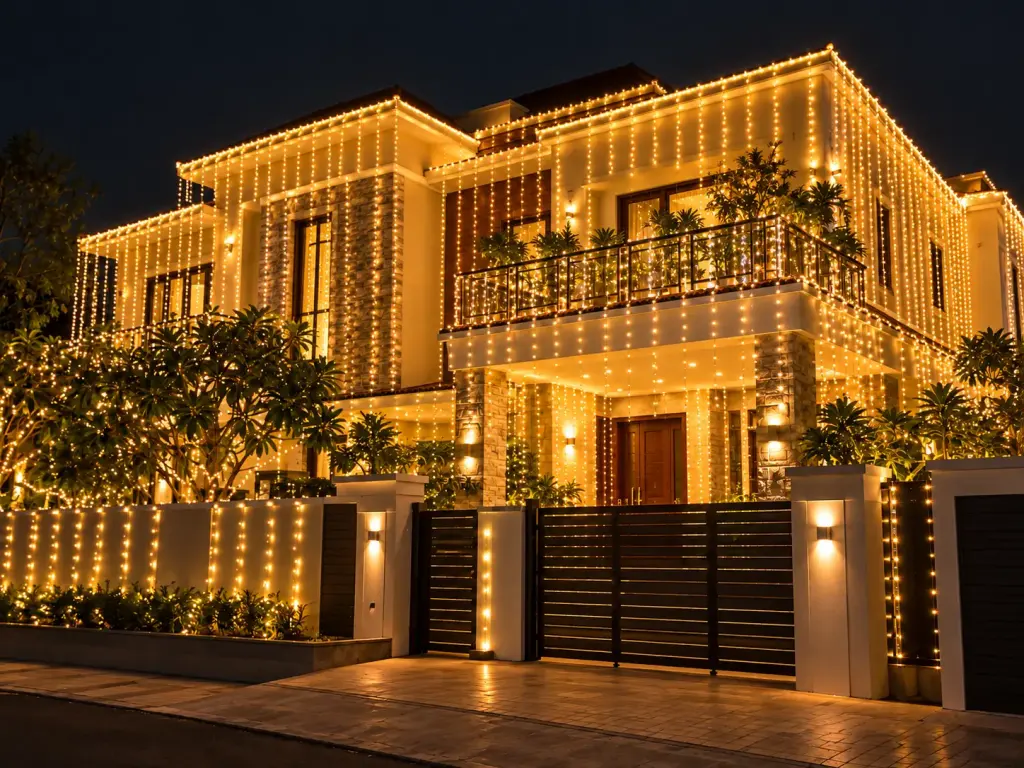
You can usually tell when Divali is getting close in Mauritius. Strings of lights begin appearing along verandas, shops fill their shelves with boxes of Indian sweets, and families start preparing their homes for one of the most anticipated celebrations of the year.
By the evening of Divali, ordinary residential streets can look completely different. Rows of little oil lamps glow along garden walls and driveways. Houses are decorated with colourful lights, while the occasional firecracker interrupts the evening. And somewhere nearby, there’s usually a kitchen that has been busy making cakes since morning.
In Mauritius, Divali is a Hindu religious festival and a national public holiday. It is also a celebration that many Mauritians of other faiths experience through neighbours, friends and colleagues, particularly through the custom of sharing homemade sweets.
There’s something rather lovely about receiving a box of freshly prepared gato patate from a neighbour. The recipes may differ from one household to another, and everyone seems to have an opinion about whose cakes are best.
If you’re planning to spend Divali in Mauritius, here’s what the celebration means, when it takes place in 2026, which traditions are particularly Mauritian, and how you can experience the festivities respectfully.
When is Divali in Mauritius in 2026?
Divali falls on Sunday, 8 November 2026 in Mauritius. The date changes every year because the festival follows the Hindu lunar calendar, generally falling in October or November.
There is an important holiday update for 2026. Although the festival falls on a Sunday, Monday, 9 November 2026 is also a public holiday in Mauritius. The Prime Minister’s Office confirmed this arrangement on 2 October following changes to the Public Holidays Act that came into force in August 2026.
Some older online holiday calendars still list only Sunday, 8 November. Those calendars were published before the new provision took effect. The government’s amended 2026 holiday notice confirms the festival date, while Le Mauricien reported the subsequent Monday holiday confirmation.
| Festival | Divali, also called Diwali or Deepavali |
| 2026 celebration date | Sunday, 8 November |
| Additional public holiday | Monday, 9 November 2026 |
| Religion | Hinduism |
| Main traditions | Prayers, oil lamps, decorations, family gatherings and sharing sweets |
The evening of 8 November is the time to see the lights. Families usually begin decorating and preparing well before the day itself, so you may notice festive displays appearing during the preceding week.
For the rest of the year’s national holidays, see our Mauritius public holidays guide.
What does Divali celebrate?
Divali is often called the Festival of Lights. Its name comes from the Sanskrit word Deepavali, which refers to a row of lamps.
The lights have religious meaning. They are associated with the victory of good over evil, knowledge over ignorance, and the hope of a better future.
One of the best-known Hindu stories associated with Divali is the return of Lord Rama to Ayodhya after defeating Ravana. According to the Ramayana tradition, the people welcomed Rama, Sita and Lakshmana by lighting rows of lamps.
Divali is also closely associated with Goddess Lakshmi, who represents wealth, prosperity and good fortune. In many Hindu households, prayers are offered to Lakshmi, and homes are cleaned and decorated in preparation for the festival.
There are other traditions associated with Deepavali, including stories involving Lord Krishna and Narakasura. The customs followed depend on a family’s religious background and the traditions passed down through generations.
That variety is worth remembering in Mauritius, where Hindu families may have Bhojpuri, Tamil, Telugu, Marathi and other ancestral traditions. The way one household observes Divali will not necessarily be identical to the next.
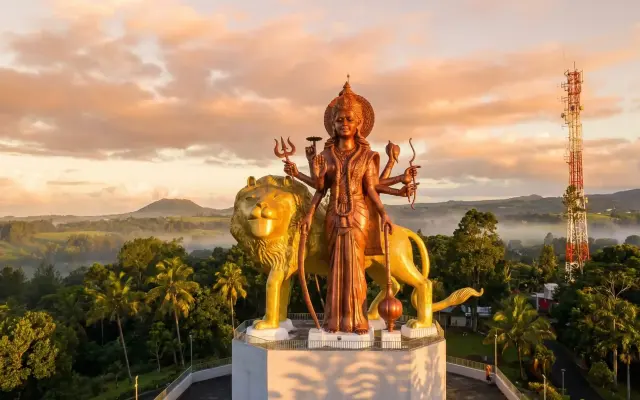
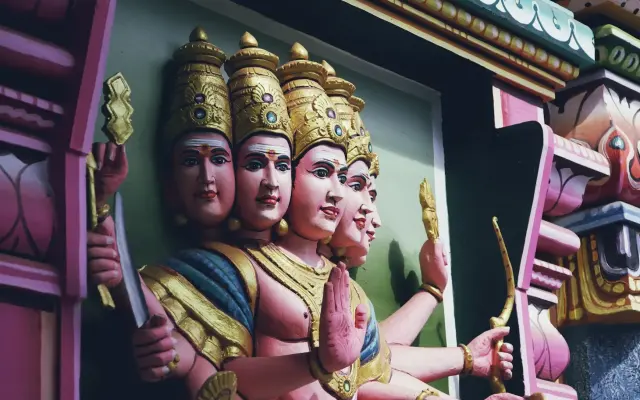
Our guide to Hinduism in Mauritius explains more about the country’s Hindu communities and their major religious festivals.
How Divali became part of Mauritian life
Divali has a long history in Mauritius, closely linked to the arrival of Indian migrants and indentured workers during the nineteenth century.
Under British rule, large numbers of workers travelled from India to Mauritius to work on sugar estates. They brought their languages, religious beliefs, recipes and family customs, many of which continued to be practised by their descendants.
The scale of this migration was considerable. UNESCO records that almost half a million indentured labourers arrived from India between 1834 and 1920, either to work in Mauritius or to be transferred to other destinations. The remains of the immigration depot at Aapravasi Ghat in Port Louis are now a UNESCO World Heritage Site.
Families maintained celebrations such as Divali, passing religious stories, prayers and recipes from one generation to the next. Over time, the festival became a familiar part of the Mauritian calendar, including for people who do not practise Hinduism.
You can see that in the way sweets are exchanged between neighbours and colleagues. A Hindu family may prepare cakes for friends who are Christian or Muslim, just as food is sometimes shared between families during other religious celebrations on the island.
Of course, not every household celebrates in the same way, and Divali remains a religious occasion with particular meaning for Hindu devotees. The wider custom of sharing food is simply one of the ways the festival has become familiar across Mauritius.
If you’re interested in the history behind the island’s population, our article on who the Mauritians are looks at the different communities and migrations that shaped the country.
How is Divali celebrated in Mauritius?
Preparations often begin several days before the festival. Families clean their homes, put up decorations, buy ingredients for sweets and prepare for religious prayers.
The amount of preparation depends on the household. Some families make several varieties of cakes from scratch, while others buy their favourites from sweet shops. Decorations can be simple, with a few lamps placed near the entrance, or elaborate enough to cover the entire house in coloured lights.
Lighting diyas around the house
The most recognisable Divali decoration is the diya, a small oil lamp traditionally made from clay. It has a cotton wick that burns in oil or ghee.
Families place these lamps near doorways, on walls, along steps and around the courtyard. Once evening arrives, the rows of flames create a warm glow that electric lights can’t quite reproduce.
Many Mauritian homes now use decorative LED lights alongside traditional diyas. Some households prefer electric lighting for convenience, particularly when decorating roofs, balconies and large outdoor areas.
It’s common to see both styles together. A house might have strings of coloured lights across its facade, with a row of clay lamps arranged along the entrance.
Rangoli and decorations
Another familiar tradition is rangoli, decorative patterns created using coloured powder, rice flour, flowers or other materials.
These designs are usually made near the entrance to a home. Some are fairly simple, while others involve detailed floral or geometric patterns that take hours to complete.
Rangoli is associated with welcoming guests and good fortune. It’s also one of the more time-consuming parts of preparing for Divali, especially when a family decides to create a large design.
Prayers and family gatherings
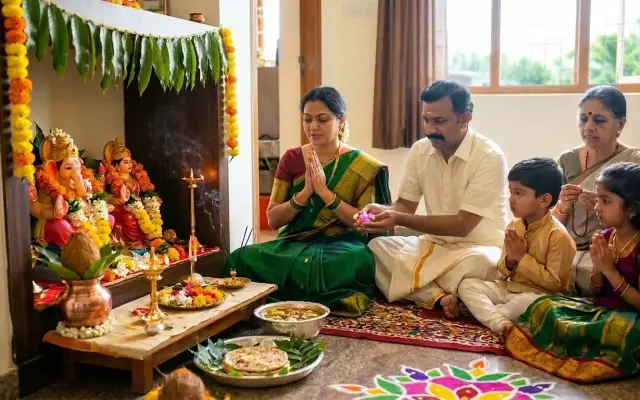
For practising Hindus, prayers are an important part of Divali. Families may perform puja at home, make offerings and light lamps as part of their religious observance.
Some people also visit temples or attend community prayers. Religious practices differ between families, and there is no single routine followed by everyone in Mauritius.
New clothes are common for the occasion, and family visits can continue throughout the day. Relatives may gather for meals or exchange sweets before returning home to light their lamps in the evening.
Firecrackers and festive noise
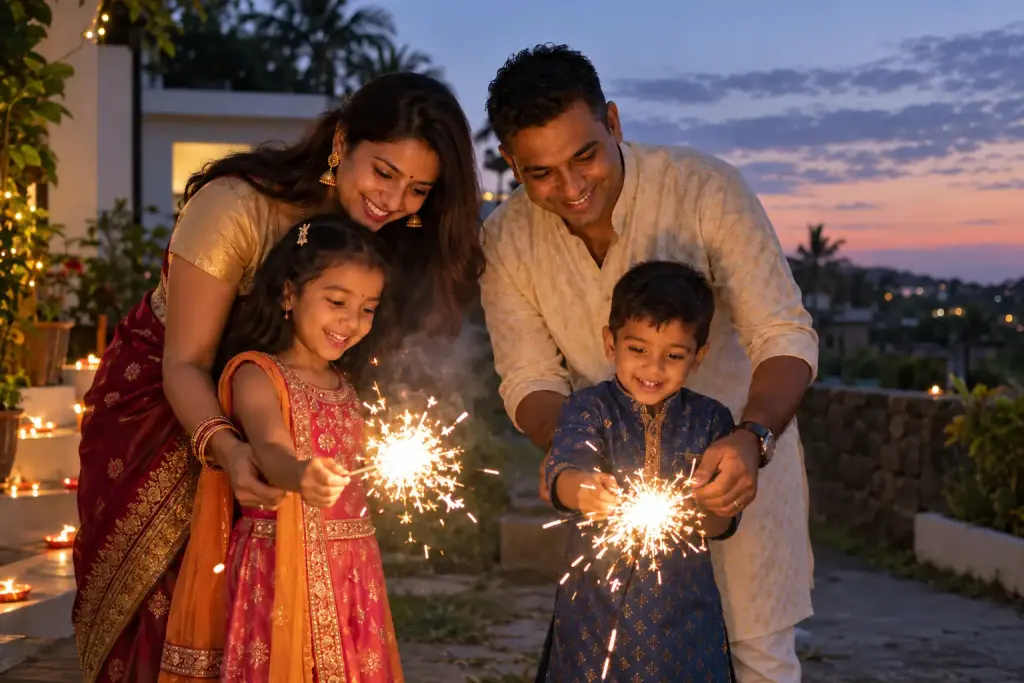
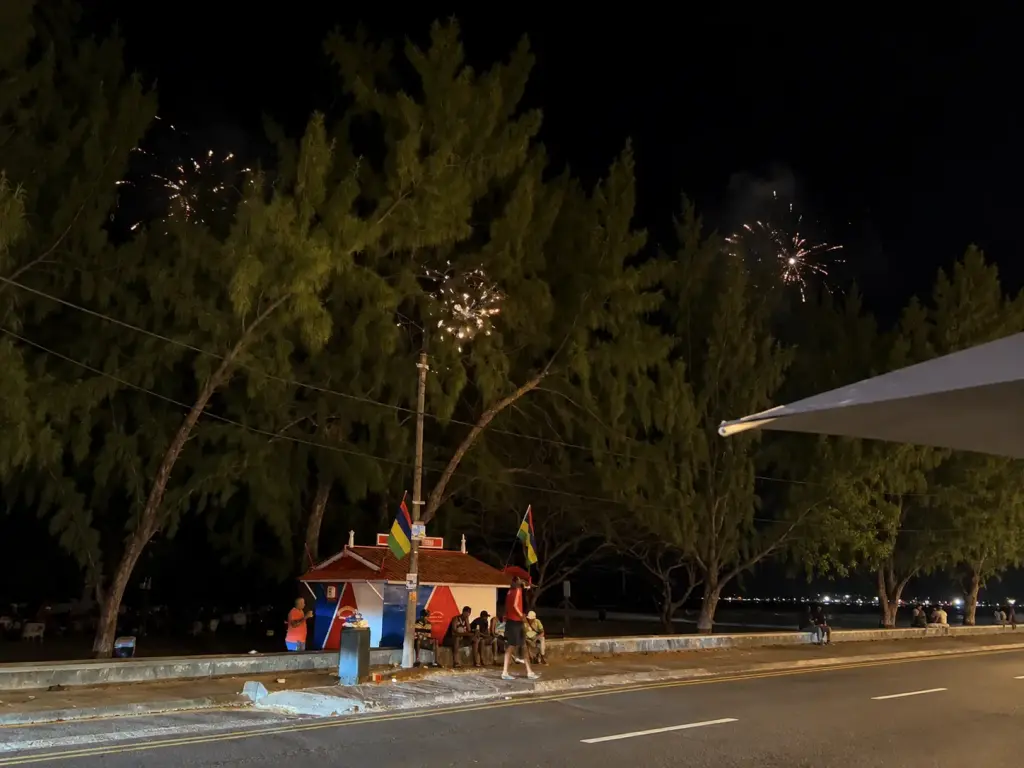
Firecrackers have long been associated with Divali celebrations in Mauritius, although not every family uses them. Some neighbourhoods can become quite noisy after dark, particularly when people are lighting fireworks or crackers outside their homes.
If you’re travelling with young children, sensitive to loud noises or staying somewhere with pets, it’s worth being prepared. Fireworks and open flames should be handled responsibly and in accordance with local rules.
Mauritius’ National Heritage Fund documents diyas, rangoli, sweets, firecrackers and cultural gatherings among the longstanding local traditions of Divali. Its intangible cultural heritage inventory also records how the celebration is passed down through family and community practices.
Divali sweets in Mauritius: The cakes everyone looks forward to
Ask people in Mauritius what they enjoy about Divali, and there’s a good chance the conversation will turn to cakes.
In the days before the festival, kitchens become busy with preparations. Some recipes involve soaking, grinding and frying ingredients, while others require careful work with sugar syrup or milk.
Many families have recipes they prefer to make themselves. Others buy part of their selection from Indian sweet shops, especially when preparing dozens of boxes to share with friends, colleagues and neighbours.
Several sweets are particularly familiar during Divali in Mauritius.
Gato patate
If there’s one Mauritian sweet closely associated with Divali, it’s gato patate.
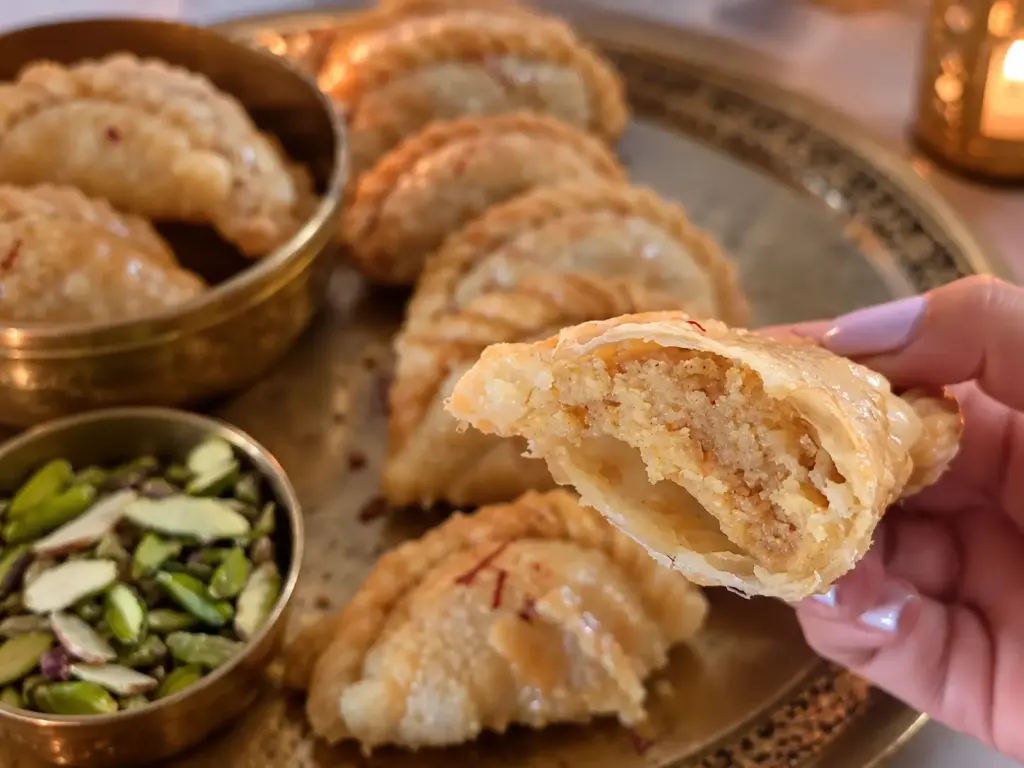
These small fried pastries are made with a dough containing mashed sweet potato and flour. The filling usually consists of grated coconut, sugar and cardamom, sometimes with vanilla or other flavourings depending on the family recipe.
The dough is rolled out, cut into small rounds and folded over the coconut filling to form half-moon shapes. The edges are sealed before the cakes are fried until lightly golden.
They’re especially good when freshly prepared, with a soft centre and lightly crisp pastry. Every family seems to have its own preferred balance of coconut, sugar and spice, which is probably why people can spend so long comparing them.
The National Heritage Fund identifies gato patate as a characteristic sweet of the Mauritian Divali celebration, and it remains a familiar part of the festival today.
Ladoo
Ladoo is another common favourite. These round sweets come in several varieties, including versions made with chickpea flour, coconut, semolina or other ingredients.
Some are soft and slightly crumbly, while others are richer and more compact. Cardamom is a common flavouring, and certain versions are topped with nuts or coconut.
Barfi
Barfi is a dense sweet commonly made with milk ingredients, sugar and flavourings such as cardamom. There are also varieties based on coconut, chickpea flour, pistachios or cashews.
It’s often cut into squares or diamonds, making it easy to arrange in gift boxes alongside other sweets. Modern confectioners in Mauritius also sell flavoured versions, so you’ll find far more than the traditional plain varieties.
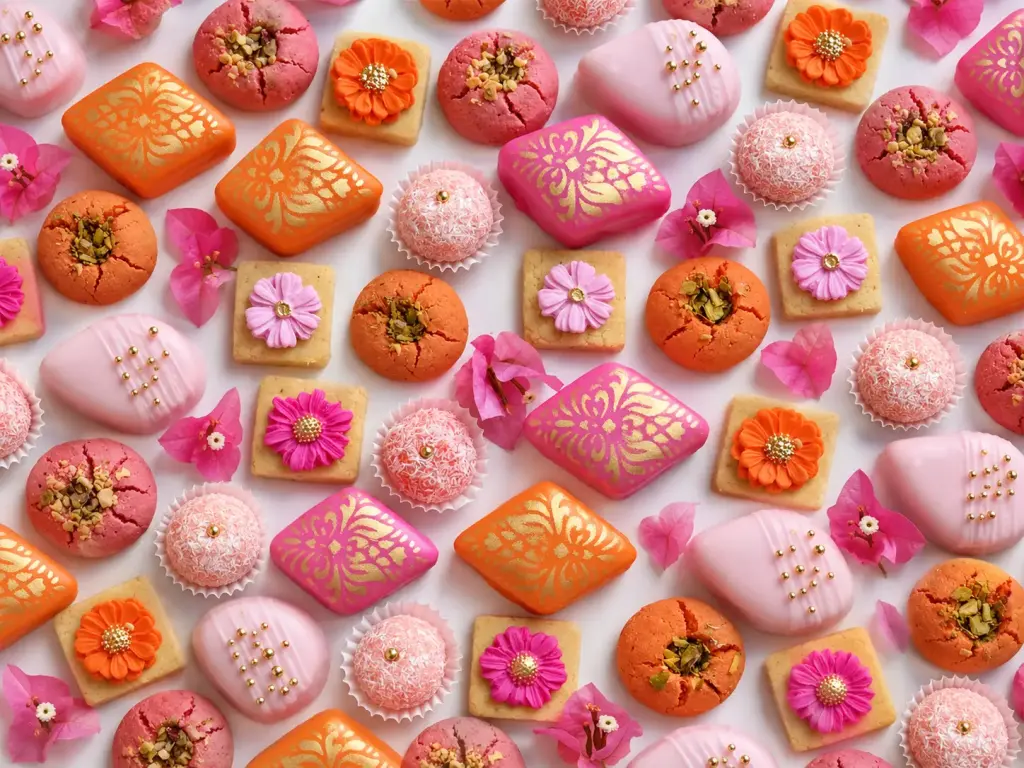
Gulab jamun and rasgulla
Gulab jamun is made from small fried dough balls soaked in a sweet syrup, often flavoured with cardamom or rose. Rasgulla is another syrup-based sweet, although the preparation and texture vary according to the recipe used.
Both are popular in Indian sweet shops around Mauritius, especially during festival periods when people are buying assorted boxes.
Mawa samoussa and other favourites
Mawa samoussa is a sweet variation of the familiar triangular samosa, traditionally filled with a milk-based mixture. It is among the sweets sold by established Mauritian confectioners during Divali.
You’ll also come across jalebi, khaja and other regional sweets. Families tend to choose a mixture of old favourites and whatever looks appealing at their preferred sweet shop.
Traditional recipes are changing too. Mauritian sweet makers have experimented with pistachio, pineapple, dates and other flavours, while some now offer less sugary options. Local newspapers such as Le Mauricien regularly report on these changing food traditions in the lead-up to Divali.
For more about the foods that developed from Mauritius’ different cultural influences, see our guide to the history of Mauritian cuisine.
Why sharing sweets matters so much
Preparing the sweets is only part of the tradition. Once the cakes are ready, many families pack them into boxes or trays to distribute to relatives, friends and neighbours.
It’s a custom that has become familiar to Mauritians well beyond Hindu households. A neighbour may arrive with a box of gato patate or assorted sweets, and the gesture is appreciated regardless of whether the recipient celebrates Divali religiously.
In workplaces, colleagues sometimes exchange cakes in the days surrounding the festival. There’s often quite a selection, especially when several people bring sweets prepared at home.
Of course, the amount of baking and exchanging depends on the family. Preparing large quantities of sweets takes considerable time and money, and some households prefer a smaller celebration.
What makes the tradition particularly Mauritian is how comfortably it fits into everyday neighbourhood life. Similar gestures of sharing food appear around Eid, Christmas and other important festivals, each with its own meaning and customs.
Our guide to Mauritian culture explores these everyday connections between food, family, religion and community life in more detail.
Where can visitors see Divali lights in Mauritius?
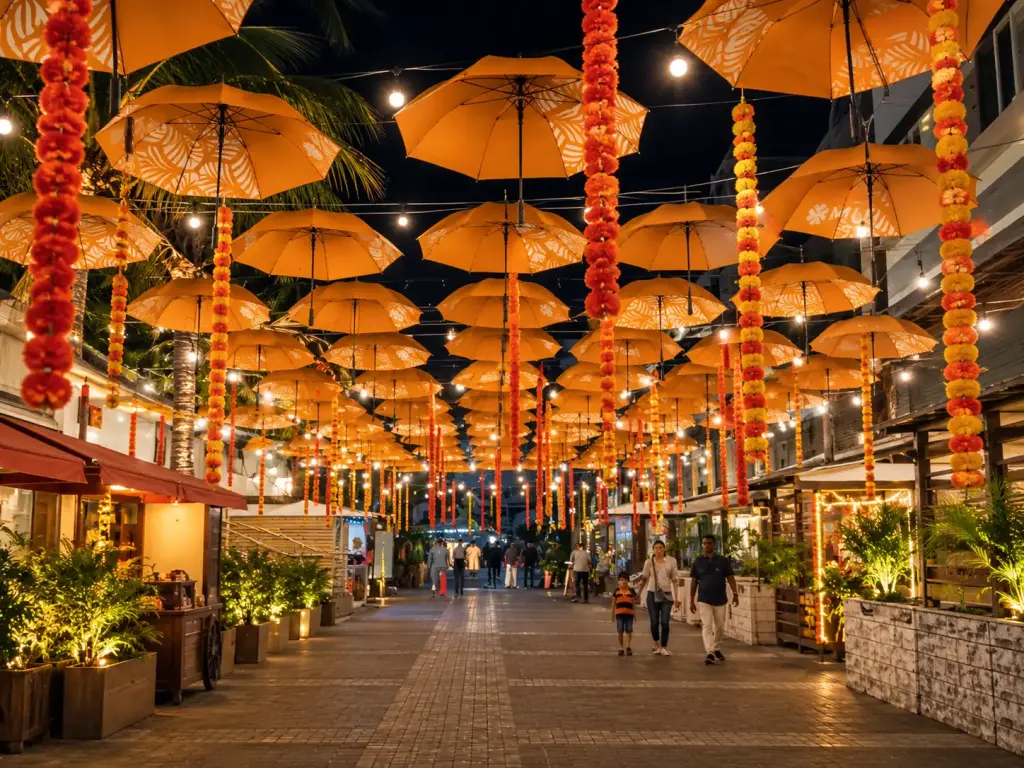
Visitors sometimes expect a major public parade or one central venue for Divali. In Mauritius, much of the celebration happens at home, so the best way to see the lights is often by passing through residential areas in the early evening.
There isn’t one official street that guarantees the most impressive decorations every year. Families decorate according to their own preferences, and some neighbourhoods may be more brightly lit than others.
If you’d like to experience the atmosphere, there are several areas worth considering.
Triolet and the northern villages
Triolet is one of the best-known villages in northern Mauritius and has a long-established Hindu community. Its residential areas can be an interesting place to see Divali decorations, particularly if you’re staying around Grand Baie or Trou aux Biches.
Goodlands and other northern villages are also worth considering, although the displays depend on the individual neighbourhood and household.
Quatre Bornes, Rose Hill and Beau Bassin
These central towns have busy residential neighbourhoods where Divali lights are often visible along roads and outside houses.
They may be convenient choices if you’re staying in the centre of the island or near the west coast. Rather than trying to cover several towns in one evening, I’d choose one area and take the time to explore a few streets.
Flacq and the eastern villages
Flacq and the surrounding villages are another option, particularly for visitors based on the east coast. This part of Mauritius has longstanding Hindu communities, and homes in residential areas may be decorated for Divali.
The best time to see the lights is after sunset, once households have finished lighting their diyas and switching on their decorations. You don’t need to wait until very late in the evening.
A few things to know if you’re visiting during Divali
Divali is a good time to experience the cultural side of Mauritius, especially if your holiday happens to coincide with the festival. There are a few practical things worth planning around.
Expect holiday opening hours
With Sunday, 8 November and Monday, 9 November both designated public holidays in 2026, some businesses and public services will operate differently from normal.
Government offices and many banks will be closed on public holidays. Individual shops, restaurants and attractions may have reduced hours or close for the day, while hotels and tourism businesses may continue operating.
If you have plans that involve a particular restaurant, excursion or shop, check its opening hours beforehand instead of assuming it will follow a normal schedule.
Respect family celebrations
The decorated houses are beautiful to look at, but remember that people are celebrating at home.
Stay on public roads or pavements when admiring the lights. Don’t walk into a courtyard or garden unless you’ve been invited, and ask before taking close photographs of people, particularly during prayers.
If you’re invited to share sweets or join a family gathering, follow your host’s lead. A polite greeting and a willingness to listen are usually all you need.
Be careful on the roads after dark
Residential streets can be busier than usual during Divali, with people visiting relatives, children outside and families gathering near their homes. Some roads are narrow, and parking can become difficult.
If you’re driving around to see the decorations, slow down through villages and avoid stopping in places that block driveways or traffic. Our driving in Mauritius guide covers local road rules and other practical advice for visitors.
Look for organised cultural events
Community groups, cultural organisations and local authorities sometimes organise Divali celebrations, performances or events around the festival.
These programmes can change from year to year, so check local announcements closer to the date rather than expecting an annual event to take place at the same location.
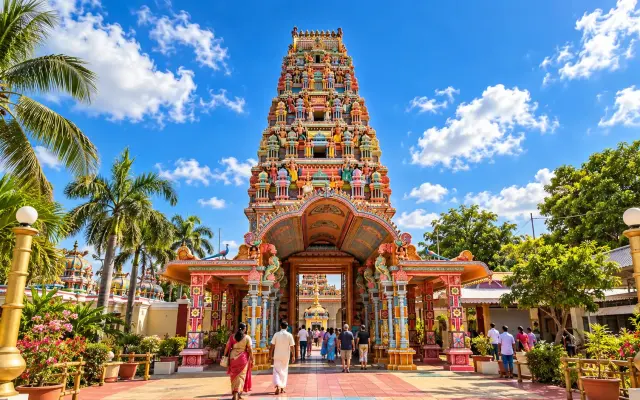
If you’re interested in religious traditions, a temple visit can also be meaningful, but it’s important to respect any worship taking place and follow the instructions of those responsible for the temple.
Common questions about Divali in Mauritius
Is Divali a public holiday in Mauritius?
Yes. Divali is a national public holiday in Mauritius. In 2026, it falls on Sunday, 8 November, and Monday, 9 November is also a public holiday under the new Sunday-holiday provision.
Is Divali the same as Diwali?
Yes. Divali, Diwali and Deepavali refer to the same festival. Divali is the spelling commonly used in Mauritian government publications, while Diwali is widely used internationally.
What is the most traditional Divali sweet in Mauritius?
Gato patate is one of the sweets most closely associated with Mauritian Divali. Made with sweet potato dough and a coconut filling, it is traditionally fried and shared with family, friends and neighbours.
Can tourists celebrate Divali in Mauritius?
Visitors are welcome to appreciate the decorations and attend public cultural events. Private family prayers and gatherings should be respected, and you should enter a home or private property only when invited.
Where is the best place to see Divali lights?
Residential areas in Triolet, Goodlands, Quatre Bornes, Rose Hill, Beau Bassin and Flacq can be worth visiting. There is no single official viewing location, and displays vary between households each year.
Are restaurants and shops open during Divali?
Some remain open, while others close or operate shorter hours. The arrangements depend on the business and location. Check directly before travelling, especially for Sunday, 8 November and Monday, 9 November 2026.
What do you say to someone celebrating Divali?
“Happy Divali” or “Happy Diwali” is perfectly appropriate. The greeting is widely understood in Mauritius, and you don’t need to know any special religious phrases to offer someone your good wishes.
If you’re in Mauritius on Divali evening, make time to see the lights after sunset. Choose a neighbourhood, walk where it’s safe to do so, and enjoy the decorations without disturbing the families celebrating. And if somebody offers you homemade gato patate, it’s well worth trying.
Tours and activities in Mauritius
Hand-picked from GetYourGuide. Free cancellation on most bookings.
Some links on this page are affiliate links. If you book through them we may earn a small commission, at no extra cost to you. It helps keep Creole Mauritius free.
Questions and tips