
Driving in Mauritius: Rules, Licence & Car Rental Guide
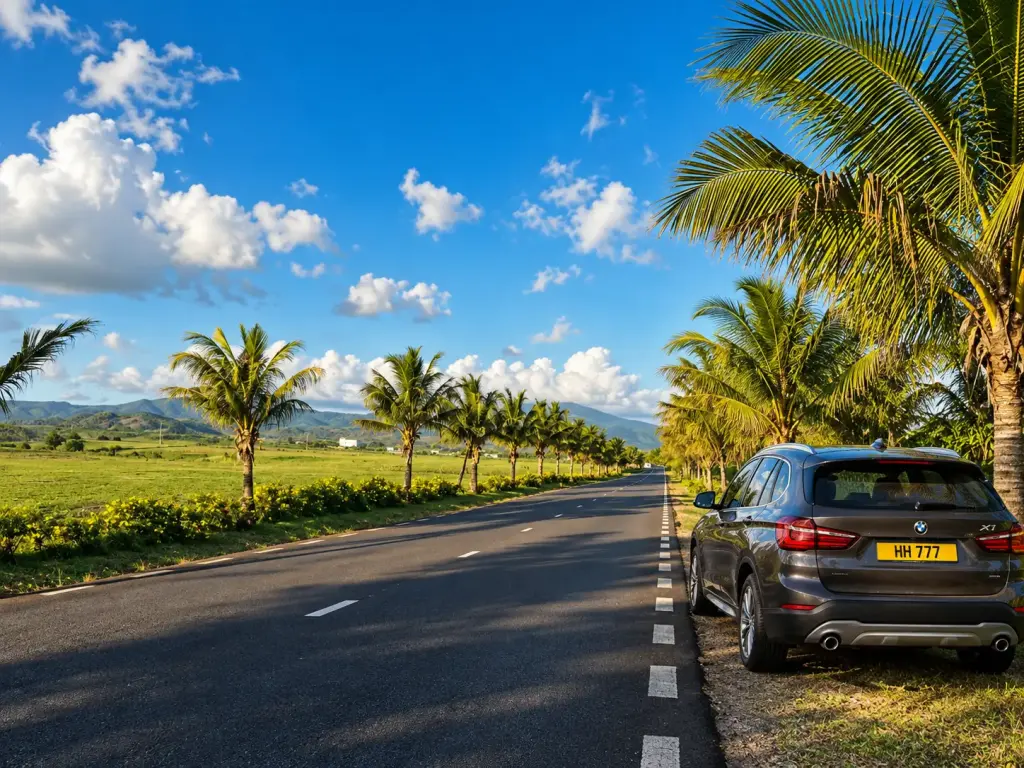
Driving is one of the easiest ways to explore Mauritius beyond your hotel. A rental car gives you the freedom to visit beaches, waterfalls, hiking trails and smaller villages without planning your day around buses or taxi pickups.
The main things tourists need to know are simple: Mauritius drives on the left, foreign visitors can generally use a valid home driving licence for up to four weeks, and road conditions vary considerably once you leave the main highways.
Driving here is not particularly difficult, but it can take a little adjustment if you normally drive on the right. Roads through villages can be narrow, motorcycles appear frequently between cars, and traffic around Port Louis, Ebène and Moka can become slow during rush hour.
Driving in Mauritius: Quick Guide
| Rule | What Tourists Need to Know |
|---|---|
| Driving side | Left |
| Foreign driving licence | Generally valid for stays of up to 4 weeks |
| International Driving Permit | Useful if your licence is not in English/French or for longer stays |
| Typical rental minimum | Often 21+ with at least 1 year of driving experience |
| Typical speed limits | About 40–60 km/h in built-up areas, 60–80 km/h on larger roads and up to 110 km/h on motorway sections |
| Emergency police | 999 or 112 |
Always follow the actual road sign rather than relying on the general speed ranges above. Limits change depending on the road.
Can Tourists Drive With a Foreign Licence?
For most short holidays, yes. A visitor can generally drive in Mauritius using a valid driving licence issued by their home country for up to four weeks.
If your licence is in English or French, you will normally not need an International Driving Permit for a standard short holiday. If it is written in another language or script, carrying an IDP or an accepted translation is a sensible precaution and may also be required by the rental company.
If you intend to stay longer than four weeks, do not assume your original licence remains sufficient indefinitely. Arrange an International Driving Permit before travelling or check the current procedure with the Mauritius Police Traffic Branch.
Rental companies can also impose stricter requirements than the basic legal rules. Many require drivers to be at least 21, to have held a full licence for at least one year and to provide a passport and payment card at collection. Some charge an additional fee for younger drivers.
If you normally drive on the right, I would strongly consider renting an automatic car. Adjusting to left-hand traffic is much easier when you do not also have to change gears with your left hand.
The Road Rules That Matter Most
Mauritius drives on the left-hand side of the road. Cars are generally right-hand drive, and overtaking is done on the right.
If you normally drive on the opposite side, take extra care when leaving car parks, turning at junctions and entering roundabouts. These are the moments when tourists are most likely to instinctively move towards the wrong side of the road.
At roundabouts, pay attention to traffic already circulating and give way as required. Vehicles will normally approach from your right. Do not rely entirely on another driver’s indicator or flashing headlights; make sure the road is actually clear before moving.
Speed limits vary, so use road signs as your primary guide. As a rough rule, many built-up areas are around 40–60 km/h, larger roads around 60–80 km/h and certain motorway sections allow speeds of up to 110 km/h. Speed enforcement is common and penalties increase depending on how far above the limit you are travelling.
Mauritius also has a very low drink-driving threshold. The prescribed limit is 20 mg of alcohol per 100 ml of blood or 9 micrograms per 100 ml of breath. For a tourist unfamiliar with local roads, the simplest rule is not to drink at all if you are driving.
Do not use your phone while driving. Set Google Maps or Waze before moving and pull over somewhere safe if you need to change the route or make a call. Enforcement around mobile-phone use and other road offences has been strengthened in 2026.
What Are Mauritius Roads Actually Like?
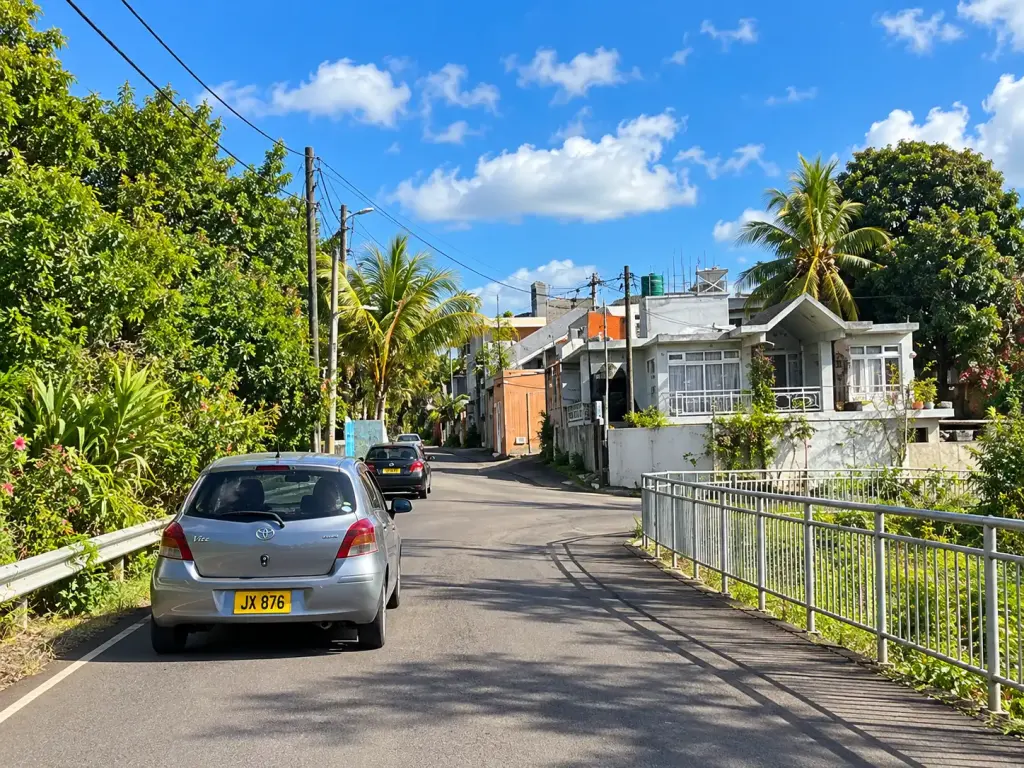
The motorway and main roads are generally straightforward, but driving becomes more interesting once you enter towns and villages. Some roads are narrow, pavements can disappear and cars may be parked close to the traffic lane.
Motorcycles and scooters are common, so check your mirrors carefully before changing lanes or turning. Buses also stop frequently and can pull back into traffic quickly.
During the sugar-cane harvest season you may encounter slow-moving trucks carrying large loads of cane, particularly on rural roads. Only overtake when you have a completely clear view ahead.
Dogs occasionally wander onto quieter roads, and pedestrians may walk along roads without proper footpaths. Driving slightly more defensively than you would on a wide European or Gulf road is sensible.
Traffic can also surprise visitors. Mauritius looks small on a map, but a short journey can take much longer during the weekday morning and evening rush around Port Louis, Moka, Ebène, Phoenix and the main central roads.
Google Maps and Waze are useful, but occasionally suggest very narrow shortcuts through residential or agricultural areas. If a road suddenly looks unsuitable for your rental car, staying on the larger road is often the better option.
Is Driving in Mauritius Safe? What the Official Statistics Say
One question visitors often ask is whether driving in Mauritius is safe. Most tourists can get around the island comfortably with a little patience, but road safety is something worth taking seriously, particularly on unfamiliar village roads and busy urban routes.
The latest figures from Statistics Mauritius provide some useful context. During the first six months of 2026, the island recorded 21,845 road accidents, compared with 19,696 during the same period in 2025. That’s an increase of 10.9%.
| Road Safety Indicator | Jan–Jun 2025 | Jan–Jun 2026 |
|---|---|---|
| Reported road accidents | 19,696 | 21,845 |
| Accidents causing casualties | 1,105 | 1,149 |
| Fatal accidents | 58 | 66 |
| People killed | 63 | 69 |
There is another statistic worth paying attention to. Of the 69 people who died in road accidents during the first half of 2026, 32 were motorcycle riders or passengers and 17 were pedestrians. Together, these two groups accounted for approximately 71% of all road fatalities recorded during that period.
This is my calculation using the official Statistics Mauritius figures. It highlights why visitors should be particularly careful around motorcycles, pedestrian crossings and busy roads through towns and villages.
For additional context, Mauritius recorded 124 road fatalities during the whole of 2025, compared with 134 in 2024. Although fatalities declined between those two complete years, the figures for the first half of 2026 show why continued attention to road safety matters.
These are island-wide accident statistics, not figures specifically involving tourists or rental cars. They cannot tell us the likelihood of an individual visitor having an accident, and the first six months of 2026 should not be compared directly with a full year.
My advice if you’re renting a car: Take your time, leave plenty of space around motorcycles, slow down through villages and avoid unnecessary driving after dark if you’re unfamiliar with the roads. A little extra caution is worth it, especially when you’re enjoying a holiday and aren’t in any hurry.
Parking, Petrol and Renting a Car
Parking at shopping centres, hotels and major attractions is usually straightforward. Central Port Louis, Rose Hill and Curepipe require a little more attention because some public street-parking areas operate using paid parking coupons.
Parking coupons are traditionally sold through petrol stations and other authorised outlets. You mark the relevant date and time and display the coupon clearly inside the vehicle. Always read the parking sign beside your space because the applicable zone, operating hours and maximum stay can differ.
If you do not want to deal with street parking in Port Louis, using a paid car park such as the facilities around Caudan Waterfront can be much easier.
Petrol stations in Mauritius are generally full service. Pull up beside the pump and tell the attendant whether you want a full tank or a specific rupee amount. Card payments are widely available, although carrying some cash is still useful when travelling around the island.
When collecting a rental car, do not focus only on the daily rate. Check the insurance excess, fuel policy and what happens if a tyre or windscreen is damaged. Take photos or a video of the entire vehicle before leaving the rental office, including existing scratches and wheel damage.
Also check that the spare tyre or repair kit is present and that you know which number to call if the car breaks down.
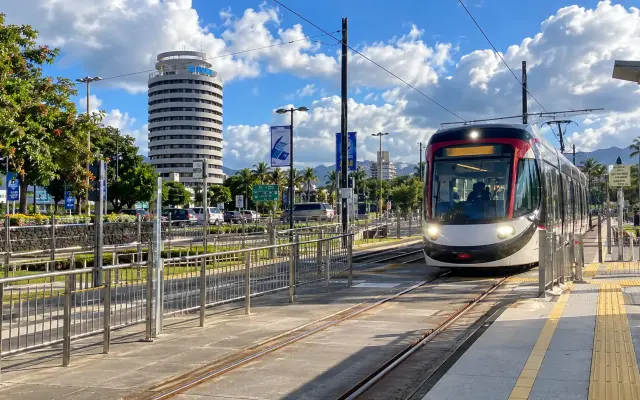
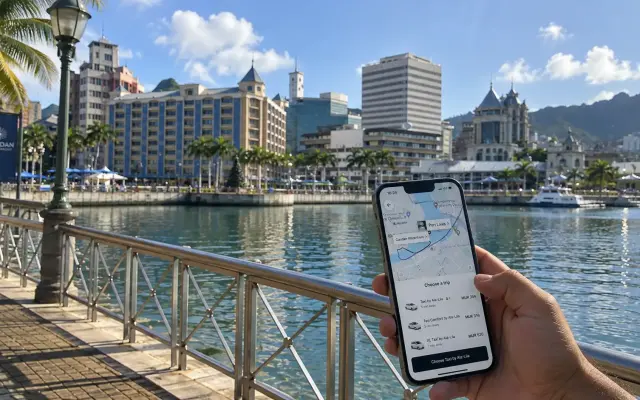
If you are deciding whether to rent or use public transport, see our Mauritius Transport Guide. For shorter journeys where you do not want to drive, our Uber in Mauritius guide explains the current app-based taxi option.
What Should You Do After an Accident?
Mauritius uses an Agreed Statement of Facts, commonly called a constat à l’amiable, for certain minor accidents.
It can generally be used where two insured vehicles are involved, nobody is injured, no other property is damaged, both drivers hold valid licences, neither driver appears to be under the influence of alcohol or drugs and both drivers agree about how the accident happened.
Each driver completes and signs the form and keeps a copy. The accident should then be reported to the insurer as soon as possible and the completed statement sent to the insurer within five days.
If somebody is injured, another property is damaged, a state-owned vehicle is involved, one of the drivers does not have a valid licence or insurance, or the drivers disagree about what happened, contact the police instead.
If you are driving a rental car, call the rental company as well. Do not arrange private repairs or make agreements with another driver without first speaking to the rental company or insurer. Police emergency numbers are 999 and 112.
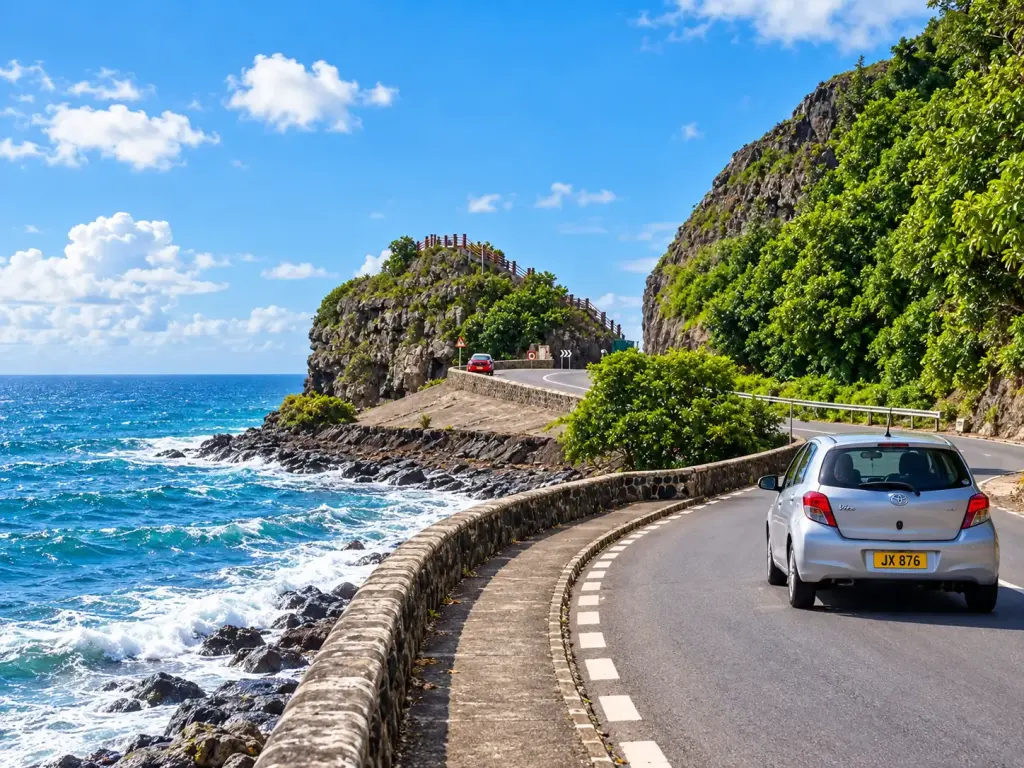
Is Renting a Car in Mauritius Worth It?
For many tourists, yes. If you are staying in one resort and mainly plan to relax at the beach, taxis and organised excursions may be enough. But if you want to explore independently, a car makes Mauritius considerably easier.
It is particularly useful for places such as Chamarel, Black River Gorges, Le Morne, the south coast and smaller beaches where public transport may require several connections or does not run frequently.
The island is small enough that you can explore a lot by car, but avoid trying to cross the entire country every day. Choosing attractions in the same region will save time and reduce unnecessary driving.
For first-time visitors, I would rent an automatic car, avoid driving through central Port Louis during rush hour unless necessary, and take the first day slowly while getting used to left-hand traffic.
Once you adjust, driving in Mauritius is generally manageable and gives you far more freedom than relying entirely on taxis or organised tours.
For ideas on where to go once you have the car, see our Ultimate Guide to Mauritius and 7-Day Mauritius Itinerary.
Disclaimer: Driving laws, rental-company requirements and parking regulations can change. Follow current road signs and check specific licence or rental requirements with the Mauritius Police Traffic Branch and your rental company before driving.
Tours and activities in Mauritius
Hand-picked from GetYourGuide. Free cancellation on most bookings.
Some links on this page are affiliate links. If you book through them we may earn a small commission, at no extra cost to you. It helps keep Creole Mauritius free.


Questions and tips