
Best Local Markets in Mauritius: Where to Go & Market Days

If you’re visiting Mauritius and want to spend a morning at a local market, the first thing to know is that they’re not all the same. Some are permanent covered markets selling vegetables, meat and everyday groceries. Others are weekly fairs where hundreds of stalls appear on particular days, selling everything from clothing and fabrics to household goods and street food.
That’s why choosing the right market matters. You wouldn’t want to travel all the way to Quatre Bornes expecting its famous textile fair, only to arrive on a vegetable-market day. And if you’re visiting Mahébourg, Monday is a very different experience from an ordinary weekday.
This guide to the best local markets in Mauritius is designed to make planning easier. I’ve brought together the main markets, their important shopping days, what each is worth visiting for and where to find them. For Flacq, Mahébourg, Quatre Bornes and Curepipe, I’ve also linked to our more detailed guides so you can plan an individual visit without searching through several different articles.
Which market should you visit in Mauritius?
If you only have time to visit one or two markets, I’d make the choice based on what you actually want to do. For an introduction to Mauritian street food and everyday shopping, Port Louis Central Market is an easy choice. For the biggest traditional market atmosphere, Central Flacq is hard to beat on a busy market day. Quatre Bornes is the place I’d consider for inexpensive fabrics and clothing, while Mahébourg is lovely for combining a Monday market with a walk around an old coastal town.
| Market | Best for | When to visit |
|---|---|---|
| Port Louis Central Market | Street food, spices, produce, souvenirs | Monday–Saturday; Sunday morning |
| Central Flacq Market | Large local fair, clothes, produce | Wednesday and Sunday |
| Mahébourg Market | Monday fair, local food, coastal atmosphere | Monday for the full fair |
| Quatre Bornes Market | Clothing, fabrics, household textiles | Thursday/Sunday main textile fair; other fair days also operate |
| Curepipe Market | Produce, flowers, everyday shopping | Most days; morning recommended |
| Goodlands Market | Local shopping in the north | Tuesday/Friday clothing; Wednesday/Saturday produce |
| Grand Baie Bazaar | Souvenirs, beachwear, gifts | Monday–Saturday, usually daytime |
| Triolet Market | Sunday produce and street food | Sunday morning |
| Rose Hill Market | Everyday groceries, snacks | Most days; Tuesday fair activity |
| Cap Tamarin Market | Local producers, baked goods, crafts | Saturday morning |
One small distinction is worth keeping in mind: in Mauritius, the word bazar can refer to an everyday covered market, while la foire generally describes the larger market fair. They may use the same premises but operate on different days. This explains why you might see a market described as open daily even though its busiest fair takes place only once or twice a week.
Map of local markets in Mauritius
Use the map below to see where the main markets are located. You can zoom in, select a marker for the market name and main shopping days, or open directions in Google Maps. If you’re staying in one part of the island, I’d generally start with the markets closest to you rather than spending half a day travelling across Mauritius just for a short shopping trip.
Map not loading? Explore markets in Google Maps.
Port Louis: Best for street food, spices and a first market visit
Port Louis Central Market
Best for: First-time visitors, traditional market shopping, street food and souvenirs. When: Monday to Saturday, with a shorter Sunday morning session.
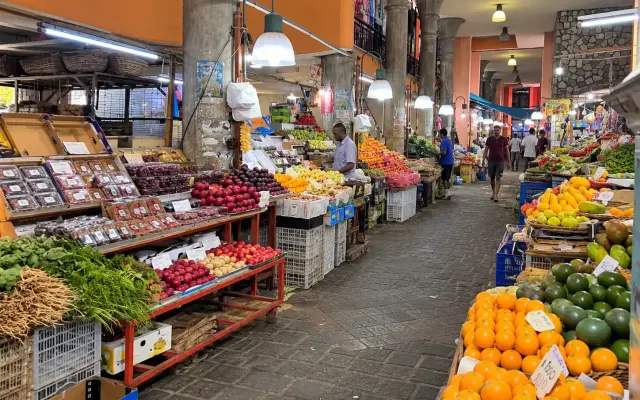
If you’ve never visited a market in Mauritius before, Port Louis Central Market is a good place to begin. Located in the heart of the capital near Corderie Street, it’s a working market where residents come for fruits, vegetables, spices and other everyday essentials. Tourists visit for much the same reason, although there’s also a craft and souvenir section selling items such as baskets, clothing and decorative gifts. The different sections make it easy to spend an hour browsing without feeling that you’re visiting somewhere created entirely for tourists.
The food is another reason to go. You can stop for a glass of cold alouda, a Mauritian milk-based drink with basil seeds and agar-agar, or pick up local snacks around the market. If you’re planning to explore Port Louis for the day, I’d visit the market in the morning before walking towards the surrounding shopping streets and Caudan Waterfront. Parking in the city centre can be difficult, so public transport is worth considering.
Worth knowing: The produce market and souvenir sections are not quite the same experience. Compare prices before buying souvenirs, and be cautious of herbal products advertised with unverified medical claims.
Our detailed guide to Port Louis Central Market covers everything from exploring its different stalls and sampling local food to finding your way there.
East and southeast: The large traditional markets
Central Flacq Market
Best for: A large traditional market, fresh produce, clothing and street food. Main market days: Wednesday and Sunday.
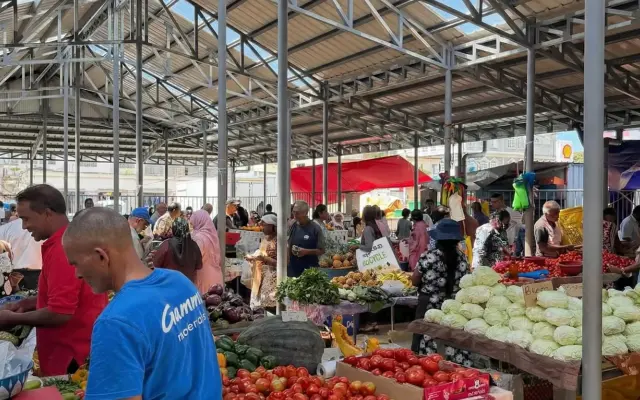
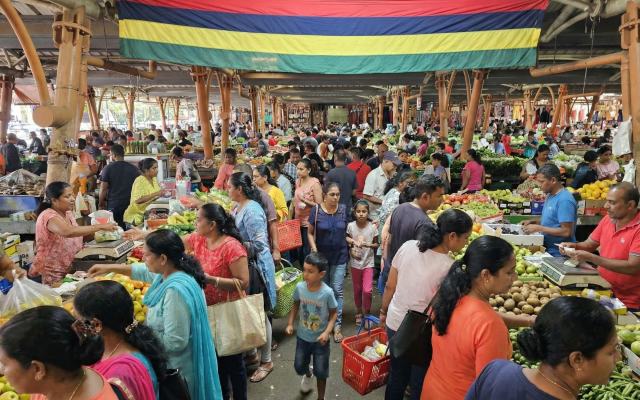
Central Flacq is often described as the largest open-air market in Mauritius, and it’s certainly one of the liveliest. On the main fair days, the area fills with stalls selling fruit, vegetables, spices, clothing, fabrics and general household items. There’s a strong local-shopping atmosphere, with people arriving from surrounding villages to stock up for the week. If you enjoy walking around a busy market and discovering things you hadn’t planned to buy, Flacq is a good choice.

I’d go earlier in the morning, particularly on a Sunday, when the choice of fresh produce is usually better and the stalls are fully operating. There are also plenty of opportunities to buy Mauritian street food while exploring. The market is located in central Flacq, within walking distance of the town’s main transport area, although traffic and parking can be challenging on the busiest days.
For a proper breakdown of the different sections, what to eat and how to get there, see our complete Central Flacq Market guide.
Mahébourg Market
Best for: A traditional Monday fair, local food, textiles and a coastal-town outing. Main market day: Monday.
Mahébourg Market is one of my favourite choices for visitors who want to combine a local market with sightseeing. The town has a different atmosphere from the busier commercial centres, with older buildings, a waterfront and a slower pace once you step away from the main shopping streets. Its covered market serves local shoppers on other days, but Monday is when the larger fair brings many more stalls and vendors into the surrounding area.

You’ll find a mixture of clothing, fabrics, household goods, produce, spices and food stalls. There may also be baskets and souvenirs, although the selection varies between sellers. I’d set aside the morning to explore the market and then walk towards the waterfront for a change of scenery. Mahébourg is also convenient if you’re staying near Blue Bay or in the southeast of the island.
We’ve covered the layout, market days, street food and nearby attractions in our dedicated Mahébourg Market guide.
Central Mauritius: Textiles, produce and everyday shopping
Quatre Bornes Market
Best for: Fabrics, clothing, curtains, bedsheets and bargain shopping. Market days: Thursday and Sunday for the main textile fair; Tuesday and Friday also have haberdashery fair activity; Wednesday and Saturday for the vegetable fair.
Quatre Bornes is probably the market I’d recommend first to anyone looking for inexpensive clothing or household textiles. It’s particularly well known for its large textile fairs, where you’ll find rows of stalls selling everything from basic T-shirts to fabrics, dresses and bedding. The important thing is to choose the right day. Thursday and Sunday are the well-known textile fair days, but the Municipal Council also lists Tuesday and Friday haberdashery fairs. Wednesday and Saturday are mainly associated with the vegetable fair.

It’s a practical market rather than a polished tourist attraction, and the amount of choice can be overwhelming if you don’t have anything specific in mind. I’d browse several stalls before buying fabrics or clothes, as prices and quality vary. The market is centrally located and convenient by public transport, including the Metro Express. If you’re coming mainly to shop for textiles, try to arrive in the morning rather than late afternoon.
Read our Quatre Bornes Market guide for more detail on the different fair days, bargaining and getting there.
Curepipe Market
Best for: Fresh produce, flowers, local snacks and everyday shopping. When: The covered market operates on most days, with shorter Sunday hours; separate Curepipe fair locations have their own schedules.
Curepipe Market is a traditional municipal market in the centre of town. It’s a good place to see everyday shopping rather than tourist-focused souvenir stalls, with sections for fruit, vegetables, flowers, meat and other practical goods. The market is also useful if you’re exploring the central plateau, especially when combined with the surrounding shopping streets or a trip to Trou aux Cerfs.
One thing worth clarifying is that Curepipe’s central market isn’t the same as every fair held in Curepipe. The Agricultural Marketing Board separately lists activity at the Forum Market and Jan Palach Market, so schedules depend on which location you intend to visit. For an ordinary visit, I’d start with the central covered market and check locally if you’re after a particular fair.
For transport, opening-hour guidance and nearby attractions, see our full Curepipe Market guide.
Rose Hill Market
Best for: Grocery shopping, fresh produce and local snacks. When: The covered market generally operates most days; Tuesday is a listed fair day.
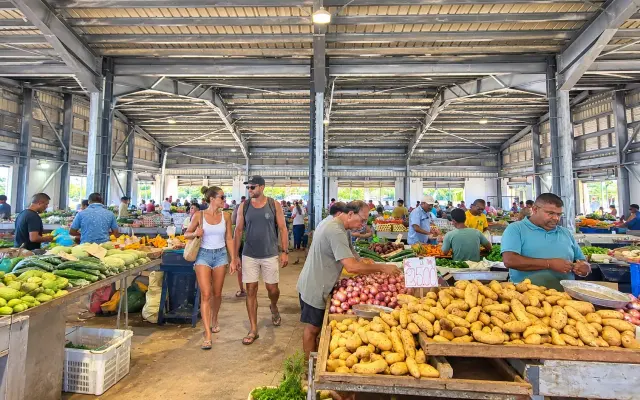
Rose Hill Market is a busy municipal market serving people who live and work in the central towns. You’ll find stalls selling fruit, vegetables and other essentials, along with food counters where you can stop for a quick bite. It isn’t somewhere I’d travel across the island just to buy souvenirs, but it’s a worthwhile stop if you’re interested in ordinary Mauritian shopping. It’s also particularly convenient by public transport because Rose Hill is one of the Metro Express interchange points.
If you’re visiting from Port Louis or Curepipe, our Mauritius Metro Express guide explains how to travel between the main central towns.
North Mauritius: Village markets and souvenir shopping
Goodlands Market
Best for: Produce, affordable clothes and a local market experience in the north. Market days: Tuesday and Friday for clothing and general merchandise; Wednesday and Saturday for fruit and vegetables.
Goodlands is one of the main commercial towns in northern Mauritius, and its market is particularly useful for people staying around Grand Baie, Pereybere or the surrounding villages. Like Quatre Bornes, the experience changes depending on the day. The clothing and general merchandise fairs attract shoppers looking for inexpensive everyday goods, while the produce market is more focused on fruits, vegetables and weekly grocery shopping.
I’d choose Goodlands over Grand Baie Bazaar if I wanted to see a more local shopping environment rather than buy tourist souvenirs. There are also stalls and food options around the market area, making it a good stop for a morning out. The main fresh-produce market is listed on Wednesdays and Saturdays, although individual stalls and nearby shops may operate at other times.
For more information on market days, bargaining tips and directions, check out our Goodlands Market guide.
Triolet Market
Best for: Sunday morning shopping, fresh vegetables and local snacks. Main market day: Sunday morning.
Triolet Market is an early-morning village market where residents come to shop for fresh produce and other weekly essentials. It’s particularly lively on Sundays, when you can browse the stalls and look for local food such as dholl puri or other freshly prepared snacks. It’s not a market I’d visit expecting a large range of crafts or tourist souvenirs, but that’s part of its appeal if you’re more interested in everyday life.

I’d aim to arrive well before late morning because some stalls begin packing up early. A Sunday market visit also works well if you’re staying on the north coast and want to spend the rest of the day at the beach.
Grand Baie Bazaar
Best for: Souvenirs, beachwear, jewellery and small gifts. When: Usually Monday to Saturday during daytime shopping hours.
Grand Baie Bazaar is different from the traditional produce markets. It’s a covered shopping area with stalls selling T-shirts, pareos, bags, jewellery, decorative items and Mauritius-themed souvenirs. The biggest advantage is convenience: if you’re staying around Grand Baie, you can browse without planning a special market-day trip. The drawback is that many stalls sell similar products, and prices can be aimed at visitors rather than local grocery shoppers.

I’d walk around before choosing anything, particularly if you’re buying several souvenirs. You may find the same item at different stalls for different prices, and polite bargaining is sometimes possible. For ideas on souvenirs that are actually worth taking home, see our What to Buy in Mauritius guide.
West Mauritius: A smaller producers’ market
Cap Tamarin Market
Best for: Locally grown food, baked goods and small-scale producers. When: Saturday morning; confirm the current hours with the organiser.
The Saturday market at La Place Cap Tamarin offers something different from the large municipal fairs. It’s a smaller producers’ market featuring locally grown fruit and vegetables, baked goods and other products from local businesses and artisans. The atmosphere is closer to a community shopping morning than a large clothing bazaar, which makes it a pleasant option for people staying in Tamarin or Black River.
The organiser has published different Saturday morning timings over the years, so I wouldn’t plan a visit based on an old online timetable. You can check the Cap Tamarin market announcement for organiser information and confirm that the event is taking place before you go.
South Mauritius: Chemin Grenier and smaller village fairs
Chemin Grenier Market
Best for: Fresh produce and local shopping in the south. Traditional fair days: Wednesday and Sunday; confirm the schedule following the market’s relocation.
Chemin Grenier deserves a mention because there has been a significant recent change. The government inaugurated a new market fair on 25 September 2026 at Toocaram Lane, replacing older arrangements with a purpose-built trading facility. The new market, representing an investment of around Rs 130 million, was designed to provide improved conditions for traders and shoppers, particularly for fresh produce.
The Agricultural Marketing Board has historically listed Wednesday and Sunday as Chemin Grenier fair days, although I would confirm the current arrangements following the opening of the new facility. If you’re staying around Bel Ombre, Baie du Cap or the south coast, it’s worth considering as a practical local shopping stop. The official September 2026 government announcement confirms the new location.
Other neighbourhood markets worth knowing about
Mauritius has many more local markets than the main destinations covered above. Pamplemousses has a well-known Sunday morning produce market, while villages and towns such as Souillac, Rose Belle, Plaine Magnien, Vacoas and Rivière des Anguilles have their own local shopping arrangements and fairs. These are generally more useful if you’re staying nearby than as dedicated tourist excursions. If you want a particular market, check the latest local schedule before travelling because smaller fairs can change locations or trading arrangements.
For other fair days around the island, the Agricultural Marketing Board’s Retail and Fairs directory is a useful official reference. It lists several markets and fair locations, although it shouldn’t be treated as a guarantee that every stall will operate at the same times each week.
Traditional markets vs souvenir markets: What’s the difference?
One mistake visitors sometimes make is expecting every place called a market to sell the same things. A traditional town market is primarily used by residents buying food and everyday necessities. A textile fair operates on particular days and focuses on clothing and fabrics. A souvenir bazaar, meanwhile, is usually more convenient for visitors looking for gifts, but prices and merchandise can be different from a local produce market.
| If you’re looking for… | Where I’d go |
|---|---|
| Local street food | Port Louis, Flacq or Mahébourg |
| Clothing and inexpensive fabrics | Quatre Bornes |
| Fresh fruits and vegetables | Flacq, Goodlands, Curepipe or a neighbourhood market |
| Souvenirs and small gifts | Grand Baie Bazaar or Port Louis |
| A smaller local producers’ market | Cap Tamarin on Saturday |
| A market and coastal sightseeing in one trip | Mahébourg on Monday |
Places such as Caudan Craft Market and Cascavelle Shopping Village offer another kind of shopping experience. They’re useful for gifts, browsing and combining shopping with cafes or restaurants, but they aren’t the same as the traditional weekly fairs. I’ve kept them out of the main market comparison so that it’s easier to distinguish the different options.
A few practical tips for visiting markets in Mauritius
Go in the morning: For produce markets and weekly fairs, mornings usually offer the widest selection and more comfortable temperatures. Some vendors start packing up before the official closing time, particularly at markets operating mainly in the morning. Souvenir bazaars such as Grand Baie are less dependent on an early start.
Carry small amounts of cash: Many stalls still prefer Mauritian rupees in cash, so bring smaller notes rather than relying entirely on cards. Reusable shopping bags are useful too, especially if you’re buying vegetables, clothes or several small items.
Ask the price before buying: In food and produce sections, prices are often displayed or quoted by weight or quantity. Clothing and souvenir sellers may be more open to negotiating, but it varies by stall. There’s no need to treat every purchase as a bargaining contest; comparing a few vendors and being polite usually works well.
Try the street food: Markets are good places to find familiar Mauritian snacks such as dholl puri, roti, gateaux piments, samosas and alouda. Choose food that’s prepared and stored hygienically, particularly in hot weather. Our 10 Must-Try Foods in Mauritius guide is useful if you’re not sure what to order.
Think about transport: Most major markets are close to a town centre or bus station, so public transport can be easier than searching for parking. Quatre Bornes, Rose Hill and Curepipe are also accessible using Metro Express. If you’re planning several stops in a day, our Metro Express guide and driving guide may help.
How I’d plan a market visit
For a first trip to Mauritius, I wouldn’t try to visit every market. I’d choose one traditional market and, if shopping for clothes or gifts interests you, one more specialised option. Port Louis gives you a good introduction to street food, produce and local commerce. Quatre Bornes is more useful for textile shopping, while Flacq or Mahébourg are good choices if you’re already exploring the east or southeast.
The day of the week matters more than the number of markets on your itinerary. A Monday in Mahébourg, a Wednesday or Sunday in Flacq, or a Thursday in Quatre Bornes can be far more interesting than visiting several quiet market buildings on the wrong day. Once you’ve chosen a market, open its detailed guide for the practical information and use the map above to plan the journey.
If you’re shopping mainly for gifts to take home, our What to Buy in Mauritius guide covers local tea, spices, sugar, crafts and other souvenirs. For all our detailed market articles together, you can also browse the Mauritius Markets collection.
Market schedule sources: Agricultural Marketing Board; Municipal Council of Quatre Bornes; Cap Tamarin organiser; and Government Information Service, September 2026. Main market days checked October 2026; individual stall schedules, public-holiday arrangements and municipal fair locations may change.
Was this guide useful?
Tours and activities in Mauritius
Hand-picked from GetYourGuide. Free cancellation on most bookings.
Some links on this page are affiliate links. If you book through them we may earn a small commission, at no extra cost to you. It helps keep Creole Mauritius free.
Questions and tips