
Port Louis Central Market: Opening Hours, Food & Shopping Guide
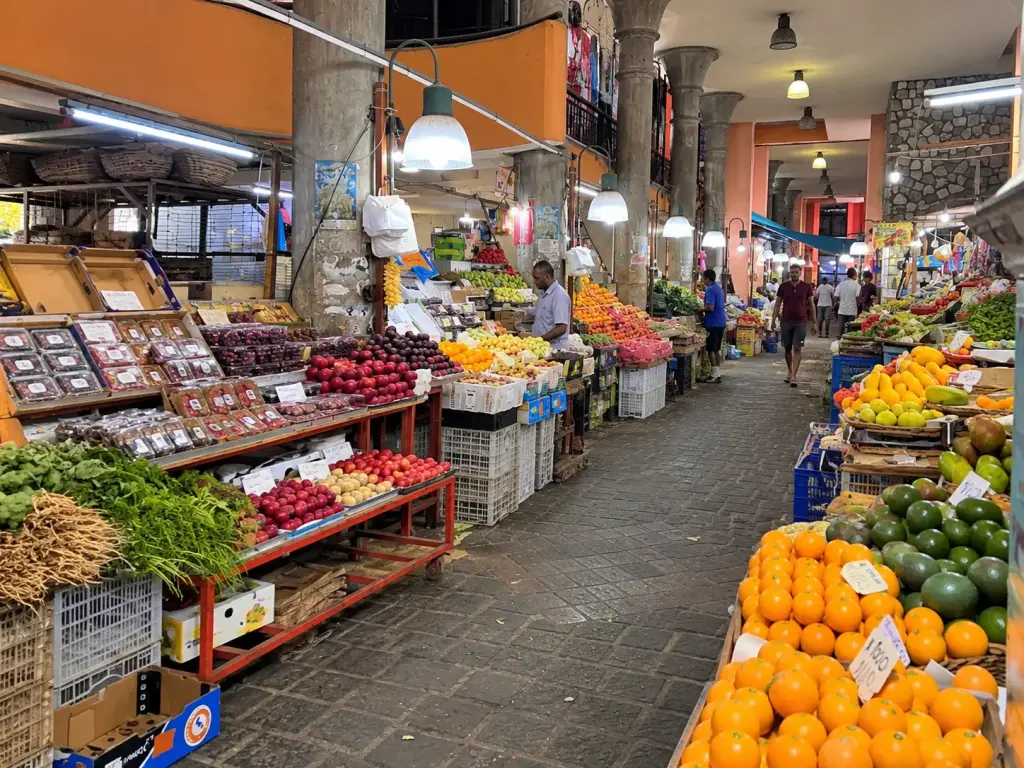
Port Louis Central Market, known locally as Bazaar Port Louis, is one of the best places to experience everyday life in Mauritius. It is where people come to buy fresh vegetables, pick up spices, eat a quick dholl puri and get on with their shopping. Visitors are welcome too, and the market has become a popular stop for anyone exploring the capital.
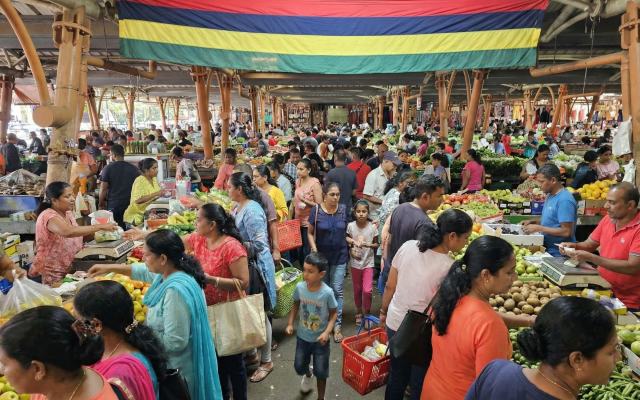
There is plenty to see even if you don’t intend to buy anything. The ground floor is filled with fruit and vegetable stalls, the food counters serve familiar Mauritian snacks, and upstairs you’ll find clothing, handicrafts and souvenirs. Some areas are clearly geared towards tourists, but the fresh produce section remains very much a working local market.
If you’re planning a visit, this guide covers the opening hours, what to eat and buy, how much time to allow and the easiest ways to get there. There are also a few things worth knowing about prices and bargaining, especially if it’s your first time shopping at a traditional Mauritian bazaar.
Port Louis Central Market: Visitor information
| Location | Central Port Louis, around Corderie Street, Queen Street and Farquhar Street |
| Also known as | Bazaar Port Louis, Marché Central |
| Opening days | Monday to Sunday, with shorter hours on Sundays |
| Typical opening hours | Early morning to late afternoon, Monday to Saturday; Sunday mornings only |
| Best time to visit | Approximately 8:00 AM to 11:00 AM |
| Entrance fee | Free |
| Time needed | 1 to 2 hours |
| Best for | Street food, fresh produce, spices, souvenirs and local shopping |
| Payment | Mauritian rupees in cash are recommended |
The market is located within walking distance of the city’s main transport terminals, Chinatown and Caudan Waterfront. It is easy to combine with other attractions in Port Louis, so you don’t necessarily need to dedicate an entire day to visiting the bazaar.
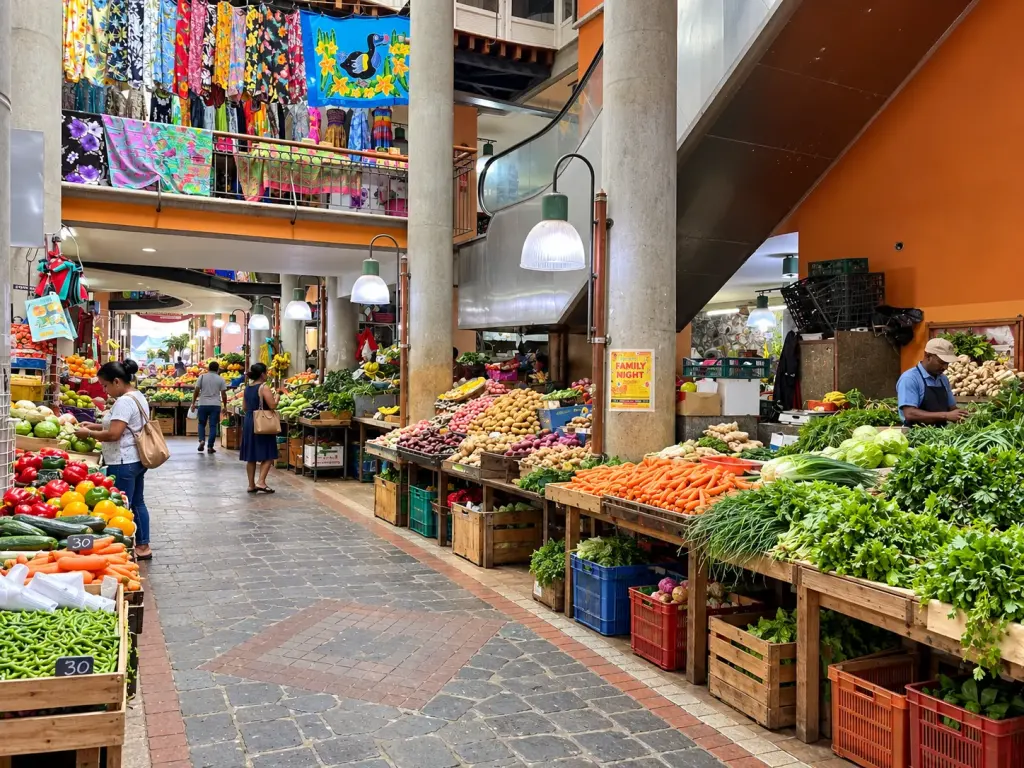
Port Louis Central Market opening hours
Port Louis Central Market generally opens very early, around 5:00 to 5:30 AM, and trades until late afternoon from Monday to Saturday. Sunday is a shorter market day, with stalls typically closing by late morning or around noon. Public holidays can also affect trading hours.
Published closing times differ between visitor guides, with some listing approximately 4:30 PM and others indicating 5:30 or 6:00 PM for the main market. Individual vendors also keep their own schedules. For visitors, the practical advice is simple: arrive in the morning, ideally between 8:00 and 11:00 AM, when the produce stalls are active, food is available and you still have plenty of time to explore the rest of Port Louis.
Saturday mornings are usually busier, with local shoppers joining visitors. Weekday mornings can be a little easier if you prefer more room to browse. I would avoid making a special journey late on a Sunday or towards the end of a weekday, since some sections may already be closing even if the market itself has not officially shut.
What will you find inside Port Louis Central Market?
The market is organised into different sections, and the experience changes quite a bit as you move from one to another. The fresh food halls are where most everyday shopping happens, while the upstairs area and surrounding stalls focus more on clothing and souvenirs. It is worth walking through the entire building before deciding where to spend your money.
1. Fresh fruits and vegetables
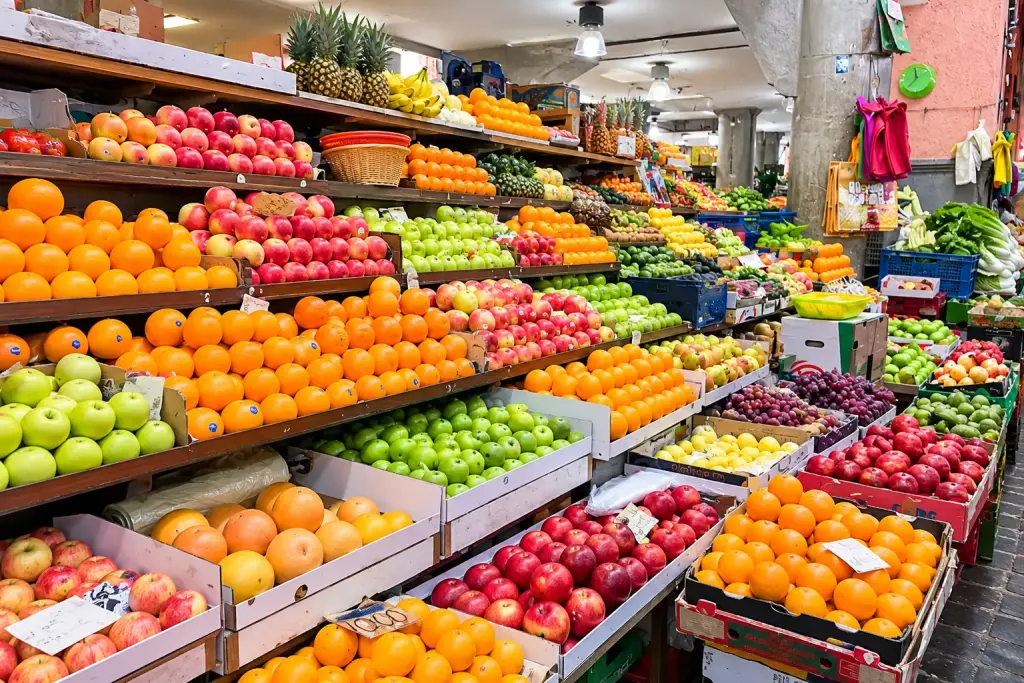
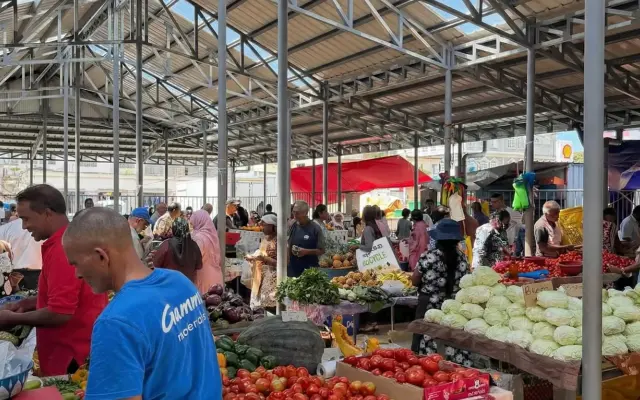
For me, this is the most interesting part of any traditional Mauritian market. The produce section is full of vegetables used in everyday local cooking, from brinzel (aubergine), lalo (okra) and chouchou (chayote) to leafy greens, chillies, tomatoes and fresh herbs. You will also see piles of onions, potatoes, ginger and other staples that make their way into Mauritian curries, rougailles and pickles.
Fruit depends on the season. Pineapples, bananas and papayas are familiar sights, while mangoes, litchis and other seasonal fruits appear when available. If you’re visiting Mauritius towards the end of the year, keep an eye out for litchis, which are particularly popular during the summer season. The stalls are also a good place to recognise ingredients you might already have eaten in a restaurant without knowing what they looked like before cooking.
This is a working food market, so don’t expect every display to be arranged for photographs. Shoppers are comparing produce, vendors are weighing purchases and people are moving through relatively narrow aisles. That ordinary activity is much of what makes the market interesting.
2. Spices, herbs and traditional products
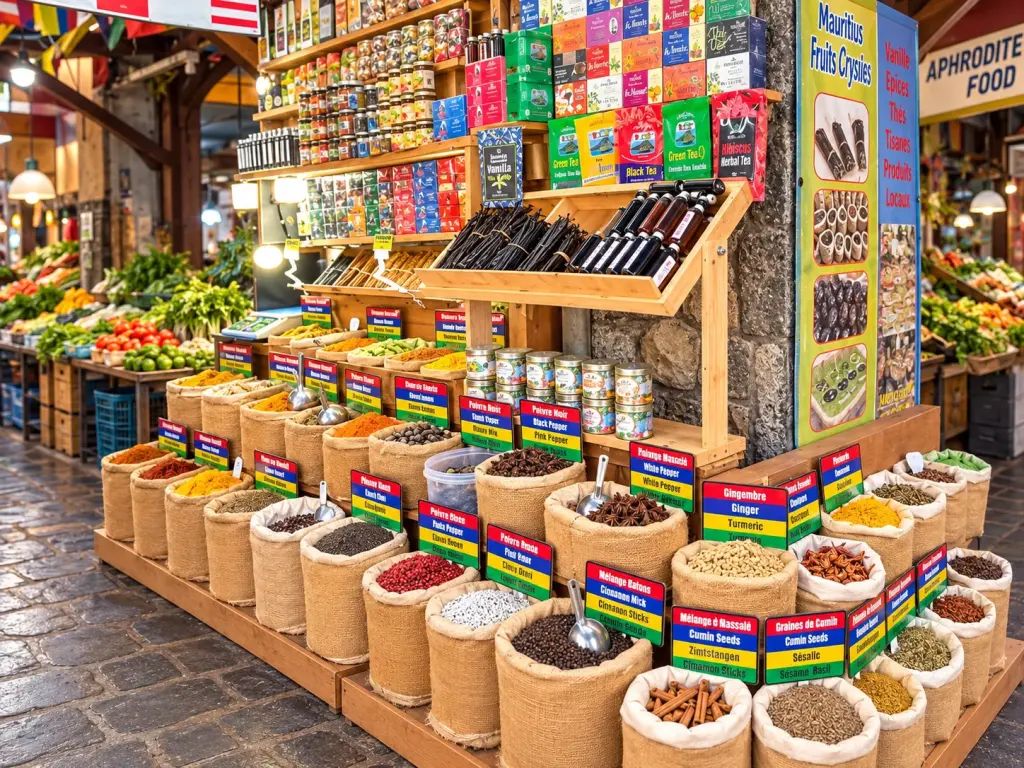
The spice stalls are another popular stop. You may find turmeric, coriander, cumin, cardamom, cinnamon, dried chillies and different masala blends, along with herbs and ingredients used in local cooking. Some vendors also sell traditional herbal preparations and dried plants. These are part of the market’s long-established trading culture, although medicinal claims made for herbal products should not be taken as proof of their effectiveness or safety.
If you’re interested in cooking Mauritian food at home, ask about the different spice mixtures rather than buying the first packet labelled “Mauritian curry”. There are plenty of variations, and the spice blend used for briani, for example, is different from one used for a fish curry or massalé. For edible souvenirs, sealed and clearly labelled products are easier to pack and transport than loose powders or homemade mixtures.
3. Clothing, handicrafts and souvenirs upstairs
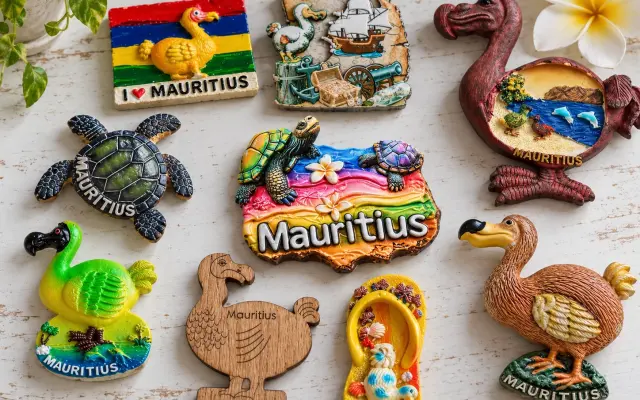
Head upstairs and the market feels noticeably different. Here you’ll find stalls selling T-shirts, beachwear, bags, baskets, jewellery, decorative items and Mauritius-themed souvenirs. There are dodo ornaments, fridge magnets and other familiar tourist gifts, alongside textiles and craft products that are worth looking through.
One thing to keep in mind is that being sold in a Mauritian market does not automatically mean an item was made in Mauritius. Some goods are imported or mass-produced. If you’re specifically looking for locally made handicrafts, ask the seller about the material and where the item was produced. Woven baskets, locally made decorative pieces and practical textiles can be more worthwhile than generic souvenirs, provided you’re happy with the quality and price.
Our separate guide to what to buy in Mauritius goes into more detail about souvenirs that are worth bringing home, including local food products, crafts and items that may be better purchased from a supermarket or specialist shop.
What to eat at Port Louis Central Market
Even if you’re only visiting to look around, I’d leave some room for food. The market and its surrounding streets are good places to try familiar Mauritian snacks without sitting down for a full restaurant meal. You’ll find food counters and small vendors serving breakfast and lunchtime favourites, although the selection varies with the time of day.
Alouda
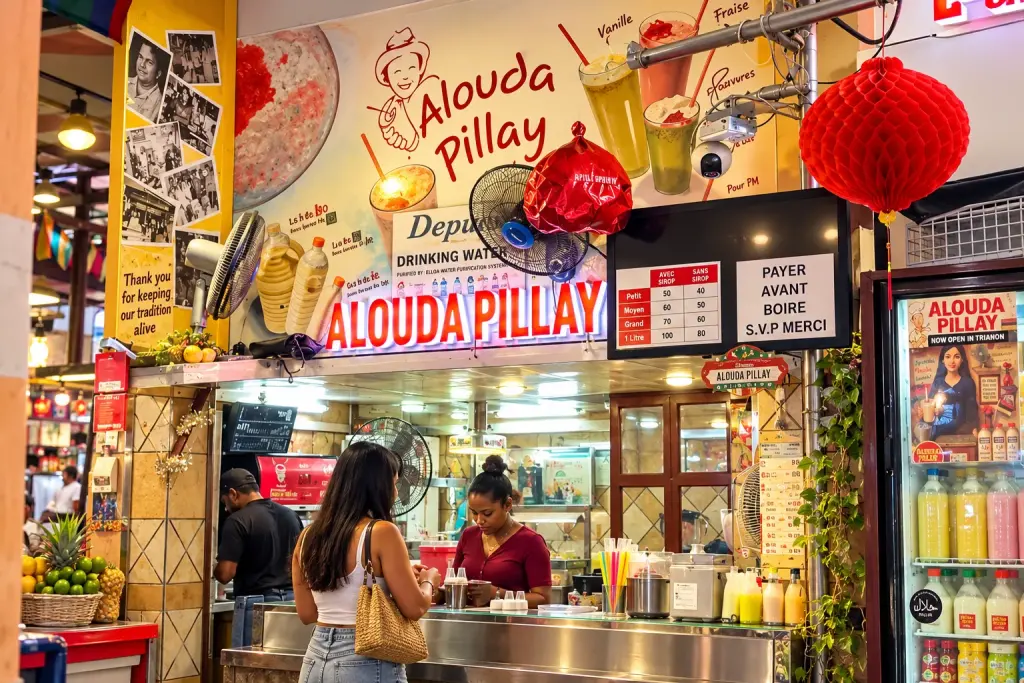
Alouda is probably the drink most closely associated with a visit to Port Louis Central Market. It is a cold, sweet milk-based drink made with basil seeds and strips of agar-agar jelly, often flavoured with vanilla or almond. The texture might seem unusual if you’ve never tried it, but it is a familiar treat for generations of Mauritians.
Alouda Pillay is one of the well-known names associated with the market. If the stall is operating when you visit, it is worth trying a glass. Otherwise, you may find alouda at other vendors around the market. It is especially refreshing after walking through Port Louis on a hot day.
Dholl puri and roti
Dholl puri is one of the easiest local foods to try. The thin flatbread is made with ground yellow split peas and usually served with butter bean curry, tomato rougaille, chutney and optional chilli. Roti or farata is another common choice, using a different style of flatbread with similar fillings. Both are inexpensive, filling and usually eaten by hand.
Look around the market entrances and nearby streets for stalls preparing them fresh. If you want to explore beyond the bazaar, the capital has several other established sellers, including Dholl Puri Palace on Sir William Newton Street. Our guide to the best dholl puri in Mauritius includes locations around Port Louis and the central towns.
Gâteaux piments, samosas and other snacks
Gâteaux piments are small fried split-pea fritters seasoned with herbs and chilli. They’re commonly sold in paper bags and are best eaten freshly cooked. Samosas are another good option, often filled with potato, vegetables, cheese or meat. You may also come across sweet pastries, cut fruit and other local snacks depending on which vendors are trading.
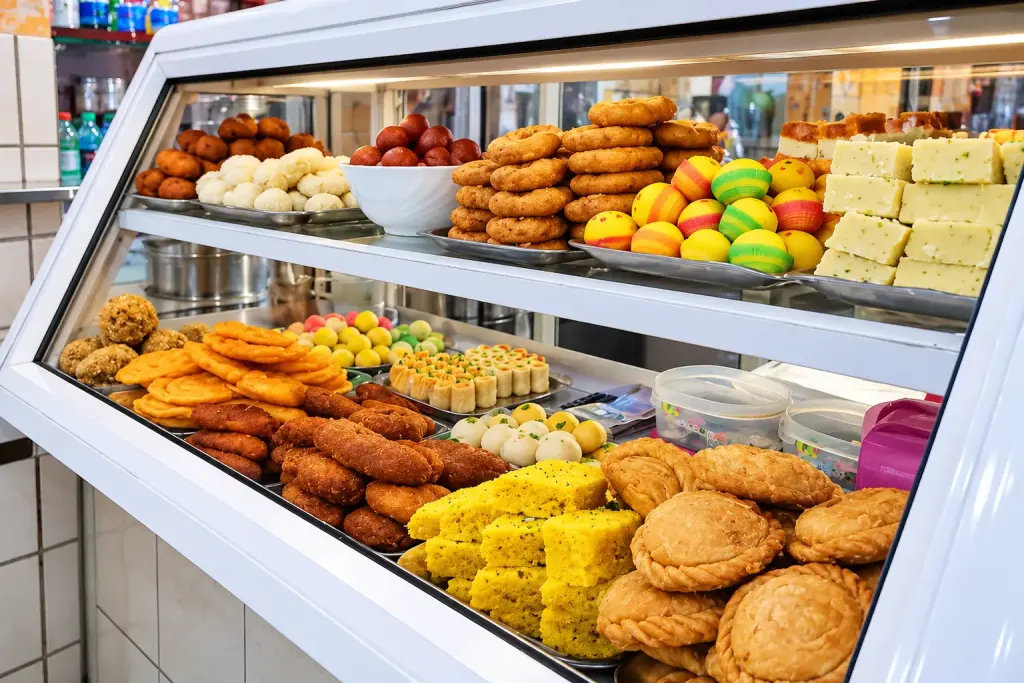
For a more substantial meal, the streets around the market have plenty of alternatives, from briani and fried noodles to Chinese-Mauritian boulettes. Our Port Louis street food guide covers where to go and what is worth eating across the city, including a suggested walking route.
Are prices cheap at Port Louis Market? Should you bargain?
Prices at Port Louis Central Market depend on what you’re buying. Fresh produce is sold in a competitive local market, while souvenir stalls operate in a more tourist-oriented environment. You shouldn’t assume that everything inside the market is cheaper than it would be elsewhere in Mauritius.
For fruits and vegetables, ask the price and quantity before purchasing. Some produce is sold by weight, while other items may be sold by the bunch, piece or small pile. Prices can change with the season and supply. Bargaining is not usually necessary for small everyday food purchases, particularly when prices are clearly displayed.
Souvenirs and clothing are different. Negotiating is common at some stalls, especially when buying several items. You may be quoted an initial price and offered a discount, but there’s no need to turn every purchase into a lengthy argument. Have a look at a few shops, decide what you’re comfortable paying and ask politely. If the price doesn’t suit you, it’s perfectly fine to thank the seller and move on.
For food, small amounts of cash are useful. Our Mauritian street food price guide gives approximate prices for dholl puri, alouda, gâteaux piments and other snacks, helping you judge what is reasonable before buying.
A little history of Port Louis Central Market
Port Louis Central Market has been part of the capital for well over 180 years. According to the Aapravasi Ghat Trust Fund’s official heritage trail, the market was inaugurated in 1844 by Governor Gomm during British colonial rule. It is described by the Trust Fund as Mauritius’ oldest market.
Its early traders included merchants from Madras, Pondicherry and Tranquebar in India, reflecting the commercial connections that shaped Port Louis in the nineteenth century. The market developed alongside the harbour, where imported goods arrived and where people from different communities came to trade. It has continued to operate through changes in the city, renovations and the growth of modern supermarkets and shopping centres.
Look at the old entrance gates before walking inside. The stone and wrought-iron arches, with their decorative floral details, are among the market’s most recognisable architectural features. The historic structures form part of the wider heritage of Port Louis, which also includes the nearby Aapravasi Ghat and several nineteenth-century buildings associated with the city’s port and commercial history.
Today, the market still reflects the mix of communities and food traditions found throughout Mauritius. You can find produce used in Indian-inspired curries alongside Chinese cooking ingredients, locally popular herbs and snacks with Creole influences. These are ordinary ingredients in Mauritian homes, which is one reason the market is more interesting than a shopping area designed exclusively for tourists.
How to get to Port Louis Central Market
The market is in central Port Louis, with entrances around the Corderie Street, Queen Street and Farquhar Street area. You can walk there from the city’s main bus terminals, and it is reasonably convenient to reach by Metro Express. Driving is possible, but finding parking immediately around the market can be frustrating, especially during the morning shopping rush.
By Metro Express
If you’re travelling from Rose Hill, Quatre Bornes, Vacoas, Curepipe or another town on the Metro Express network, getting into central Port Louis by tram is a practical option. Place d’Armes is the city-centre terminus and provides access to the market area on foot. Port Louis Victoria is another option, especially if you’re connecting with buses at Victoria Urban Terminal.
The Metro does not serve the airport or the main northern and coastal holiday areas directly. Our Mauritius Metro Express guide explains the stations, ticket prices and how to use the service.
By bus
Port Louis is one of Mauritius’ main public transport hubs. Buses from different parts of the island arrive at the Victoria and Immigration Square terminal areas, both within walking distance of the central shopping district. If you’re coming from the north, the Immigration Square side is particularly convenient. From the terminals, use your phone’s walking directions or ask for Bazaar Port Louis. The market is a familiar landmark and easy to identify by name.
By car and where to park
If you’re driving, I’d avoid trying to park directly outside the market. Roads in central Port Louis can be congested, spaces are limited and street parking restrictions apply in some areas. A more comfortable option is to use paid parking around Caudan Waterfront or another established city-centre car park, then walk to the market.
Allow extra time if you’re visiting on a weekday morning because Port Louis is also the country’s main business and administrative centre. For more information about parking, local road rules and driving conditions, read our guide to driving in Mauritius.
What else can you visit near Port Louis Central Market?
One of the advantages of visiting the market is that several other interesting parts of Port Louis are close enough to explore on foot. If you arrive around 9:00 AM, you can browse the produce halls, have something to eat and continue sightseeing without needing to take another taxi immediately.
Aapravasi Ghat
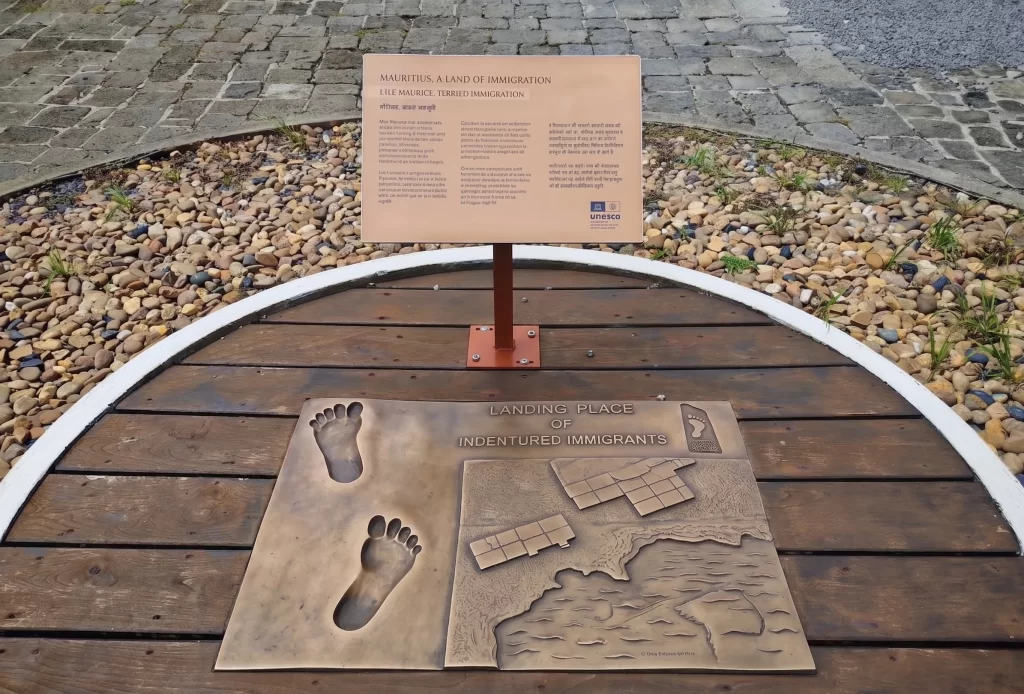
The Aapravasi Ghat World Heritage Site is a short walk from the market. It preserves the remains of the immigration depot where indentured labourers arrived in Mauritius during the nineteenth century. It is one of the country’s most significant historical sites and helps explain an important part of modern Mauritian society. If you’re interested in history, it’s worth making time for a visit.
Chinatown
Continue towards Port Louis Chinatown and you’ll find old shopfronts, Chinese businesses, temples and plenty of places to eat. The area has a different atmosphere from the market, and it’s particularly useful if you’re looking for Chinese-Mauritian food such as boulettes, fried noodles or noodle soup. The streets around Chinatown also give you a closer look at the trading communities that have shaped the capital.
Caudan Waterfront
Caudan Waterfront is another easy stop, especially if you want a break from the market’s crowded aisles. It’s a modern shopping and leisure area beside the harbour, with restaurants, shops and the Blue Penny Museum. The atmosphere is quite different from Bazaar Port Louis, which makes the two places interesting to visit on the same day.
For more options, our guide to the best local markets in Mauritius compares Port Louis with markets in Flacq, Mahébourg, Quatre Bornes and other towns. Each has its own character and market days, so you can choose one that fits your route around the island.
Practical tips before visiting the market
Port Louis Central Market is fairly straightforward to visit, but a little preparation can make the experience more enjoyable, particularly during the hotter months or if you’re not used to crowded local markets.
- Carry some cash. Small notes in Mauritian rupees are especially useful for snacks, fresh produce and inexpensive souvenirs. Don’t assume every stall accepts cards.
- Go in the morning. This gives you a better chance of finding active produce stalls and freshly prepared food before vendors start winding down.
- Dress comfortably. The market is covered, but Port Louis can be hot and humid. Comfortable walking shoes are more useful than anything fashionable.
- Ask before taking close-up photographs. General market photographs are common, but it’s courteous to ask stallholders before photographing them or their customers.
- Check prices before buying. This is especially helpful for souvenirs, spices and items sold without a visible price label.
- Keep your belongings secure. The market can be crowded and the aisles narrow. A zipped bag is sensible, as it would be in any busy shopping area.
- Be selective with food. Choose stalls where food is prepared and handled hygienically. Freshly cooked, hot snacks are generally a sensible choice, particularly if you have a sensitive stomach.
- Allow for restricted access in some sections. The ground-floor aisles can be crowded, and upper-level stalls may require using stairs. Visitors with mobility needs should check access arrangements before travelling.
Is Port Louis Central Market worth visiting?
Yes, especially if you want to see a side of Mauritius that is quite different from the beaches, resorts and shopping malls. The most interesting part of the market is the everyday shopping downstairs, where people are buying ingredients for home rather than souvenirs for visitors. The food alone also makes it worth stopping by, particularly if you’ve never tried alouda or freshly prepared Mauritian street snacks.
There are a few things to be realistic about. It can be crowded and warm, some sellers in the tourist sections are persistent, and you may find similar souvenirs for less money elsewhere. If you’re hoping for a quiet, polished shopping experience, Caudan Waterfront or a modern shopping centre will be more comfortable. But if you’re happy to wander around a busy market, compare a few stalls and take in the activity, Port Louis Central Market is a worthwhile stop.
I’d plan around an hour for the market itself, or closer to two if you want to eat and shop. Visit during the morning, take a look at the old entrance gates, browse the produce stalls and stop for an alouda before continuing towards Chinatown or the waterfront. It’s an easy way to spend part of a morning in the capital without needing an organised tour.
Tours and activities in Port Louis
Hand-picked from GetYourGuide. Free cancellation on most bookings.
Some links on this page are affiliate links. If you book through them we may earn a small commission, at no extra cost to you. It helps keep Creole Mauritius free.

Questions and tips