
10 Must-Try Foods in Mauritius

There is an old saying that the way to a person’s heart is through their stomach. If that is true, then Mauritius is basically a professional heartbreaker.
Traveling to our island isn’t just about finding the perfect beach or the clearest lagoon; it is about embarking on a gastronomic adventure that will ruin you for all other cuisines. Our food scene is a glorious, chaotic mix of Indian, Chinese, African, French, and Creole influences. It is flavor-packed, unpretentious, and deeply satisfying.
At Creole Mauritius, we believe that you haven’t truly experienced the culture until you have stood in a queue for street food or wiped turmeric sauce off your chin. If you are ready to eat your way across the island, you have come to the right place.
We have compiled the ultimate list of must-try foods in Mauritius. These culinary treasures are non-negotiable parts of the island experience.
Contents
1. Dholl Puri: The Unofficial King of Street Food
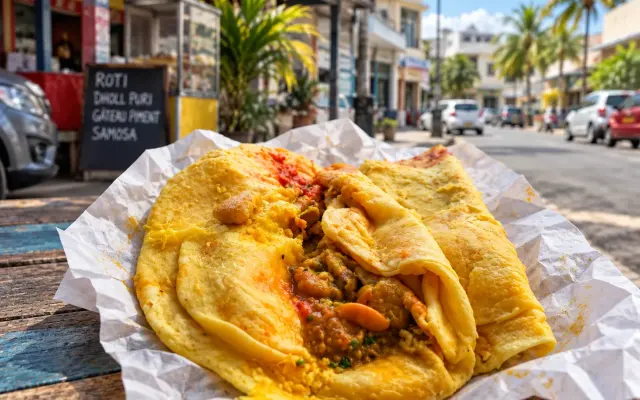
If Mauritius had an edible flag, it would probably be a Dholl Puri.

You simply cannot visit the island without seeing locals lining up at a glass case on the back of a motorcycle or a small stall in the market. It is widely regarded as the unofficial national food, and for good reason. It is affordable, usually vegan, and wildly addictive.
What is it?
Imagine a soft, thin flatbread that melts in your mouth. Dholl Puri is made from yellow split peas (dholl) ground into a fine paste, stuffed inside a dough ball, and rolled out paper-thin. It is then cooked on a flat iron griddle called a tawa.
The Experience
Eating this is a ritual. It is typically served in pairs and wrapped around a combination of fillings. You usually get a smear of “cari gros pois” (butter bean curry), a dollop of “rougaille” (spicy tomato sauce), and “achard” (pickled vegetables).
If you like living on the edge, ask for “piment” (chili). Just be warned that Mauritian chili is not a suggestion; it is a command. It packs a serious punch.
If you are on a quest to find the absolute best version of this delight, read our dedicated guide on the best dholl puri in Mauritius. We take our research very seriously.
2. Gateau Piment: The Popcorn of Mauritius
“Gateau Piment” literally translates to “Chili Cake.” The name is a warning and an invitation all at once. These are the undisputed champions of Mauritian snacking. You think you will just have one, but suddenly the bag is empty and you are looking for crumbs.

The Preparation
These little golden balls are made from split peas that have been soaked and coarsely ground. The mixture is seasoned with spring onions, coriander, and plenty of green chilies. They are deep-fried until crunchy on the outside and soft on the inside.
How to Eat Them
You can eat them hot out of a paper bag, which usually turns transparent from the oil (a sign of quality, we promise). Or, for the ultimate breakfast of champions, put them inside a fresh baguette with butter and cheese. We call this “Pain Gateau Piment.”
You will find these must-try foods in Mauritius at almost every street corner, especially in the mornings. For more on where to find the best snacks, check out our list of top food spots to try in Mauritius.
3. Boulettes: The Ultimate Comfort Food
If you have had a long day of exploring or perhaps enjoyed one too many drinks at one of the best nightclubs in Mauritius, Boulettes are the cure.

These are essentially Mauritian dumplings, a direct legacy of our Chinese heritage. But like everything else here, we have adapted them to local tastes.
The Star: Niouk Yen
The most unique variety is the Niouk Yen (or Boulette Chouchou). It is made from chayote squash, which we call “chouchou.” The vegetable is grated, squeezed dry, and mixed with dried shrimp, meat, and tapioca starch. The result is a chewy, savory dumpling that absorbs broth beautifully.
The Broth
You usually order a mixed bowl—fish balls, meat balls, tofu, and calamari balls, swimming in a clear, hot broth. The magic happens when you add the condiments: chili paste, garlic water, and plenty of spring onions. It is warm, comforting, and incredibly satisfying.
4. Biryani: A Celebration on a Plate
You might know Biryani from Indian cuisine, but the Mauritian version has a distinct personality. It is not just a rice dish; it is an event.
This dish is deeply embedded in our culture, often served at weddings, religious festivals, or family gatherings. It is a labor of love involving marinated meat (chicken, lamb, beef, or fish), fried potatoes, and fragrant basmati rice layered in a massive pot called a deg.
Why Ours is Different
Mauritian Biryani is usually cooked “Dum” style, meaning it is sealed and slow-cooked to trap the steam and aromas. We are also very generous with the potatoes, which soak up all the spices like saffron, cardamom, star anise, and cinnamon.
It is served with a cooling cucumber salad and a tangy tomato chutney. If you are exploring the food scene, finding a good Biryani spot is essential.
5. Vindaye: The Pickle That Thinks It’s a Curry
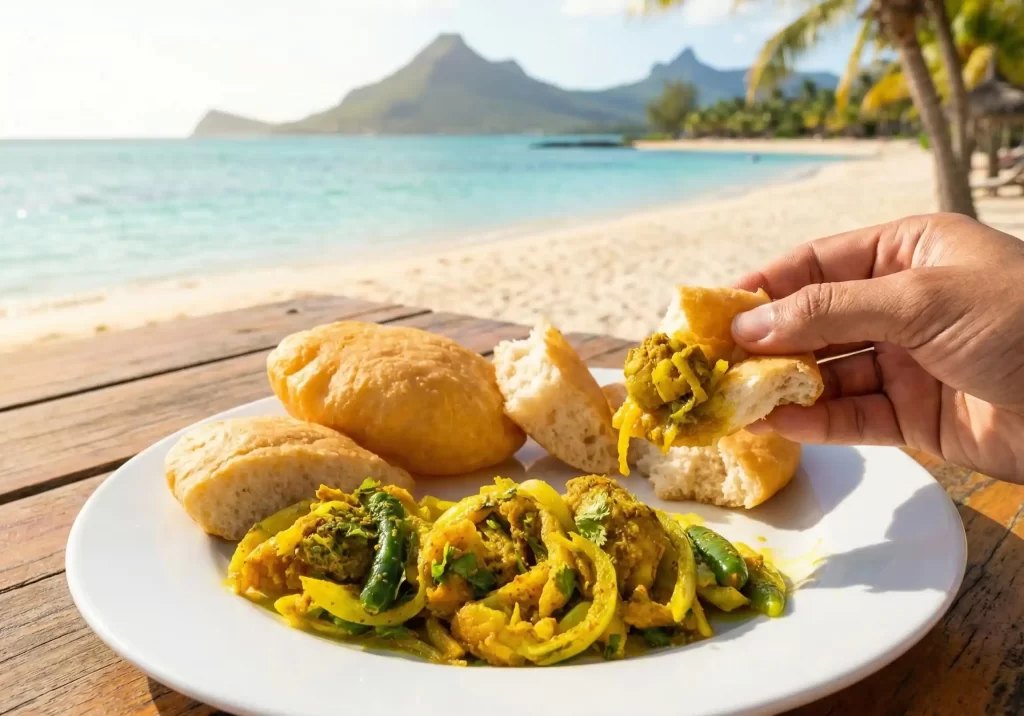
This dish often confuses visitors but is a staple for locals. Vindaye is a dry curry that originated as a preservation method before refrigerators were common.
The Flavor Profile
It is tangy, yellow, and pungent. The base is made from mustard seeds, turmeric, garlic, ginger, and vinegar.
The most famous version uses octopus. The seafood is boiled until tender and then tossed in the spice mixture with plenty of onions and green chilies.
Because of the vinegar and mustard, the flavor actually improves after marinating for a day or two. It is often eaten cold inside a fresh baguette or with rice and lentils. It is the perfect beach picnic food because it doesn’t spoil easily in the heat.
6. Roti and Rougaille: The Daily Staple
We mentioned Dholl Puri, but we cannot ignore its cousin, the Roti (or Farata). This is a flaky, layered flatbread similar to a paratha.

Watching a vendor make these is mesmerizing. They slap the dough, fold it with oil to create layers, and cook it on the griddle until it puffs up.
The Soulmate: Rougaille
A roti needs a partner, and the classic choice is Rougaille. This is a Creole tomato-based sauce that is the backbone of Mauritian home cooking.
It starts with onions, garlic, ginger, and thyme cooked down until fragrant. Then come the tomatoes, simmering until they break down into a rich sauce. You can put anything in a Rougaille, sausages, salted fish, prawns, or keep it vegetarian. Scooping up spicy sausage rougaille with a piece of warm roti is pure happiness.
7. Bol Renversé: The Magic Bowl
If you want to impress kids (or adults who are easily amused), order the Bol Renversé. The name literally translates to “Upside Down Bowl,” and it offers a little moment of theater.

The Architecture
It is a structured masterpiece.
- Layer 1 (The Top): A fried egg, sunny side up.
- Layer 2 (The Middle): A saucy stir-fry of chicken or seafood with veggies and soy sauce.
- Layer 3 (The Base): Steamed white rice.
The chef packs all of this into a bowl in reverse order (egg first). Then, they place a plate on top and flip it over. When they lift the bowl… voilà! You have a perfect dome of rice topped with glistening stir-fry and an egg crowning the glory. It is one of the most popular must-try foods in Mauritius found in Chinese restaurants.
8. Halim: The Soup for the Soul
Halim (or Haleem) is a heavy hitter. It is a thick, spicy soup made from cracked wheat, barley, and a variety of lentils (up to eight types!). It is usually slow-cooked with mutton or lamb until the meat dissolves into the stew.

When to Eat It
You will often see huge pots of Halim being sold on the street in the evenings. It is also a staple during Ramadan.
It is served piping hot with a garnish of chopped spring onions and fried onions. The texture is rich, creamy, and porridge-like. It is not a light appetizer; it is a meal in a cup. If you are feeling under the weather, this is the cure.
9. Samosas: The Triangle of Joy
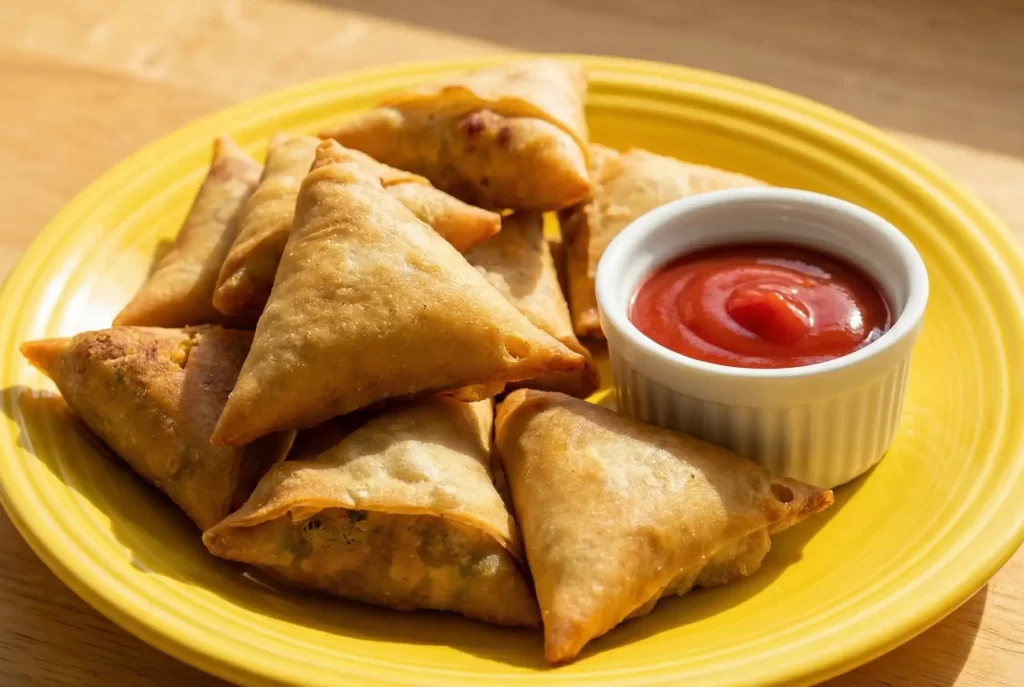
You cannot talk about Mauritian snacks without bowing down to the Samosa.
Yes, Samosas exist all over the world, but we like to think ours are special. They are smaller and crispier than the ones you might find in India. The pastry is thin and blistered from the fryer.
The Fillings
The classic filling is potato and peas with a hint of curry powder. But we get creative. You will find cheese and corn samosas, chicken samosas, and fish samosas.
There is even a sweet version called the Mawa Samosa, filled with milk solids, sugar, and nuts, often eaten during Diwali. But for a standard afternoon snack, nothing beats a bag of hot potato samosas dipped in mint chutney.
10. Pineapple with Tamarind: The Beach Classic
We are ending with something light. If you go to the beach, you will see fruit sellers carving Victoria Pineapples into beautiful spirals.
But you don’t just eat the fruit plain. The seller will ask if you want “confit.” Say yes. They will sprinkle the pineapple with a mix of sea salt, chili powder, and tamarind sauce. The combination of sweet, sour, salty, and spicy is an explosion of flavor that defines a Mauritian summer.
Final Thoughts: Eat Everything
This list represents the history of our island, a history that tastes like saffron, thyme, soy sauce, and chili.
So, when you come to visit, don’t just stick to the hotel buffet. Go to the market. Stand in the line. Eat with your hands.
If you are looking for more inspiration on where to go, check out our lifestyle section for more tips on living the island life. And remember, calories consumed in Mauritius stay in Mauritius (we hope).
For more culinary adventures and recipes, explore our Food Category.
Tours and activities in Mauritius
Hand-picked from GetYourGuide. Free cancellation on most bookings.
Some links on this page are affiliate links. If you book through them we may earn a small commission, at no extra cost to you. It helps keep Creole Mauritius free.


Questions and tips