
Hinduism in Mauritius – A Guide to Culture and Temples

When you step off the plane in Mauritius you might expect to see just palm trees and blue water. But look a little closer and you will spot colorful temples rising above the sugar cane fields and smell the scent of incense mixing with the salty sea air.
You have landed in a place that is unique in the world. Mauritius is the only country in Africa where Hinduism is the most practiced religion. It is a vibrant and colorful tapestry that has been woven over the last 150 years. It is not just about rituals. It is about a community that crossed an ocean and built a new home while keeping their traditions alive in their hearts.
If you want to understand the real soul of this island you need to look beyond the buffet line and explore the fascinating world of Hinduism in Mauritius. It represents a narrative of human resilience and cultural preservation that is truly inspiring.
Contents
A History of Resilience and Hope
The story of Hinduism in Mauritius is one of the most compelling chapters in global history. It does not begin with luxury resorts or honeymoon suites. It begins with the “Great Experiment” in the 19th century. After slavery was abolished across the British Empire the colonial powers needed a new workforce for the sugar estates. They turned their eyes to India.
Between 1834 and the early 20th century hundreds of thousands of indentured laborers arrived on our shores. They docked at the Aapravasi Ghat in Port Louis which is now a UNESCO World Heritage Site. These brave souls carried very little with them in terms of material wealth. They had their cooking pots and their clothes and perhaps a few seeds. But they carried something far more valuable in their hearts. They carried their faith.
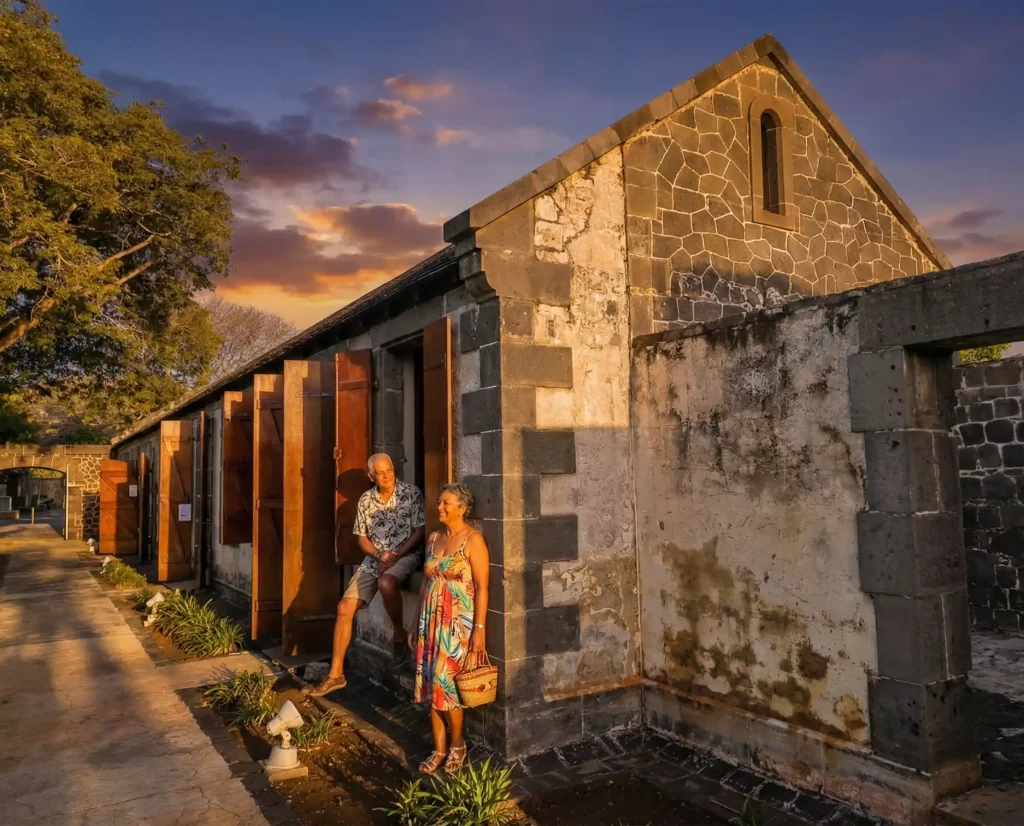
Life was hard. Mari dir (Very hard). The work in the cane fields was backbreaking and the conditions were often harsh. Yet despite the displacement and the struggle the community refused to let their culture fade. They built small shrines under trees using volcanic rocks. They gathered in the evenings to recite the Ramayana and sing bhajans. They kept their holy books safe as if they were gold.
Over time these humble shrines under banyan trees transformed into the magnificent concrete and stone temples you see today. The community grew and thrived and integrated. Today the descendants of those brave laborers are leaders in politics and business and culture. It is a story of survival that turned into a story of immense success.
You can learn more about the diverse beliefs on the island in our guide to Religion in Mauritius.
The Demographic Tapestry
You might read statistics saying that the Hindu population has dipped slightly from 56% in 1891 to around 48% today. Does this mean the religion is fading? Jamais! (Never!)
This gradual demographic shift reflects something quite beautiful about Mauritian society. It tells a positive story of integration and the success of our “rainbow nation.” It shows that Mauritius is a place of interfaith coexistence where cultural assimilation happens naturally within a secular and pluralistic nation.
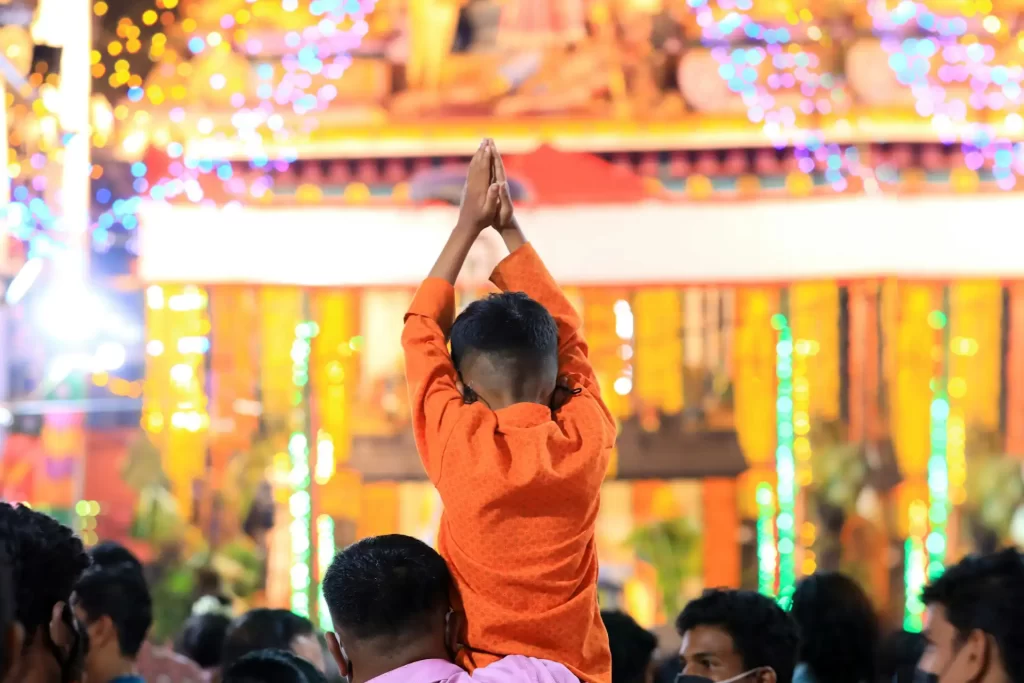
Hinduism remains the largest religion on the island and its influence is profound. It shapes our national festivals and our public holidays and our cultural identity. We have created a unique global example where ancestral Indian traditions flourish in an African island context. It is a distinctive Hindu diaspora that maintains theological authenticity while embracing local adaptation. We call it “Neo-Mauritian” Hinduism. It is traditional yet modern. It is Indian yet distinctly Mauritian.
Grand Bassin: The Sacred Lake
If there is one place you must visit to understand the spiritual heart of the island it is Ganga Talao or Grand Bassin. It is the most sacred Hindu site in Mauritius. Legend says that holy water from the Ganges River in India was poured here creating a spiritual link between the two lands.
Google Map: Get Directions to Grand Bassin
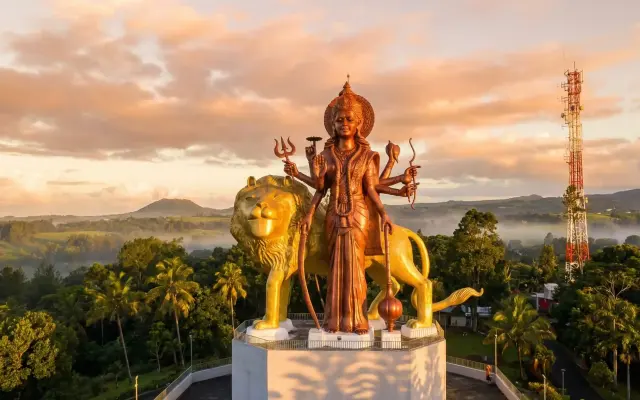
The lake is located deep in the crater of an extinct volcano roughly 1800 feet above sea level. The drive there is scenic and takes you through the lush Plaine Champagne. When you arrive you will be greeted by two massive statues standing 108 feet tall. One is of Lord Shiva (Mangal Mahadev) with his trident and the other is of Durga Maa standing on her lion. They are breathtaking and visible from miles away.
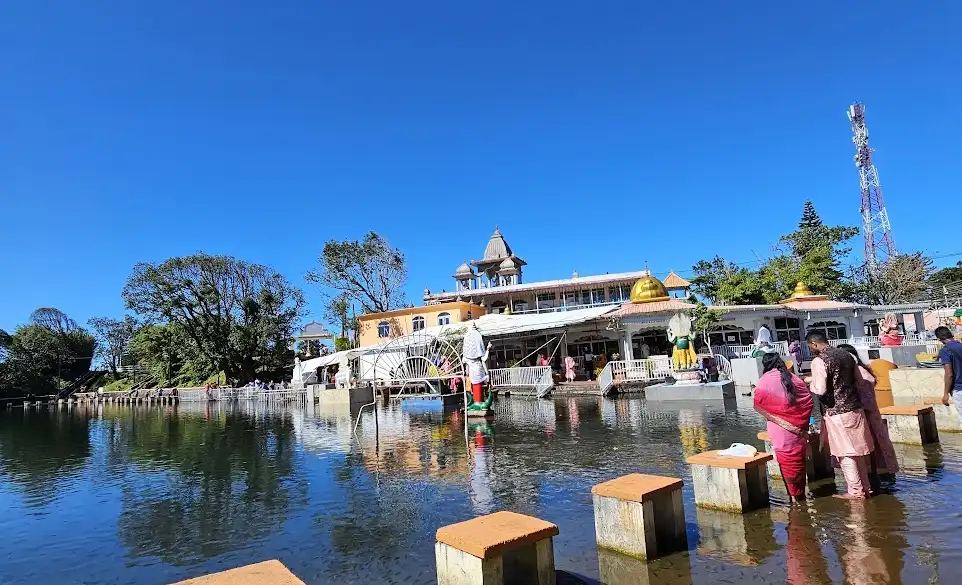
The atmosphere here is usually peaceful and misty. The air is cooler than on the coast so you might want to bring a light jacket. You can spot monkeys playing in the trees. Please hold onto your snacks because they are cheeky and very fast. You will see devotees offering flowers and fruits and camphor by the water’s edge. It is a place for quiet reflection and prayer.
However if you visit during the Maha Shivaratri festival the scene changes completely. This usually happens in February or March. Hundreds of thousands of pilgrims walk from all over the island to this lake. They walk for days from villages in the north and south. Most are dressed in white symbolising purity. They carry “kanwars” on their shoulders. These are beautifully decorated bamboo structures covered in mirrors and paper flowers and bells. Some are small and simple while others are massive and require several people to carry.
It is a spectacular display of devotion. Volunteers set up tents along the roads to offer food and water and massages to the tired walkers. It is a time when the whole island comes together in a spirit of service.
Read more about when to catch these events in our post on the Best Time to Visit Mauritius.
Temples of Architectural Splendor
You do not need to be an architect to appreciate the beauty of our temples. They are everywhere. Some are small and pink and sit by the roadside protecting travelers. Others are massive complexes covered in intricate sculptures that tell stories of the gods.
The architecture reflects the diversity of the Indian immigrants who came from different regions like Tamil Nadu and Bihar and Maharashtra and Andhra Pradesh.
The Tamil Temples (Kovils)
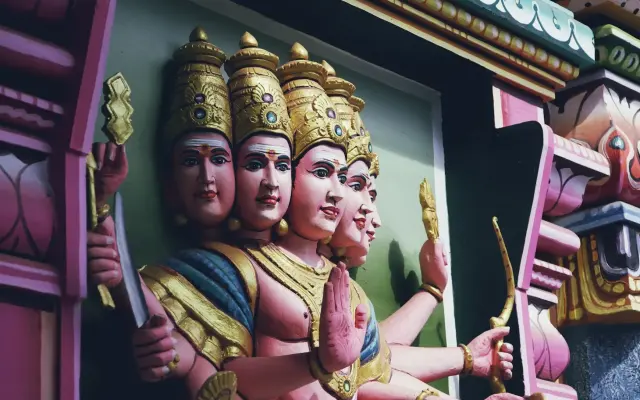
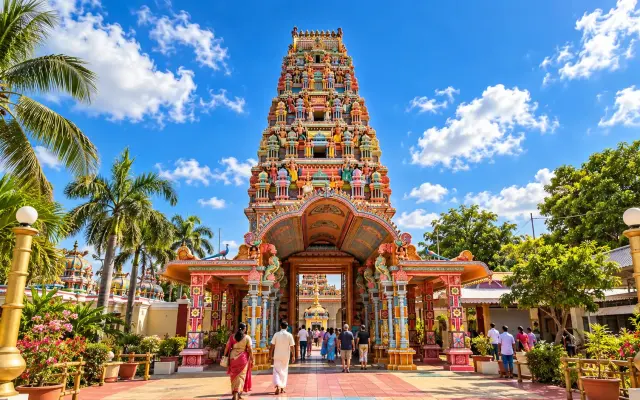
These are easily recognized by their colorful and ornate architecture. The most striking feature is the “Gopuram” which is a tall entrance tower covered in hundreds of colorful statues of deities and celestial beings.
Sockalingum Meenatchee Ammen Kovil (Kaylasson Temple) Google Map: Get Directions to Kaylasson Temple
Located in Port Louis this is a masterpiece of Dravidian architecture. It was built in 1854 by Tamil traders and artisans. The temple is shaped like the human body according to sacred texts. The entrance represents the feet and the inner sanctum represents the head. The level of detail in the sculptures is mind blowing. Every inch of the structure is carved and painted. It is a riot of color against the blue tropical sky.
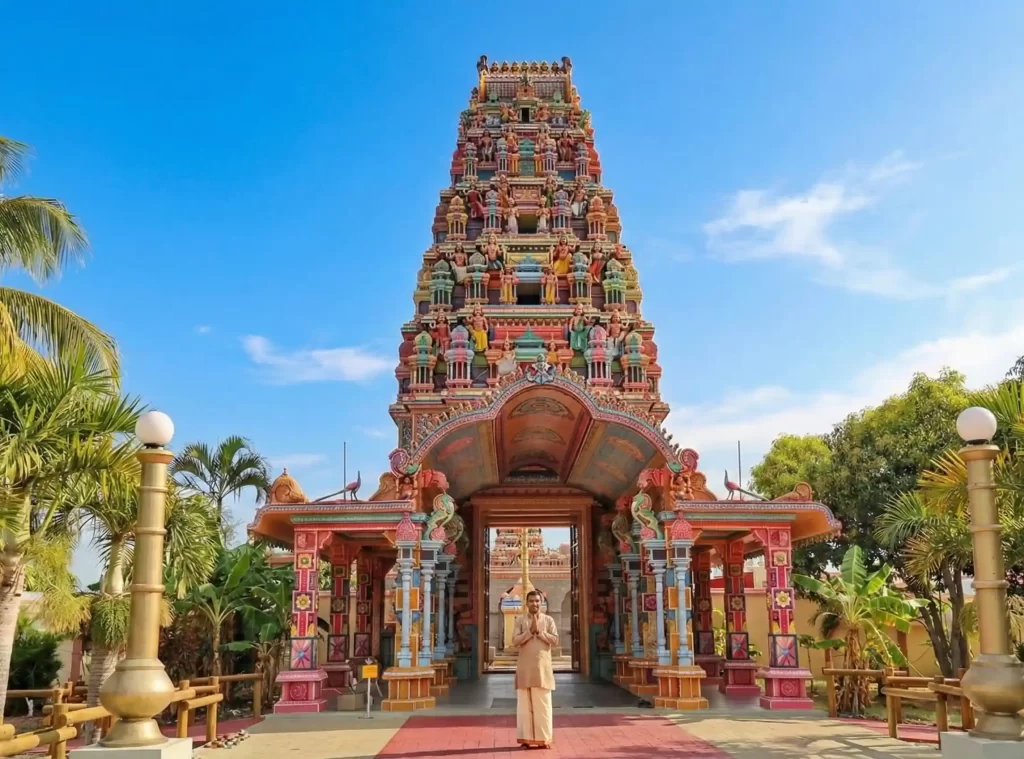
Visiting here feels like being transported to southern India. The air is thick with the scent of jasmine and camphor. It is a very active place of worship so you will often hear the sound of bells and chanting.
The Shivalas
These temples are mostly built by the community with roots in North India. They often feature white domes and spires and are dedicated to Lord Shiva.
Maheswarnath Mandir Google Map: Get Directions to Maheswarnath Mandir
Located in the village of Triolet this is the biggest of its kind on the island. It was built in the 1880s. The story goes that a wealthy landowner started building it after finding a buried Shiva Lingam on the site. The complex includes several smaller temples dedicated to different deities like Lakshmi and Krishna and Hanuman. Stepping inside feels like stepping back in time. The old stone walls and the sprawling banyan tree in the courtyard create a sense of timeless peace.
If you love discovering these cultural spots make sure to check out our list of Hidden Gems in Mauritius.
Festivals: A National Celebration
In Mauritius Hindu festivals are not just for Hindus. They are national celebrations. We represent a culture where sharing joy is mandatory.
Diwali: The Festival of Lights
Diwali turns the island into a fairy tale. It celebrates the victory of light over darkness and good over evil. Houses are decorated with clay lamps and electric lights. The whole island sparkles. But the best part is the food. Neighbors of all religions exchange boxes of sweets. You will eat “gateaux patate” (sweet potato cakes filled with coconut) until you cannot move. It is a time of unity and sweetness.
Thaipusam Cavadee
This is one of the most intense and visually striking festivals on the island. It is celebrated by the Tamil community usually in January or February. It marks the end of ten days of fasting and prayer. Devotees carry “cavadees” which are wooden arches decorated with flowers and peacock feathers and pots of milk.
To show their devotion and penance many participants pierce their tongues and cheeks and bodies with silver needles and hooks. It sounds painful but the devotees are in a trance like state and report feeling no pain. They walk barefoot in the burning sun to the temple to offer the milk to Lord Muruga. It is a powerful display of faith that leaves many visitors speechless.
Ganesh Chaturthi
This festival celebrates the birth of Lord Ganesha the remover of obstacles. It is a joyous occasion. Families make or buy clay statues of the elephant headed god. They worship him at home for a few days. Then in a grand procession filled with music and dancing they take the statues to the sea or to rivers.
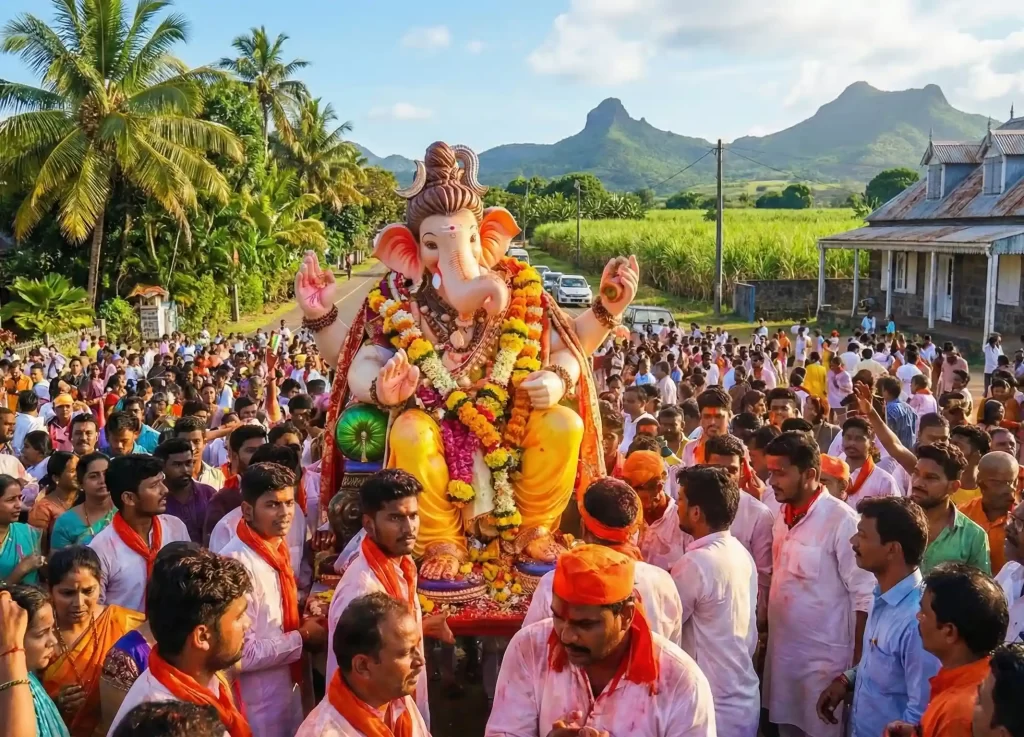
The statues are immersed in the water where they dissolve. It symbolizes the cycle of creation and dissolution. It reminds us that everything comes from nature and returns to nature. The beaches are packed with people singing “Ganpati Bappa Morya” as they bid farewell to their beloved deity.
Ugadi and Other Celebrations
We also celebrate Ugadi which is the New Year for the Telegu community and Gudi Padwa for the Marathi community. These festivals involve special prayers and the sharing of traditional foods. Every month seems to have a celebration in Mauritius. It keeps life exciting.
Weddings and Traditions
If you are lucky enough to be invited to a Hindu wedding in Mauritius say yes immediately. Ayo it is a party you will never forget.
These weddings are vibrant affairs that can last for several days. It is not just a ceremony for two people. It is a union of two families.
The Saffron Ceremony
A few days before the wedding there is the “Saffron” or “Haldi” ceremony. Turmeric paste is applied to the bride and groom in their respective homes. It is meant to make them glow and purify them before the big day. There is lots of singing of traditional songs called “geet” and lots of dancing.
The Vivaah (Wedding Day)
The main ceremony takes place under a decorated canopy called a “maro.” The groom usually arrives with a procession. The priest lights a sacred fire and recites Vedic mantras. The couple walks around the fire seven times taking vows to support each other.
The fashion at these weddings is stunning. Women wear elaborate saris and jewelry and men wear sherwanis or suits. The colors are dazzling.
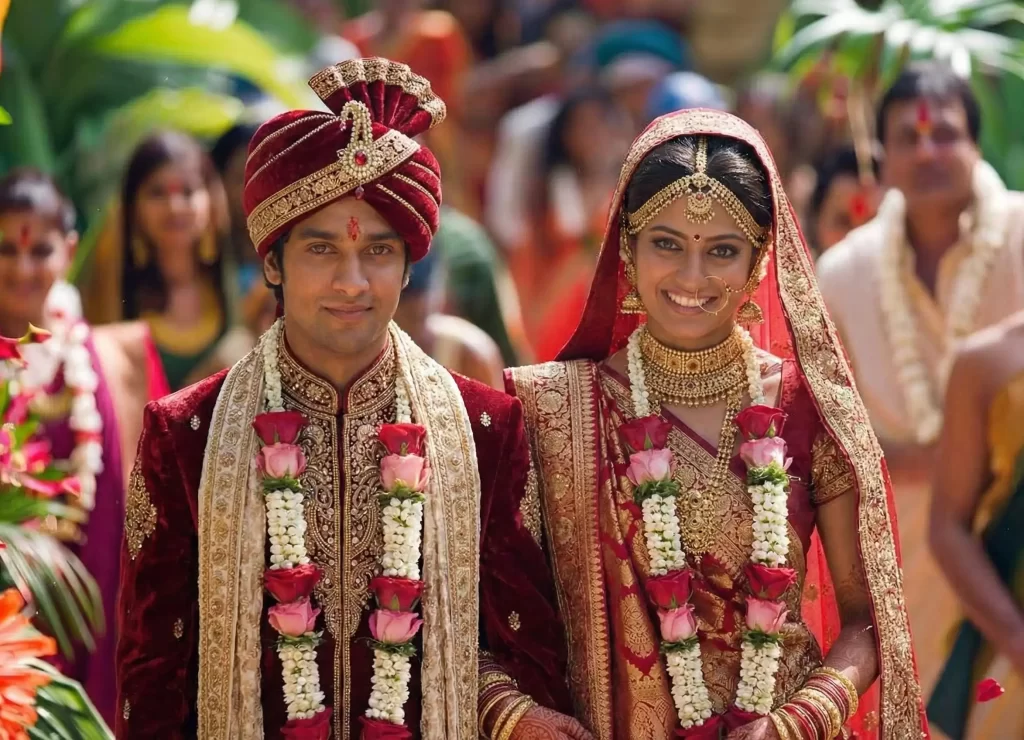
And then there is the food. The wedding feast is strictly vegetarian. It is usually served on banana leaves. You will be served “sept caris” (seven curries) with rice and pickles and papadum. It is a culinary explosion. Eating with your fingers is encouraged and honestly it makes the food taste better.
Thinking of tying the knot here yourself? Check out our guide on Getting Married in Mauritius.
Visitor Etiquette: How to Be Respectful
Visiting temples is a wonderful experience but it is important to be respectful of the local customs. Here are a few tips to help you blend in.
1. Remove Your Shoes You must always take off your shoes before entering a temple. There is usually a designated area for this at the entrance. It keeps the sacred space clean.
2. Dress Modestly Beachwear is for the beach. When visiting religious sites please cover your shoulders and knees. This applies to both men and women. A sarong or a scarf comes in very handy.
3. Ask Before Clicking Most temples allow photography of the architecture but some might restrict photos of the inner sanctum or the deities. Always look for signs or ask a priest if you are unsure. And please do not take selfies with your back to the deities as it can be seen as disrespectful.
4. Be Quiet Temples are places of prayer. People might be meditating or reciting mantras. Try to speak in a soft voice.
5. Accept Offerings If a priest offers you “prasad” (blessed food usually fruit or sweets) accept it with your right hand. You can eat it right away. It is considered a blessing.
The Role of Hinduism in Modern Mauritius
Hinduism in Mauritius is not stuck in the past. It is a living and breathing part of our modern society. You will see businessmen praying at a temple before a big meeting. You will see teenagers listening to bhajan remixes on their phones.
The religion has adapted to the times. Many organizations run schools and hospitals and social services. They play a vital role in the welfare of the nation. The Prime Minister and many other leaders often attend religious functions showing the deep link between faith and public life.
At the same time there is a strong sense of secularism. Hindu leaders often participate in Christian and Muslim festivals and vice versa. It is this mutual respect that makes Mauritius so special. We do not just tolerate each other. We celebrate each other.
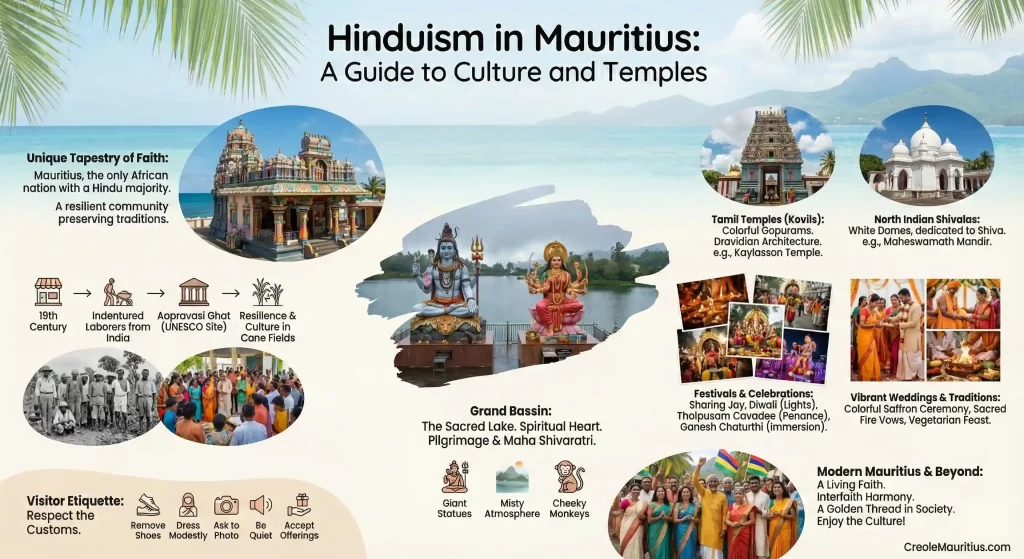
Exploring Beyond the Main Sites
While Grand Bassin and the big temples are must sees do not ignore the small village shrines. They have their own charm.
Kalimaye Shrines You will often see small red shrines usually under a big tree or near a river. These are dedicated to Goddess Kali. They are places of intense devotion where people go to ask for protection or healing.
Sagar Shiv Mandir Located on the immense Ile aux Goyaviers off the coast of Poste de Flacq this temple is literally in the ocean. It creates a picture perfect scene of white domes against the blue lagoon. It is a bit newer but the location is stunning.
Final Thoughts
Hinduism in Mauritius is more than just a belief system. It is the golden thread in the fabric of our society. It represents a journey of 150 years from the dusty plains of India to the volcanic soil of this island. It teaches us about resilience and the power of keeping one’s identity alive while embracing the new.
So when you are driving past a temple or watching a procession take a moment to appreciate the history behind it. Listen to the bells ringing. Smell the camphor. And if someone offers you a sweet during Diwali take it with a smile.
It is these moments of connection that turn a holiday into a journey of discovery.
Allez! Enjoy the culture!
External Links:
Tours and activities in Mauritius
Hand-picked from GetYourGuide. Free cancellation on most bookings.
Some links on this page are affiliate links. If you book through them we may earn a small commission, at no extra cost to you. It helps keep Creole Mauritius free.
Questions and tips