
Getting Married in Mauritius – Your Dream Wedding Starts Here
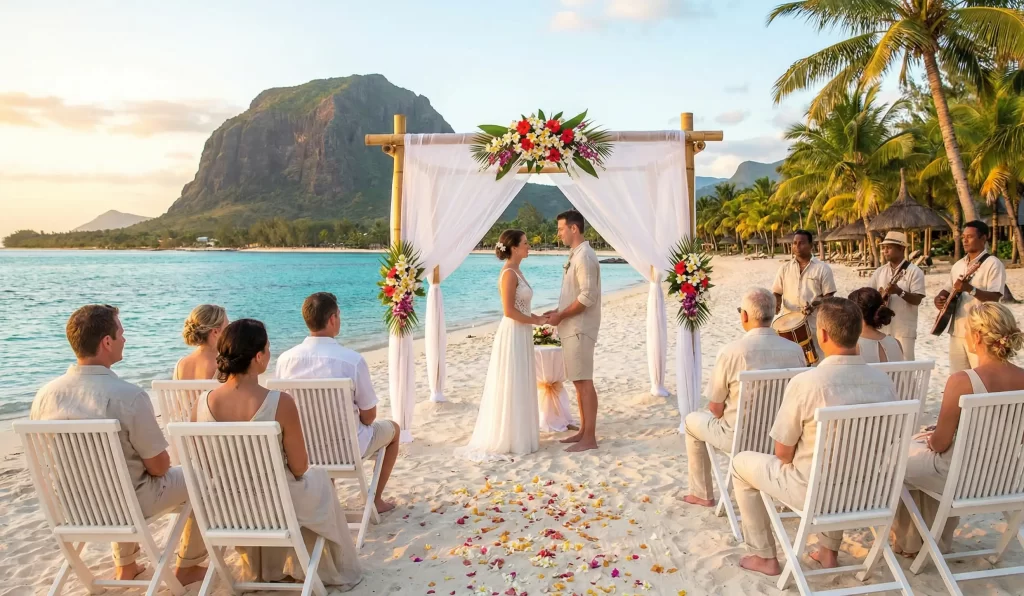
Getting married in Mauritius is a magical experience that combines legal requirements with rich cultural traditions. Whether you are planning a civil, Catholic, or Hindu wedding, understanding the steps, customs, timing, and venue options will help you create a truly memorable celebration. Mauritius is known for its tropical beauty, vibrant multicultural society, and warm hospitality, making it an ideal destination for couples seeking a dream wedding.
If you love languages and culture, you can also explore Creole Mauritius to learn more about the island’s unique Creole heritage and customs, which can add a special touch to your wedding celebrations.
Contents
Legal Formalities for Getting Married in Mauritius
Before planning your dream wedding, it is essential to understand the legal requirements. All couples marrying in Mauritius must comply with local laws, regardless of religion or nationality. The first step is the publication of a notice of intended marriage, also known as banns, at the Civil Status Office. Locals can go to the office in their district, while foreigners usually submit their notice at the Port Louis Central Office.
Banns must be displayed for at least ten days before the wedding can take place. Foreign nationals must reside in Mauritius for at least seven days before the banns are published. This period allows anyone with legal objections to raise them.
Required Documents
To legally marry in Mauritius, couples need several documents:
- Birth certificates issued within three months
- Valid passports or national ID cards
- Proof of single status (divorce decree or death certificate of a previous spouse, apostilled if issued abroad)
- Medical certificates confirming you are free from contagious diseases
- Affidavits of good character and financial means, especially for foreigners
The ceremony requires two witnesses who must be at least 18 years old. Weddings can take place at the Civil Status Office, licensed venues such as hotels, or approved locations like beaches. Note that ceremonies outside the office may incur additional fees.
Couples must also decide on a matrimonial property regime. Options include community of goods (shared ownership of assets), separation of goods (individual ownership), or a custom arrangement documented in a notarial deed. After the ceremony, the marriage certificate is valid internationally once authenticated by the Prime Minister’s Office. Foreigners may need additional validation for recognition in their home country.
For two foreigners, extra steps include submitting affidavits to the Supreme Court Registrar and presenting documents to the Port Louis Registrar. Once approved, the marriage can occur the day after the banns are published. Planning these documents can take 1-3 months, so early coordination with local authorities or wedding planners is recommended.
Couples planning their wedding in Mauritius can also benefit from reading our lessons on Creole to include some local phrases and customs in their ceremony.
Catholic Wedding Procedures in Mauritius
Mauritius has a rich Catholic heritage, and many couples choose to celebrate their union in the church. A Catholic wedding combines religious rites with civil requirements for legal recognition. At least one partner must be baptized Catholic. The non-Catholic partner must obtain a Nihil Obstat, a certificate confirming no obstacles exist for the marriage, from their priest or bishop. This paperwork is typically submitted 3-5 months before the ceremony.
The couple must also provide pre-nuptial inquiry forms and baptism certificates. Meetings with the local priest and participation in preparatory sessions are standard. It is important to align the church wedding date with the civil banns publication to ensure legal compliance.
Catholic weddings often take place in historic churches, many with stunning views. One famous location is the Cap Malheureux Chapel, overlooking the turquoise waters of northern Mauritius. Ceremonies last about 45-60 minutes and can be personalized with readings, vows, and music. Wedding packages may include photographers, musicians, floral arrangements, and tailored menus. Many expats opt for a small church ceremony followed by a reception at a luxury hotel or beachside resort.
Couples can also learn more about local Creole vocabulary to add a cultural twist to their wedding speeches or decorations.
Traditional Hindu Weddings in Mauritius
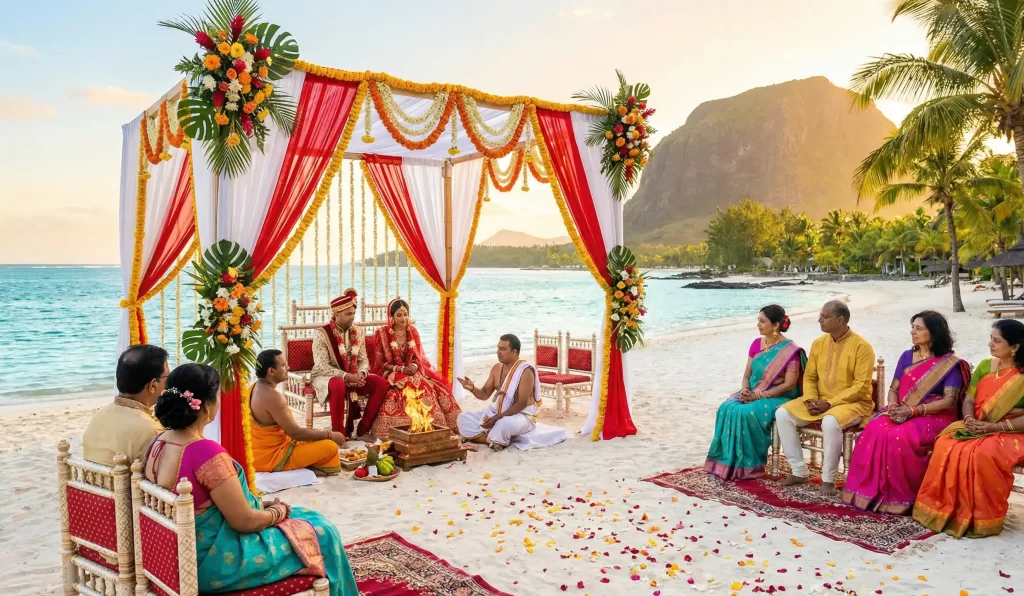
Mauritius has a vibrant Hindu community, and traditional Hindu weddings are colorful, spiritual, and joyful. These weddings often last several days and involve numerous rituals.
Pre-Wedding Ceremonies
- Mehendi Ceremony: The bride’s hands and feet are decorated with intricate henna designs. Women sing traditional songs while dancing and celebrating.
- Haldi Ceremony: Turmeric paste is applied to the bride and groom for purification and blessings.
Wedding Day Rituals
The main ceremony is conducted by a pandit at a decorated mandap. The groom arrives with a baraat, a lively procession accompanied by music and dance. The bride usually wears a red sari adorned with gold and flowers, while the groom wears a traditional outfit with a turban.
Rituals include:
- Invoking Lord Ganesh to remove obstacles
- Tying the bride’s sari to the groom’s scarf, symbolizing unity
- Exchanging flower garlands
- Taking seven steps around the sacred fire with vows
- The groom tying the Mangalsutra, a sacred thread necklace, around the bride’s neck
Other important customs are the Sindoor, applying red powder on the bride’s forehead, and Kanyadaan, where the bride’s father formally entrusts his daughter to the groom’s family. Hindu weddings also include vegetarian feasts, family blessings, and community celebrations lasting three to four days.
The Wedding Experience in Mauritius
Weddings in Mauritius are not just ceremonies—they are experiences. The island offers vibrant cultural traditions, breathtaking scenery, and warm hospitality.
Entertainment and Culture
Couples often incorporate local traditions such as the Sega dance, a lively Creole folk performance with drummers and dancers. Cultural performances add color and energy to the reception.
Cuisine
Food is a highlight of Mauritian weddings. Guests enjoy seafood curries, traditional dishes like dholl puri, and signature rum cocktails. Many couples include a tea ceremony to honor family elders.
Venues
Mauritius offers a variety of wedding venues:
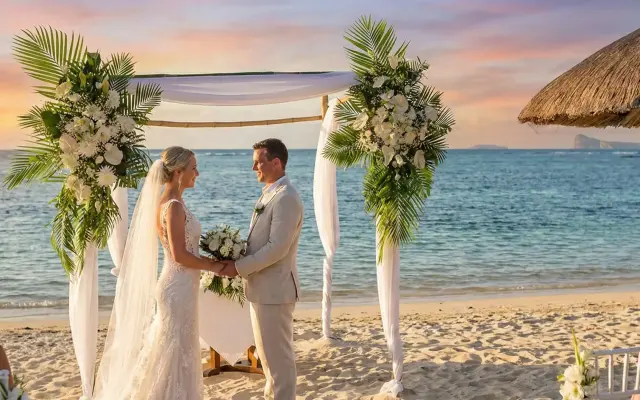
- Beaches: Belle Mare, Flic en Flac, and Ile aux Cerfs provide stunning coastal views
- Colonial Estates: La Demeure Saint Antoine offers elegant gardens and heritage charm
- Luxury Resorts: Four Seasons Anahita and Ambre provide full-service wedding planning, including legal, ceremonial, and reception arrangements
Receptions can feature helicopter arrivals, horse-drawn carriages, fireworks, and elaborate photo booths, making each wedding unique.
Couples can explore our blog for ideas on integrating local culture and language into their celebrations.
Best Time for Weddings in Mauritius
Timing your wedding is crucial. The ideal season depends on weather and your personal preferences.
- October to December: Warm temperatures (25-30°C), sunny skies, and calm seas. This is the peak wedding season.
- May and June: Pleasant weather with fewer crowds and more affordable venues.
- June to September: Dry winter season with cooler but comfortable temperatures (18-24°C), ideal for outdoor ceremonies.
- January to April: Cyclone season with heavy rain and storms, generally not recommended for weddings.
Planning according to these seasons ensures smooth celebrations and beautiful photos.
Popular Wedding Locations in Mauritius
Mauritius offers diverse landscapes for different wedding styles:
- Northern Mauritius: Grand Baie and Cap Malheureux for luxury weddings with ocean views
- Western Coast: Flic en Flac and La Preneuse for sunny beaches and family-friendly venues
- Eastern Beaches: Belle Mare and Ile aux Cerfs for seclusion and exclusivity
- Southern and Central Regions: Black River Gorges and colonial estates for garden or nature-centric weddings
Luxury resorts like Four Seasons Anahita provide all-inclusive wedding packages that handle both the legal and ceremonial requirements.
Practical Advice for Wedding Planning
- Hire a wedding planner: Experienced planners can navigate legal paperwork, coordinate vendors, and arrange visas if needed.
- Wedding visas: Available for foreign couples marrying in Mauritius.
- Budgeting: Civil ceremonies at government offices are free. Full wedding packages start around Rs 200,000.
- Names and residency: Brides can keep or change their maiden names. Spouses of foreign nationals can apply for residence permits, although work rights may initially be limited.
- Transportation: Options include vintage cars, helicopters, and horse-drawn carriages for a special touch.
- Photography and videography: Essential for capturing Mauritius’s natural beauty and wedding rituals.
For couples planning to relocate, consider venues near preferred neighborhoods and schools. Learning about local Creole culture can make the wedding more immersive. Check out Creole Mauritius lessons for tips and phrases to include in your wedding.
Conclusion
Mauritius is a dream destination for weddings. It offers a perfect combination of legal simplicity, rich cultural traditions, and tropical beauty. Whether you prefer a civil ceremony, a Catholic church wedding, or a traditional Hindu celebration, the island caters to all tastes. With careful planning, couples can enjoy unforgettable moments surrounded by breathtaking beaches, vibrant traditions, and warm Mauritian hospitality.
By understanding legal requirements, ceremony types, timing, and venue options, you can confidently plan your perfect wedding. Each celebration reflects the island’s multicultural spirit and creates memories that last a lifetime. Mauritius truly offers a fairytale beginning for your married life.

Questions and tips