
Ugadi in Mauritius – The Telugu New Year
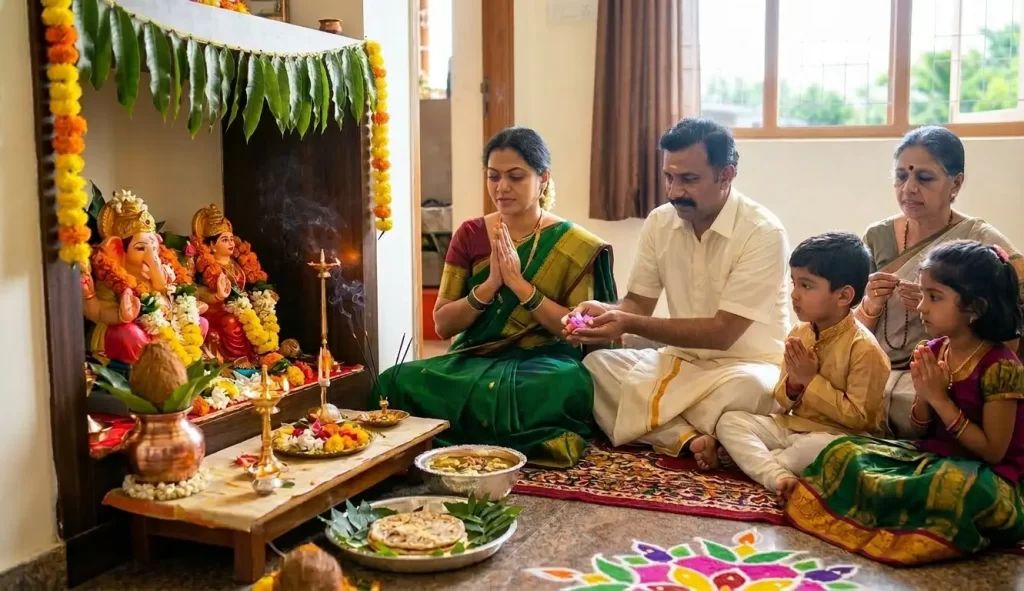
If there is one thing we Mauritians excel at, it is celebrating New Year. Why celebrate it just once on January 1st when you can celebrate it multiple times throughout the year depending on the cultural calendar? It is the ultimate life hack for eating more gato (sweets) and getting more public holidays.
One of the most vibrant and deeply philosophical of these celebrations is Ugadi in Mauritius (sometimes spelled Ougadi locally). This festival marks the Telugu and Kannada New Year. It is a day that beautifully weaves together ancient cosmology, the changing of the seasons, and a fierce sense of community identity. Oh, and it involves a very specific dish that forces you to eat something bitter while smiling.
Whether you are a local preparing for the festivities or an expat wondering why your neighbors are tying mango leaves to their front door, grab a cup of tea and kas enn poz (relax). Here is your complete guide to the history, rituals, and joy of Ugadi in Mauritius.
Contents
What Exactly is Ugadi?
Before we look at how the island celebrates, let us break down the word itself. “Ugadi” (or Yugadi) comes from two ancient Sanskrit words. Yuga means “age” or “era,” and adi means “beginning.” Put them together, and you literally have “the beginning of a new age.”
In the Hindu lunisolar calendar, Ugadi falls on the first day of the bright half of the month of Chaitra. For those of us using the regular Gregorian calendar on our phones, this usually translates to late March or early April. Astronomically, this period coincides with the onset of spring in the Indian subcontinent. Symbolically, it marks a shift into renewal, growth, and fresh starts after the dormant months.
The Cosmic History: Lord Brahma’s Big Day
If you thought your New Year’s resolutions were a big deal, wait until you hear the mythological background of Ugadi.
According to Hindu tradition, Ugadi is the exact day when Lord Brahma began the creation of the universe. Yes, the entire universe. He ordered time into days, months, and years. So, when we celebrate Ugadi in Mauritius, we are not just celebrating a cultural new year; we are throwing a birthday party for time itself.
Other narratives link this date to the end of the Dvapara Yuga and the start of the Kali Yuga (around 3101 BCE), marking a massive transition in cosmic time. Some traditions also say Ugadi coincides with the very first avatar of Lord Vishnu, Matsya (the fish), symbolizing divine protection.
Basically, the spiritual stakes of this day are astronomically high. It is a powerful reminder that time is cyclical, and each new year is a fresh chance to align yourself with positive energy and good karma.
The Telugu Community in Mauritius
To truly understand Ugadi in Mauritius, you need to know a bit about the people who brought it here.
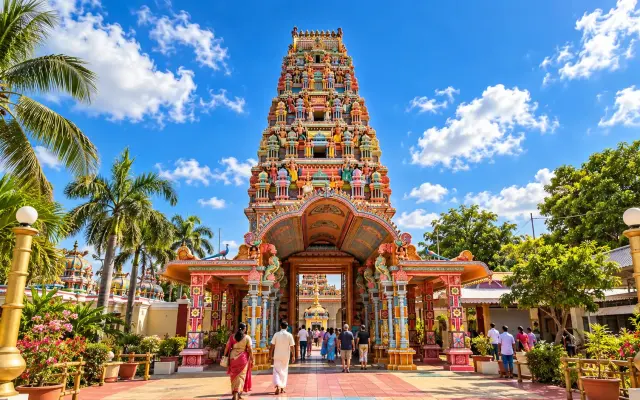
During the colonial era, Telugus arrived on the island as part of the broader Indian indentured labor migration. They brought with them their language, their incredible food, and their deep-rooted traditions. Over generations, they formed organized cultural and religious associations to keep their heritage alive in a new land.
The most prominent of these is the Mauritius Andhra Maha Sabha (M.A.M.S.). This organization has worked tirelessly to unite Telugu families, promote the language through evening schools, and anchor community life around beautiful temples.
Through sheer dedication, the Telugu community in Mauritius ensured that Ugadi evolved from a small community gathering into a massive national event. In fact, Mauritius is famously noted as the only country outside of India where Ugadi is officially declared a national public holiday.
A National Public Holiday: Unity in Diversity
The fact that Ugadi is a public holiday here is a huge deal. It signals state-level recognition of our island’s plural cultural heritage. It places a South Indian festival right alongside North Indian, Creole, Christian, and Muslim celebrations.
Because the day is a public holiday, schools, banks, and offices close. This gives devotees the time they need to perform their rituals properly without rushing to catch the morning bus to work. It also means that non-Telugu Mauritians get to participate, observe, and most importantly, taste the food. It is a brilliant example of the intercultural harmony that makes our island so special.
If you want to understand how all these different holidays fit into our daily lives, check out our comprehensive guide to Mauritian Culture.
Preparations: The Ultimate Spring Cleaning
You cannot just wake up on Ugadi and start celebrating. The preparations begin weeks in advance, and they usually start with a mop and a broom.
Families go through a massive deep-cleaning phase. Every corner of the house is washed, dusted, and repaired. This is both practical and deeply symbolic; you have to sweep out the old, stagnant energies to make room for the new, auspicious vibes of the New Year. (It is also a great time for parents to make their teenagers clean their rooms).
Once the house is sparkling, the decorations go up. Doorways are adorned with rangoli (also known as kolam), which are intricate, beautiful geometric designs drawn on the ground using colored powders or rice flour. These are meant to welcome prosperity and the divine presence into the home.
You will also see fresh mango-leaf toranas (festoon-like hangings) tied above doorframes. Why mango leaves? Tradition says that gods like Ganesha and Kartikeya are very fond of mango trees, so the leaves act like a VIP invitation for positive energy.
Dawn Rituals: The Mangala Snaanam
On the morning of Ugadi in Mauritius, sleeping in is not an option. Devotees wake up long before the sun rises to perform a ceremonial oil bath known as Mangala snaanam.
Coconut oil is massaged into the hair and body before bathing. This ancient practice is believed to promote health, vitality, and a clear mind. Symbolically, you are washing away the old karma, the negativity, and the sheer exhaustion of the previous year.
Once squeaky clean, everyone dresses in brand new traditional clothes. Women wear vibrant saris or salwar suits, and men wear crisp kurtas or dhotis. Looking sharp is half the fun of the Telugu New Year.
Temple Worship and Cosmic Prayers
After the morning bath, families head to the local temples. These temples host special pujas (prayers) dedicated to deities linked with creation and prosperity, like Lord Brahma, Lord Vishnu, or Goddess Lakshmi.
The offerings are beautiful and fragrant. Devotees bring akshata (turmeric-laced rice, symbolizing abundance), jasmine flowers, coconuts, and fruits. The priests chant Vedic hymns invoking blessings for the year ahead.
A fascinating part of the temple visit is the reading of the Panchangam (the traditional Hindu almanac). Priests or astrologers will read the predictions for the coming year, forecasting everything from global weather patterns to community wealth. Devotees pray for health, educational success for their children, and family harmony.
Ugadi Pachadi: Tasting the Six Flavors of Life
Now we arrive at the absolute centerpiece of the Ugadi celebrations: the Ugadi Pachadi.
This is not just a dish; it is a profound philosophical lesson served in a bowl. Ugadi Pachadi is a special mixture that combines six distinct tastes. Each taste represents a different emotion or experience you will face in the coming year:
- Sweet (Jaggery or Sugar): Represents joy, happiness, and pleasant moments.
- Sour (Raw Mango): Represents surprises and the tangy, unexpected moments in life.
- Salty (Salt): Represents the basic, everyday necessities and interactions.
- Bitter (Neem Leaves/Flowers): Represents sorrow, illness, or temporary setbacks.
- Astringent (Raw Banana): Signifies the tough challenges that dry up our ego and attachments.
- Spicy (Green Chilies/Pepper): Denotes anger, intensity, and emotional turbulence.
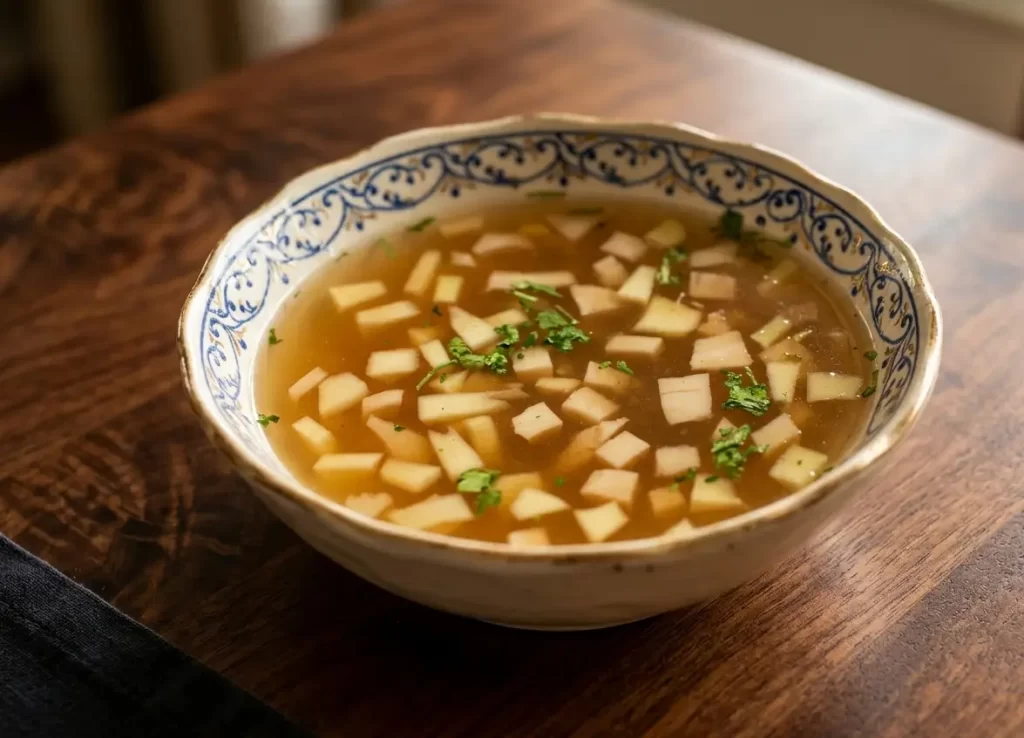
The philosophy is brilliant: life in the upcoming year will naturally be a mixture of all these things. You cannot have the sweet without the bitter. By eating the Pachadi, you are making a spiritual commitment to accept whatever life throws at you with equanimity, grace, and gratitude. (Even if the neem leaf makes you pull a funny face).
Festive Foods and Family Feasts
Once the philosophical part of the menu is done, it is time for the heavy lifting. Ugadi in Mauritius is a time for epic family feasts.
Households prepare elaborate meals featuring rice dishes, rich lentil preparations, and an array of vegetable curries. Then come the sweets: laddoos and kheer (a sweetened milk and rice pudding) are absolute must-haves.
Because we live on an island that loves sharing, these desserts do not just stay at home. Tupperware containers full of sweets are circulated among neighbors, colleagues, and friends, reinforcing social ties. The food here is a wonderful blend of ancestral South Indian recipes utilizing the fresh local ingredients available in Mauritius.
If all this talk of food is making you hungry, you should definitely browse our list of the top food spots to try in Mauritius.
Community Events: Music, Dance, and Culture
Ugadi in Mauritius is not confined to living rooms and temples. It spills out into the public sphere.
Associations organize massive, national-level cultural programs. These events feature devotional songs, classical Telugu music, and intricate dance performances. It is a time for the community to showcase their beautiful heritage to the rest of the island.
You might attend a public event at a community hall or a mall where traditional sweets are sold, and cultural troupes perform. In the true spirit of our “rainbow nation,” it is not uncommon to see a traditional Telugu dance performance followed later in the week by a completely different cultural celebration.
To see how these different musical and cultural styles have evolved on our island, take a look at the history of Mauritian music.
Conclusion: A Time for Renewal
At its core, Ugadi in Mauritius is an invitation to hit the reset button. It is a time for introspection, a moment to honor the impermanence of time, and a reminder to be grateful for the present.
For the Telugu community in Mauritius, it is also a powerful moment to honor the resilience of their ancestors who crossed the ocean and kept these beautiful traditions alive. Through the sweet jaggery and the bitter neem, Ugadi teaches us that life is a grand, cyclical adventure, and every new year is a blessing.
So, the next time late March or early April rolls around, look out for the mango leaves, wish your friends a “Happy Ugadi,” and do not be afraid to taste the Pachadi!
If you are curious about how we celebrate other major transitions on the island, check out how we celebrate Christmas and New Year in Mauritius.
External Links:
Tours and activities in Mauritius
Hand-picked from GetYourGuide. Free cancellation on most bookings.
Some links on this page are affiliate links. If you book through them we may earn a small commission, at no extra cost to you. It helps keep Creole Mauritius free.
Questions and tips