
International Schools in Mauritius: A Guide for Expat Families

Mauritius has a good range of international schools, but the right choice depends heavily on where you live and which curriculum your child needs. Families can choose between English-medium Cambridge and IB schools, British-style primary schools and French-curriculum schools following the French national system.
The biggest practical consideration is location. A school that looks perfect on paper may become frustrating if the daily journey crosses the island during morning traffic. If possible, choose the school before signing a long-term rental agreement, then look for accommodation within a realistic school-run distance.
For most expat families, the main areas to consider are Mapou and Beau Plan in the north, Moka in the centre, Cascavelle and Tamarin in the west, and Gros Bois in the south.
International Schools in Mauritius at a Glance
| School | Age / Level | Main Curriculum | Useful For |
|---|---|---|---|
| Northfields International School | 18 months–18 years | IB PYP, Cambridge IGCSE, IB Diploma / A Levels | Families wanting one school from early years through secondary |
| Clavis International Primary School | Approx. 3–11 | IB Primary Years Programme | IB-focused primary education |
| Le Bocage International School | Approx. 11–18 | IB MYP, IGCSE option, IB Diploma and Career-related Programme | Secondary students following an IB pathway |
| Westcoast International Secondary School | 11–18 | Cambridge Lower Secondary, IGCSE, IB Diploma | Families living in the west |
| Lighthouse Primary & Secondary School | Primary–18 | British/IPC, Cambridge IGCSE and A Levels | Cambridge pathway with Christian ethos |
| Greencoast International School | Approx. 3–10/11 | International primary curriculum | Young children living around the north |
| Savannah International School | Early years / primary | IEYC and IPC | Families living in the south |
| École du Nord | 3–15 | French national curriculum with enhanced English options | French-speaking and bilingual families in the north |
| Lycée La Bourdonnais | 5–18 | French national curriculum to Baccalauréat | Families wanting continuity with the French system |
The Main English-Medium Options
Northfields International School, Mapou
Northfields is one of the most comprehensive international-school options in Mauritius because it accepts children from 18 months through Year 13. The campus is in Labourdonnais Village near Mapou, making it particularly convenient for families living around Grand Baie, Pereybere, Mont Choisy and other parts of the north.
The academic pathway has evolved over time. Primary students follow the IB Primary Years Programme, while secondary students progress through Cambridge programmes including IGCSE. For Years 12 and 13, students can currently choose between the IB Diploma and Cambridge A Levels.
Fees are at the higher end of the Mauritius market. For the 2026/27 year, published expatriate tuition is approximately Rs311,300 for Year 1, Rs605,000 for Years 7–11 and Rs656,700 for Years 12–13. Application, inception, deposit, books and other charges are additional.
Best suited to: families living in the north who want an all-through international school and are comfortable with premium fees.
Visit Northfields International School
Clavis International Primary School, Moka
Clavis is a dedicated primary school and an authorised IB Primary Years Programme school. It is a natural option for families who want an IB education from the early years before moving into secondary education later.
For non-Mauritian families, published 2026 fees are approximately Rs212,300 for Pre-Reception, Rs328,900 for Reception and Rs334,400 for Years 1–6. A registration fee is charged separately.
Because Clavis is primary-only, parents should also think ahead about secondary school. Le Bocage in nearby Moka is an obvious IB-oriented option, although admission is separate and progression should never be assumed automatically.
Best suited to: families based around Moka or the central plateau who specifically want an IB primary education.
Visit Clavis International Primary School
Le Bocage International School, Moka
Le Bocage is an established English-medium secondary school in Mount Ory, Moka. It opened in 1990 and currently serves more than 800 students.
The school is strongly associated with the International Baccalaureate. It offers the IB Middle Years Programme, IB Diploma Programme and IB Career-related Programme. Students in the later MYP years can also choose an IGCSE pathway, while the Career-related Programme incorporates Pearson BTEC qualifications.
I would avoid publishing an exact 2026 tuition figure unless you obtain a written current quotation from the school. Unlike some competitors, Le Bocage does not currently display a straightforward public 2026/27 fee table online.
Best suited to: secondary-age students following an IB pathway and families living around Moka, Ebène or the central plateau.
Visit Le Bocage International School
Westcoast International Secondary School, Cascavelle
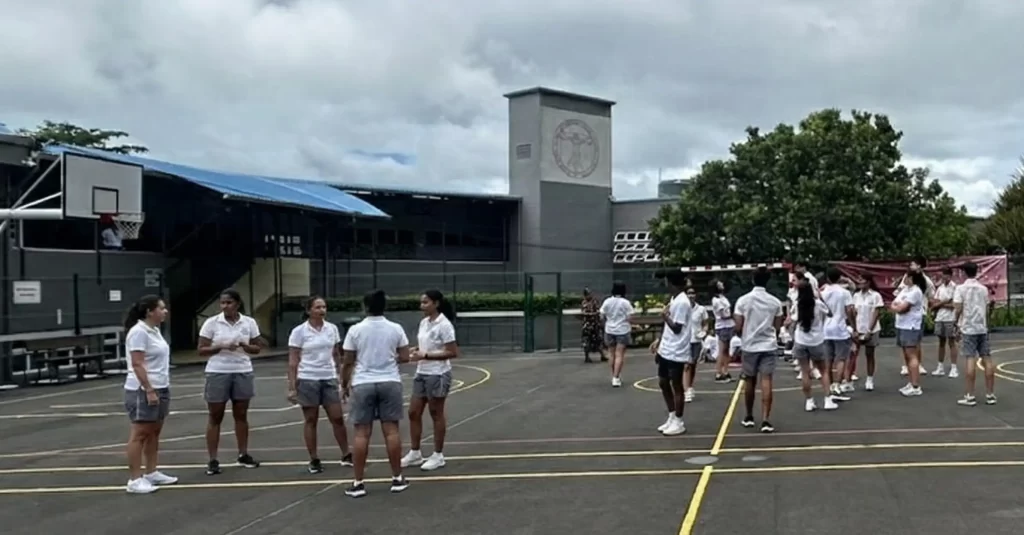
Westcoast International Secondary School is the most obvious English-medium secondary option for many families living around Flic en Flac, Cascavelle, Tamarin and Black River. The school is on Flic en Flac Road in Cascavelle rather than in Flic en Flac itself.
Students move from Cambridge Lower Secondary into IGCSE and then the IB Diploma Programme. The school accepts students roughly from ages 11 to 18.
For 2026, published non-citizen tuition is Rs318,000 for Forms 1–3, Rs334,800 for Forms 4–5 and Rs385,200 for Forms 6–7. New non-citizens also pay a Rs3,700 application/entrance fee, Rs70,000 enrolment fee and a refundable deposit ranging from Rs79,500 to Rs96,300 depending on year group.
Best suited to: families living on the west coast who want to avoid a daily commute to Moka or Mapou.
Visit Westcoast International Secondary School
Lighthouse Primary & Secondary School, Calebasses
Lighthouse offers another English-medium option in the north. Its primary curriculum combines the British National Curriculum with the International Primary Curriculum. Older students move into Cambridge IGCSEs followed by AS and A Levels.
The school also has an explicitly Christian ethos, so families should consider whether that aligns with what they want from their child’s education.
For expatriates in 2026, published tuition ranges from approximately Rs17,000 per month for Reception–Grade 2 to Rs28,800 per month for Grades 12–13, paid across 11 months. Meal fees and a registration fee are additional.
Best suited to: families who prefer the Cambridge/A-Level pathway and are comfortable with the school’s Christian educational philosophy.
Primary Schools in the North and South
Greencoast International School, Beau Plan
Greencoast is located inside Beau Plan Smart City in the north and focuses on younger children. Current information from Beau Plan lists the school for approximately ages 3 to 10, while current school databases extend the upper age to around 11 depending on year group.
The campus places a strong emphasis on modern, environmentally conscious design and is convenient for families living around Beau Plan, Mapou and the northern districts.
Because Greencoast does not provide the full secondary pathway, parents should consider where their child will move afterwards. Themis International Secondary School now operates nearby in Beau Plan, although it is a newer school and should be evaluated separately.
Visit Greencoast International School
Savannah International School, Gros Bois
For families living in the south, Savannah International School removes the need to commute all the way to Moka or the north for primary education. The school is situated within Savannah Connected Countryside near Gros Bois.
Its current curriculum uses the International Early Years Curriculum (IEYC) for younger pupils and the International Primary Curriculum (IPC) for primary students. That is more precise than simply describing it as a British National Curriculum school.
It is a smaller and newer option than schools such as Northfields or Clavis, which may appeal to parents looking for a community-scale primary environment in the south.
Visit Savannah International School
French-Curriculum Schools
The previous version of this guide focused almost entirely on English-medium education, but that misses an important part of the international-school market in Mauritius. French families and children already studying in the French system have several established options.
École du Nord, Mapou
École du Nord serves students from approximately age 3 to 15 and follows the French national curriculum while placing an unusually strong emphasis on English. At collège level, families can choose between the standard French programme, a European English section and a British International Section.
The school currently warns that some year groups have waiting lists for 2026/27, so families planning a move to the north should apply well in advance.
Lycée La Bourdonnais, Curepipe
Lycée La Bourdonnais is one of the island’s longest-established French international schools. It follows the curriculum of the French Ministry of Education and currently provides a continuous pathway from approximately age 5 to 18, finishing with the French Baccalauréat.
French is the main teaching language, although English is introduced strongly from primary level and an international British section is available within parts of the programme.
This is particularly relevant for families arriving from France or another French-curriculum school who want their children to continue without changing education systems.
How Much Do International Schools Cost?
There is no useful single “average fee” because schools price differently by age, nationality and curriculum. Some schools also distinguish between Mauritian citizens and non-citizens.
For a non-citizen family in 2026, a realistic planning range is roughly Rs180,000 to more than Rs650,000 per child per year across the English-medium schools discussed above. The amount can rise further once enrolment fees, deposits, books, exams, school meals, transport, uniforms and activities are included.
| Example | Published 2026 Fee |
|---|---|
| Northfields Year 1 – expatriate | Rs311,300 |
| Northfields Years 7–11 – expatriate | Rs605,000 |
| Northfields Years 12–13 – expatriate | Rs656,700 |
| Clavis Years 1–6 – non-Mauritian | Rs334,400 |
| Westcoast Forms 1–3 – non-citizen | Rs318,000 |
| Westcoast Forms 6–7 – non-citizen | Rs385,200 |
| Lighthouse Reception–Grade 2 – expatriate | Rs17,000 × 11 months |
| Lighthouse Grades 12–13 – expatriate | Rs28,800 × 11 months |
Do not compare tuition alone. A school with a lower headline annual fee may require a large one-off enrolment payment or refundable deposit in the first year. External examination fees may also sit outside normal tuition.
If you are calculating the full relocation budget, see our cost of living in Mauritius guide and grocery cost guide.
Choosing Between IB, Cambridge and the French System
IB can work particularly well for internationally mobile families because the programmes are used by schools around the world. Clavis offers the IB Primary Years Programme, while Le Bocage offers the MYP, Diploma and Career-related programmes. Northfields also uses IB programmes alongside Cambridge qualifications.
Cambridge IGCSE and A Levels are familiar to families from British and many other international schools. Northfields, Lighthouse and Westcoast all use Cambridge qualifications at parts of the secondary pathway.
The French system is the obvious choice for children already following the French national curriculum, particularly where the family expects to return to France or move to another AEFE school. École du Nord and Lycée La Bourdonnais are among the most established options.
There is no objectively better curriculum. Continuity matters. Moving a 15-year-old from one education system into a completely different examination pathway can be much harder than moving a six-year-old, so compare programmes at your child’s exact year level rather than choosing a school purely on reputation.
Admissions and Residence Status
International schools generally ask for recent school reports, passport and birth-certificate copies and sometimes a recommendation from the previous school. Older students may need an assessment or entrance test. Requirements vary, so start directly with the admissions department of the school you are considering.
Apply early if your move depends on one particular school. Some schools and year groups do operate waiting lists; École du Nord, for example, has specifically announced waiting lists for several 2026/27 year groups.
One important correction from older relocation guides is that school admission and immigration status are separate matters. Children of Occupation Permit or Residence Permit holders can generally apply for residence permits as dependants, with the permit linked to the main holder. Do not assume that paying a school deposit automatically gives the child immigration status.
If your family’s residence situation is unusual, confirm the correct process directly with the Mauritius Passport and Immigration Office rather than relying on the school to determine your visa category.
The School Run Matters More Than You Think
Mauritius looks small on a map, but morning traffic can make a short distance surprisingly time-consuming. I would avoid choosing a house in Grand Baie while sending children to school in Moka every day unless you have actually tested the journey at school-run time.
A more practical approach is to think in clusters. Families using Northfields, École du Nord, Greencoast or Lighthouse can look around the north. Clavis and Le Bocage naturally fit Moka and the central corridor. Westcoast suits Cascavelle, Flic en Flac, Tamarin and Black River. Savannah makes the most sense for families intentionally living in the south.
This can also affect your transport budget. If you are still deciding where to live, our Mauritius transport guide explains driving, buses and the Metro.
How I Would Shortlist Schools
Start with curriculum, your child’s age and location. That should eliminate most schools immediately. Then compare the current fees, available places, language support, special educational needs provision, class size, extracurricular activities and university pathways where relevant.
After that, visit the campuses if possible. A school can have an impressive website and still not feel right for your child. Speak to the admissions team, ask to see the classrooms and understand how the school communicates with parents.
Finally, get the complete first-year cost in writing. Ask specifically about tuition, registration, deposits, school transport, meals, books, devices, examinations and activities. That number is much more useful than comparing headline tuition alone.
Official School Links
- Northfields International School
- Clavis International Primary School
- Le Bocage International School
- Westcoast International Secondary School
- Lighthouse Primary & Secondary School
- Savannah International School
- École du Nord
- Lycée La Bourdonnais
Fee disclaimer: School fees, year groups, curricula and admission availability can change. Always request the latest fee schedule and written admission terms directly from the school before making relocation or housing decisions.

Questions and tips