
Cost of Groceries in Mauritius: Supermarket Prices and Monthly Budget

Groceries in Mauritius can be reasonably affordable if you cook with local staples, but imported food can make your supermarket bill rise very quickly. Rice, lentils, locally produced chicken, basic vegetables and everyday supermarket brands are generally manageable. Imported cheese, European cereals, premium meat, speciality dairy products and familiar brands from overseas are where prices start to climb.
For a useful official benchmark, the latest Household Budget Survey from Statistics Mauritius found that the average Mauritian household spent Rs10,480 per month on food and non-alcoholic beverages in 2023. That household had an average of 3.2 people. Prices have risen since then: by June 2026, the official food and non-alcoholic beverages price index stood 13.6% above its 2023 base.
Your own grocery bill can therefore vary enormously. Someone buying vegetables at local markets, rice in larger bags and mostly Mauritian products may spend far less than someone filling a trolley with imported cheese, berries, cereal, wine and European convenience foods.
Below is a realistic look at current supermarket prices, how much to budget and where to shop if you live in Mauritius.
Typical Grocery Prices in Mauritius
These are practical price ranges based on current supermarket listings and recent retail data checked in September 2026. They should be treated as a guide rather than fixed island-wide prices because brands, promotions, package sizes and seasonal availability make a big difference.
| Grocery Item | Typical Price | What to Know |
|---|---|---|
| UHT milk, 1 litre | About Rs60–80 | Imported and premium milk can cost substantially more |
| Eggs, 12 large | About Rs115–125 | Larger packs can work out cheaper per egg |
| Rice, 5kg | About Rs260–450+ | Standard rice is much cheaper than premium basmati |
| Chicken breast, 1kg | About Rs320–560 | Whole chicken and other cuts can be considerably cheaper |
| Whole chicken, around 1.4kg | About Rs295–375 | Often better value than buying breast meat only |
| Cheddar-style cheese, 250g | About Rs85–140 | Speciality imported cheese can be much more expensive |
| Potatoes, 1kg | About Rs40–60 | Usually one of the more predictable vegetables |
| Tomatoes, 1kg | About Rs60–200 | One of the most seasonal and weather-sensitive items |
| Apples, 1kg | About Rs100–200 | Almost entirely dependent on imported varieties |
| Bread, around 500g | About Rs30–45 | Basic bread is relatively affordable; speciality loaves cost more |
| Bottled water, 1.5 litres | About Rs20–45 | Buying larger multipacks normally lowers the unit price |
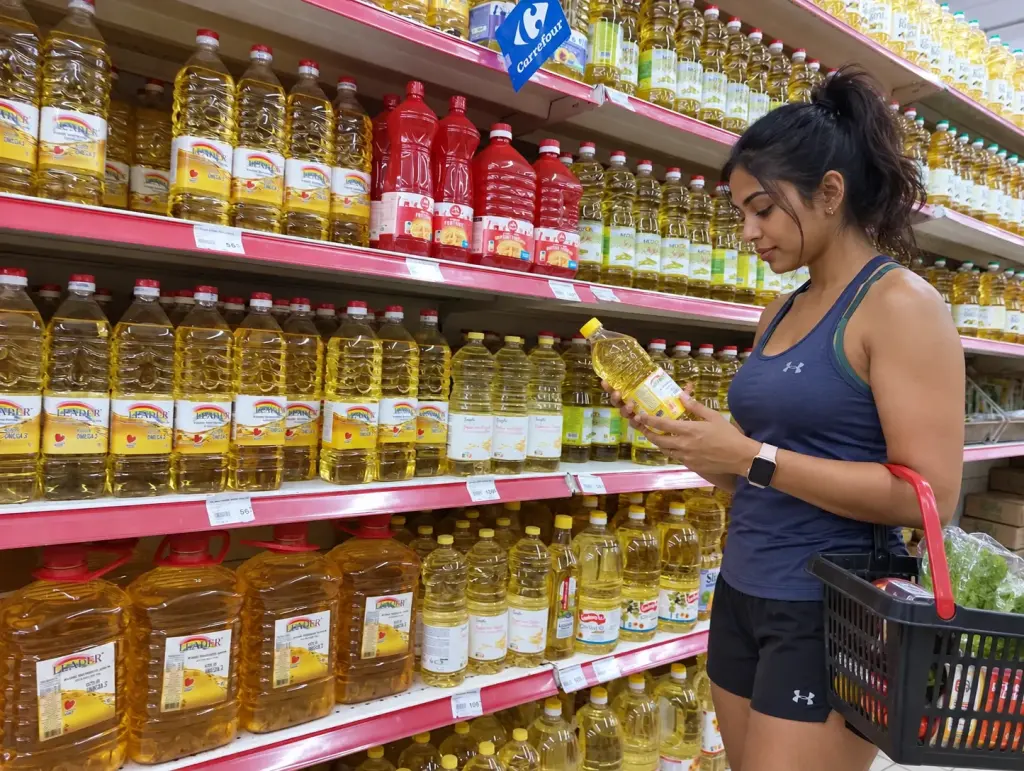
One useful example of how much brand choice matters is rice. Winners Supermarket listings range from around Rs261 for a 5kg everyday rice to more than Rs450 for some premium basmati products. The product category is technically the same, but your monthly grocery bill will look very different depending on which one regularly goes into your trolley.
How Much Should You Budget Each Month?
There is no official Statistics Mauritius figure specifically for an “expat grocery budget”, and I would avoid pretending there is. The best official benchmark is the 2023 Household Budget Survey, which recorded average spending of Rs10,480 per household per month on food and non-alcoholic drinks. Food represented roughly a quarter of household consumption expenditure.
That survey represents Mauritian households rather than newly arrived expatriates, and the average household size was 3.2 people. It also predates the additional food-price increases recorded during 2024–2026, so it should be viewed as a baseline rather than a current shopping allowance.
For practical planning in 2026, the following ranges are more useful. These are planning estimates rather than official government figures:
| Household | Indicative Monthly Grocery Budget | Typical Shopping Style |
|---|---|---|
| Single person | Rs6,000–10,000 | Mostly cooking at home with local staples and ordinary supermarket brands |
| Single person buying many imports | Rs10,000–16,000+ | Imported dairy, cereal, snacks, premium meat and speciality foods |
| Couple | Rs10,000–16,000 | Mixed supermarket and market shopping |
| Family | Rs15,000–25,000+ | Varies enormously depending on children’s food, imported brands and meat consumption |
A household that cooks Mauritian-style meals based around rice, lentils, vegetables, chicken, fish and seasonal produce can sit toward the lower end. A family that wants the same brands and food it bought in Europe, Australia or the Gulf can easily move beyond the upper ranges.
For rent, utilities, transport and other expenses as well, see our broader cost of living in Mauritius guide.
Supermarket or Local Market: Where Should You Shop?
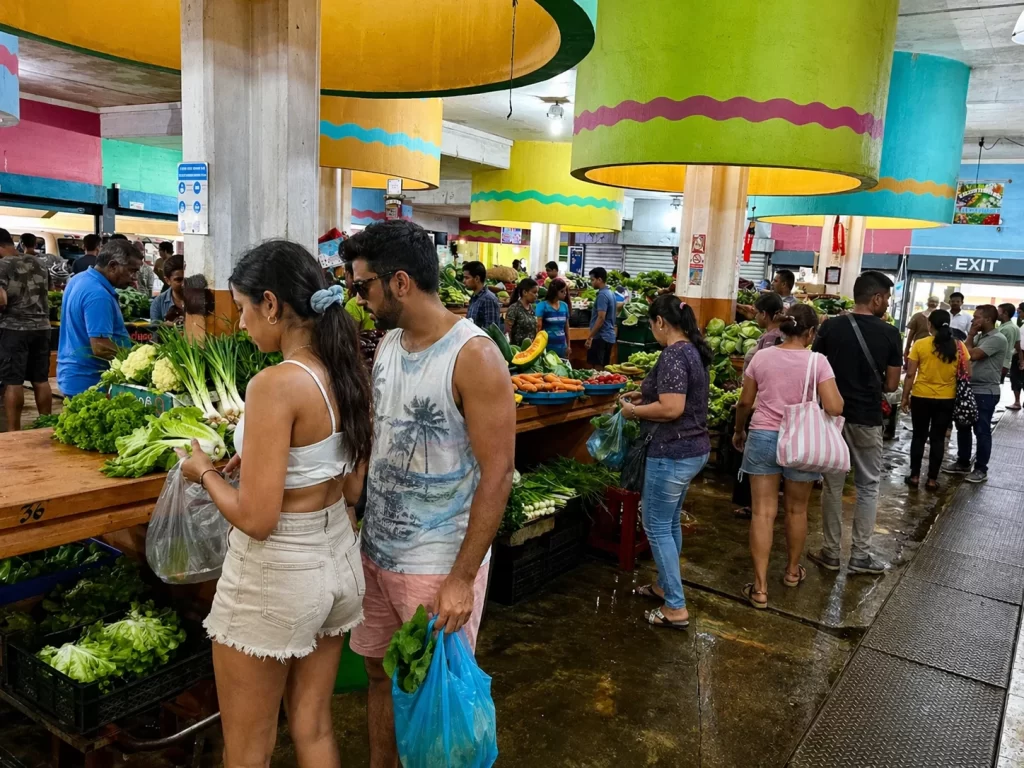
Most people living in Mauritius end up using a combination of supermarkets and local markets rather than choosing one exclusively. Supermarkets are easier for packaged groceries, dairy, frozen food, household products and predictable pricing, while markets can be particularly useful for seasonal vegetables, fruit and herbs.
Large supermarket names include Winners, Super U, Intermart, Dream Price and several other regional chains. Prices can vary enough between them that promotions are worth checking if you are buying expensive items or stocking up.
For vegetables and fruit, local markets are worth exploring. Port Louis Central Market, Central Flacq, Quatre Bornes and Mahébourg all have large produce sections, while smaller towns usually have their own markets or vegetable sellers. Market prices are not automatically cheaper for every product, but buying seasonal produce can offer better value and gives you access to ingredients that are part of everyday Mauritian cooking.
If you are staying in the south-east, our guide to Mahébourg Market explains what you will find there.
Are Imported Groceries Expensive?
This is probably the biggest adjustment for people moving to Mauritius. The island does not produce everything its population consumes, so imported food is an important part of supermarket shelves. Shipping, exchange rates and international food prices therefore affect what shoppers ultimately pay.
That does not mean every imported item is expensive. Mauritius imports large quantities of staples such as rice and manufactures or packages many products locally using imported ingredients. Competition between supermarkets also keeps some imported everyday products reasonably priced.
The noticeable premium usually appears when you insist on a specific overseas brand or speciality product. Imported European cheese, berries, cured meats, specialist vegan products, premium breakfast cereal and certain sauces can cost several times more than a basic alternative.
Current Winners listings demonstrate the difference well. Basic processed cheddar-style cheese can be under Rs100 for 250g, while imported speciality cheeses can cost Rs170–350 for packs that are sometimes smaller than 250g.
So the useful rule is not simply “local equals cheap, imported equals expensive”. It is better to think in terms of mainstream versus speciality. Everyday supermarket products can be fairly affordable regardless of origin, while niche imported brands usually carry the biggest premium.
Vegetables Can Change Price Very Quickly
Fresh produce deserves its own warning because the price you see one month may bear little resemblance to the price three months later. Mauritius has a tropical climate, and heavy rain, cyclones, drought or temporary shortages can affect local crops quickly.
This is especially noticeable with tomatoes, leafy vegetables and some seasonal produce. After bad weather, prices can jump sharply before falling again as supply recovers. Statistics Mauritius data for the second quarter of 2026 shows how quickly agricultural prices can move: the producer-price index for fresh vegetables fell significantly during that quarter, while poultry, eggs and milk moved in the opposite direction.
That makes substitution useful. If tomatoes are unusually expensive, buy another seasonal vegetable rather than treating one specific ingredient as essential. Frozen vegetables are also useful during temporary price spikes and are widely available in supermarkets.
What Has Inflation Done to Grocery Prices?
The old version of this article described food inflation as having simply returned to a “new normal” of around 2.8–4%. The current data is more nuanced.
Statistics Mauritius reported an overall headline inflation rate of 4.1% for the twelve months ending June 2026. More specifically for this article, the Consumer Price Index for food and non-alcoholic beverages reached 113.6 in June 2026, with 2023 set to 100. In simple terms, the overall price level for that category was approximately 13.6% above its 2023 baseline.
Food prices do not all move together. In the second quarter of 2026, lower vegetable prices helped offset increases elsewhere, while bread and cooking oil contributed to increases in the wider CPI. That is why someone may feel that their eggs, bread or chicken have become noticeably more expensive even during a period when another part of their vegetable basket has fallen in price.
The practical takeaway is that grocery costs are still moving. A detailed list of exact prices in an article like this will inevitably age, which is why the ranges above are more useful than pretending that milk will always cost exactly Rs64 or tomatoes exactly Rs90.
How to Spend Less on Groceries in Mauritius
The biggest saving usually comes from changing what you buy rather than driving across the island to save Rs5 on one item. Base more meals around rice, lentils, beans, local vegetables and ordinary chicken cuts, and buy larger packs of products such as rice when you know you will use them. A 5kg bag usually makes far more sense than repeatedly buying 1kg premium packs.
Use local markets for seasonal produce, but still compare. Markets are not magically cheaper every day, and supermarkets sometimes run strong vegetable or meat promotions. For packaged goods, checking the weekly catalogues from Winners, Intermart, Super U and other supermarkets can produce meaningful savings on items you were going to buy anyway.
Whole chicken can also be substantially better value than buying only boneless breast. Current supermarket examples put some whole 1.4kg chickens at around Rs300, while a kilogram of premium chicken breast or escalopes can approach Rs500–600.
Imported snacks, cereal, cheese and convenience foods are where many relocation budgets quietly disappear. There is no need to eliminate them, but treating them as extras rather than the foundation of every weekly shop makes a considerable difference.
And sometimes cooking is not automatically the cheapest option for one person. Mauritius has remarkably affordable street food. A pair of dholl puri or a simple local meal can cost less than buying several ingredients solely to make one lunch. See our Mauritian street food prices guide for examples.
So, Are Groceries Expensive in Mauritius?
For basic everyday food, Mauritius is manageable. For a heavily imported lifestyle, it can become expensive surprisingly quickly. Rice, lentils, chicken, basic bread and seasonal vegetables can form the basis of a relatively affordable grocery shop. Imported cheese, speciality meats, overseas snacks and premium international brands are what change the equation.
The most useful approach for someone moving here is not to arrive with a fixed assumption such as “Mauritius is cheap” or “Mauritius is expensive”. Spend the first few weeks learning which brands offer good value, which market is convenient for you and which imported foods you actually care enough about to pay extra for.
Also remember that grocery spending is only one part of living costs. Coastal rent, owning a car, private schooling or frequent restaurant meals will usually have a much larger effect on your total monthly budget than whether your eggs cost Rs110 or Rs125.
If you are considering moving to the island, continue with our complete Mauritius cost of living guide. If you are visiting rather than relocating, our Mauritius travel guide covers transport, food, accommodation and practical planning.
Useful Price Sources
Price disclaimer: Grocery prices and promotions change regularly. Fresh fruit and vegetable prices can vary considerably with season and weather.




Questions and tips