
How to Apply for an OCI Card in Mauritius (2026)
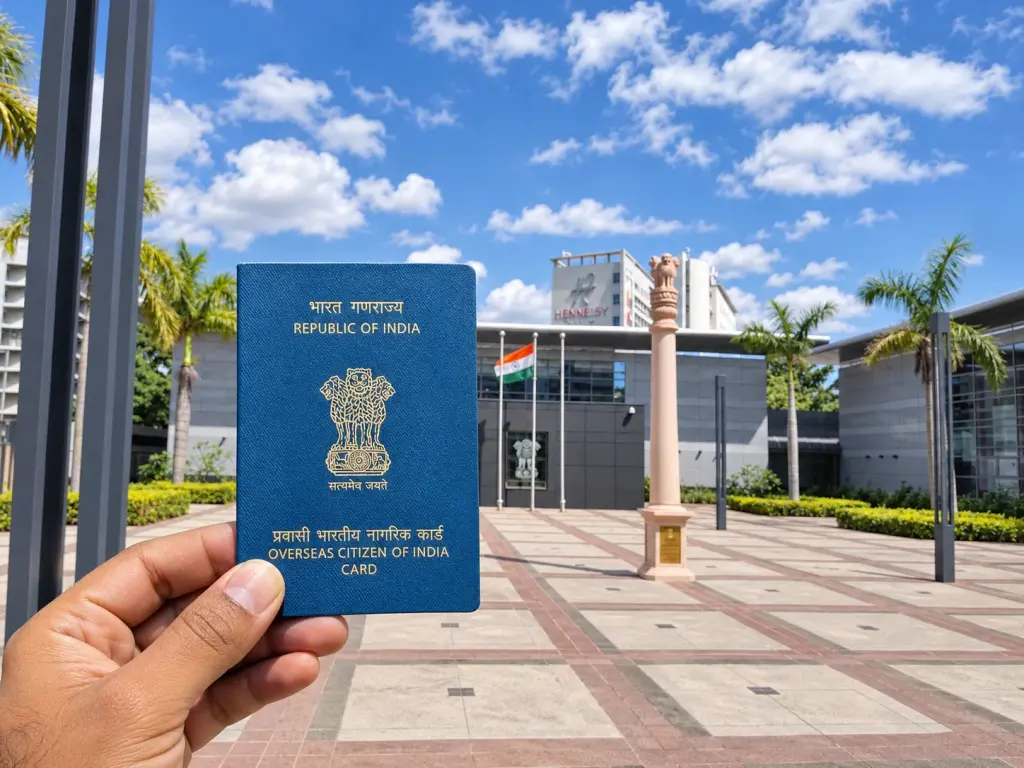
If you’re a Mauritian citizen with Indian ancestry, you may be eligible for an Overseas Citizen of India (OCI) card. It allows you to travel to India without repeatedly applying for a visa, and gives you certain rights to live, work and study there. Mauritius also benefits from a special provision allowing eligible descendants of Indian immigrants to apply based on ancestry going back as far as the seventh generation.
The application process involves a little more than completing an online form. If you’re applying through your ancestors, you’ll need birth certificates tracing your family back to the original immigrant, along with an official record from the Mahatma Gandhi Institute (MGI) or the National Archives. You’ll then apply through the Indian government’s OCI website and submit your documents at the High Commission of India in Ebene.
This guide explains exactly where to go in Mauritius, which documents to collect, how to complete the online application, the current fees and what happens after submission. It also covers separate requirements for spouses, children and people who previously held Indian citizenship.
OCI card application in Mauritius: Quick overview
| Official application website | ociservices.gov.in |
| Application fee | MUR 12,955 for a new OCI card, including surcharge |
| Where to apply | Online, followed by submission at the High Commission of India, Ebene |
| Where to get ancestry records | Mahatma Gandhi Institute, Moka, or National Archives of Mauritius |
| Where to get birth certificates | Mauritius Civil Status Division |
| Application submission hours | Monday to Friday, 9:30 AM to 12:00 PM |
| OCI card collection hours | Tuesday and Thursday, 3:00 PM to 4:00 PM, after confirmation |
| Passport requirement | At least six months’ validity when applying |
| Visa benefit | Multiple-entry, lifelong visa for India |

The fees and consular hours above are published by the High Commission of India in Mauritius. Fees may be revised on 1 April each year, and the office follows its own holiday calendar.
What is an OCI card, and what are its benefits?
OCI stands for Overseas Citizen of India. Despite its name, an OCI card does not give you Indian citizenship or an Indian passport. India does not generally permit dual citizenship, and OCI cardholders remain foreign nationals.
The main benefit is a lifelong, multiple-entry visa to India. You can visit repeatedly without having to apply for a new tourist visa for each trip. OCI cardholders are also generally exempt from registration with Indian immigration authorities for the duration of their stay and may live and work in India, subject to applicable restrictions.
Other benefits include certain rights similar to those available to Non-Resident Indians (NRIs), particularly in economic, financial and educational matters. OCI cardholders may also purchase eligible residential and commercial property in India, although agricultural and plantation property restrictions apply.
There are limits. OCI holders cannot vote in Indian elections, hold an Indian passport or take up certain government and constitutional positions. Some activities, including journalism, missionary work and visits to restricted areas, require additional permission. The official OCI Services website explains the rights and restrictions in more detail.
For many Mauritians, the appeal also comes from family history. The island’s Indian communities have roots in different parts of the subcontinent, particularly through nineteenth-century migration. Our article on the origins of the Mauritian population explains how that migration shaped the country.
Who is eligible for an OCI card in Mauritius?
The High Commission of India recognises several categories of OCI applicants. For Mauritians, the most common routes are through Indian ancestry, marriage to an Indian citizen or eligible OCI holder, and previous Indian citizenship. There are also provisions for qualifying minor children.
Mauritian citizens with Indian ancestry up to the seventh generation
In March 2024, India introduced a special provision for Mauritian citizens of Indian origin, extending OCI eligibility to descendants as far back as the seventh generation. This recognises the history of Indian immigration to Mauritius, where families may be separated from their original immigrant ancestors by several generations.
The High Commission’s eligibility guidance states that Mauritian citizens aged 18 or above who descend from an Indian immigrant arriving as an indentured labourer or free passenger may apply under the special ancestry provision.
However, having an Indian surname or knowing that your family came from India is not sufficient by itself. You must establish your lineage through official documents connecting you to the original immigrant. Each application is assessed on its supporting evidence, so eligibility does not guarantee approval.
Spouses of Indian citizens or OCI holders
A foreign national married to an Indian citizen or an eligible OCI cardholder may apply on a spouse basis if the marriage has been legally registered and has continued for at least two years immediately before the application. Additional documentary checks and security clearance apply to this category.
Children and former Indian citizens
Qualifying minor children can apply through the applicable parental citizenship provisions. Someone who previously held Indian citizenship and later became Mauritian may also qualify, but will need documents proving their former Indian citizenship and the necessary surrender or renunciation formalities.
OCI eligibility also has nationality-related exclusions. Under India’s current rules, an applicant whose parents, grandparents or great-grandparents are or were citizens of Pakistan, Bangladesh or another country specified by the Indian government is generally ineligible. Other restrictions may apply in particular circumstances. Check the official categories and requirements before preparing an application.
Documents required for an OCI card in Mauritius
The documents depend on your application category. If you’re applying through Indian ancestry, start by collecting the records that establish your family line. You will need the following documents for an ancestral application, with additional requirements where applicable.
- Valid Mauritian passport with at least six months’ validity at the time of submission.
- Your birth certificate in A4 format.
- Birth certificates of the relevant parents, grandparents and earlier ancestors connecting you to the original immigrant from India, also in A4 format.
- Official ancestral record or arrival documentation issued by the Mahatma Gandhi Institute or National Archives of Mauritius. The High Commission specifies a one-year validity for these records.
- Marriage certificate in A4 format, if applicable.
- Spouse’s passport, if applicable.
- Both passports if you hold dual nationality.
- Two recent colour photographs measuring 50 mm × 50 mm, with a white background, as required by the High Commission in Mauritius.
- Evidence of residential address and other supporting records requested by the online portal or the High Commission.
Birth and marriage certificates issued outside Mauritius may require an apostille from the appropriate authority. If you have changed your name or there are differences in how a family member’s name appears across old records, obtain supporting documents before submission. These discrepancies can make it harder to establish the family relationship.
The High Commission publishes the full requirements for each category on its OCI documentation page. Use that checklist alongside the online application, rather than relying on the list for another application category.
Step 1: Obtain birth certificates from the Mauritius Civil Status Office
If you’re applying through your ancestors, this is usually the first substantial part of the process. You need a documented family chain linking you to the original immigrant from India. That means starting with your own birth certificate and working backwards through the relevant parent, grandparent and earlier generations.
For example, suppose your great-great-grandfather arrived in Mauritius from India. You would need birth certificates showing the relationship between you and each generation leading back to that ancestor, together with the immigrant record. Where surnames or family names changed through marriage or over time, marriage certificates and other civil records may also be needed to explain the connection.
Where to request the birth certificates
You can request civil status documents from the relevant Civil Status Office in Mauritius. For older family records or cases where the local sub-office cannot trace a certificate, the Central Civil Status Office in Port Louis is the appropriate place to enquire.
Central Civil Status Office
7th Floor, Emmanuel Anquetil Building
Port Louis, Mauritius
Telephone for civil status document applications: +230 201 2808
Website: Civil Status Division contact details
The Civil Status Division office hours are from 8:45 AM to 4:00 PM, with a lunch break from 12:00 PM to 12:30 PM. Take identification and as much information as you have about the relatives whose certificates you’re requesting, including names, approximate birth dates and places of registration.
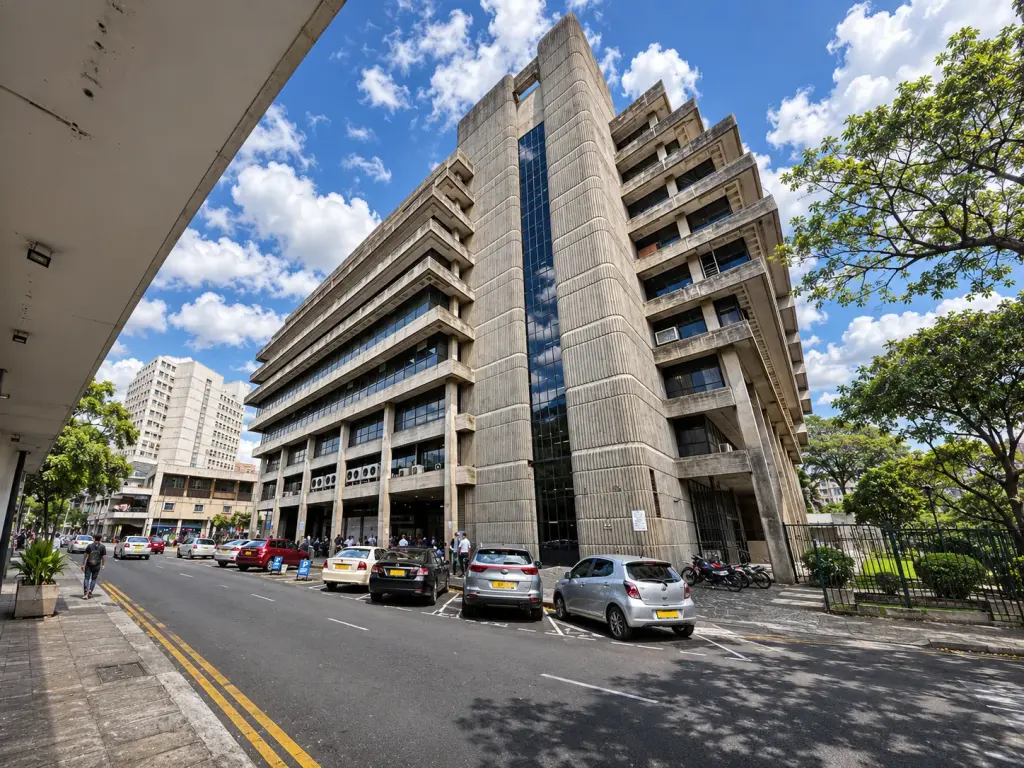
A useful clarification comes from the National Archives of Mauritius. In a May 2026 notice, it explained that civil status records from the British period, beginning in 1811, fall under the Civil Status Division. If you need old Mauritian birth or marriage certificates for your OCI application, contact Civil Status rather than assuming the National Archives will issue them. The National Archives has a separate role in preserving historical immigration records.
Some Mauritian birth and marriage certificates are also available digitally through MoKloud, subject to eligibility and account verification. This can be convenient for obtaining your own records, but tracing several older generations may still require assistance from Civil Status. The government’s MoKloud instructions explain how to access and download available certificates.
How far back do you need to go?
The important document is often the birth certificate of the first generation of your family born in Mauritius after the original immigrant arrived. According to the MGI Indian Immigration Archives, that certificate may contain the immigrant’s name and immigration number. These details are used to identify the correct immigration record.
Continue tracing the relevant family line until you have enough information to connect your family to the immigrant. Don’t assume the process will take the same amount of time for everyone. Some families already have the older certificates, while others may need to search through several generations or resolve different spellings of family names.
Step 2: Get your Indian ancestry certificate from MGI in Moka
Once you’ve gathered the relevant family certificates, the next step is obtaining official evidence of your Indian immigrant ancestor. For descendants of indentured labourers, the Mahatma Gandhi Institute’s Indian Immigration Archives in Moka is an important starting point.
The Archives preserve historical immigration registers containing information about Indian workers who arrived in Mauritius during the nineteenth and early twentieth centuries. They can issue certified or attested information about an identified immigrant, which applicants use as evidence of ancestry for their OCI application.
Where is the MGI Indian Immigration Archives?
Indian Immigration Archives
Mahatma Gandhi Institute
Mahatma Gandhi Avenue
Moka, Mauritius
Telephone: +230 403 2037
Email: archives@mgi.ac.mu
Official information: MGI Indian Immigration Archives
According to the Institute’s published information, the archives counter opens Monday to Friday, from 9:00 AM to 3:30 PM, with a lunch closure between noon and 1:00 PM. It is closed on weekends and public holidays. Call ahead to confirm the arrangements, particularly if you are travelling from another part of the island.
How to request your ancestral record
MGI explains that applicants can submit requests in person at the Indian Immigration Archives counter or through email, fax or post. If you are visiting the counter, bring the birth certificates linking you to your immigrant ancestor, your National Identity Card and proof of address.
- Collect the birth certificates of your parents, grandparents and any earlier relatives needed to establish the family connection.
- Look for the original immigrant’s name and immigration number, particularly on the birth certificate of the first generation born in Mauritius.
- Contact the MGI Indian Immigration Archives or visit the counter in Moka with the documents you have collected.
- Explain that you need certified ancestral information for an Overseas Citizen of India application.
- Provide the necessary identity and address documents, along with your family records.
- Follow the Archives’ instructions for processing and collection of the certified information sheet.
The Archives state that they generally issue the information within seven to eight working days after an application, although this should be treated as their published service indication rather than a guarantee for every family search. Staff will inform you when the document is ready. You can collect it personally or arrange for an authorised representative with the appropriate letter.
If you cannot find the immigration number, the Archives also identify other potentially useful records, including old marriage and death certificates and certain notarial property documents. Contact the Archives with the information you have rather than assuming your ancestry cannot be traced.
What if your ancestor arrived as a free passenger?
This is an important distinction. MGI’s Indian Immigration Archives mainly hold records relating to indentured labourers. According to the Institute, records concerning Indian free passengers are held by the National Archives of Mauritius. If your ancestor came to Mauritius as a free passenger rather than an indentured worker, ask the National Archives about the relevant arrival records.
The High Commission accepts qualifying ancestral records obtained from MGI or the National Archives, subject to its documentation requirements. The official checklist specifies that the ancestry document should be within its one-year validity period when submitted.
Step 3: Complete the OCI card application online
Once your supporting documents are ready, you can begin the online application. OCI registration is handled through the Government of India’s Ministry of Home Affairs portal, and the application must be completed online before documents are verified by the High Commission.
Official OCI website: https://ociservices.gov.in/
You can also open the OCI registration page directly. Use the official government portal rather than third-party websites that offer to complete the application for a fee.
1. Register on the OCI portal
Open the OCI Services website and select the option for a new OCI registration. The current portal provides a user registration page where you enter information including your name as shown on your passport, date of birth, nationality, email address and mobile number.
Use an email address you can access regularly. The government portal uses email verification and account credentials, and you may need the same details later to check your application status. Never share a one-time password sent to your email or phone with anyone offering application assistance.
2. Select your application category and complete your personal details
After registration, follow the portal’s instructions to begin a fresh application and select the category that matches your circumstances. If you’re applying through a Mauritian immigrant ancestor, use the appropriate ancestry route. The spouse, minor and former Indian citizen categories have different supporting requirements.
Complete the requested personal details, passport information, nationality, family information and other declarations. When selecting the place where your application will be processed, choose the appropriate Indian Mission in Mauritius if you will submit your documents in Ebene.
Check every field against your official documents, particularly names, dates of birth and passport numbers. Older Mauritian civil records sometimes use different name formats or spellings, so supporting certificates should make the family connection clear.
3. Upload your photograph, signature and documents
The portal requires a digital photograph, signature or other applicable image, and scanned copies of supporting documents. Prepare clear, readable digital copies of your passport, civil status documents and evidence of Indian ancestry before starting this part of the application.
For the online photograph, the central OCI portal currently specifies a square JPG or JPEG image, with dimensions between 200 × 200 and 900 × 900 pixels and a file size not exceeding 200 KB. The signature image also has a 200 KB limit. Follow the photo specifications shown by the live portal when uploading.
There is a distinction between the central portal’s online photo guidance and the local High Commission’s printed-photo requirements. The High Commission in Mauritius specifically asks for two recent 50 × 50 mm colour photographs with a white background. Prepare the printed photos according to that local checklist, and use the portal’s own specifications for the digital upload. If there is any doubt about the background or format, confirm the latest requirement with the High Commission before submitting.
4. Review and submit the application
Review all the information and uploaded documents before making the final submission. Keep a record of your application reference or file number, as it is needed to track the progress of your application.
The High Commission in Mauritius still instructs applicants to submit a signed copy of the completed application with their supporting documents. Download and print the completed application according to its instructions, then sign where required. If the portal’s instructions have changed or you are unsure what needs to be printed, confirm with the local consular section before visiting.
Step 4: Submit your OCI application at the High Commission of India in Ebene
After completing your online application, you need to present your documents for verification. In Mauritius, the High Commission’s published OCI procedure directs applicants to its consular office in Ebene Cybercity.
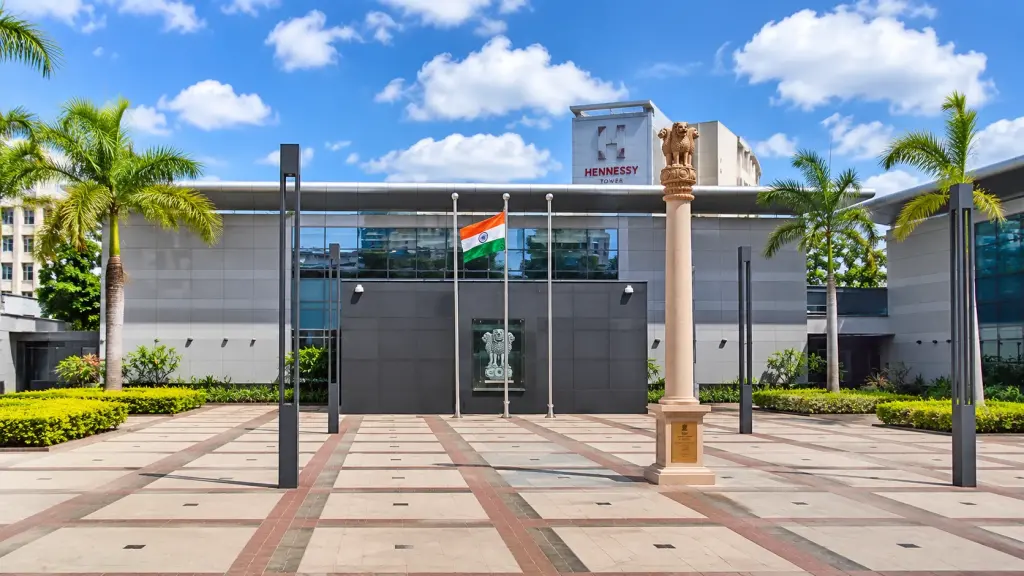
High Commission of India address and contact details
High Commission of India
Plot No. 65-C
Cybercity, Ebene
Mauritius
Telephone numbers for OCI enquiries:
+230 460 6600
+230 460 6612
+230 460 6605
Official website: High Commission of India, Mauritius
OCI application submission hours
The consular section’s published submission hours are Monday to Friday, 9:30 AM to 12:00 PM, excluding designated holidays. The High Commission’s OCI page says applications may be submitted on working days during this period.
Check the official consular working hours before visiting, especially around Indian and Mauritian public holidays. If you have a complicated application or are travelling from far away, calling ahead can save an unnecessary trip.
What should you take to Ebene?
Take your completed and signed application, original passport, the required photographs, ancestral or category-specific supporting documents, and any additional records requested by the High Commission. Bring the original documents for verification and keep photocopies organised in case the local office requires them.
The central Government of India OCI portal states that applicants who have uploaded their documents generally need to present the originals for verification rather than printed copies of everything. However, the Mauritius High Commission’s specific instructions continue to request a signed application and supporting documents. Follow the local office’s current checklist for submission in Ebene.
Officers will examine the information and documentation and may request corrections or further evidence if something is incomplete. Bring your application reference and keep any acknowledgement or instructions provided during the visit. The originals are normally returned after verification, in accordance with the applicable OCI process.
If you live outside Mauritius, you may not need to return to the island solely to submit your application. The High Commission’s guidance allows eligible Mauritians residing abroad to apply through the Indian Mission with jurisdiction over their place of residence, or through the appropriate Indian immigration office if they qualify to apply from India. The process and local payment arrangements may differ.
Step 5: Check your OCI application status
After your documents have been accepted for processing, you can track your application through the official OCI portal. Keep your application reference number safe and monitor the email address used for registration, since the High Commission may contact you if additional documents are needed.
Official tracking link: Check OCI application status
The status page asks for your application ID, passport number and captcha verification. Use the details associated with the original application. If the system does not recognise your reference, check for typing mistakes and ensure you are using the correct application number.
How long does OCI processing take in Mauritius?
The processing period can vary depending on the application category, document verification and any additional checks required. Applications involving older ancestral records or discrepancies between certificates may take longer if further evidence is requested.
India’s Ministry of External Affairs provides general OCI processing guidance, but that should not be treated as a guaranteed collection date in Mauritius. The High Commission does not publish a fixed turnaround commitment on its main local application page. Allow several weeks or more and use the status portal or consular office for updates on your particular application.
If you need to travel to India for a specific event, do not book on the assumption that your OCI card will be ready within a particular number of weeks. Your travel arrangements should be based on documents and entry permission you already hold.
Step 6: Pay the OCI fee and collect your card
The High Commission of India in Mauritius currently instructs applicants to pay the OCI fee after receiving confirmation that their application has been approved. For a new OCI application, the published fee is MUR 12,955, including surcharge.
Follow the payment instructions provided by the High Commission. Do not assume payment must be made during your initial document submission, and avoid paying through unofficial third-party websites.
Where and when can you collect your OCI card?
Collection takes place at the High Commission of India in Ebene once the office confirms that your card is ready. Its published OCI collection schedule is:
Tuesday and Thursday, 3:00 PM to 4:00 PM.
Wait for confirmation before travelling to collect the document. You will need your original passport and any other documents specified in the collection instructions.
The High Commission’s FAQ also allows collection through a duly authorised representative in certain circumstances, provided the relevant requirements are met. The applicant must be physically present in the country where the card is issued when collection is carried out through an authorised person. If this applies to you, confirm the authorisation and passport requirements with the consular office beforehand.
OCI card fees in Mauritius in 2026
The High Commission’s published fee schedule distinguishes between a first OCI application, a duplicate card and miscellaneous changes. The following amounts are listed in Mauritian rupees.
| Application category | Published fee (MUR) |
|---|---|
| New OCI card, ancestral basis | Rs 12,955 |
| New OCI card, spouse basis | Rs 12,955 |
| New OCI card, former Indian citizen | Rs 12,955 |
| New OCI card, minor | Rs 12,955 |
| Duplicate OCI card | Rs 4,800 |
| Miscellaneous service involving changes to personal particulars | Rs 1,305 |
These fees come from the High Commission’s OCI categories and fees schedule. They may be revised on 1 April of each year, so check the latest amount before payment. Additional expenses for civil status certificates, photographs, apostilles or document preparation are separate.
For a duplicate card following loss, the local checklist also requires a police memo and a copy of the earlier OCI card if available. Existing PIO cardholders should check the current conversion rules directly with the High Commission rather than relying on old conversion fees and deadlines.
OCI applications for spouses, minors and former Indian citizens
Not every applicant needs to trace an immigrant ancestor through MGI. If your eligibility is based on marriage, a parent’s Indian citizenship or your own former Indian citizenship, a different document checklist applies.
Applying for an OCI card through your spouse
If you’re married to an Indian citizen or eligible OCI cardholder, your marriage must have been legally registered and continuously subsisting for at least two years immediately before the application. The High Commission’s spouse checklist requests documents including your passport, the applicable birth records, your marriage certificate, your spouse’s Indian passport or OCI card, and a joint affidavit confirming the marriage is continuing.
The Mauritius-specific checklist states that the marriage certificate should be apostilled by the relevant Mauritian authorities, and it includes a specimen of the joint affidavit. The spouse-based route also involves mandatory personal interview verification and prior security clearance under India’s OCI rules. Do not assume an ordinary marriage certificate and your spouse’s passport are sufficient on their own.
Applying for a minor child
The High Commission publishes a separate checklist for minors. It includes the child’s valid passport and birth certificate, the parents’ marriage certificate where applicable, and evidence of the qualifying parent’s Indian citizenship or other relevant eligibility documents. If there are custody arrangements, adoption circumstances or other special situations, further evidence may be needed.
Parents should select the correct application category and check the child’s eligibility before submitting the online form. The special seventh-generation provision for adult Mauritian citizens should not be assumed to apply automatically to every minor without reference to the relevant rules.
Applying after giving up Indian citizenship
Former Indian citizens who have acquired Mauritian nationality generally need to provide documents relating to their previous Indian passport and surrender or renunciation of Indian citizenship, along with their current passport and other relevant records. The High Commission’s FAQ notes that a renunciation certificate is compulsory in applicable cases and directs applicants to the official Indian citizenship portal for that procedure.
If you were born abroad and are still completing your Mauritian identity documents, our guide to obtaining a Mauritian National ID when born abroad explains that separate Mauritian process.
Common mistakes that can delay an OCI application
OCI applications often involve documents issued by different offices and, in ancestral cases, records going back many decades. Taking time to organise everything before submitting the online form can help avoid unnecessary visits and requests for corrections.
- Incomplete family lineage: An immigrant arrival record alone may not prove your relationship to that person. You also need the civil status documents connecting the generations.
- Expired ancestral certificate: The High Commission specifies a one-year validity for records obtained from MGI or the National Archives. Check the date if the document was issued some time ago.
- Incorrect certificate format: The local ancestral checklist requests A4 birth and marriage certificates.
- Different name spellings: Older records may use different spellings or names. Obtain relevant supporting records rather than assuming the difference will be overlooked.
- Passport validity below six months: The application requires a current passport meeting the minimum validity rule.
- Incorrect photographs: Follow the portal’s digital upload specifications and the High Commission’s requirements for printed photographs.
- Applying under the wrong category: Ancestral, spouse, minor and former Indian citizen applications have different documentary requirements.
- Missing apostilles: Check the applicable authentication requirements for foreign-issued records and the marriage documents used in spouse applications.
- Visiting during the wrong hours: OCI submissions and collections have separate schedules. Check before travelling to Ebene.
Do you need to update your OCI card when renewing your passport?
Obtaining an OCI card does not remove the requirement to maintain a valid passport. Your passport remains your primary travel document when entering India, together with your applicable OCI documentation.
India has separate OCI rules for updating passport details and reissuing cards, depending on the cardholder’s age and circumstances. Some updates can be completed through OCI Miscellaneous Services, while other situations require card reissuance. The High Commission published a further notice about updating OCI records after passport renewal in October 2026.
Before travelling with a renewed passport, check the current High Commission OCI FAQ and the OCI Services portal to establish whether your passport details need to be updated.
India has also introduced an electronic version of the OCI card, known as the e-OCI card. Existing OCI holders can access the digital version through the official portal. It is free to download, but it does not replace the physical OCI card or remove the need to comply with passport and travel-document requirements.
OCI card application checklist for Mauritius
If you’re applying on the basis of Indian ancestry, the process can be organised in the following order. Keep the original documents and your scanned copies together so that you can refer to the same records throughout the application.
- Confirm that you meet the eligibility requirements, including the ancestry rules and any applicable exclusions.
- Obtain your own birth certificate and the relevant family certificates from the Civil Status Division.
- Identify the original immigrant and, if possible, their immigration number from the historical civil records.
- Request the certified ancestral record from the MGI Indian Immigration Archives in Moka or the National Archives, as appropriate.
- Prepare your valid passport, photographs, supporting documents and any necessary apostilles.
- Register and complete the application on ociservices.gov.in.
- Upload the required digital documents, review the information and save the application reference.
- Submit the signed application and required original documents at the High Commission of India in Ebene, following its local checklist.
- Monitor your application online and respond to any request for additional information.
- Pay the applicable fee when instructed and collect your OCI card after confirmation from the High Commission.
If your ancestral records are incomplete, I’d start with the Civil Status Office and MGI before spending time completing the online form. The family-document search is often the part that requires the most preparation, and obtaining those records first can help you submit a more complete application.
Official websites and contacts for OCI applications in Mauritius
Keep these official resources handy during your application:
- Government of India OCI Services: online registration, application tracking and miscellaneous services.
- High Commission of India: How to apply for an OCI card: the Mauritius-specific submission, payment and collection process.
- High Commission OCI categories and requirements: documents and fees for different application types.
- MGI Indian Immigration Archives: ancestry searches and certified immigrant records.
- Mauritius Civil Status Division: birth, marriage and other civil status documents.
The special seventh-generation provision has made OCI registration possible for more Mauritians whose Indian ancestry goes back to the nineteenth century. For some families, the necessary records may already be available at home. For others, the process begins with a visit to Civil Status and a search through the immigration archives in Moka. In either case, having the correct documents before completing the online application is the most useful preparation you can make.
Last reviewed: 2 November 2026. Information is based on the published guidance of the High Commission of India in Mauritius, the Government of India OCI Services portal, the Mahatma Gandhi Institute and the Mauritius Civil Status Division. Fees, document requirements and office procedures can change. Confirm the latest instructions with the relevant authority before applying or travelling to an office.


Questions and tips