Are you searching for the true Mauritius flag meaning? You have come to the right place.
If you have ever walked down a street in Mauritius during March you have probably been blinded by a sea of vibrant colors. We are not just talking about the tropical flowers or the flashy shirts of tourists. We are talking about our flag.
It is everywhere. It is draped over balconies and stuck on car antennas and painted on faces. We call it “Les Quatre Bandes” (The Four Bands). It is simple and bold and instantly recognizable. But to truly appreciate it you must dive into the deep Mauritius flag meaning.
Have you ever stopped to wonder why we chose these specific colors? Why not a dodo bird holding a coconut? Or a Sega dancer on a surfboard?
The story behind the Mauritius flag meaning is actually a fascinating tale of history and politics and the clever design of a schoolteacher who wanted to unite a nation. If you want to impress your friends at the next trivia night or just want to understand the soul of nou pays (our country) then pull up a chair.
We are going to decode the Mauritius flag meaning color by color.
Contents
The Birth of a Nation (and a Flag)
Let us rewind the clock to 1968. The Beatles were singing “Hey Jude” and Mauritius was getting ready for its biggest moment ever. We were about to gain independence from British colonial rule.
Before this big day on March 12, 1968, the island had flown a variety of flags. We had the Dutch red, white, and blue tricolour way back in 1638. Then came the French Royal Standard followed by the French Tricolour. Finally, the British Union Jack and the Colonial Blue Ensign waved over our government buildings.
But a new nation needed a new identity and the Mauritius flag meaning had to reflect that.
The atmosphere in the late 60s was intense. Mari serye (Very serious). There were deep ethnic and political tensions. The riots of 1965 and early 1968 had left scars on the community. The leaders knew that if Mauritius was going to succeed as an independent nation it needed a symbol that would bring everyone together.
They needed a flag that screamed “Unity.”
And that is exactly what they got. The new flag was officially registered at the College of Arms in London on January 9, 1968. When it was raised for the first time at the Champ de Mars in Port Louis it signaled the end of centuries of colonization and the beginning of a new chapter.
Google Map: Get Directions to Champ de Mars
The Unsung Hero: Gurudutt Moher
For decades most people did not know who actually designed the flag. It was one of those national mysteries. Was it a committee? Was it a famous artist from Europe?
No. It was a humble primary school teacher named Gurudutt Moher.
Mr. Moher was a man of vision. He submitted his design and it beat out all the others. Yet for most of his life he remained in the shadows while his creation flew on every flagpole in the country.
It was not until March 2018 that the Mauritian government finally gave him the recognition he deserved. He was posthumously awarded the title of Member of the Star and Key of the Indian Ocean (MSK). Sadly Mr. Moher had passed away just a few months earlier in October 2017 at the impressive age of 93.
Next time you see the flag flutter in the wind spare a thought for the schoolteacher who used four simple crayons to define the Mauritius flag meaning for generations to come.
Deconstructing the Colors: More Than Just a Rainbow
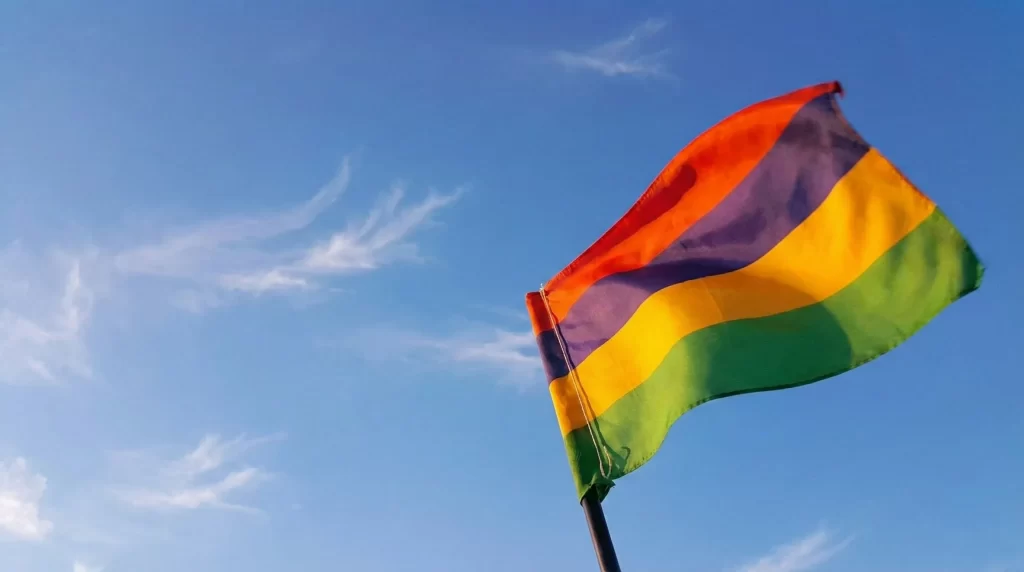
The Mauritius flag meaning is deep. It consists of four equal horizontal stripes. Red at the top. Blue. Yellow. And Green at the bottom.
Each color tells two stories. One is the poetic symbolic story. The other is the gritty political story. Understanding the Mauritius flag meaning requires looking at both sides.
1. Red (Rouge)
The Symbolic Meaning: Red represents the struggle for freedom and independence. It is the blood and sweat of our ancestors who worked the fields and fought for their rights. It reminds us that our freedom was not free. It was earned.
The Political Meaning: In the political landscape of 1968 red was the color of the Parti Travailliste (Labour Party). This was the social democrat party led by Sir Seewoosagur Ramgoolam who is often called the Father of the Nation. They were the driving force behind the independence movement.
2. Blue (Bleu)
The Symbolic Meaning: This one is easy to guess. Blue represents the Indian Ocean. We are an island nation surrounded by the most beautiful deep blue water you have ever seen. The ocean is our lifeblood. It provides our food and brings our tourists and defines our borders.
The Political Meaning: Blue represented the PMSD (Parti Mauricien Social Démocrate). This was the conservative party at the time. Including their color in the flag was a masterstroke of diplomacy. It showed that even though they were the opposition they were still an essential part of the Mauritian fabric.
3. Yellow (Jaune)
The Symbolic Meaning: Yellow stands for the new light of independence shining over the island. It represents the golden sunshine (which we have plenty of) and the bright future ahead. It is the color of hope.
The Political Meaning: Yellow was the color of the IFB (Independent Forward Block). This was a socialist party that largely represented the rural Indo-Mauritian community. By including yellow the design acknowledged the vital role of the villages and the agricultural workers.
4. Green (Vert)
The Symbolic Meaning: Green represents the lush agriculture of Mauritius. If you drive through the center of the island you will see miles of green sugar cane fields and tea plantations. It symbolizes the fertility of our land and the verdant landscape that stays green all year round.
The Political Meaning: Green was associated with the CAM (Comité d’Action Musulman). This party represented the interests of the Muslim Indo-Mauritian community. Including green ensured that this significant part of the population saw themselves reflected in the national symbol.
A Masterclass in Unity
Do you see the genius of it now?
The flag was not just a pretty design. It was a political coalition woven into cloth. By taking the colors of the four major political parties of the time, Labour, PMSD, IFB, and CAM, and placing them side by side as equals Gurudutt Moher created a visual treaty.
It said that no matter who you voted for or where your ancestors came from you were part of this flag. You were Mauritian. This is why the Mauritius flag meaning is so powerful. It turned a divided population into a united nation.
If you want to learn more about the diverse groups that make up our island check out our guide to Mauritian Culture.

Technical Specs: We Don’t Just Use Any Red
You cannot just grab some crayons and draw the flag. Well you can but if you want to be official about it there are rules. To preserve the true Mauritius flag meaning, the government has strict standards.
The flag is governed by the “National Flag, Arms of Mauritius, National Anthem and Other National Symbols of Mauritius Act of 2022.” That is a mouthful of a title.
- Ratio: The flag must maintain a width to length ratio of 2:3.
- Pantone Colors: We have specific Pantone codes. The Red is not just red it is Pantone 18-1664 TCX. The Blue is Pantone 19-3939 TCX. We take our colors serye (seriously).
This ensures that whether the flag is flying on a government building in Port Louis or on an embassy in Paris it looks exactly the same.
A Unique Global Status
Here is a cool fact for your next trivia night. Mauritius is one of only two nations in the world whose flag features four equal horizontal stripes.
The other one is the Central African Republic. However their flag is a bit different because it has a vertical red bar running through the middle. So technically we are the only ones with just the four pure horizontal bands.
The Mauritius flag meaning stands out among African nations because it explicitly incorporated political party colors to forge national cohesion. Most other countries chose colors based on Pan-Africanism (red, black, green, gold). Mauritius chose colors based on internal reconciliation.
It has remained unchanged since 1968. While many other countries have changed their flags after coups or regime changes Mauritius has kept “Les Quatre Bandes” flying high. It is a testament to the stability of our democracy.
If you are interested in visiting during our Independence Day celebrations on March 12th make sure to read our guide on the Best Time to Visit Mauritius. The energy is electric and the whole island turns into a party.
The Flag in Daily Life
Today the Mauritius flag meaning resonates as more than just a political symbol. It is a badge of pride.
You will see it painted on the side of traditional pirogue boats. You will see it printed on beach towels. During the Indian Ocean Island Games the whole country wears the four colors to cheer on our athletes.
It reminds us that despite our differences we are all in the same boat. Literally. We are on a small island in the middle of a big ocean. We have to swim together.
So the next time you see “Les Quatre Bandes” waving against the blue sky take a moment to appreciate the Mauritius flag meaning. It is not just colorful fabric. It is a history book. It is a peace treaty. It is a promise of a bright future.
Allez! Raise the flag high!
External Links:
Government of Mauritius National Symbols
Encyclopedia Britannica: Flag of Mauritius