
Sega Dance in Mauritius – The Soulful Rhythm You Can’t Resist
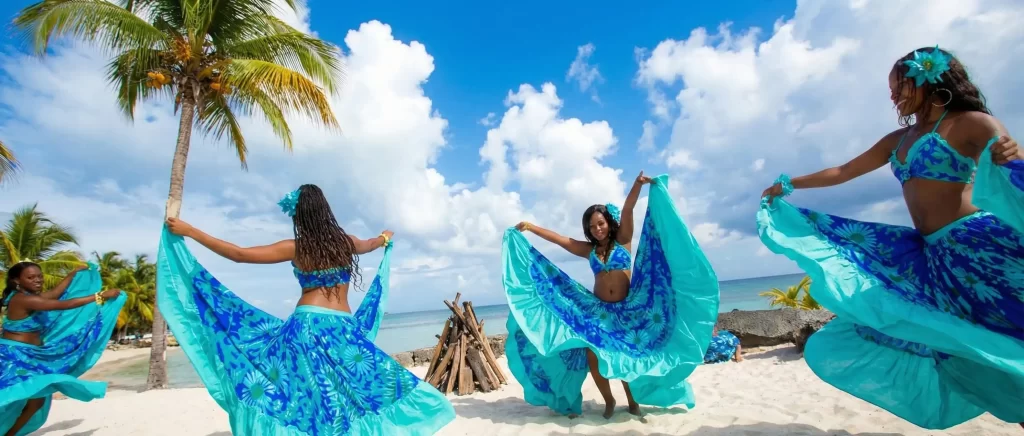
If you think “Sega” is just a vintage video game console from the 90s, you are in for a delightful cultural shock. In the middle of the Indian Ocean, Sega Dance in Mauritius is the heartbeat of the island. It is the rhythm that wakes you up, the melody that puts you to sleep, and quite frankly, the only valid reason to wiggle your hips in public without looking entirely out of place.
While most visitors come here to perfect their tan or sip cocktails with little umbrellas in them, the real soul of the island lies in this vibrant, rhythmic tradition. Sega Dance in Mauritius is far more than a tourist show put on between the buffet and dessert at your hotel. It is a living, breathing expression of memory, resistance, and joy. It is the story of a people who decided that no matter how hard life got, there was always a reason to light a fire and dance.
In this guide, we are going to dive deep into the world of Sega. We will explore its history, its instruments, and most importantly, how you can stop looking like a confused flamingo and start moving like a local.
Contents
What Exactly is Sega Dance in Mauritius?
At its core, Sega is a “complete performing art.” That sounds very fancy, but it basically means it is a combo meal of music, dance, storytelling, and fashion. It originated right here in Mauritius and spread its vibes to our neighbors in Rodrigues, Réunion, and the Seychelles.
The essence of Sega Dance in Mauritius is grounded in simplicity and raw emotion. It does not require a symphony orchestra or a stage with pyrotechnics. It requires a beat, a voice, and a desire to move.
The Ingredients of the Vibe
To truly understand Sega Dance in Mauritius, you have to look at its components:
- The Music: It is percussive. We are talking about drums and rattles that create a rhythm so infectious it should probably come with a health warning.
- The Dance: It involves grounded steps and rolling hips. If your feet are leaving the ground too much, you are probably doing aerobics, not Sega.
- The Lyrics: This is where it gets spicy. The songs are sung in Creole, the beautiful everyday language of the island. The lyrics are often improvised poetry. They tell stories of love, lost love, hungry neighbors, and the struggles of daily life.
It is considered the “Tipik” style, traditional Mauritian Sega, that has been recognized by UNESCO. That is right, Sega Dance in Mauritius is officially a masterpiece of the intangible heritage of humanity. So when you are shaking it on the beach, you are technically performing a cultural service.
A History Lesson That Won’t Put You to Sleep
To appreciate Sega Dance in Mauritius, we have to rewind the clock a few centuries. The origins of this dance lie in the 18th and 19th centuries, born in the fires of adversity.
From Shadows to the Spotlight
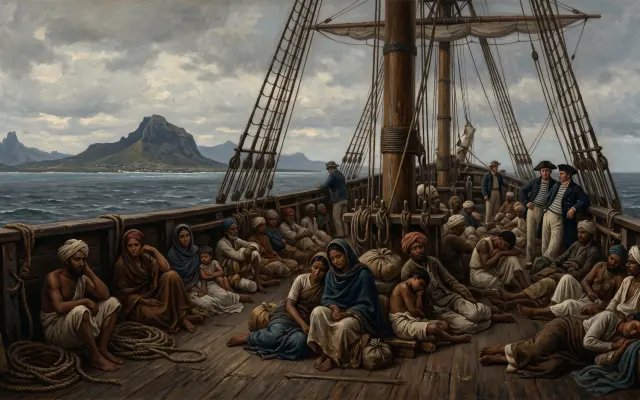
When enslaved Africans and Malagasy people were brought to the island by French and British colonizers, they didn’t bring luggage, but they brought their rhythm. After long, exhausting days working in the sugar cane fields, they would gather around a campfire.
This was their safe space. They would beat on crude drums, sing in the emerging Creole language, and dance to release the pain of the day. It was catharsis in its purest form. It was a way to mourn the loss of their homeland but also a way to reclaim their joy.
For a long time, Sega Dance in Mauritius was looked down upon by the colonial elite and religious authorities. They saw the close male-female interaction and the hip movements and clutched their pearls in horror. They called it “primitive” or “immoral.”
But you cannot keep a good rhythm down. Over time, as slavery was abolished and the island moved toward independence, Sega moved from the hidden campfires to the public stage. Legends like Ti Frer and Michel Legris brought the music to the radio. Suddenly, everyone realized that Sega Dance in Mauritius wasn’t just for one community; it was the heartbeat of the entire nation.
The Musical Trinity of Sega Dance in Mauritius
You can’t have the dance without the noise. And the noise in Sega Dance in Mauritius comes from a specific set of instruments that look simple but sound incredible.
The Ravanne: The Heartbeat
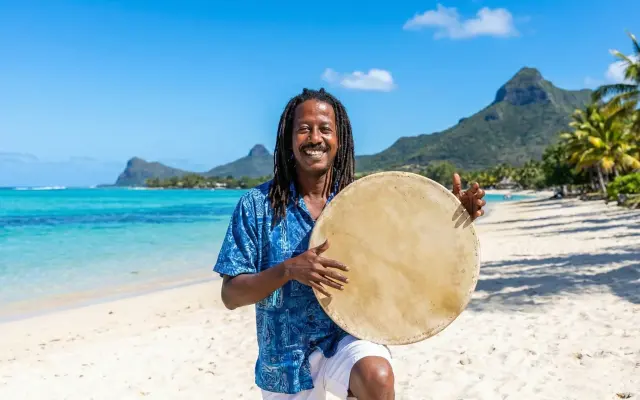
The undisputed king of Sega instruments is the Ravanne. It is a large, round frame drum made from a wooden hoop covered with goatskin.
Here is a fun fact to impress your friends at dinner parties: The skin of the Ravanne needs to be tight to get that booming sound. Traditionally, players warm the drum over a bonfire before playing to tighten the skin. So, if you see a musician holding his instrument over a fire, do not panic; he is not cooking it. He is tuning it. The ravannier (the player) drives the energy of the dancers, often speeding up the tempo until everyone is breathless.
The Maravanne: The Shaker
Next up is the Maravanne. This is a flat, rectangular box filled with dried seeds or small pebbles. When shaken, it creates a continuous, sandy, rustling sound. It sounds like the ocean washing over the shore, which is fitting since most Sega Dance in Mauritius happens within earshot of the waves. It binds the rhythm together, filling the gaps between the drumbeats.
The Triangle: The Ting-a-Ling
Finally, we have the Triangle. Yes, the same instrument you might have played once in primary school and felt very proud of. In Sega, the triangle is crucial. Struck with a metal rod, it provides a high-pitched, metallic beat that cuts through the deep thrum of the drums. It keeps the time and adds a bright texture to the music.
Mastering the Moves of Sega Dance in Mauritius
Okay, you have the history, and you know the instruments. Now it is time to talk about the physical part. How exactly do you do the Sega Dance in Mauritius without injuring yourself or offending the locals?
The Golden Rule: Keep Your Feet on the Ground
The most distinct feature of Sega is the footwork. Or rather, the lack of footwork. You rarely lift your feet off the ground. The movement is a shuffle. Imagine you are standing on hot sand and you are trying to smooth it out with the soles of your feet.
You slide your feet back and forth, keeping contact with the earth. This grounded nature of the dance is symbolic of the connection to the land. You aren’t trying to fly; you are trying to vibe with the soil.
It’s All in the Hips
While your feet are shuffling, your hips should be doing the heavy lifting. The hips move in a continuous, fluid motion, often side-to-side or in a circle. For the ladies, this is emphasized by the voluminous skirts that sway with every movement. For the men, it’s a bit more subtle, but the rhythm is definitely in the waist.
If you are stiff, you aren’t doing Sega Dance in Mauritius. You need to relax. Loosen the knees. Let the drum tell your hips what to do. It’s hypnotic.
Partner Interaction: The Art of the Chase
Sega is often danced in couples, but it’s a tease. The dancers face each other, but they rarely touch. It is a dance of courtship.
The man might stand with his hands on his hips or behind his back, waiting. The woman shuffles toward him, perhaps waving a colorful handkerchief, inviting him into her space. They circle each other. They approach and retreat. It’s a playful game of “catch me if you can,” played out to a 6/8 time signature.
The lack of touching adds to the intensity. It reflects a tradition of controlled sensuality. It’s flirtatious and fun, but respectful.
The Dress Code: Colors, Ruffles, and Rolled Trousers
You can’t talk about Sega Dance in Mauritius without talking about the fashion. It is a visual feast.
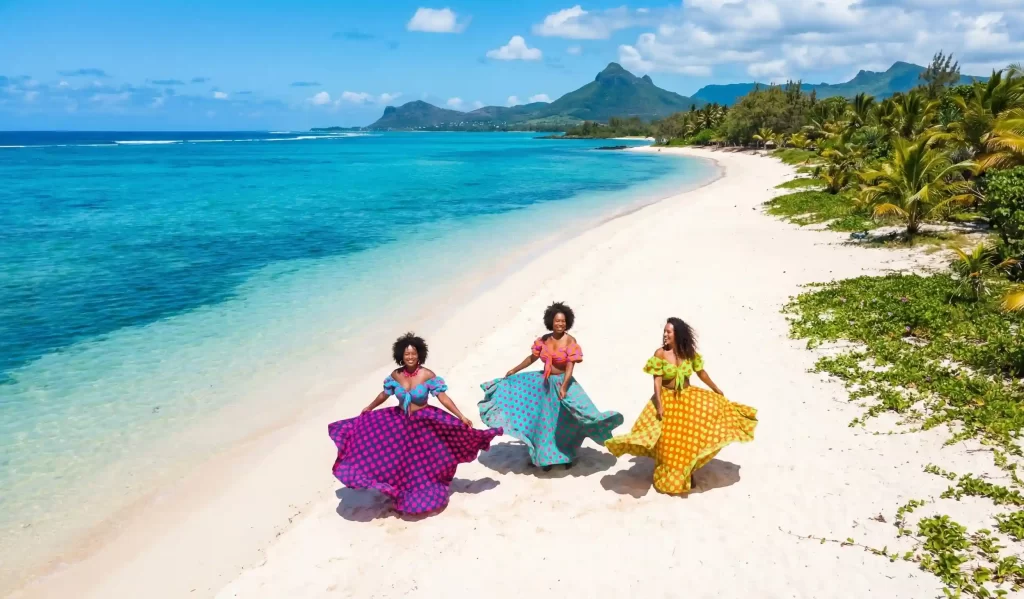
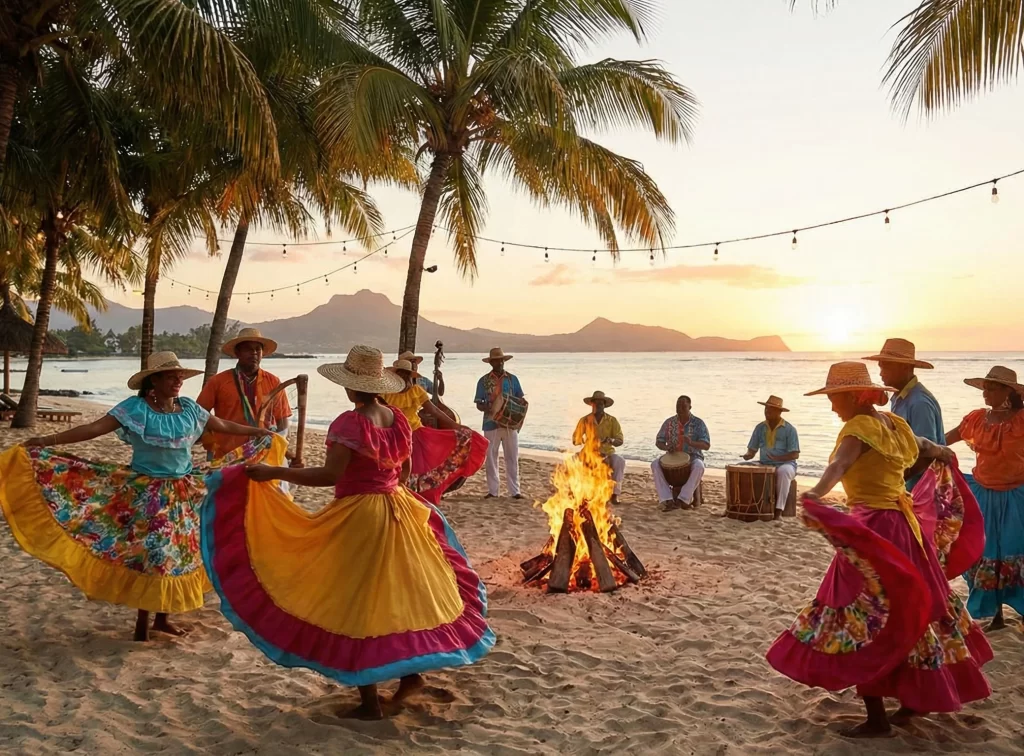
The women typically wear long, wide skirts that are a kaleidoscope of colors. We are talking bright reds, sunny yellows, ocean blues, and floral patterns that can be seen from space. The blouse is usually cropped or tied at the waist, often off the shoulder. The skirt is not just clothing; it is a prop. Dancers grab the hem and wave it like butterfly wings, accentuating the hip movements.
The men keep it simple but stylish. They usually wear rolled-up trousers (perfect for wading in the surf) and colorful shirts. A straw hat often completes the look, a nod to the ancestors who worked in the fields.
When you see a group of dancers in full costume against the backdrop of a white sandy beach, it is the quintessential postcard image of the island. Speaking of beaches, if you want to know the best spots to potentially see this, check out our guide to Belle Mare Beach, which is a fantastic backdrop for such events.
Different Flavors: From Tipik to Seggae
Sega Dance in Mauritius is not a monolith. It has evolved, branched out, and remixed itself over the years.
Sega Tipik Morisien
This is the OG style. The vintage reserve. Recognized by UNESCO, Sega Tipik is raw and acoustic. It uses only the traditional instruments, Ravanne, Maravanne, Triangle. It is intimate and intense. This is what you find at small family gatherings or dedicated cultural events.
Sega Tambour of Rodrigues
If you hop over to our sister island of Rodrigues, the Sega gets faster. The Sega Tambour features, as the name suggests, a tambour (drum) but the tempo is rapid-fire. It is energetic, sweaty, and incredibly impressive to watch. The accordion is also a frequent guest star in Rodriguan music, adding a unique melodic layer.
Modern Vibes and Seggae
We can’t live in the past forever. In the late 20th century, Sega Dance in Mauritius met the electric guitar and the synthesizer. Modern Sega, or “Sega d’Ambiance,” is what you hear on the radio and at parties. It’s polished, faster, and designed to get a club moving.
Then there is Seggae. A brilliant fusion of Sega and Reggae, pioneered by the legendary Kaya. It takes the soulful drumming of Sega and mixes it with the chill, off-beat skank of Reggae. It’s the perfect soundtrack for a Sunday afternoon drive or reading our ultimate guide to Mauritius.
Where to Experience Authentic Sega Dance in Mauritius
So, you are sold. You want to see it. You want to hear it. You want to awkwardly shuffle your feet to it. Where do you go?
Hotels vs. Real Life
Most resorts and hotels will have a “Sega Night.” These are great for a first taste. The costumes are pristine, the choreography is tight, and you can watch it while eating your buffet dinner. It’s accessible and entertaining.
However, if you want the real, unfiltered Sega Dance in Mauritius, you need to venture out. Public beaches on weekends are prime territory. Families bring their own instruments, light a BBQ, and play music as the sun goes down. It’s not a show; it’s life.
Cultural festivals like the Festival International Kreol are also fantastic opportunities to see top-tier performers. And if you happen to be getting married in Mauritius, hiring a local Sega troupe for your reception is the ultimate way to get your guests on the dance floor. Trust me, nothing breaks the ice like trying to teach your Aunt Sharon how to move her hips to a Ravanne beat.
Why We Love Sega Dance in Mauritius
Why does this matter? Why are we writing 1500 words about a dance?
Because Sega Dance in Mauritius is the glue that holds the culture together. In a country that is a melting pot of cultures, African, Indian, European, Chinese, Sega is the common ground. It doesn’t matter your background; when the Ravanne starts beating, you are Mauritian.
It transforms the “chosen traumas” of the past into a celebration of survival. It allows the people to remember where they came from while celebrating where they are. It is memory in motion.
If you are exploring the island, perhaps taking one of the best hikes in Mauritius up Le Morne, remember that the mountain is sacred in Sega history. It was a refuge for escaped slaves. The music that was born in its shadow conquered the world.
Conclusion
Sega Dance in Mauritius is an invitation. It invites you to leave your worries at the door, to take off your shoes, and to feel the earth beneath your feet. It invites you to listen to a language that was forged in struggle and turned into poetry.
Whether you are watching a polished performance at a 5-star resort or stumbling upon a jam session on a public beach, take a moment to really listen. Listen to the hands slapping the goatskin. Listen to the seeds shaking in the box. Listen to the voices rising in harmony.
And then? Then you dance. You might not have the rhythm perfectly. You might look a bit silly. But in Mauritius, nobody cares. As long as you are smiling and your feet are shuffling, you are doing it right.
So, pack your sunscreen, bring your sense of rhythm, and come experience the soul of the island. Just remember: it’s all in the hips.
External Resources used:
Tours and activities in Mauritius
Hand-picked from GetYourGuide. Free cancellation on most bookings.
Some links on this page are affiliate links. If you book through them we may earn a small commission, at no extra cost to you. It helps keep Creole Mauritius free.
Questions and tips