
Best Snorkeling Spots in Mauritius: 14 Places
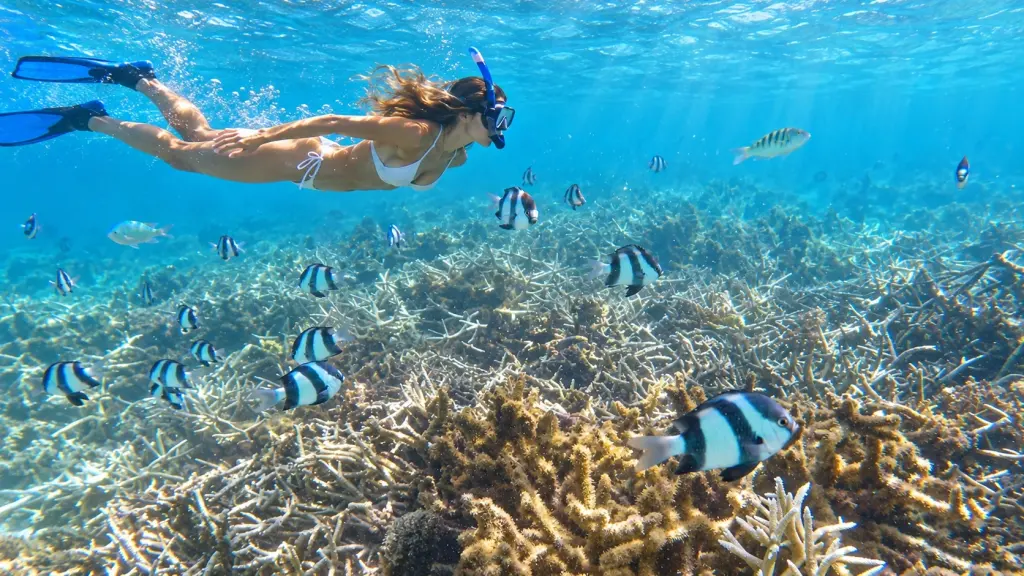
Some of the best places to snorkel in Mauritius are surprisingly easy to reach. At Trou aux Biches, you can walk straight into the lagoon with a mask and snorkel. At Blue Bay, a short boat trip can take you over coral gardens that have made this corner of the island famous. And along the northwest coast, there’s always the possibility of spotting a sea turtle feeding around the reef.
But there’s something worth knowing before you choose a beach. Not every beautiful lagoon is good for snorkeling. Some have sandy bottoms with very little marine life, while others have coral patches that are difficult to reach safely from shore. Wind, tides and boat traffic can also change the experience considerably.
I’ve put together this guide to the best snorkeling spots in Mauritius to help you choose somewhere that suits your swimming ability and where you’re staying. It covers beaches you can snorkel from independently, places better explored with a local guide, and a few popular locations where the snorkeling isn’t necessarily the main attraction.

Best snorkeling spots in Mauritius at a glance
If you’re short on time, these are the places I’d consider first. The access information is particularly useful because some of the best reefs aren’t directly accessible from the public beach.
| Snorkeling spot | Best for | Access |
|---|---|---|
| Blue Bay Marine Park | Coral and reef fish | Beach or guided boat |
| Trou aux Biches | Beginners and families | From shore |
| Pointe aux Piments | Possible turtle sightings | From shore, conditions permitting |
| Flic en Flac | Casual snorkeling on the west coast | From shore |
| Pereybere | Short snorkeling sessions | From shore |
| Pointe d’Esny | Quiet lagoon and marine life | From designated public access |
| Balaclava Marine Park | Marine biodiversity | Guided excursion recommended |
| Coin de Mire | Experienced snorkelers | Boat only |
For a first snorkeling trip, my preference would be Blue Bay or Trou aux Biches. If you have already spent time snorkeling and are comfortable in deeper water, a guided trip to Coin de Mire is worth considering.
Whatever location you choose, check the conditions on the day. A normally sheltered lagoon can become difficult to swim in when the wind picks up, and currents near reef openings can be dangerous even when the water looks calm.
Snorkeling in southeast Mauritius
The southeast is home to Blue Bay Marine Park, one of the best-known snorkeling destinations in Mauritius. It’s also close to Mahébourg and the airport, making it relatively easy to include in a holiday itinerary.
1. Blue Bay Marine Park
If I had to recommend one snorkeling location to somebody visiting Mauritius for the first time, Blue Bay would be high on the list.
Located on the southeast coast near Mahébourg, Blue Bay has a protected marine park covering approximately 3.5 square kilometres. It’s known for its coral formations, clear lagoon and variety of reef fish.
There’s some interesting scientific information behind its reputation. The Mauritius Oceanography Institute reported that a 2012 inventory of Blue Bay Marine Park recorded 108 coral species, 233 fish species and 201 mollusc species. Those are historical survey findings rather than a count of what visitors will see today, but they give an idea of the area’s biodiversity.
The park is also home to large brain coral formations. Some have grown to several metres across, although the condition of individual corals can change because of bleaching, storms and human activity.
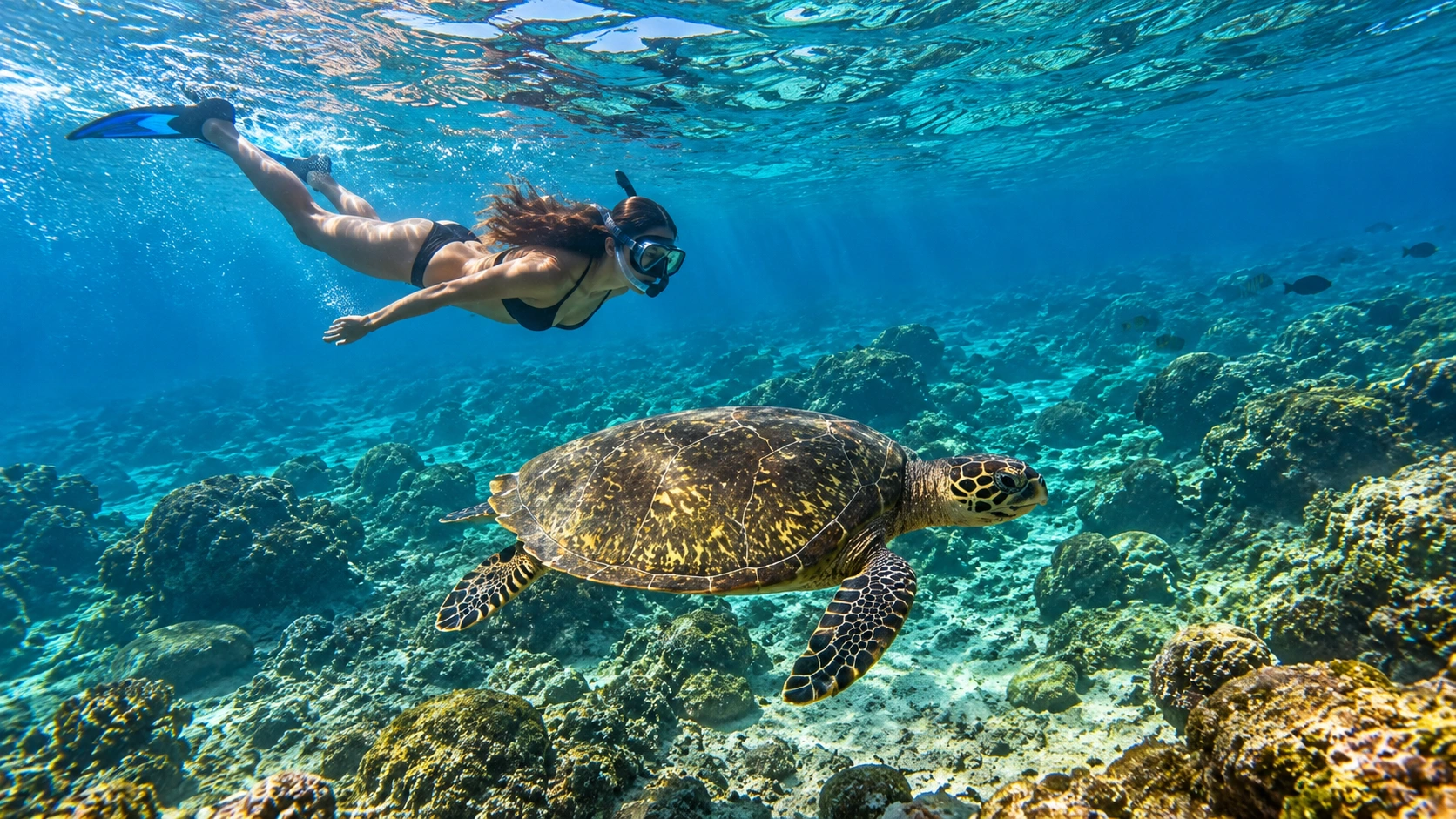
You can swim and snorkel from Blue Bay Public Beach in suitable conditions. However, the better-known coral gardens are not necessarily right beside the swimming area. A short glass-bottom boat excursion with a permitted local operator can be a better option for seeing the reef without attempting a long swim through boat traffic or towards deeper water.
Ask the operator where snorkeling is permitted and whether the trip includes a stop in an authorised area. Blue Bay is protected under marine park regulations, and some zones have restrictions on access and activities.
I’d try to visit earlier in the morning when conditions are suitable and the lagoon is usually less busy. School holidays and weekends can bring considerably more visitors to the public beach.
Good for: Beginners on a supervised excursion, reef fish, coral viewing and families who want the option of a glass-bottom boat.
For the official biodiversity information, see the Mauritius Oceanography Institute’s OceanQuest publication.
2. Pointe d’Esny
A little north of Blue Bay, Pointe d’Esny has a different atmosphere. The long stretch of coastline is lined with residential properties, and public access points are less obvious than at the main tourist beaches.
The lagoon can be beautiful on a calm day, with clear water, sandy areas and patches of marine vegetation. You may find small fish around suitable habitats, although this isn’t a continuous coral garden.
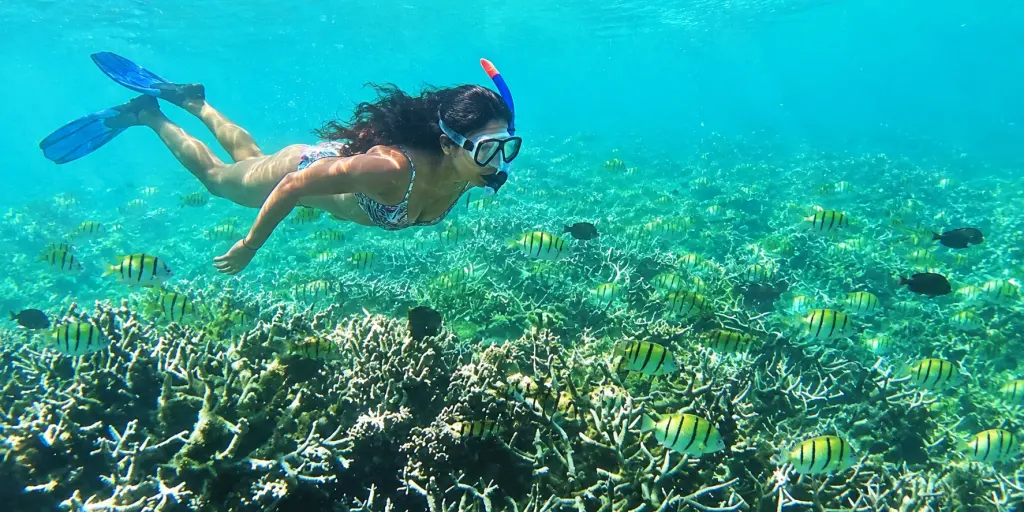
One of the nice things about Pointe d’Esny is that it can feel quieter than Blue Bay, especially outside weekends and holidays. The trade-off is that there are fewer obvious facilities and less guidance about where to enter the water.
Use an established public access point, remain within a comfortable distance of shore and pay attention to the current. Conditions can vary with the tide, and the lagoon is not equally suitable for snorkeling along its entire length.
Good for: Quiet lagoon swimming with some casual snorkeling when the conditions are calm.
3. La Prairie Beach
La Prairie is on the southwest coast, between Le Morne and Baie du Cap. It’s a lovely place to stop when exploring this part of Mauritius, particularly because of the views towards Le Morne Brabant.
The lagoon is shallow in places, with broad sandy areas and patches of seagrass. You might spot small fish or other marine creatures, but I wouldn’t choose La Prairie expecting the same coral and fish diversity as Blue Bay.
It’s better suited to visitors who enjoy an occasional look beneath the surface while spending time at the beach. Wind and tide can make the conditions less comfortable, so avoid going far out simply because the water appears shallow.
Good for: A scenic beach stop with light snorkeling when conditions allow.
Snorkeling on the west coast of Mauritius
The west coast is a convenient option for visitors staying around Flic en Flac, Black River or Le Morne. It is often more sheltered from the southeast trade winds during the cooler months, although local sea conditions still need checking.
4. Flic en Flac Beach
Flic en Flac is one of the easiest places to combine a beach day with a short snorkeling session. There’s a long public beach, plenty of space to relax and restaurants nearby if you’re spending most of the day in the area.
The lagoon has a mixture of sand, seagrass and scattered coral or rocky patches. Fish are more likely to gather around these areas than over completely bare sand, so you may need to look around a little to find an interesting spot.
I wouldn’t recommend swimming all the way towards the outer reef in search of better marine life. There can be boat activity, and currents around reef openings are a risk. Stay within suitable swimming areas and ask locally about safe snorkeling zones.
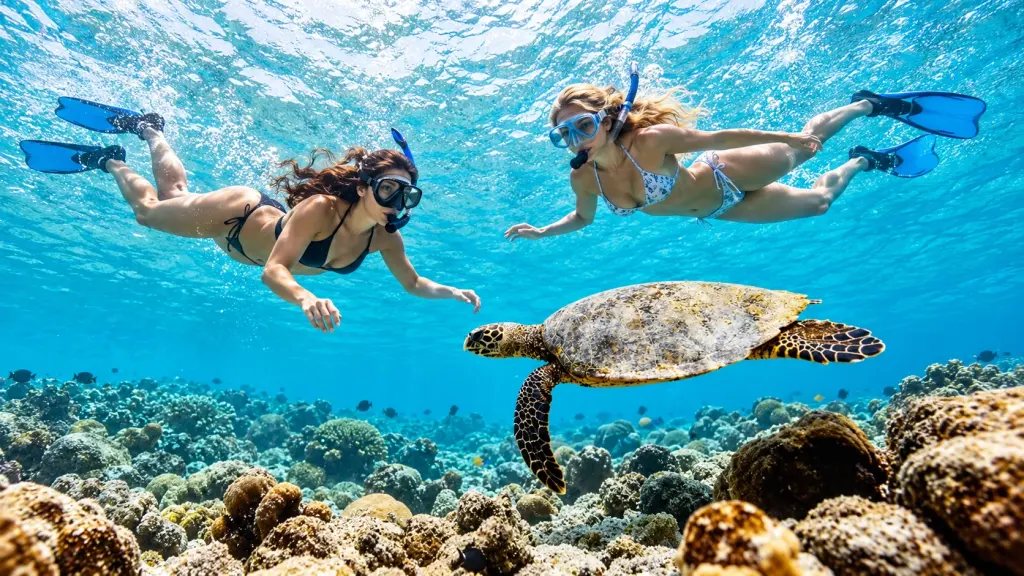
You may also come across references to the Cathedral near Flic en Flac. This is a scuba diving site involving underwater rock formations and caves, not an ordinary snorkeling location accessible from the public beach.
If you’re staying in Flic en Flac, trying the lagoon on a calm morning is worthwhile. Just keep your expectations realistic: it’s a pleasant place for recreational snorkeling, but the marine life varies from one section to another.
Good for: Visitors staying on the west coast who want convenient shore snorkeling.
5. Tamarin Bay
Tamarin Bay is famous for its dolphins, although I wouldn’t put it among the best places for independent reef snorkeling.
The bay has a river mouth, changing currents and surf conditions. Visibility can also be affected by sediment. It’s a different environment from the sheltered lagoons around Blue Bay or Trou aux Biches. Many visitors come here for dolphin-watching excursions, usually arranged through operators departing from Tamarin or nearby Black River.
If you’re interested in seeing wild dolphins, choose an appropriately licensed operator that follows the rules on approach distances, boat behaviour and swimming activities. Don’t enter the water independently to chase a pod or approach dolphins from a boat that isn’t conducting a permitted activity.
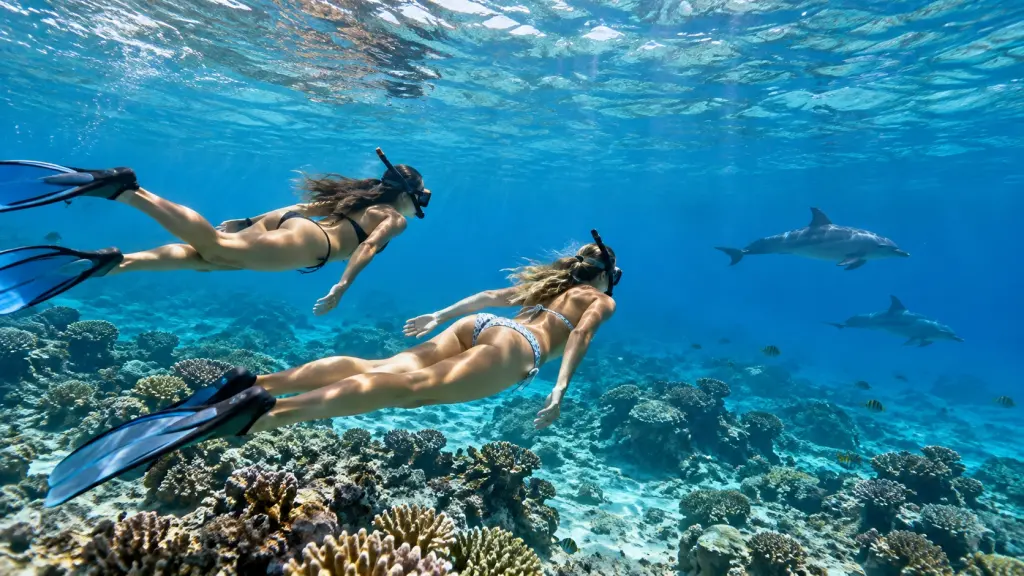
Mauritius already regulates commercial dolphin-watching and swimming activities. On 14 October 2026, the government announced additional enforcement measures and plans to tighten the regulations further to protect marine mammals and visitors.
Good for: Responsible dolphin-watching excursions, rather than casual reef snorkeling.
You can read the government announcement on dolphin and whale-watching rules for further information.
6. Île aux Bénitiers and Crystal Rock
Île aux Bénitiers is a popular boat excursion from the southwest coast. Trips commonly combine time in the lagoon, views of Le Morne, a stop near Crystal Rock and lunch on or near the island.
Crystal Rock is a distinctive coral-rock formation rising from the lagoon. It’s one of the most photographed places in southwest Mauritius, and the shallow turquoise water around it looks wonderful in photographs.
However, the famous scenery doesn’t mean every part of the surrounding lagoon is good for snorkeling. Much of it is sandy or covered with seagrass, and boat traffic can be heavy around popular stops.
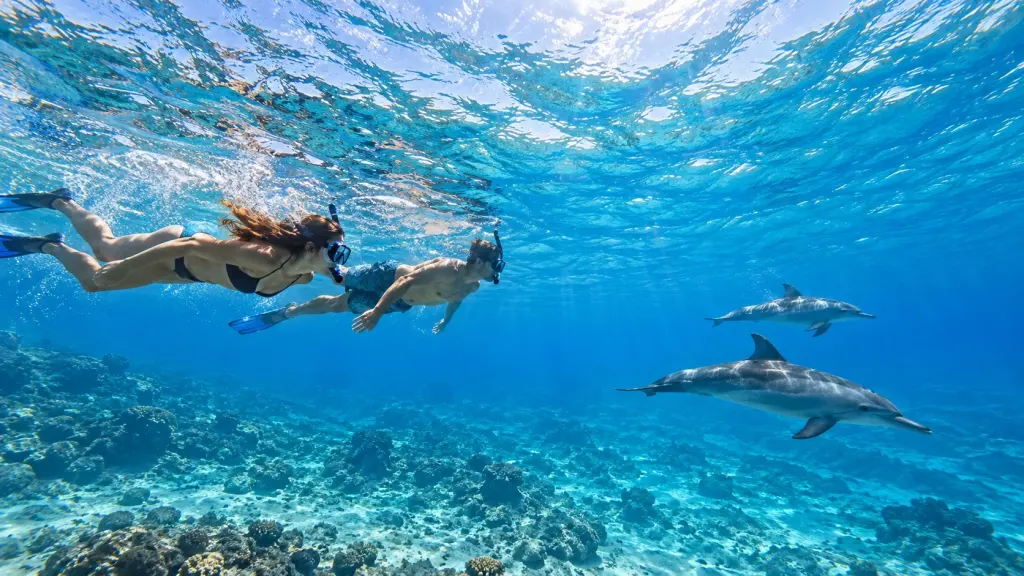
If snorkeling is important to you, ask the boat operator whether the excursion includes a dedicated reef stop away from busy boat movements. Don’t assume a trip advertised as visiting Crystal Rock will automatically include an interesting coral garden.
Good for: A scenic island excursion with snorkeling included where the operator identifies a suitable reef area.
Best snorkeling spots in north Mauritius
For visitors staying around Grand Baie, Trou aux Biches or the northwest coast, there’s no need to travel all the way to Blue Bay every time you want to snorkel. Several northern beaches have accessible swimming areas, with fish and occasional turtle sightings.
7. Pointe aux Piments
Pointe aux Piments is one of the better-known locations in Mauritius for possible sea turtle sightings. It’s on the northwest coast, close to Trou aux Biches and Balaclava.
The underwater terrain includes rocky and coral areas as well as marine vegetation. Green turtles may visit suitable feeding grounds, although sightings are never guaranteed.
Unlike a wide sandy beach, some entry points around Pointe aux Piments can be uneven or rocky. I’d recommend checking where people are safely entering the water and avoiding areas with strong currents or significant boat activity.
If you encounter a turtle, give it plenty of space. Avoid swimming directly above it when it needs to surface, never grab its shell and don’t try to follow it if it moves away.
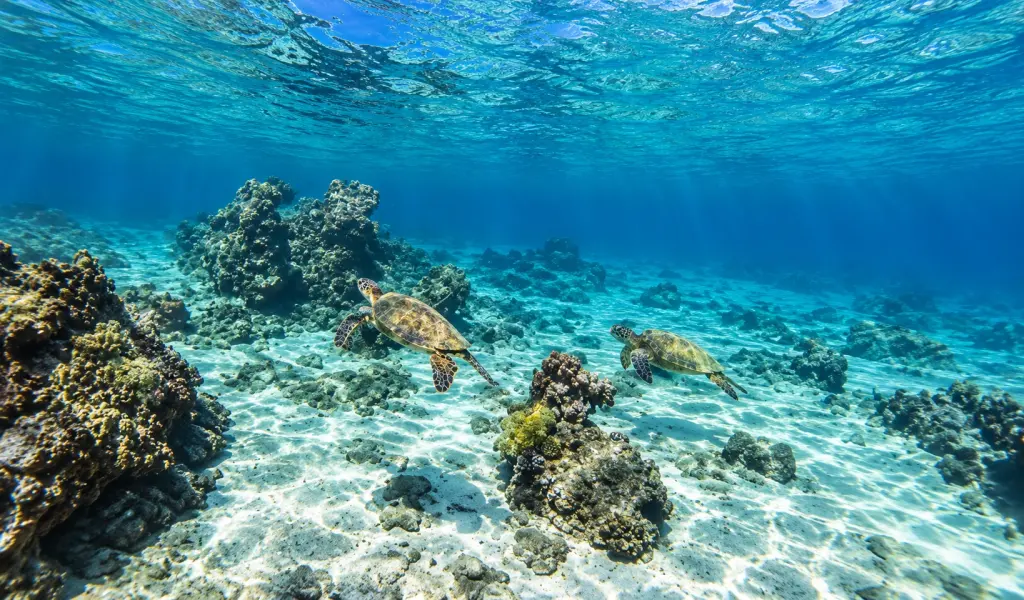
I would also avoid tours that guarantee a turtle encounter. They’re wild animals, and the best experience is watching them behave naturally without being surrounded or chased.
Good for: Confident swimmers hoping to see turtles and reef fish in suitable conditions.
8. Trou aux Biches Beach
Trou aux Biches is one of my preferred recommendations for travellers who want to try snorkeling without booking a boat excursion.
The beach has a sheltered lagoon with sandy areas and patches of rock and coral. It’s popular with families, and on a calm day you can explore suitable areas near the shore without swimming large distances.
Look for fish around rocky patches and coral heads, but be mindful of sea urchins and avoid putting your feet down on the reef. Visibility will vary with the weather, recent rainfall and the number of people in the water.
Trou aux Biches can become busy, particularly around public holidays and weekends. Early morning is often a more pleasant time for a swim before beach and boat activity increases.
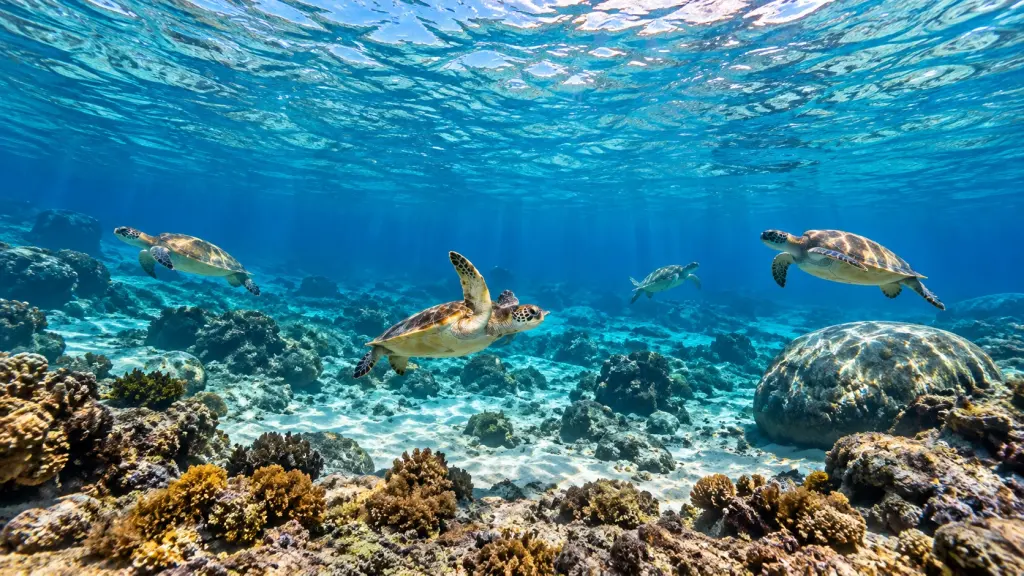
Families with children should choose an appropriately shallow, calm section and keep young swimmers under close supervision. A sheltered lagoon isn’t a substitute for swimming ability or safety equipment.
Good for: Beginners, families and visitors looking for snorkeling directly from a public beach.
9. Pereybere Beach
Pereybere is a small, popular beach just north of Grand Baie. The water can become deeper relatively quickly compared with some of the island’s broader, shallower lagoons, making it enjoyable for swimming on calm days.
For snorkeling, the more interesting areas tend to be around suitable rocky and marine habitats near the edges of the bay. The central sandy section is generally better for ordinary swimming.
Because it’s a compact beach, Pereybere gets crowded fairly easily. There can also be boat and water-sports activity, so pay attention to swimming zones and avoid heading towards vessel movements.
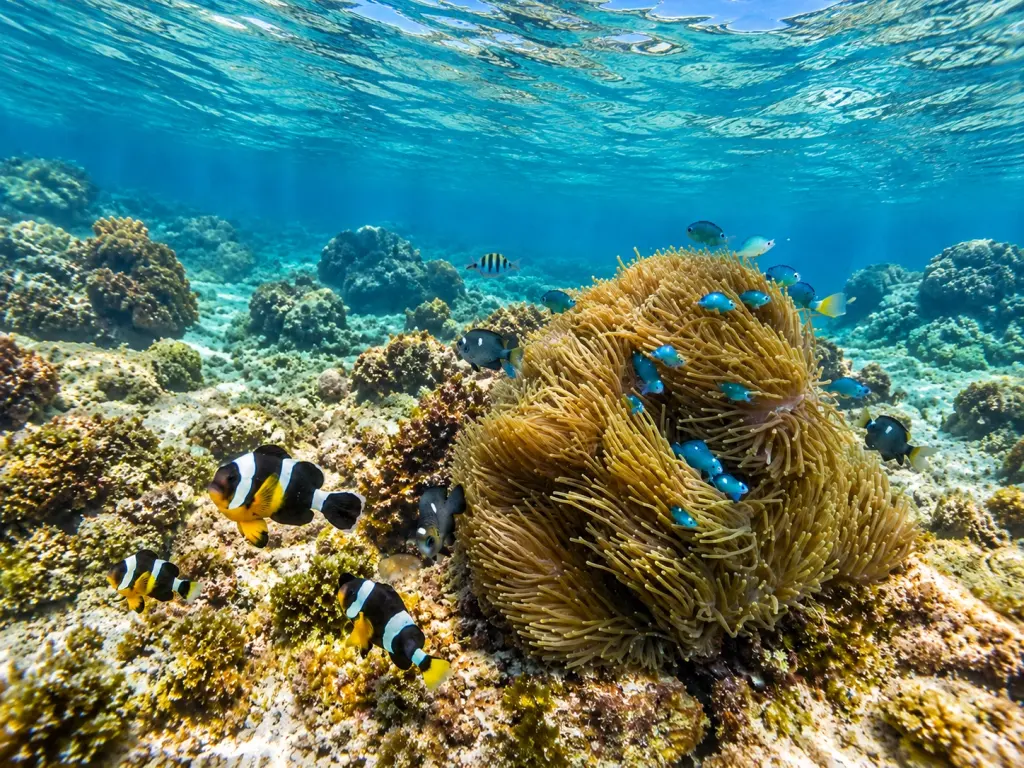
I’d choose Pereybere if I were already staying in the north and wanted a relaxed morning at the beach with some snorkeling included. I wouldn’t travel across the island specifically for its reef.
Good for: Swimming and short snorkeling sessions near Grand Baie.
10. Turtle Bay and Balaclava Marine Park
Balaclava Marine Park is on the northwest coast near Turtle Bay. Along with Blue Bay, it’s one of the two designated marine parks in Mauritius.
The protected area contains coral habitats and a variety of marine life. It’s sometimes overlooked because several nearby beaches are associated with hotels and resorts, making access less straightforward for independent visitors.
If you’re staying in the area, ask your hotel or a properly permitted local operator about guided snorkeling opportunities in authorised zones. It’s important to follow the marine park rules rather than assuming you can enter any reef area independently.
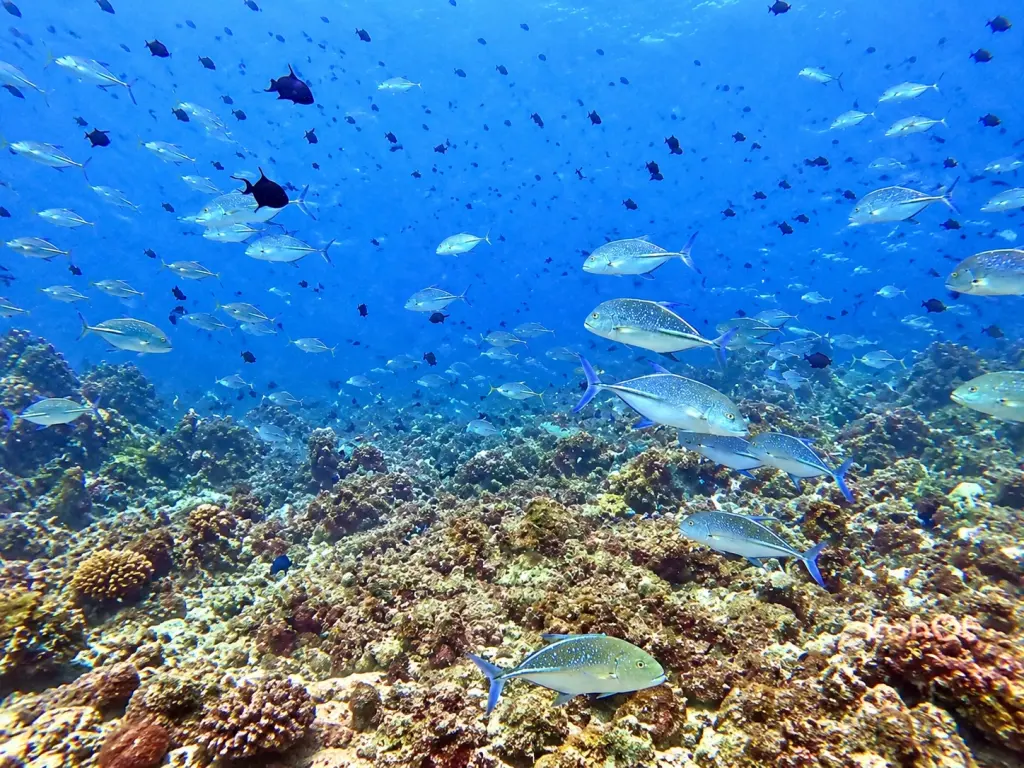
Despite the name Turtle Bay, turtle sightings aren’t guaranteed. The main attraction is the wider marine habitat and the opportunity to observe fish and corals where conditions are suitable.
Good for: Guided marine park snorkeling, particularly for visitors based around Balaclava.
Snorkeling on the east coast of Mauritius
The east coast has some beautiful lagoons, but it’s also more exposed to the southeast trade winds during winter. If you’re visiting between roughly May and October, check the wind before planning a long snorkeling session here.
11. Île aux Cerfs
Île aux Cerfs is one of the most popular day trips in Mauritius. Boats usually depart from Trou d’Eau Douce, taking visitors across the lagoon to the island’s beaches and tourist facilities.
The island is a lovely place to spend the day, but I wouldn’t describe every beach there as excellent for snorkeling. Many of the popular swimming areas have mostly sandy bottoms, with limited coral directly beneath you.
Some excursions include separate snorkeling stops in suitable parts of the surrounding lagoon. If seeing reef fish is your priority, choose a trip that specifically includes guided snorkeling rather than assuming it will be available as part of any island visit.
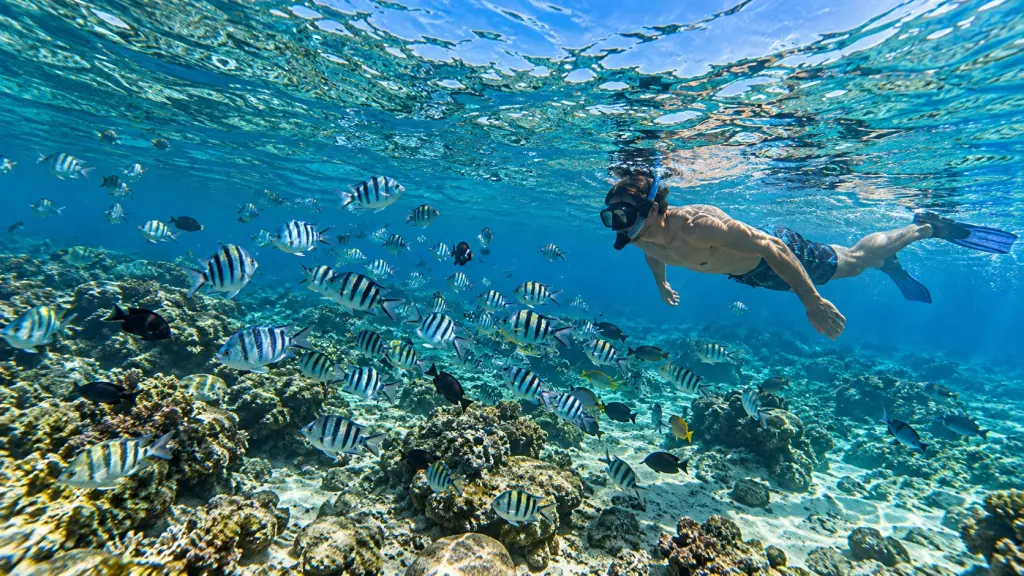
Boat traffic and changing conditions are important considerations. Keep clear of marked channels and follow your guide’s instructions when entering the water.
Good for: An island day trip combining the beach, boat ride and an optional guided snorkeling stop.
12. Palmar Beach
Palmar is a quieter stretch of beach on the east coast, not far from Belle Mare. Its main appeal is the broad lagoon and relatively peaceful surroundings.
The seabed is sandy across much of the accessible area, so snorkeling can be less rewarding than at places with more coral or rocky habitat. You may still see fish around suitable patches, especially when the water is clear.
I would treat Palmar primarily as a swimming and beach destination. If you’re staying nearby, taking a mask into the water on a calm morning can be enjoyable, but there are stronger snorkeling choices elsewhere on the island.
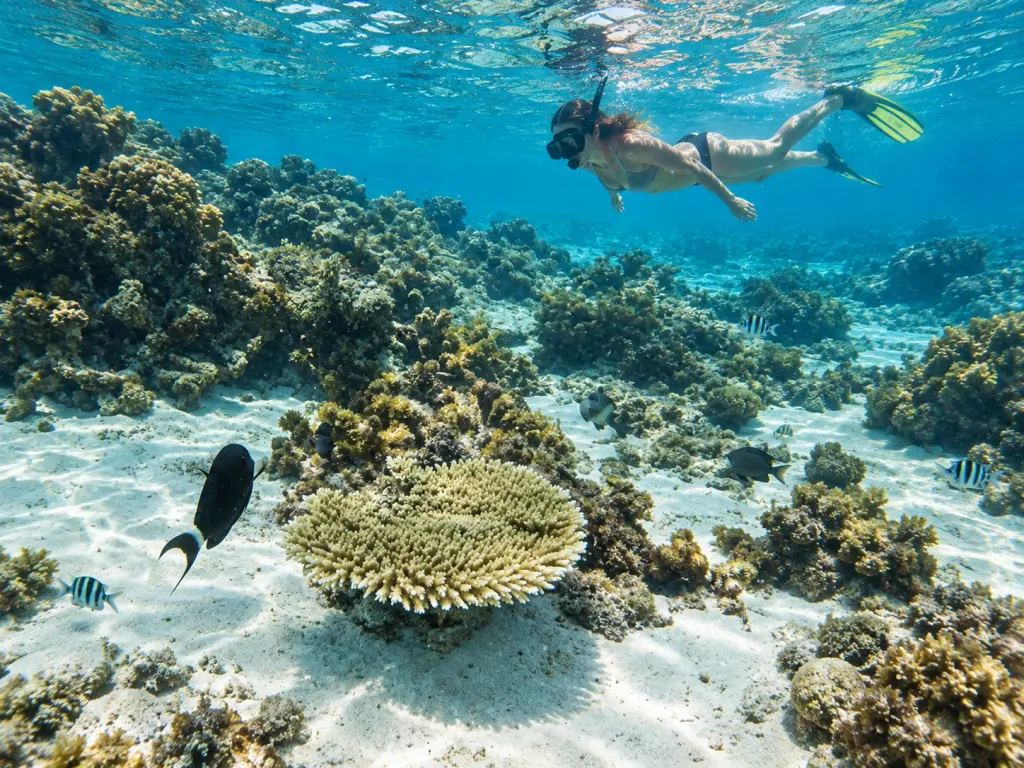
Winter trade winds may make the lagoon choppy. Pay attention to local conditions and avoid entering the water when waves or currents make swimming uncomfortable.
Good for: A quieter beach day with occasional snorkeling in suitable conditions.
Snorkeling around Mauritius’ northern islands
If you have already explored the lagoons and want something different, a boat excursion to the northern islands is worth considering.
These trips involve more exposed water than the typical beach snorkeling session. Conditions can change during the crossing, and the best sites depend heavily on the swell, current and wind.
13. Coin de Mire (Gunner’s Quoin)
Coin de Mire is the distinctive triangular island visible from parts of the northern coast near Grand Baie and Cap Malheureux.
It’s a popular destination for boat excursions, diving and snorkeling because the surrounding water has rocky underwater habitats and marine life quite different from the shallow mainland lagoons.
Depending on the location and conditions, snorkelers may encounter schools of reef fish and larger species around the rocks. Visibility can be good, but there is no guarantee of exceptionally clear water or particular animals on every trip.
Coin de Mire is not somewhere I would recommend swimming out to independently. The waters around the island are exposed, with currents and boat movements that require careful planning.
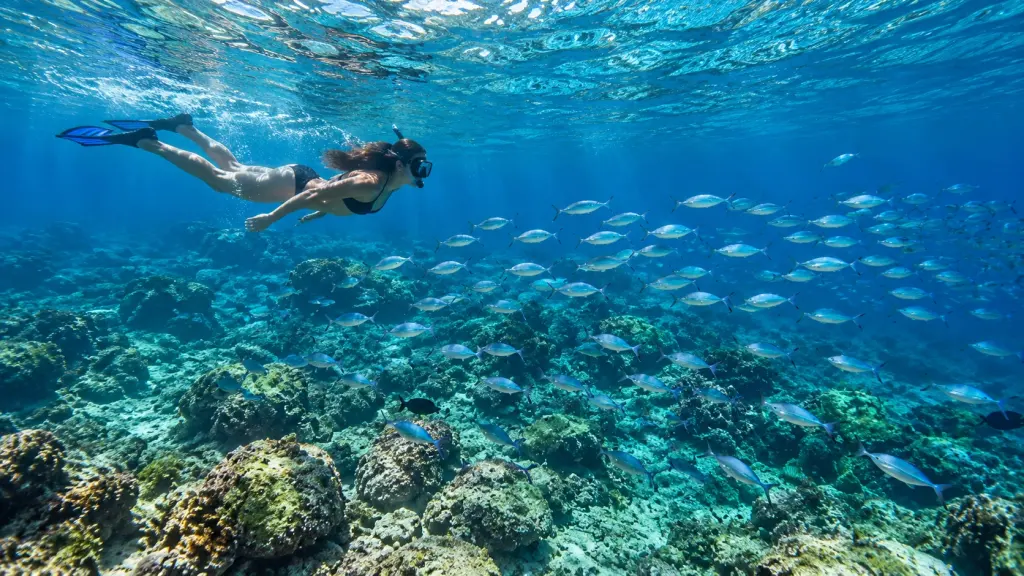
Choose a reputable operator, make sure snorkeling is an organised part of the excursion, and follow the skipper’s decision if the weather makes entering the water unsafe.
Good for: Confident snorkelers looking for a guided boat excursion away from the mainland.
14. Île Plate (Flat Island)
Île Plate is farther north and usually visited on an organised boat or catamaran trip. Its beaches and relatively remote setting attract visitors who want a full day away from the main island.
There are places around the island where snorkeling may be possible when conditions are suitable, but the exposed location means the sea can be rougher than in the sheltered mainland lagoons.
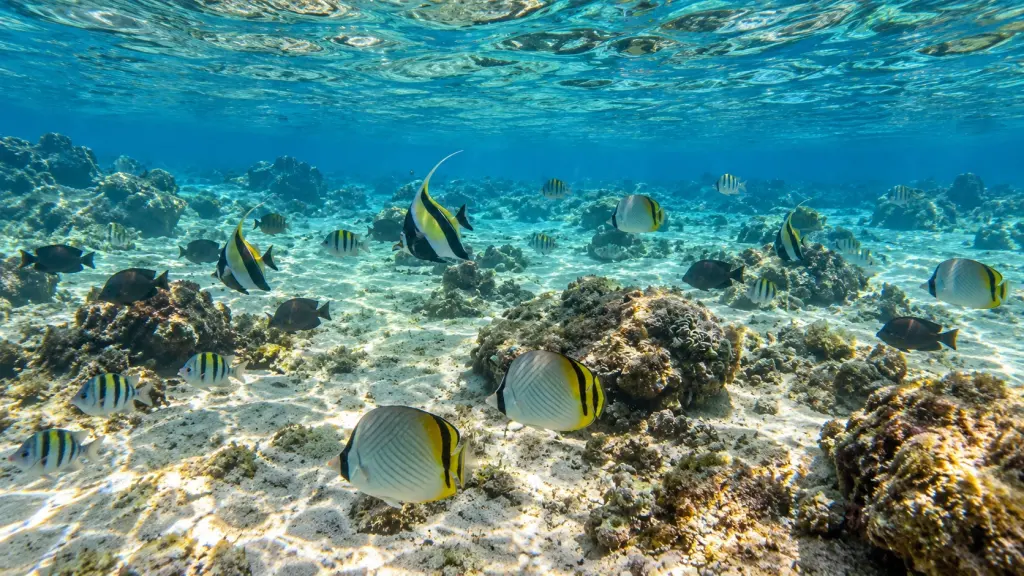
Some day trips focus mainly on the beach and lunch rather than marine exploration. If snorkeling is the reason you’re booking, ask which sites the operator uses and whether a guide, flotation equipment and snorkeling gear are included.
Good for: Visitors who enjoy boat excursions and want the possibility of snorkeling around the northern islands.
When is the best time to snorkel in Mauritius?
You can snorkel in Mauritius throughout the year, but the best coast to choose often depends on the season and daily weather.
November to April: Warmer water
The Mauritian summer is warm and humid, and sea temperatures are generally at their highest. The warmer water makes it comfortable to spend longer snorkeling, particularly for people who don’t enjoy cooler water.
However, summer also brings heavier rainfall and the risk of tropical cyclones. The official cyclone season runs from 1 November to 15 May, and rough seas or heavy rain can make snorkeling unsuitable even when the weather looks reasonable from the beach.
May to October: Cooler water and trade winds
The cooler season is often comfortable for exploring Mauritius, although water temperatures drop and trade winds become more noticeable. The east and southeast coasts can be windy during this period. The north and west coasts are often more sheltered, making places such as Trou aux Biches, Pointe aux Piments and Flic en Flac worth considering.
There isn’t one guaranteed month with perfect underwater visibility everywhere in Mauritius. Local wind, rain, swell and boat activity matter more than a simple seasonal ranking. For more help choosing travel dates, read our best time to visit Mauritius guide or our July and August weather guide.
Snorkeling safety: What visitors should know
Mauritius has plenty of sheltered lagoons, but it’s important not to confuse shallow-looking water with safe swimming conditions.
A reef may protect much of the beach from waves while allowing strong water movement through a channel or opening. Currents can be especially dangerous near these passes, and conditions may change with the tide.
- Don’t snorkel alone. Go with another person, stay within your ability and tell someone where you’re entering the water.
- Avoid reef passes and boat channels. Don’t swim towards the outer reef or across marked channels hoping to find more fish.
- Check the weather. Wind, heavy rain and swell can reduce visibility and make getting back to shore difficult.
- Use a suitable flotation aid. Beginners and anyone uncertain of their swimming ability should consider a properly fitted buoyancy vest and supervised snorkeling.
- Protect your feet. Sea urchins, sharp rocks and other hazards may be present. Reef shoes can help around rocky entry points, but never walk or stand on coral.
- Wear sun protection. A long-sleeved UV swim shirt is useful because your back is exposed to the sun while snorkeling.
- Choose properly equipped operators. Boats should have life jackets and appropriate communication and safety equipment.
If you’re taking an organised excursion, the UK’s official travel advice for Mauritius recommends checking that the operator holds a valid permit, that sufficient life jackets are available and that the captain can contact the coastguard if necessary.
How to snorkel without damaging the reef
Mauritius’ reefs have experienced coral bleaching, storms and damage from human activity. Even in protected areas, you may see broken, bleached or dead coral alongside healthier patches.
The most useful thing visitors can do is avoid adding to that damage.
- Never stand on, kick or touch living coral. Some corals are extremely fragile and can break with surprisingly little pressure.
- Don’t feed fish, turtles or other marine animals. Feeding changes their natural behaviour and can harm them.
- Keep your distance from sea turtles and allow them clear access to the surface to breathe.
- Don’t collect coral, shells or other marine organisms. Protected areas have additional restrictions.
- Choose operators that follow permitted routes and mooring arrangements rather than anchoring on coral reefs.
It’s tempting to swim closer when you spot something interesting, especially a turtle. I think the best underwater encounters are the ones where the animal continues behaving naturally and you can simply watch from a distance.
For more information about the protection of Mauritius’ reefs, see the Ministry’s annual report on marine protected areas, which covers monitoring and management of Blue Bay and Balaclava Marine Parks.
Planning a snorkeling trip around Mauritius
If you’re staying in Mauritius for a week or longer, I wouldn’t try to visit every snorkeling spot on this list. You’ll spend too much time travelling between beaches, and several locations offer fairly similar experiences.
A better approach is to choose one or two sites near your accommodation and add a boat excursion if you want to explore somewhere farther away.
For visitors staying in the north, Trou aux Biches and Pointe aux Piments make sense. On the west coast, Flic en Flac is convenient for casual snorkeling. If you’re based near Mahébourg or have a free day in the southeast, Blue Bay would be my first choice.
For a special excursion, consider a licensed boat trip to Coin de Mire or a visit to Balaclava Marine Park with an operator familiar with the permitted areas.
Public transport reaches many coastal towns, but getting between several beaches with equipment can be inconvenient. If you plan to explore independently, our Mauritius Transport Guide compares buses, taxis and car rental. We also have a separate guide to driving in Mauritius.
Still deciding where to stay? Our where to stay in Mauritius guide compares the main coastal areas, and our best beaches in Mauritius article covers places worth visiting even when you’re not snorkeling.
Tours and activities in Mauritius
Hand-picked from GetYourGuide. Free cancellation on most bookings.
Some links on this page are affiliate links. If you book through them we may earn a small commission, at no extra cost to you. It helps keep Creole Mauritius free.

Questions and tips