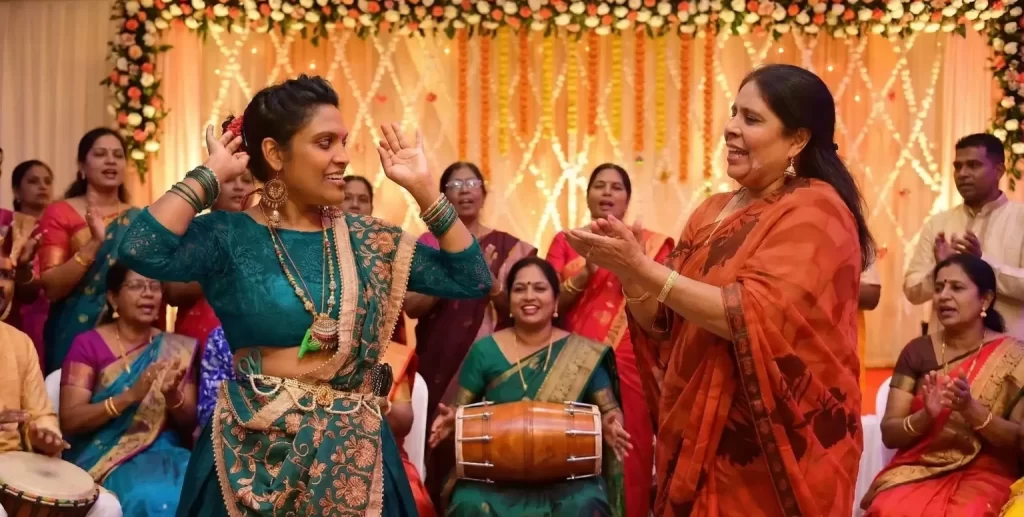
If you are invited to a traditional Hindu wedding in Mauritius, the celebration begins long before the actual wedding day. A few evenings prior to the main event, the family home is transformed by the rhythmic beating of a drum, the clinking of spoons against brass pots, and a chorus of women’s voices singing late into the night.
This is Geet-Gawai, a vibrant pre-wedding ceremony that combines ancient rituals, powerful folk music, and energetic dancing.
Rooted in the island’s Bhojpuri-speaking community, this ceremony has evolved from small, intimate gatherings in 19th-century sugar estate camps into a widely recognized pillar of national identity. It is so culturally significant that in 2016, it was inscribed on UNESCO’s Representative List of the Intangible Cultural Heritage of Humanity.
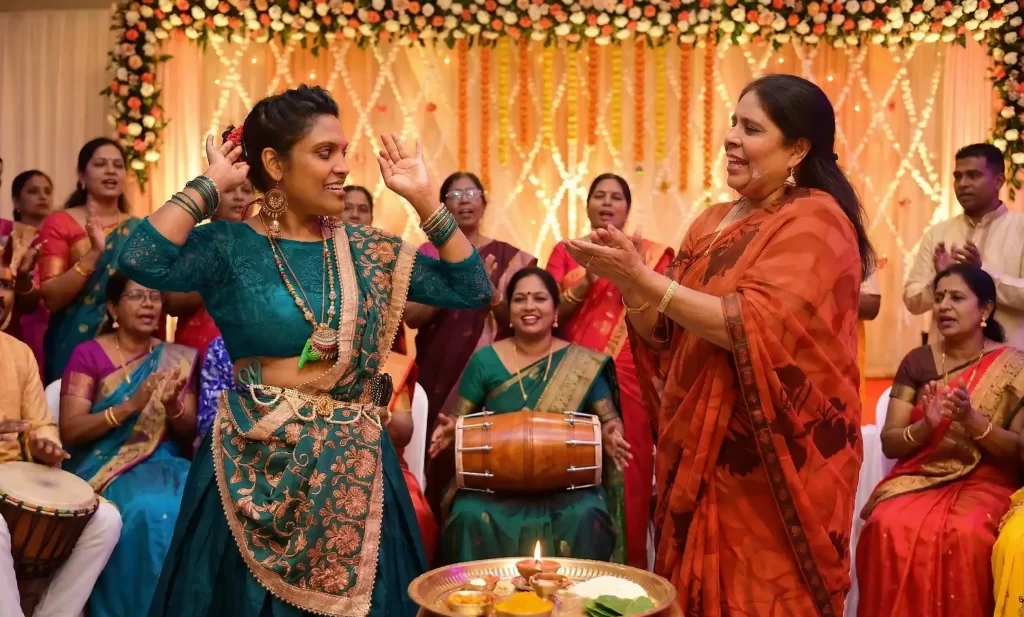
Quick Takeaway: Geet-Gawai is a traditional pre-wedding ceremony performed by the Mauritian Bhojpuri community. Led primarily by women, it involves a sequence of sacred rituals followed by call-and-response folk songs and the lively jhumar circle dance. Today, it stands as a celebrated UNESCO heritage practice that bridges generations and communities.
In this guide, we explore the origins, the step-by-step rituals, and the deep cultural significance of Geet-Gawai in Mauritius.
Table of Contents
1. What Is Geet-Gawai?
The term itself comes from North India. Geet means “song,” and gawai (or gawain) is linked to the act of singing. In official heritage documents, it is referred to as “Mauritius Bhojpuri Lok Geet – Geet-Gawai.” Put simply, it refers to traditional Bhojpuri wedding songs sung in Mauritius.
While it is fundamentally a pre-wedding event usually held at the home of the bride or groom, it is also recognized today as a distinct musical style. The evening begins with a strict, ordered series of sacred rituals and slowly transitions into rhythmic, joyful singing and dancing involving family members and neighbors.
2. The Historical Roots of the Tradition
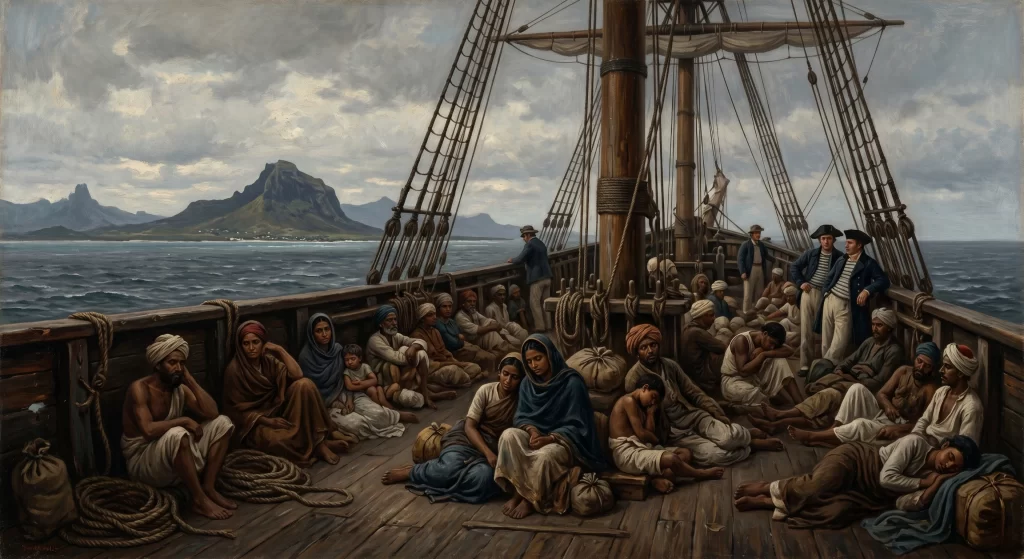
To understand Geet-Gawai, you have to look at the history of migration in the Indian Ocean. Following the abolition of slavery in 1834, thousands of indentured laborers (often referred to as girmitiyas) arrived in Mauritius from regions like Bihar and eastern Uttar Pradesh in India.
These migrants brought their vibrant repertoire of Bhojpuri folk songs and ritual music with them. However, as they settled into life on the colonial sugar estates, the tradition began to adapt. It absorbed influences from the new plantation environment and other local musical cultures. Over time, a distinct Mauritian style of Geet-Gawai emerged.
Because of this rich history, the ceremony acts as a living memory of migration, hardship, resilience, and community bonding for Indo-Mauritian families.
3. Step-by-Step: The Geet-Gawai Ceremony
A traditional Geet-Gawai is a deeply structured event. While modern families might shorten the timeline to accommodate busy work schedules, the core sequence outlined in UNESCO heritage documents remains intact.
The Gathering
On the evening of the ceremony, women of the family, neighbors, and specialist singers (known as Geetharines) arrive in traditional dress. They gather in a decorated space, often a yard or veranda, and sit together in a semi-circle.
Lagan-Kholna
The ritual begins with five married women sorting pieces of turmeric, unhusked rice, grass, and money in a cloth. During this process, the group sings lagan-geet, sumiran, and sandhya, devotional songs honoring Hindu deities and setting a sacred tone for the evening.
Dharti-Bandhai
Next, songs are sung to sanctify the performance space. The participants symbolically seek permission from Mother Earth to dance and perform upon her surface.
Dholak-Puja
This is a pivotal moment in the ceremony. The mother of the bride or groom, alongside the lead drummer, ritually honors the musical instruments, particularly the dholak (a two-headed hand drum). This marks the official transition from the solemn, sacred rituals into the more overt, energetic musical performance.
Suhag-Geet and Jhumar
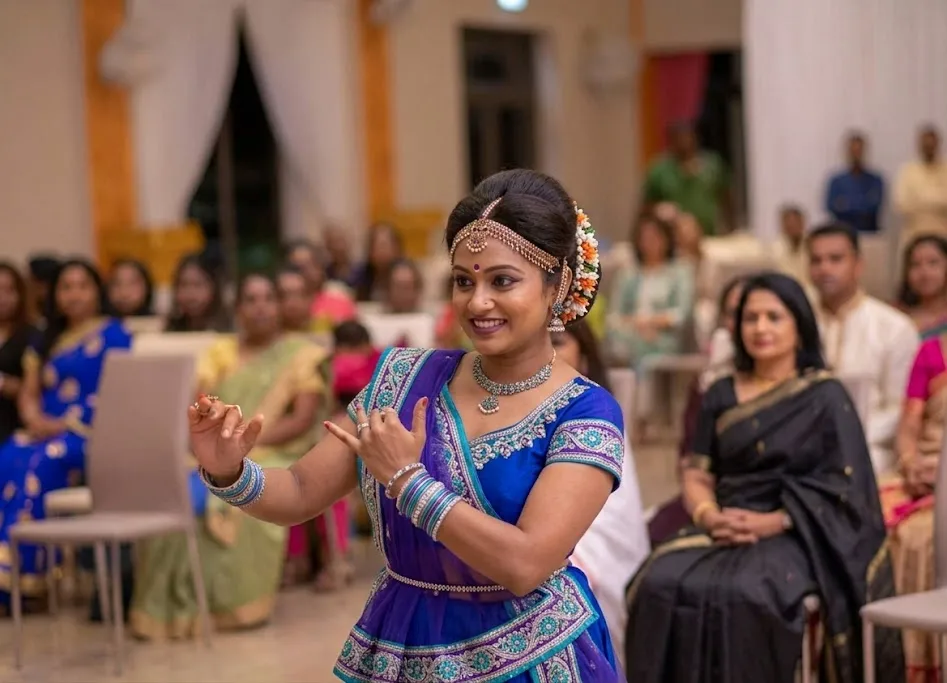
The tempo shifts. The women sing suhag-geet, auspicious songs wishing the bride or groom a happy married life. This naturally leads into the jhumar, a vibrant and joyful sequence of music and dance. Women and girls sway their hips, move in circles with short rhythmic steps, and playfully act out the lyrics of the songs.
Throughout the night, participants are served traditional snacks, hot drinks, ginger powder, and paan (betel leaves). The evening typically ends with guests being given soaked black chickpeas to take home.
4. The Sound of Geet-Gawai: Music and Instruments
Geet-Gawai is built around a call-and-response vocal style. The Geetharines (experienced lead singers) sing a verse, and the chorus of women answers. The songs range from deeply devotional pieces to humorous, playful verses that tease family members.
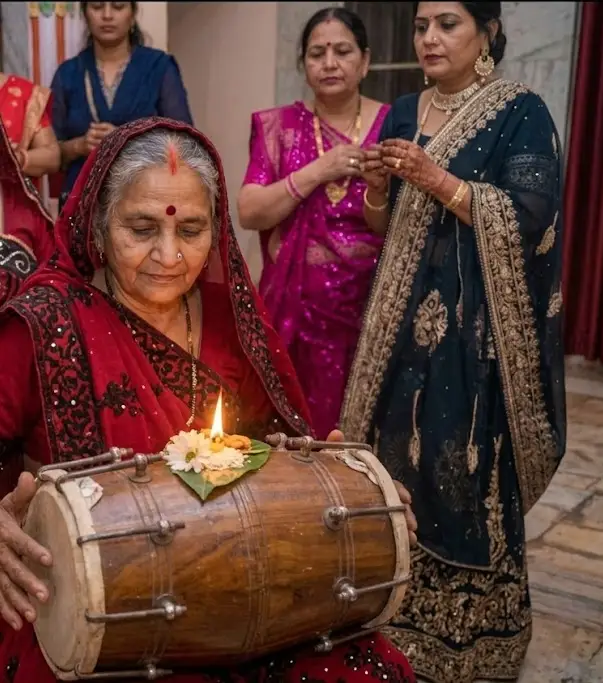
The instrumentation is wonderfully resourceful. The heartbeat of the music is the dholak. To add bright, percussive textures, everyday household items are transformed into instruments:
- Spoons are struck against the rim of a brass pot (lota).
- Brass plates (thali) are rhythmically tapped.
- Pairs of wooden sticks are used to keep the beat.
While the famous Mauritian Sega music is historically rooted in coastal Creole communities and driven by the ravanne drum and guitar, Geet-Gawai is distinctly rooted in the Bhojpuri language and North Indian-style melodies. To understand how these different genres coexist and shape the island’s soundtrack, read our guide on the history of Mauritian music.
5. UNESCO Status and Modern Evolution
Originally, Geet-Gawai was a women-only event held strictly within family circles in the sugar estate camps, sometimes lasting for an entire week.
From the 1970s onwards, the practice moved into the public domain. Today, it is performed not just at weddings, but on public stages, at national festivals, and on television. Men now frequently join in the musical and dance segments, and the repertoire occasionally features Bollywood-influenced arrangements.
In December 2016, the Intergovernmental Committee inscribed Geet-Gawai on UNESCO’s Representative List of the Intangible Cultural Heritage of Humanity. The committee praised the practice for contributing to social cohesion, breaking down class and caste barriers, and providing a powerful space where women’s voices and creativity lead the community.
Conclusion
Today, Geet-Gawai remains widely practiced across Mauritius. State cultural bodies, such as the Mahatma Gandhi Institute and the Bhojpuri Speaking Union, actively support documentation and training schools to ensure the younger generation carries the torch.
Geet-Gawai is much more than just a pre-wedding party. Its importance today lies not only in wedding rituals, but also in the way it preserves language, memory, and women-led cultural expression in Mauritius. By carrying the stories of 19th-century migration, family devotion, and community joy into the modern era, it remains a vital, living thread in the multicultural fabric of Mauritius.
If you are interested in learning more about how different traditions blend together on the island, explore our comprehensive Guide to Mauritian Culture.
Useful References: