Mauritius is often described as a “Rainbow Nation,” a term that usually refers to its ethnic diversity. However, this vibrancy extends deeply into the spiritual life of the island. Religion in Mauritius is not just a demographic statistic; it is the rhythm of daily life. It is found in the call to prayer echoing over Port Louis, the bells of a church in the central plateau, and the incense wafting from a temple in the north.
Unlike many nations where one faith dominates, Mauritius stands out as one of Africa’s most religiously diverse countries. There is no single majority religion here. Instead, the island is a tapestry of beliefs woven together by a complex history of colonization, migration, and coexistence. As we look at the landscape in 2025, Religion in Mauritius remains a testament to how different cultures can share a small geographical space while maintaining their distinct spiritual identities.
In this guide, we will explore the major faiths that call this island home, the festivals that bring the streets to life, and the unique societal fabric that allows them to thrive together.
Contents
The Religious Landscape: A Snapshot
To understand Religion in Mauritius, one must look at the numbers, which tell a story of immigration and settlement. The population is a unique blend, resulting from centuries of movement from India, Africa, China, and Europe.
According to recent data, the religious composition is distinct:
- Hinduism: Approximately 48%
- Christianity: Approximately 32%
- Islam: Approximately 17%
- Buddhism and others: Less than 2%
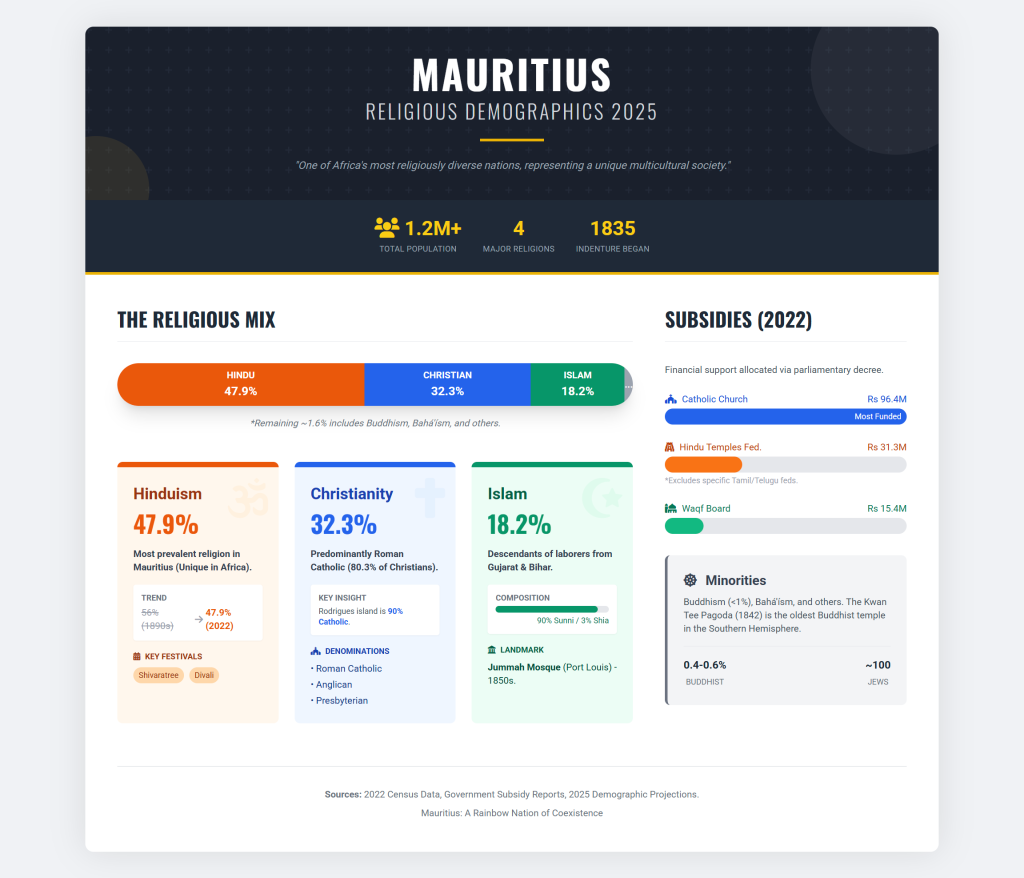
This makes Mauritius the only African nation where Hinduism is the most widely practiced religion. However, the beauty of the island lies in its proximity. You will often see a mosque, a church, and a temple within the same neighborhood, serving communities that have lived side by side for generations.
Hinduism in Mauritius: The Dominant Faith
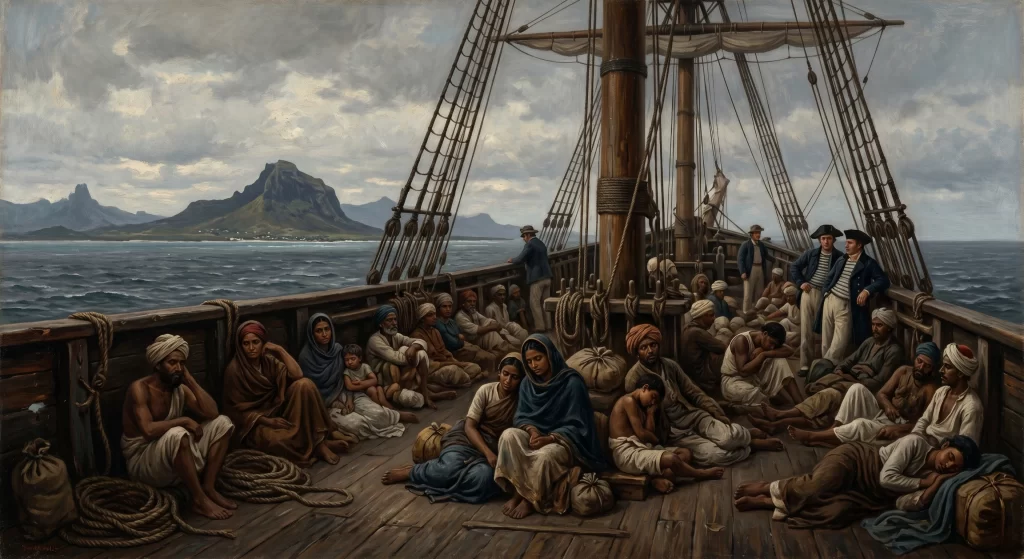
Hinduism holds a unique and prominent position in the cultural identity of the island. Brought to these shores primarily by indentured laborers from India following the abolition of slavery in 1835, it has flourished to become the largest faith group.
Traditions and Temples
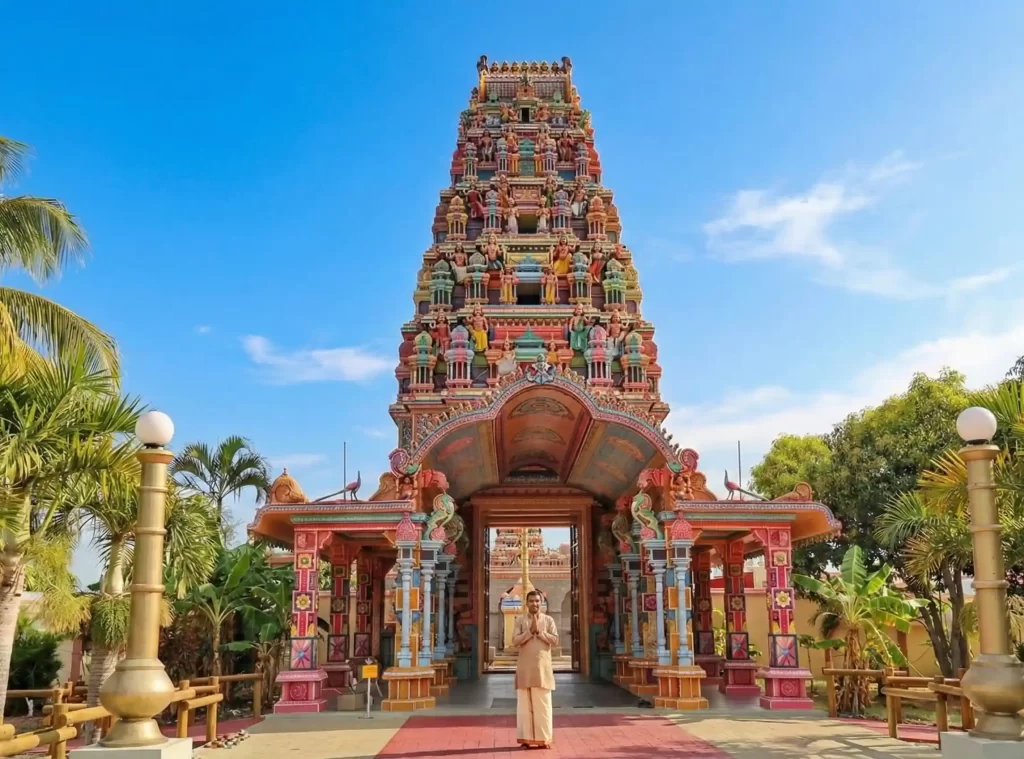
The Indo-Mauritian community preserved their traditions through difficult times, and today, their heritage is visible everywhere. The landscape is dotted with colorful temples, known as kovils (Tamil temples) and mandirs.
One cannot discuss Religion in Mauritius without mentioning the Maheswarnath Mandir in Triolet. Founded in 1888, it is dedicated to Lord Shiva and stands as a historic beacon of the faith. Similarly, the Ganga Talao (Grand Bassin) is a crater lake deep in the heart of the island that serves as the most sacred pilgrimage site for Mauritian Hindus. During the festival of Maha Shivaratree, hundreds of thousands of devotees walk across the island to offer prayers here.
If you are exploring the island, perhaps on one of the best hikes in Mauritius, you might encounter smaller shrines nestled in nature, reflecting the deep connection between the faith and the land.
Major Festivals
Hindu festivals are national events here. Divali, the festival of lights, illuminates the entire island with clay lamps and electric lights, transcending religious boundaries as neighbors of all faiths share sweets. Thaipoosam Cavadee, celebrated largely by the Tamil community, is a spectacular display of devotion involving piercing and processions.
Christianity in Mauritius: A Legacy of History
Christianity is the second largest religion and is deeply intertwined with the colonial history of the island. It first arrived with the Dutch and later took firm root under the French and British administrations.
The Christian Community
Today, the Christian population is predominantly Roman Catholic, accounting for roughly 26% of the total population. This group includes the Franco-Mauritian, Creole, and Sino-Mauritian communities. The island of Rodrigues, a dependency of Mauritius, is distinctively different, being approximately 90% Catholic.
The church plays a significant institutional role. Historic structures like the St. Louis Cathedral in Port Louis remind visitors of the enduring presence of the faith. In towns like Curepipe, the Ste Thérèse Church stands as an architectural landmark.
Celebrations
Christmas and Easter are major public holidays celebrated with great fervor. Christmas in Mauritius is a unique tropical experience, often involving beach picnics and family gatherings. For those planning on getting married in Mauritius, the historic churches offer a stunning and solemn backdrop for weddings, steeped in tradition.
Islam in Mauritius: A Pillar of the Community
Islam constitutes the third major pillar of Religion in Mauritius. Like Hinduism, the Muslim community primarily traces its roots to Indian immigration, with ancestors arriving from Gujarat and Bihar.
Structure and Diversity
The community is predominantly Sunni (about 90%), with a diverse internal structure including groups like the Memons and Surtees. The Jummah Mosque in Port Louis is not just a place of worship but an architectural marvel. Dating back to the 1850s, it combines Indian, Creole, and Islamic design elements. It stands right in the middle of the bustling Royal Road, offering a sanctuary of peace.
Festivals of Faith
Eid-ul-Fitr is the major celebration marking the end of Ramadan. It is a national public holiday, emphasizing the government’s recognition of the Muslim community. The streets near mosques are often lively with food stalls during Ramadan evenings, offering a taste of the island’s rich culinary heritage.
Buddhism and Minority Faiths in Mauritius
Though smaller in numbers, the Buddhist community, primarily of Sino-Mauritian descent, adds a vital layer to the diverse landscape of Religion in Mauritius. The Kwan Tee Pagoda in Les Salines is the oldest of its kind in the Southern Hemisphere, a testament to the long history of the Chinese community on the island.
Other faiths such as the Bahá’í Faith and the Church of Jesus Christ of Latter-day Saints also have a presence. The island is truly a haven for spiritual plurality.
Constitutional Protections and Government Support
One of the reasons Religion in Mauritius flourishes is the robust legal framework. The Constitution guarantees freedom of conscience and religion. Discrimination based on creed is explicitly prohibited.
The government actively supports this diversity financially. Recognized religious bodies receive annual subsidies to maintain their institutions. In 2022, for instance, millions of rupees were distributed to Catholic, Hindu, and Muslim organizations to ensure their operations continued smoothly. This state support underscores a commitment to treating all faiths with dignity.
Furthermore, the education system allows for confessional schools, ensuring that religious values can be passed down while maintaining a standard national curriculum.
Inter-religious Harmony and Society
Mauritius is often cited as a model for peace. It is common to see a church next to a mosque or a temple. Inter-religious dialogue is encouraged, and while tensions can exist, violent conflict is extremely rare.
The shared history of struggle and settlement has created a unique “Mauritian” identity that often bridges the gap between different beliefs. For example, many non-Christians will visit a church to light a candle, and many non-Hindus participate in the cultural aspects of Divali.
Language also plays a binding role. Mauritian Creole is spoken by everyone, regardless of whether they pray in a mosque, church, or temple. It is the common thread that weaves through the diverse religious tapestry.
Experiencing Religion as a Visitor
For visitors, Religion in Mauritius offers a chance to witness living history.
- Respect is Key: When visiting places of worship, dress modestly. Remove shoes before entering temples and mosques.
- Participate: If you are invited to a festival or a wedding, say yes. It is the best way to understand the culture. Check out our ultimate guide to Mauritius for more tips on cultural etiquette.
- Observe: Even a walk through Port Louis will reveal the proximity of different faiths. You might hear church bells and the Azan within minutes of each other.
Conclusion
Religion in Mauritius in 2025 is a vibrant, living example of coexistence. It is a society where differences are not just tolerated but celebrated as public holidays and national events. From the grand pilgrimage of Maha Shivaratree to the family feasts of Christmas and Eid, the island pulses with faith.
For the traveler or the student of culture, Mauritius offers a lesson in harmony. It shows that a small island can hold a world of beliefs, protected by law and nurtured by a community that values peace above all.
External Resources:
- Religion in Mauritius – Wikipedia
- International Religious Freedom Report
- Mauritius Tourism Promotion Authority