When you close your eyes and picture Mauritius, you probably see swaying palm trees, crystal-clear lagoons, and yourself holding a cocktail with a little umbrella in it. You generally do not picture utility bills, rental contracts, or the price of a liter of milk. But unless you have figured out how to pay for groceries with sand (spoiler: we tried, they don’t accept it), you need to know the numbers.
Moving to paradise is a dream, but staying there requires a budget. The Cost of Living in Mauritius is a topic that generates a lot of debate. Is it cheap? Is it expensive? The answer, famously, is: “It depends.” Are you planning to live like a local, eating dal puri and taking the bus? Or do you plan to import your favorite French cheese and drive a brand-new convertible?
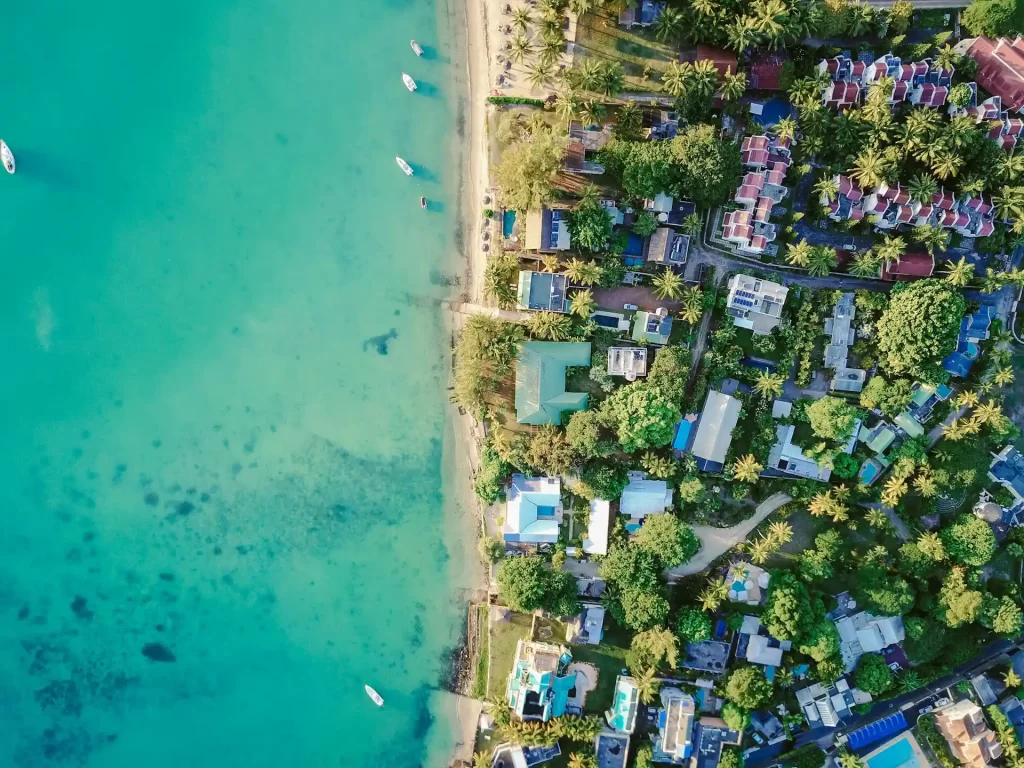
In this extensive guide, we are going to break down every single rupee you might spend. We will cover housing, food, transport, and even the cost of sending your little ones to school. So, put down the travel brochure and pick up the calculator. Here is everything you need to know about the Cost of Living in Mauritius.
Contents
1. Housing and Rent: The Biggest Slice of the Pie
Unless you plan on building a treehouse in the Black River Gorges (not recommended, the monkeys are territorial), housing will be your biggest expense. In 2025, the rental market is vibrant, which is a polite way of saying “prices have gone up.”
The Geography of Price
The Cost of Living in Mauritius 2025 varies wildly depending on your zip code.
- The North (Grand Baie, Pereybère): This is the tourist hub. It is where the action is, and the landlords know it. A 1-bedroom apartment here averages around MUR 25,000, while a family-sized 3-bedroom pad can hit MUR 85,000. If you want a villa in Trou aux Biches, prepare to part with MUR 80,000 or more.
- The West (Tamarin, Black River): This is expat central, known for surfing, sunsets, and premium pricing. It is arguably the most expensive region. A fancy 4-bedroom villa here can easily cost between MUR 165,000 and MUR 190,000 a month. It is the price you pay for living in the “California of Mauritius.”
- The Center (Moka, Quatre Bornes): If you want to save money (approx. 30-50% compared to the coast) and don’t mind a bit of rain/cooler weather, this is your spot. It is practical, close to schools, and much kinder to your wallet.
For a deeper dive into specific property trends, check out our dedicated article on Mauritius rent prices in 2025.
Buying vs. Renting
If you are here for the long haul, perhaps on a specific Occupation Permit, you might consider buying. Property values have remained steady.
- Apartments: Median price is roughly MUR 186,336 per m².
- Houses: Median price sits at MUR 219,088 per m².
Interestingly, Grand Baie is slightly more “modestly” priced for purchase compared to the skyrocketing rentals, with apartments around MUR 170,713 per m². It seems even paradise has its own complex real estate economics.
2. Utilities: Keeping the Lights On (and the AC Running)
You might think that living on a tropical island means you save on heating bills. True. But you will trade that heating bill for an air conditioning bill that can make your eyes water faster than chopping onions.
Electricity: The Silent Wallet Killer
Electricity bills are the wildcard in the Cost of Living in Mauritius.
- Winter: You might pay around MUR 3,000.
- Summer: If you run the AC all night and have a pool pump running all day, expect bills upwards of MUR 6,000.
The connection fees are standard (MUR 750 for single-phase), but it is the usage that gets you. Pro tip: Learn to love the ceiling fan. It is cheaper, and it makes you feel like you are in a noir film.
Water and Gas
Good news! Water is cheap. Most residents pay between MUR 300 and MUR 500 a month. It is one of the few things in life that hasn’t succumbed to massive inflation. Cooking is mostly done with gas cylinders. A refill costs less than MUR 180. If you are eco-friendly and install a solar water heater (highly recommended), your gas bill will remain strictly for cooking, keeping costs very low.
The Digital Lifeline: Internet and Mobile
You cannot post photos of your beach life without internet. Thankfully, Mauritius is well-connected.
- Fiber Internet: A 100 Mbps connection will cost you about MUR 1,545 (approx EUR 30) per month.
- Mobile Plans: A decent plan with 10GB of data and calls is around MUR 2,632 if you go for a premium package, but basic prepaid options are dirt cheap, starting from MUR 50.
If you are working remotely, reliable internet is non-negotiable. The main provider, My.t, offers packages up to 1 Gbps if you really need to stream 4K movies while video conferencing.
3. Food and Groceries: Local vs. Imported
This is where your lifestyle choices really dictate the Cost of Living in Mauritius. Are you willing to eat like a Mauritian, or do you insist on eating like a European?
The Supermarket Reality Check
Imported goods are taxed. Heavily. If you want French cheese, Australian beef, or South African wine, you will pay a premium (approx. 30% more than local equivalents).
- Beef (1 kg): MUR 567.
- Local Cheese (1 kg): MUR 433.
- Chicken Fillets (1 kg): MUR 263.
However, staples are affordable. A loaf of fresh bread is just MUR 32. Rice is MUR 88 per kg. If you shop smart, a single person can survive on a grocery budget of about MUR 11,000 a month. A family will likely spend between MUR 15,400 and MUR 33,000.
Dining Out: Street Food vs. Fine Dining
One of the joys of Mauritius is that you can eat like a king for the price of a pauper, provided you like street food.
- Street Food: A pair of Dholl Puri or a bowl of Mine Bouille will cost you USD 1 to 4. It is delicious, filling, and authentic.
- Mid-Range: A nice meal for two will set you back around MUR 2,047 (USD 44).
- High-End: If you go for Italian or seafood in a tourist area, expect to pay USD 20+ per main course.
Mauritius actually ranked 6th in Africa for restaurant prices in 2025. Inflation has hit the dining sector, especially in urban hubs like Port Louis and Flic-en-Flac. But honestly, nothing beats eating a roti on the beach at sunset, which is practically free in terms of ambiance.
4. Transport: The Price of Motion
Getting around the island is a tale of two extremes: the incredibly cheap bus and the surprisingly expensive car.
The Public Bus: The Budget Hero
The bus system is extensive and colorful. Fares are calculated by distance.
- Short trip: MUR 17.
- Long trip: MUR 44. You can cross a significant chunk of the island for less than a dollar. It might be bumpy, and the music might be loud, but it is an experience. For daily commuters, a monthly pass is a steal at around MUR 31.
Taxis: Negotiate or Use the Meter
Taxis are convenient but can add up.
- Base fare: MUR 150-200.
- Airport run: A trip from the airport to Grand Baie is roughly MUR 1,500-1,700. If you are planning to explore the island for a full day, hiring a taxi for the day (approx MUR 2,500) is often smarter than paying for multiple single trips.
Car Ownership: A Luxury?
Here is the shocker for many expats: Cars are expensive. The Finance Bill 2025 didn’t help.
- Duty: Excise duty on gasoline vehicles can be up to 100%. Yes, you effectively pay for the car twice.
- Registration: Fees for first-time registration just went up by 30%.
- Fuel: Petrol is MUR 58.45 per liter.
Even used cars hold their value incredibly well. A ten-year-old Japanese hatchback often sells for a price that would buy you a decent used luxury car in Europe. However, having a car gives you freedom. If you do buy one, check out our ultimate guide to Mauritius to find the best road trip spots. Also, consider the Mauritius Metro if you live and work along the Port Louis – Curepipe corridor; it is modern, air-conditioned, and traffic-free.
5. Education: The Investment in Future
If you have children, education will be a massive line item in your Cost of Living in Mauritius spreadsheet.
Pre-School Changes
Big changes are afoot. From 2026, the “Free Pre-Primary” scheme is changing to a fixed grant system. For now, in 2025, private pre-schools like Dukesbridge charge significant fees.
- Registration: MUR 22,000 (one-time).
- Tuition: Around MUR 31,000 per term.
International Schools
Expats usually gravitate toward international schools, and they come with international price tags.
- Lighthouse School: For expats, grades 7-9 cost MUR 23,000 monthly. By the time they reach grades 12-13, it is MUR 26,000 monthly.
- Registration Fees: Can be up to MUR 35,000.
There is a stark difference between fees for Mauritians and expats (often nearly double). If you are looking into schooling options, our detailed post on international schools in Mauritius breaks down the curriculum and campuses in detail.
6. Healthcare: Private vs. Public
We touched on this in our healthcare guide, but financially speaking, you have two choices.
- Public: Free. It costs you zero rupees.
- Private: Costs money but saves time. A GP consultation is EUR 20-30. Specialists are EUR 40+.
For budgeting purposes, most expats opt for health insurance, which can cost between EUR 90 and EUR 120 per month per person. It is a safety net that prevents a medical emergency from becoming a financial disaster.
7. Sample Monthly Budgets (2025)
Okay, let’s crunch the numbers. What does the total Cost of Living in Mauritius look like?
The Single Bachelor/Bachelorette
If you are single, renting a modest 1-bedroom apartment, and enjoying a mix of cooking and dining out:
| Expense | USD | MUR |
|---|---|---|
| Rent (1-bedroom) | 450 | 20,812.50 |
| Utilities | 60 | 2,775.00 |
| Food | 300 | 13,875.00 |
| Transport (Bus/Metro) | 50 | 2,312.50 |
| Entertainment | 100 | 4,625.00 |
| Total | ~960 | ~44,400 |
| Verdict | Very doable, especially if you earn in foreign currency. |
The Power Couple
Two adults, renting a nicer 2-bedroom place, owning one small car, and enjoying the weekend life:
| Expense | USD | MUR |
|---|---|---|
| Rent (2-bedroom) | 800 | 37,000.00 |
| Utilities | 100 | 4,625.00 |
| Food | 500 | 23,125.00 |
| Car/Transport (Fuel + Insurance) | 300 | 13,875.00 |
| Entertainment | 300 | 13,875.00 |
| Total | ~2,000 | ~92,500 |
| Verdict | Comfortable living, allowing for savings. |
The Family of Four
This is where it gets heavy. 3-bedroom villa, two kids in international school, two cars, and a helper:
| Expense | USD | MUR |
|---|---|---|
| Rent (3-br villa) | 1,500 | 69,375.00 |
| Utilities | 150 | 6,937.50 |
| Food | 900 | 41,625.00 |
| Schooling (2 kids, intl.) | 1,000 | 46,250.00 |
| Cars (2 cars) | 500 | 23,125.00 |
| Total | ~4,000+ | ~185,000+ |
| Verdict | Requires substantial income (expat package or successful business). |
8. Factors That Inflate (or Deflate) Your Costs
The Cost of Living in Mauritius is not static. It moves based on your choices.
What Makes It Expensive?
- Imported Goods: Buying brand-name cereals, cheeses, and electronics.
- Tourist Zones: Living in Grand Baie or Tamarin means paying a “sunshine tax” on rent and food.
- Cars: As mentioned, the duty is painful.
- Expat Bubbles: If you only eat at expat restaurants and only socialize in expat clubs, you will pay European prices.
What Makes It Cheap?
- Local Markets: Buying veggies at the weekly market (baz) is dirt cheap and fresh.
- Local Services: A haircut costs USD 10. A plumber is affordable.
- Free Nature: The beaches, the hikes, the waterfalls—they are all free. You don’t need a gym membership when you have the Indian Ocean.
- Language: Learning to speak the local language can save you the “tourist tax” at markets. Check out our lessons to get started with basic bargaining phrases.
9. Practical Tips for Saving Money
If you want to enjoy the island without burning a hole in your pocket, here are some survival tips.
- Move Inland: Consider Quatre Bornes or Moka. The rent is drastically lower, and you are only 20 minutes from the beach.
- Solar Power: If renting, ask if the house has solar water heating. It saves a fortune.
- Eat Local: We cannot stress this enough. Mauritian food is world-class. Embrace the roti.
- Buy Second Hand: Expat groups on Facebook are full of people leaving the island and selling high-quality furniture and cars for decent prices.
- Negotiate: In markets and with taxis (before getting in), negotiation is part of the culture. Be polite but firm.
Conclusion
Is the Cost of Living in Mauritius high? Compared to London, New York, or Paris? Absolutely not. It is a bargain. Compared to Southeast Asia? It is pricey.
Mauritius sits in a unique middle ground. It offers African adventure with European infrastructure. You can live very cheaply if you embrace the local lifestyle, or you can spend a fortune if you try to replicate your life back home exactly.
The key to surviving and thriving here is adaptability. Swap the cheddar for local cheese (it’s… interesting), swap the heating for AC, and swap the subway for the bus. Do that, and you will find that living in paradise is surprisingly affordable.
Now, if you will excuse us, we are going to find a MUR 20 chili cake.
External Resources:



It’s a pity you don’t have a donate button! I’d most certainly donate to this fantastic
blog! I guess for now i’ll settle for bookmarking and adding
your RSS feed to my Google account. I look forward to brand new updates and will share this blog with my Facebook group.
Chat soon!