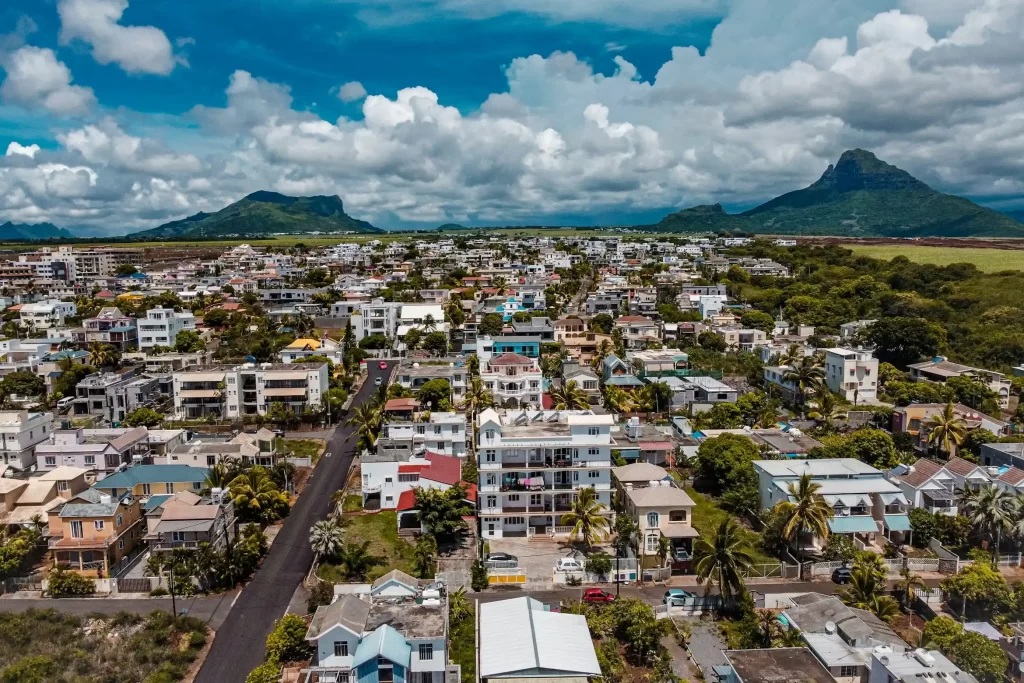
So, you have decided that your current office view (likely a brick wall or a rainy street) just isn’t cutting it anymore. You have scrolled through Instagram, seen the photos of Le Morne, and thought, “Yes, I could definitely send emails from a hammock.”
Welcome to the dream. But before you pack your flip-flops and resign from your job in a dramatic fashion, there is a small, slightly terrifying hurdle standing between you and the beach: Bureaucracy.
Specifically, you need to figure out How to Get an Occupation Permit in Mauritius. Think of the OP as the Golden Ticket in Charlie and the Chocolate Factory, except instead of a chocolate river, you get 330 days of sunshine and arguably the best street food on the planet.
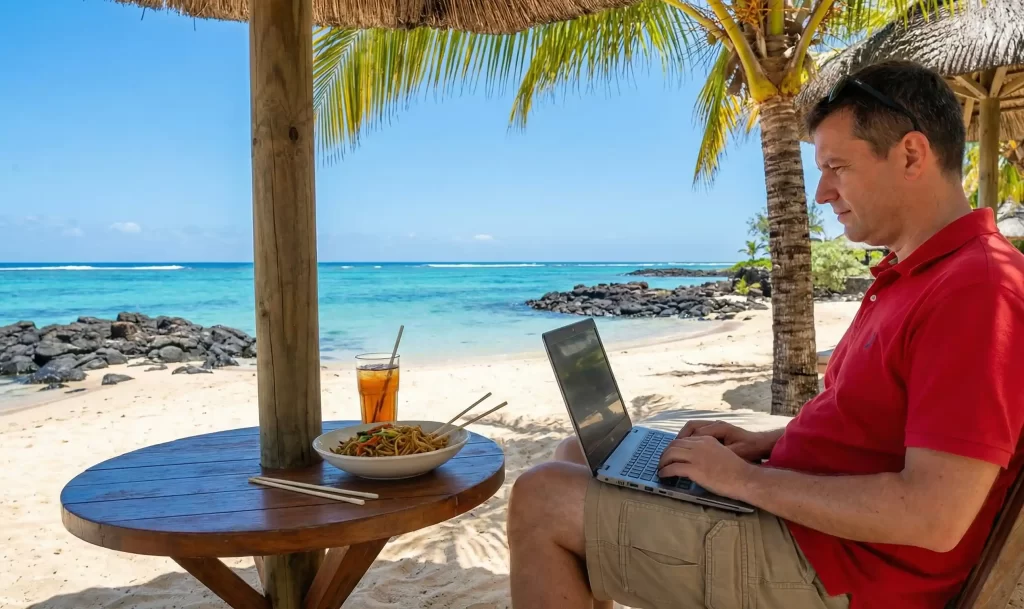
This permit is your combined right to live and work here. Without it, you are just a tourist with a laptop and a limited visa. With it, you are a resident. In this guide, we are going to walk you through the paperwork jungle, dodge the pitfalls, and get you that stamp in your passport without you losing your mind.
Contents
What on Earth is an Occupation Permit?
The Occupation Permit (OP) is a two-for-one deal. It grants you the right to reside and the right to work. It is processed by the Economic Development Board (EDB), which sounds very serious because it is. They are the gatekeepers.
The permit is typically valid for 10 years. That is a decade of sun, sand, and dholl puri. It is renewable, too, provided you don’t accidentally bankrupt your company or decide to become a pirate.
Pick Your Fighter: The Three Categories
Before you apply, you need to decide who you are. The Mauritian government likes boxes, and you need to fit into one of them.
1. The Investor (The Big Spender)
This is for those who want to establish a business empire (or just a nice coffee shop) on the island.
- The Entry Fee: You need to transfer an initial investment of USD 50,000 into a Mauritian bank account.
- The Rules: Your business needs to generate an annual turnover of at least MUR 4 million from the third year onwards.
- The Perk: As of December 2025, the EDB grants these for 10 years, with a “compliance review” at year 5. Pass the review, and you are safe until year 10. Fail it, and well… let’s just make sure you pass.
If you are going this route, you will probably be interested in our guide on how to invest in the Stock Exchange of Mauritius to keep your money working for you.
2. The Professional (The Salary Earner)
This is for the skilled workers. You have a job offer, and a company in Mauritius wants to hire you because you are brilliant.
- The Salary: Your basic monthly salary must exceed MUR 60,000 (approx. USD 1,300).
- The Discount: If you work in ICT, call centers, or pharmaceutical manufacturing, the threshold drops to MUR 30,000.
- The “Young Pro”: If you are fresh out of university, recent changes effective December 2025 set the bar at MUR 25,000.
Just make sure the salary covers your lifestyle. Check our Mauritius living cost calculator 2025 to see how far those Rupees will stretch.
3. The Self-Employed (The Solo Artist)
This is for the freelancers, the consultants, and the one-person armies.
- The Entry Fee: Initial investment of USD 35,000.
- The Rules: Your business income must exceed MUR 800,000 per year from year 3 onwards.
- The Catch: You can only work for yourself. No secret side jobs for other companies.
The Eligibility Checklist (Are You Worthy?)
To get past the velvet rope, you must meet the general criteria:
- Non-Citizen: Obviously.
- Clean Bill of Health: No infectious diseases.
- Financial Proof: You need to show the money. Bank statements are your new best friend.
- No Existing OP: You can’t hold two permits at once.
The Medicals: The Part Everyone Hates
This is mandatory. You cannot skip it. You need to prove you are healthy enough to live here.
You must undergo specific tests:
- Blood Tests: HIV, Hepatitis B, and a full blood count.
- Chest X-Ray: To check for Tuberculosis.
- The “Local” Rule: The HIV, Hep B, and Chest X-ray MUST be done in Mauritius at a private clinic. You cannot bring results from home.
Once you have done the tests (usually within a few days of arriving), you take the results to a local doctor who issues a Medical Certificate. If you need to know where to go, our guide on the healthcare system in Mauritius will point you in the right direction.
The Paperwork Mountain (Documents Checklist)
You will need to upload these in PDF format. Do not take blurry photos with your phone on a bedsheet. Scan them properly.
For Everyone:
- Passport biodata page.
- Birth Certificate (in English or French).
- 4 passport photos (JPEG format).
- The Medical Certificate.
- Marriage/Divorce certificates (if your love life is relevant to the application).
For Investors:
- Business Plan (make it look professional).
- Certificate of Incorporation.
- Proof of the USD 50,000 transfer.
For Professionals:
- Employment Contract (must show the salary).
- CV and Academic Qualifications.
- Job Description.
For Self-Employed:
- Business Plan.
- Letters of Intent (you need at least two from local clients saying they might work with you).
- Proof of the USD 35,000 transfer.
The Process: Step-by-Step Survival Guide
The entire process is digital, handled through the National Electronic Licensing System (NELS). It is actually quite efficient, which is a rare compliment for government software.
Step 1: The Online Application
Go to the NELS platform. Create an account. Fill in the forms. Upload your PDFs. You can do this from your sofa in your home country.
Step 2: Approval-In-Principle (AIP)
The EDB will review your file. If they like what they see, they will issue an Approval-In-Principle. This is the green light. It is NOT the permit, but it is a promise that if you show up and pass the medicals, the permit is yours.
Step 3: The 90-Day Dash
Once you have the AIP, the clock starts ticking. You have 90 days to:
- Fly to Mauritius on a tourist/business visa.
- Open a bank account.
- Do the medical tests.
- Finalize your housing. (Check Mauritius rent prices in 2025 to avoid getting shocked).
Step 4: The Interview
Once you have your medical certificate, you upload it to NELS. The EDB will then give you an appointment date. You must go to the EDB office in Port Louis (usually the Sterling House). Bring ALL original documents. If you forget one, you will be sent home. It is like school, but with higher stakes. They will check your face against your passport, verify your papers, and if all is well…
Step 5: The Handover
You get registered. The Passport and Immigration Office (PIO) issues the permit. Congratulations, you are now a resident!
The Costs: What’s the Damage?
Freedom isn’t free, and neither is residency.
- Processing Fee: €43 (Non-refundable).
- Investor/Self-Employed Fee: USD 1,000.
- Professional Fee:
- Up to 2 years: MUR 6,000.
- Up to 3 years: MUR 10,000.
- Short-term (9 months): USD 300.
Payment is usually by bank cheque. Yes, a physical cheque.
Bringing the Tribe (Dependents)
You don’t have to leave your family behind. You can bring your spouse, your children (under 24), and even your parents.
- The Cost: USD 400 per dependent.
- The Catch: This permit doesn’t allow them to work. If your spouse wants to work, they need to find their own job and get their own Professional OP.
- Schooling: If you have kids, you need to sort out their education fast. Read our guide on international schools in Mauritius to find the best fit.
The Long Game: Permanent Residence
If you survive the first few years and decide you never want to leave, you can aim for the Permanent Residence Permit (PRP). This is valid for 20 years.
How to Unlock It:
- Investors: Hold OP for 5 years + Gross income of MUR 15m for 3 consecutive years.
- Professionals: Hold OP for 3 years + Monthly salary of MUR 150,000 for 3 consecutive years.
- Self-Employed: Hold OP for 5 years + Annual income of MUR 3m for 5 consecutive years.
Common Pitfalls (How Not to Fail)
- Incomplete Docs: The number one reason for rejection. Triple-check the checklist.
- Medical Timing: Do not do your medicals 7 months before you apply. They must be less than 6 months old.
- Category Hopping: You cannot switch from Investor to Professional without applying for a brand new permit. Choose wisely.
- Transferability: You cannot sell your permit. It belongs to you.
Conclusion
Getting an Occupation Permit in Mauritius is a process, but it is a manageable one. It is a series of hoops, but the prize at the end is living on one of the most beautiful islands on earth.
Just imagine: once this paperwork is done, your biggest worry will be whether to go hiking or snorkeling on Saturday. If you need inspiration for that post-permit life, check out our ultimate guide to Mauritius or perhaps celebrate your new status by buying and registering a car in Mauritius so you can explore in style.
Good luck with the paperwork, and we will see you on the beach!
External Resources: