If you have spent the last few days of your holiday lounging by a pool that is bluer than the sky, sipping cocktails, and wondering if real life actually exists anymore, we have a reality check for you. And it is a glorious, loud, colorful reality check. Welcome to Central Flacq Market.
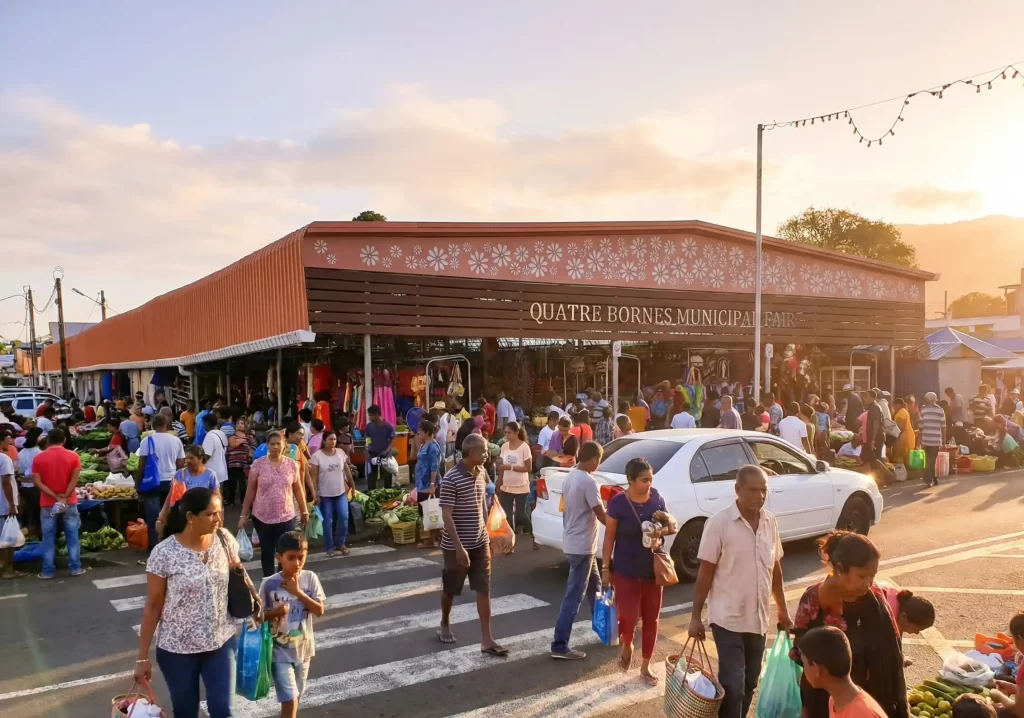
Located in the east of the island, Central Flacq Market is not just a place to buy vegetables; it is a full-contact sport. It is the largest open-air market in Mauritius and a cornerstone of the best local markets in Mauritius, offering a raw, unfiltered look at how the island really shops, eats, and lives.
This is not a sanitised tourist trap where you pay ten times the price for a fridge magnet. This is where the locals shop. It is vibrant, it is chaotic, and it smells like a mixture of fresh coriander, frying chili cakes, and the distinct aroma of “bargain.” If you want to see the real Mauritius, put down the sunscreen bottle and head east.

In this massive guide (and we mean massive, grab a snack), we are going to walk you through everything you need to know about surviving and thriving at Central Flacq Market. We will cover the food, the haggling, the bus rides, and the secret to finding the best vanilla.
Contents
Why Central Flacq Market is the Real Deal
You might be asking, “Why should I leave my sun lounger to go look at onions?” A valid question. But Central Flacq Market is about more than just groceries. It is a sensory overload in the best possible way.
Unlike the sleek shopping malls or the more polished markets elsewhere on the island, Flacq remains unapologetically raw. If you’re deciding which markets to visit during your trip, our guide to the best local markets in Mauritius explains how places like Flacq, Port Louis, and Mahebourg each offer a very different experience.
Here, the air is filled with a symphony of languages. You will hear the melodic flow of Mauritian Creole, the sharp negotiation of French, and the rhythmic cadence of Bhojpuri, an Indian dialect that is still widely spoken in this part of the island.
It is a place where cultures collide. You will see grandmothers in bright floral saris inspecting eggplants with the precision of a diamond cutter. You will see young guys selling streetwear while blasting Sega music. It is a melting pot, and everyone is invited, provided you don’t block the aisle.
If you are trying to plan your trip and wondering where this fits in, check out our 7-day Mauritius itinerary. We usually recommend hitting Flacq on a day when you are exploring the east coast beaches.
Navigating the Chaos: Opening Days and Hours
Timing is everything. You cannot just roll up whenever you feel like it and expect the full experience. The market breathes in and out, and you want to catch it when it is fully awake.
The “Official” Schedule vs. The Real Schedule
Technically, the market infrastructure is there every day. If you go on a random Tuesday, you will find stalls open.
- Monday to Saturday: Roughly 06:00 to 17:00.
- Sunday & Public Holidays: Roughly 06:00 to 12:00.
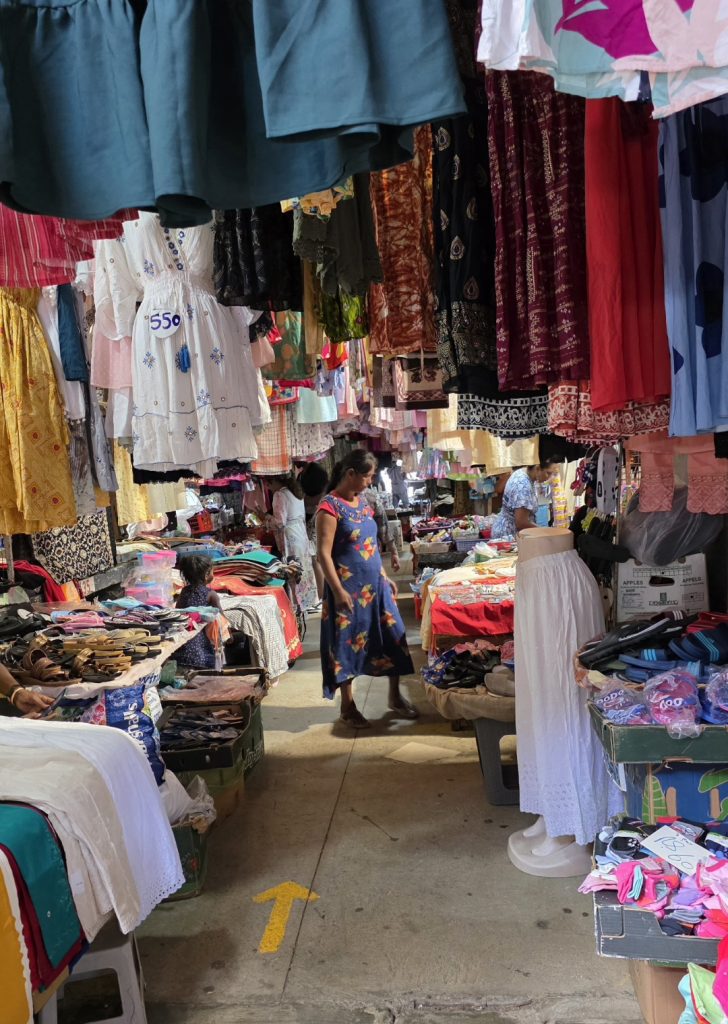
However, going on a Tuesday is like going to a party at 9 AM. The lights are on, but nobody is dancing.
The Big Days: Wednesday and Sunday
To see Central Flacq Market in all its glory, you must go on a Wednesday or a Sunday. These are the official “Market Days.”
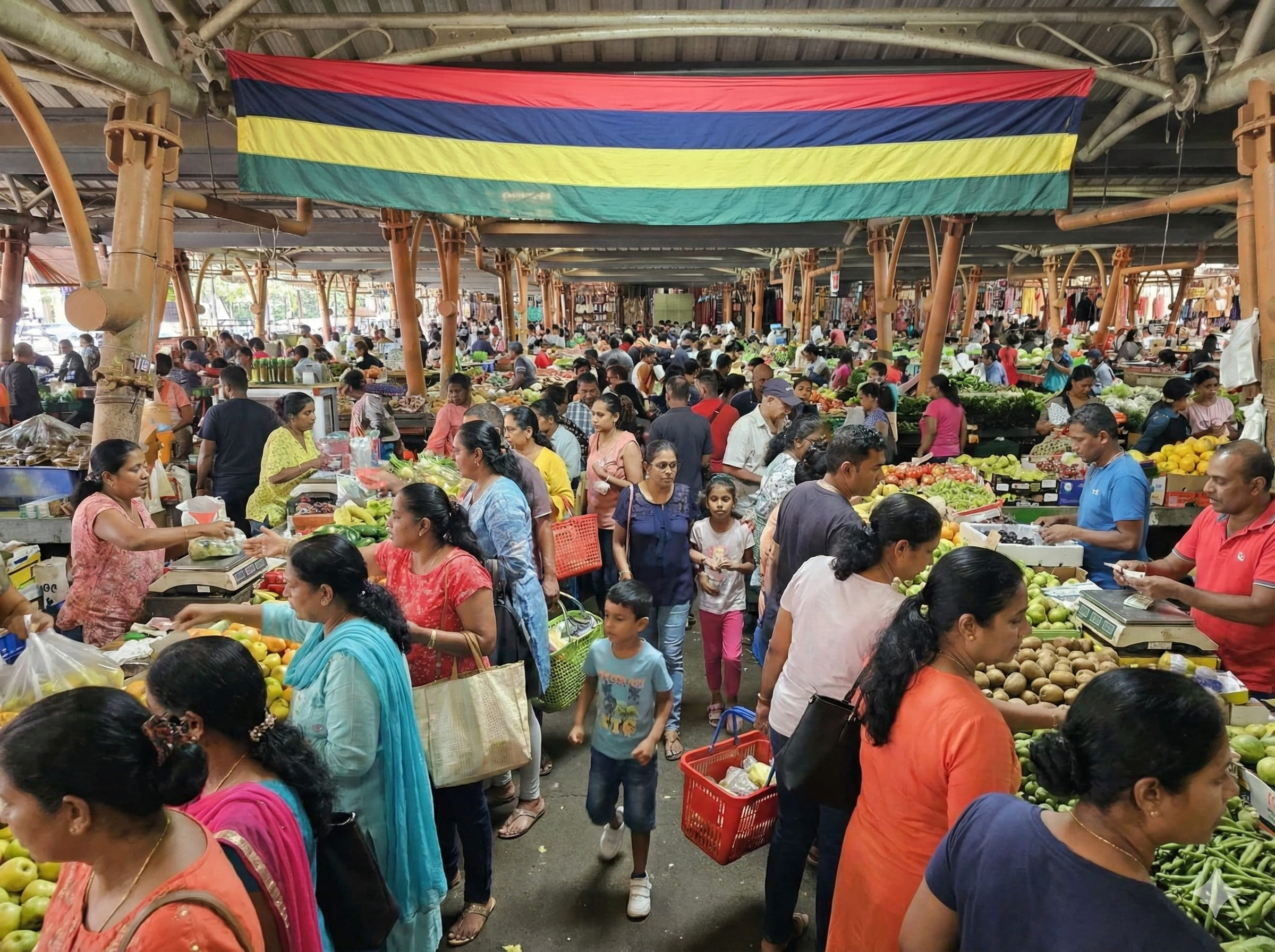
On these days, the permanent stallholders are joined by hundreds of temporary vendors. The market swells in size. The energy triples. The noise level goes from “lively conversation” to “rock concert.”
If you want the full, chaotic, wonderful experience, mark these days on your calendar. If you prefer a quieter stroll where you can actually hear yourself think, a regular weekday morning (like Thursday) is a safe bet, though you will miss out on some of the variety.
The Golden Hour
The sun in the east of Mauritius does not mess around. It rises early and gets hot fast.
- The Sweet Spot: 06:30 AM to 10:30 AM.
- Why? The produce is fresh (the fish hasn’t been sitting out), the street food is piping hot, and you won’t melt into a puddle of sweat.
By 11:00 AM, the crowds thicken, and the heat rises. By 1:00 PM, the fishmongers are packing up, and the best vegetables have been snatched up by eagle-eyed aunties.
Getting There: The Journey to Central Flacq Market
Located in the district of Flacq, the market is smack in the middle of Central Flacq town. It is surprisingly easy to find because all roads (and buses) seem to lead there.
The Public Bus Adventure
Taking the bus in Mauritius is an experience in itself. It is cheap, it is loud, and it is a great way to meet locals.
- From Port Louis: Look for the NTC Line 176. It runs frequently (every 25 minutes or so). The journey takes about an hour to an hour and a half. It is a scenic route, mostly because you will stop every 500 meters.
- From East Coast Resorts: If you are staying in Belle Mare or Trou d’Eau Douce, you are in luck. Local buses run regularly to “Centre de Flacq.” Just ask the reception at your hotel or stand at a bus stop and look confused; a local will usually help you out.
Bus fares are calculated by distance, usually costing between MUR 20 and MUR 40. It is a bargain. If you are budgeting for your trip, our Mauritius living cost calculator 2025 can help you factor in these tiny transport costs.
Driving Yourself
If you have rented a car, driving to Central Flacq Market is straightforward. However, parking is a competitive sport.
- The Challenge: On Wednesdays and Sundays, parking near the market is chaotic.
- The Strategy: Arrive early (before 8 AM). Or, be prepared to park a few streets away and walk. Do not try to park right in front of the entrance unless you enjoy reversing out of tight spots while a bus honks at you.
For more on driving, make sure you read about buying and registering a car in Mauritius (okay, you probably won’t buy one, but the driving tips are universal!).
The Layout and Atmosphere: What to Expect Inside
Imagine a giant, colorful maze with no roof. That is Central Flacq Market.
It is roughly divided into sections, though the borders are fluid. You might find a guy selling socks next to a woman selling chili peppers.
The Zones
- The Textile Jungle: Usually the first thing you see. Rows and rows of hanging fabrics, t-shirts, and dresses. It looks like a laundry line exploded.
- The Fruit and Veg Kingdom: The most photogenic part. Mountains of green, red, and yellow produce.
- The Protein Corner: Meat and fish. This area has a… distinct aroma. If you are squeamish, maybe skip this or breathe through your mouth.
- The Food Court: The holy grail. We will get to this later.
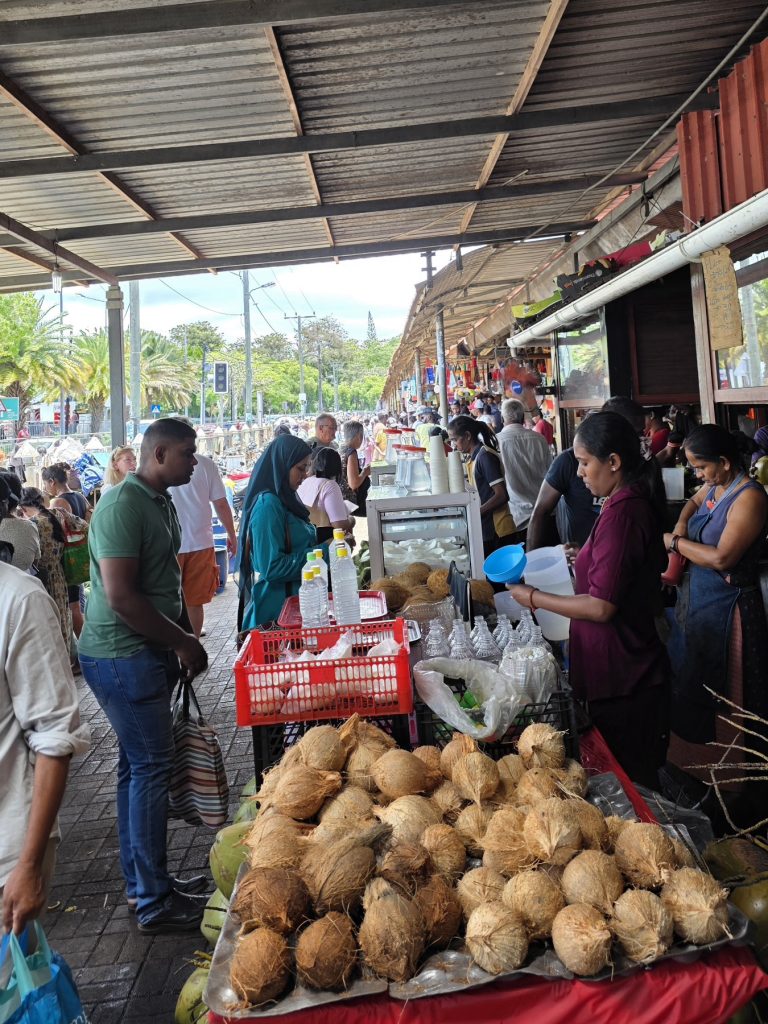
The atmosphere is high-energy. Vendors shout their prices (often singing them). “Cinquante roupies! Cinquante!” (Fifty rupees!). Music blares from portable speakers. It is a sensory overload, so take your time. Walk slowly. Smile at people.
Shopping Guide: What to Buy at Central Flacq Market
You can’t come here and leave empty-handed. Even if you don’t need 5 kilos of potatoes, you will find something you want.
Fruits and Veggies: The Healthy Haul
If you are self-catering, this is paradise. The produce is infinitely better and cheaper than the supermarket.
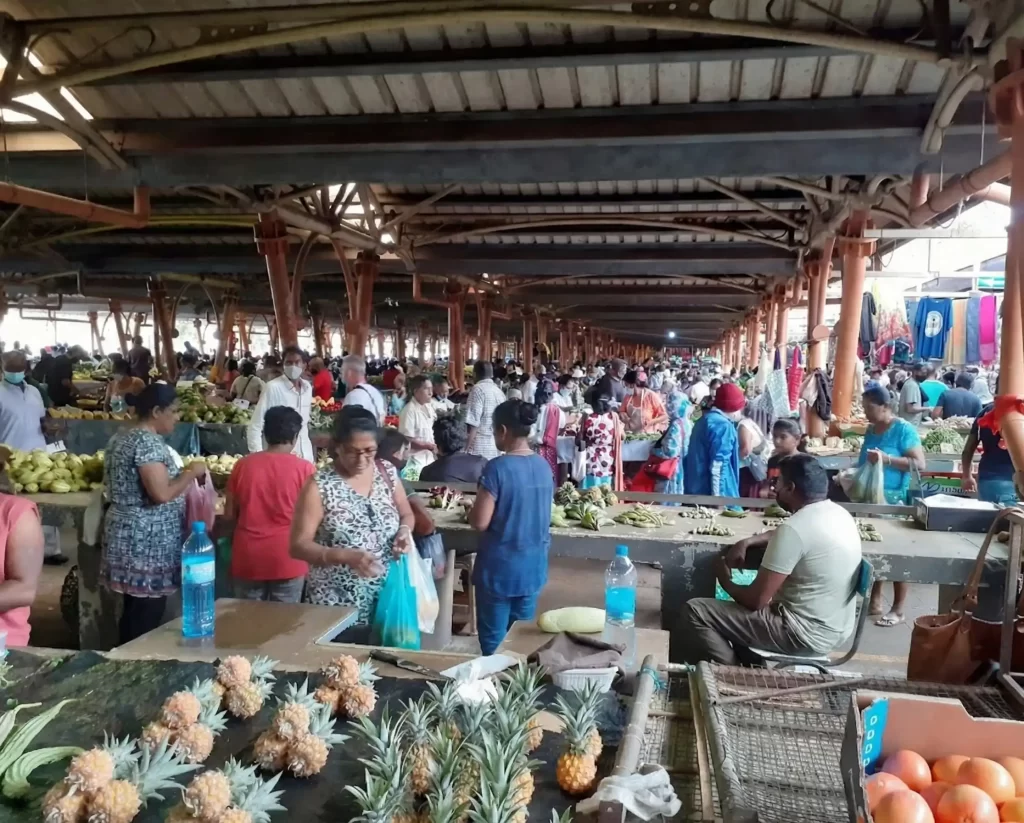
Look out for:
- Tropical Fruits: In summer (December/January), the lychees are piled high. Mangoes are everywhere. Pineapples are sweet enough to act as dessert.
- Local Greens: Try “Brède” (leafy greens). Ask the vendor how to cook them (usually a quick stir-fry with garlic).
- Exotics: Look for jackfruit, soursop, and custard apples. If you don’t know what something is, ask! “Ki ete sa?” (What is this?). It is a great way to practice the phrases from our Creole lessons.
The Textile Jungle: Cheap Threads
Need a pair of shorts because you forgot yours? Need a sarong for the beach? This is the place.
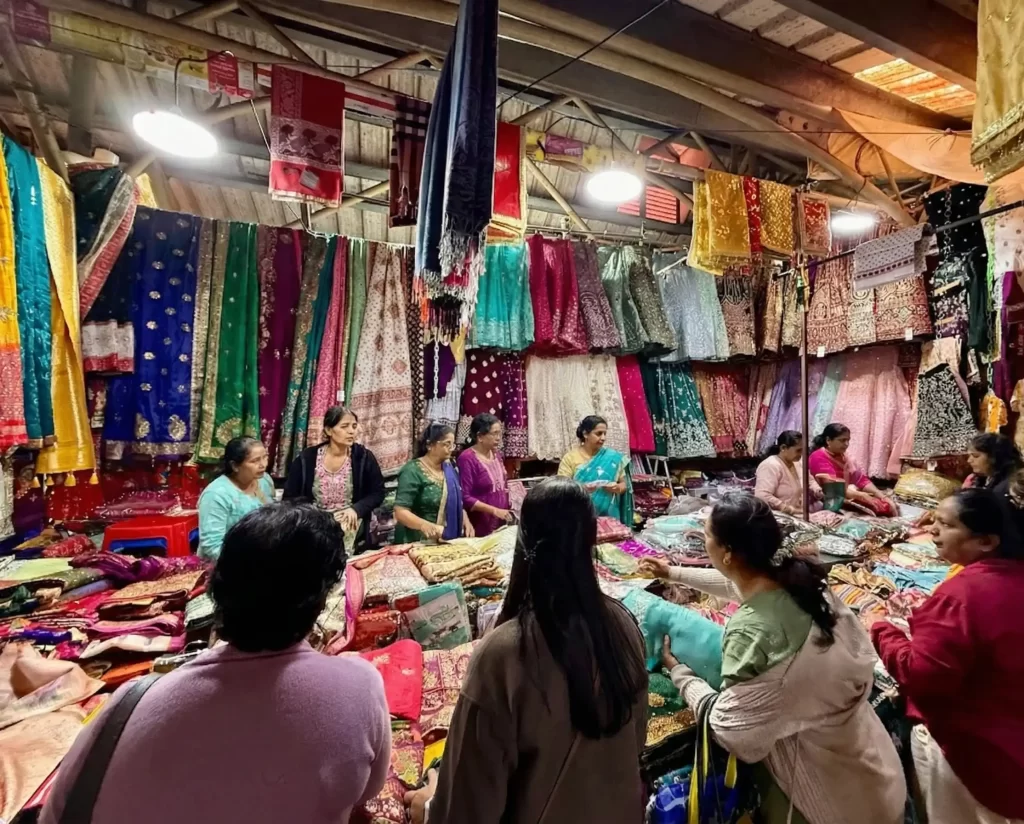
The clothing here is generally “fast fashion” quality, but the prices are unbeatable. You can find t-shirts for a few dollars.
- Indian Wear: This is a highlight. You will find stunning sarees and Churidar sets. Even if you don’t wear them, the fabrics are beautiful to look at.
- Beach Wear: Pareos (sarongs) are everywhere. They make great gifts.
Spices, Vanilla, and Souvenirs
This is where you spend your souvenir budget.
- Spices: You will find bags of curry powder, turmeric, and chili powder. They are fresh and potent. A bag of “Masala” from Flacq will ruin supermarket curry powder for you forever.
- Vanilla: Mauritius grows excellent vanilla. You can often buy bundles of fresh pods.
- Handicrafts: Look for woven baskets. They are sturdy, sustainable, and look great in your living room.
A note on pricing: Tourists might get quoted a “tourist price” for non-food items. It is part of the game. If the price feels high, smile and suggest a lower one. For food, the prices are usually fixed and displayed, so no haggling there.
The Main Event: Street Food at Central Flacq Market
Okay, let’s be honest. You are here for the food. Central Flacq Market is one of the best places on the island to eat. It is street food heaven.
The Savory Stars
- Briani (Biryani): Flacq is famous for its Briani. Look for a stall with a massive metal pot (deg). The rice is fluffy, spiced with saffron and cardamom, and usually hides a piece of chicken or beef. It is served in a bag or a plastic box with cucumber salad. It is messy, and it is delicious.
- Dholl Puri: The national dish. Thin flatbreads stuffed with yellow split peas, served with bean curry and tomato sauce. It is vegan, it is cheap, and it is perfect.
- Gato Pima (Chili Cakes): Little crunchy balls of deep-fried lentils. Buy a bag of ten. You will eat them all before you leave the market.
- Gato Arouille: Fritters made from grated taro root. They are crispy on the outside and gooey on the inside. Slightly sweet, slightly savory. addictive.
The Drinks
It gets hot in the market. You need hydration.
- Alouda: A sweet milk drink with basil seeds and agar jelly. It is pink, it is sugary, and it is ice cold.
- Sugarcane Juice: Watch them crush the cane right in front of you. Ask for a squeeze of lime (“ek limon”) to cut the sweetness.
- Coconut Water: A guy with a machete will chop the top off a coconut for you. Nature’s Gatorade.
If you are worried about the cost of all this eating, check our cost of living in Mauritius 2025 guide. Spoiler: Street food is very budget-friendly.
Language and Bargaining: How to Survive
You don’t need to be fluent in Creole to survive, but it helps to know what is going on.
- The Languages: Most vendors speak Creole and French. Many speak English, especially the younger ones.
- The Bargaining: For clothes and souvenirs, haggling is expected. Start by offering about 60-70% of the asking price and meet in the middle. Keep it friendly. It is a conversation, not an argument.
- The Phrases:
- “Kombien sa?” (How much is this?)
- “Li trop cher!” (It is too expensive!)
- “Dernier prix?” (Last price?)
If you want to feel more confident, spend a few minutes on our Creole lessons page before you go. A little “Bonzur” (Hello) creates instant goodwill.
Practical Tips for Your Visit
To ensure your trip to Central Flacq Market is a triumph and not a sweaty disaster, follow these tips:
- Bring Cash: This is a cash economy. Stallholders do not have card machines. Bring small notes (Rs 25, Rs 50, Rs 100). Trying to pay for a Rs 10 chili cake with a Rs 2000 note will make you very unpopular.
- Dress Down: It is hot and dusty. Wear comfortable shoes (the ground can be uneven/wet). Leave the high heels at the resort.
- Watch Your Pockets: Like any busy market in the world, pickpockets exist. Keep your bag zipped and in front of you.
- Hygiene: The street food is generally safe because the turnover is high (food doesn’t sit around). However, if you have a sensitive stomach, stick to fully cooked, hot foods and avoid cut fruit that has been sitting out.
- Be respectful: Ask before taking close-up photos of people. Most are happy to oblige, but it is polite to ask.
A Perfect Half-Day Itinerary
Here is how we would plan a morning at Central Flacq Market:
- 08:00 AM: Arrive. The air is still relatively cool.
- 08:15 AM: Do a lap of the fruit and veg section. Buy some lychees or mangoes for later.
- 09:00 AM: Head to the textile section. Browse the fabrics. Haggle for a sarong.
- 09:45 AM: You are hungry. Head to the food court. Order a pair of Dholl Puri and a cold Alouda. Find a spot to stand and eat. Watch the world go by.
- 10:30 AM: Grab a bag of Gato Pima for the road.
- 11:00 AM: Escape before the midday heat hits. Head to a nearby beach like Belle Mare to wash off the market dust in the ocean.
Conclusion
Central Flacq Market is intense, loud, and absolutely essential. It is the antidote to the perfectly manicured resort life. It connects you with the soil, the people, and the flavors of the island in a way that a buffet dinner never could.
So, grab your shopping bag (and your sense of humor) and head east. Immerse yourself in the chaos. Eat something you can’t pronounce. Buy a t-shirt that might shrink in the wash. It is all part of the Mauritian experience.
And whatever you do, do not forget the chili cakes.
External Resources: