Mauritius is not always a cheap destination, especially if you are eating at hotels, beach restaurants or tourist cafés. But local street food is still one of the best-value ways to experience the island.
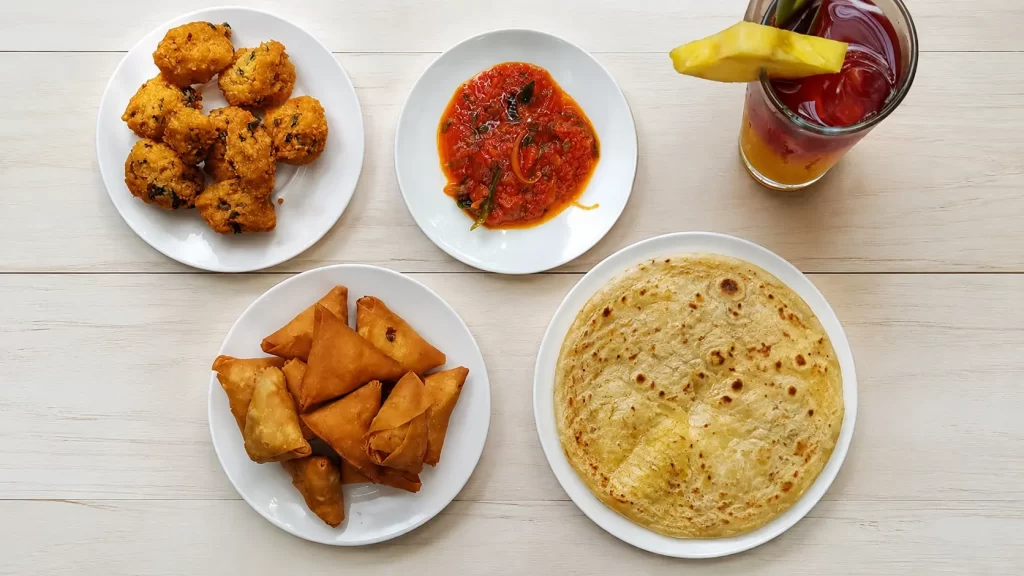
From dholl puri and farata to gateaux piments, boulettes, briani, alouda and fresh pineapple with chilli, you can eat very well in Mauritius without spending too much, as long as you know what normal prices look like.
This guide gives tourists a practical idea of Mauritian street food prices, what is considered fair, where prices are usually cheaper, and how to avoid paying tourist-area prices for simple local snacks.
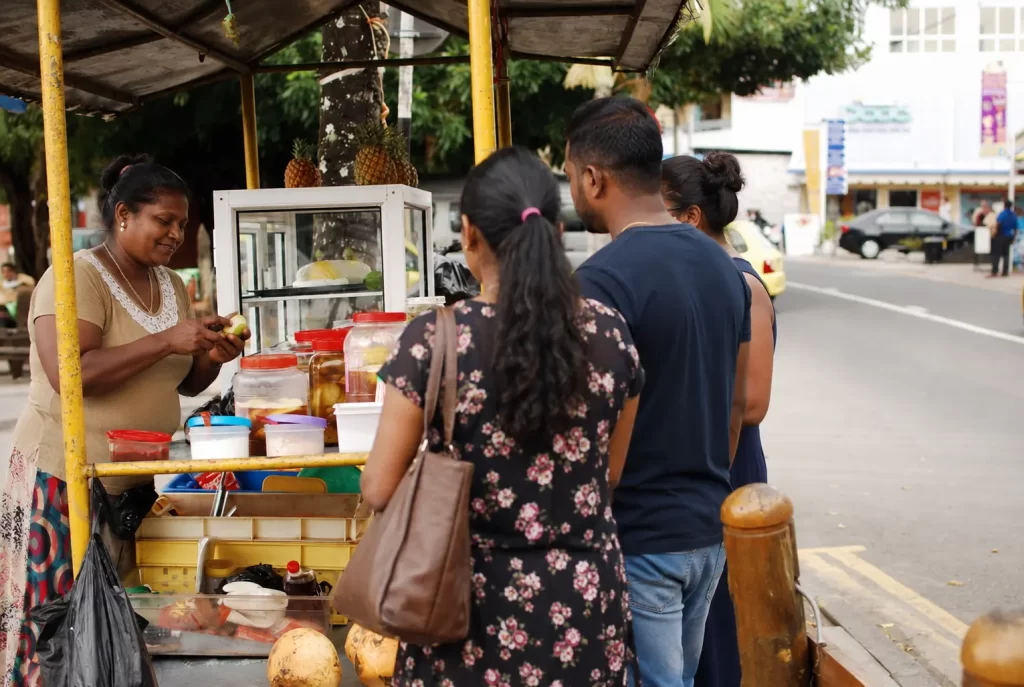
Table of Contents
Quick Answer: How Much Does Street Food Cost in Mauritius?
As a general guide, tourists can expect to pay:
- Small street snack: Rs 5–30
- Light street-food meal: Rs 40–100
- Full local meal: Rs 100–250
- Street drink or dessert: Rs 25–100
- Very cheap street food day: Rs 300–500 per person
- Casual local food day: Rs 500–900 per person
- Mixed street food + restaurant day: Rs 900–1,500+ per person
Prices are usually lower in local towns and markets such as Port Louis, Rose Hill, Quatre Bornes, Curepipe, Mahebourg and Flacq. They can be higher in tourist areas such as Grand Baie, Flic en Flac, Le Morne and beachfront zones.
Mauritian Street Food Price Guide
Here is a realistic price guide for popular street foods in Mauritius. These are not fixed prices, but they should help you understand what is normal.
| Street Food Item | Typical Price | Type |
|---|---|---|
| Dholl puri | Rs 15–30 per piece / Rs 40–80 for two with fillings | Light meal or snack |
| Farata / roti | Rs 20–50 per piece | Light meal, especially with curry |
| Gateaux piments | Rs 5–10 per fritter / around Rs 10 for 3 | Snack |
| Samosas | Rs 5–15 each | Snack |
| Boulettes | Rs 50–100 per bowl | Light meal |
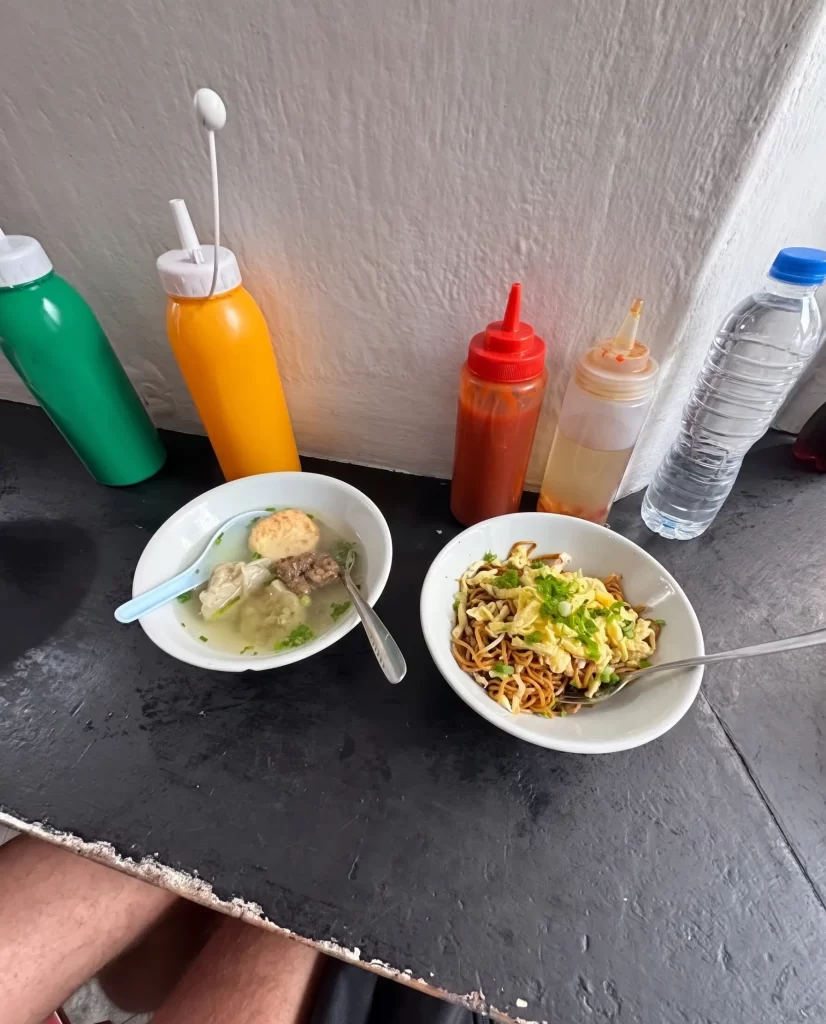
| Mine frite / fried noodles | Rs 75–150 at many local stalls | Full meal |
| Fried rice | Rs 90–150 at local stalls, more in tourist areas | Full meal |
| Briani / biryani | Rs 150–250 for a standard portion | Full meal |
| Bol renversé | Rs 150–250+ | Full meal |
| Alouda | Rs 25–40 per glass | Sweet drink |
| Pineapple with chilli | Rs 10–60 depending on portion and area | Snack |
| Coconut water | Rs 75–120 per coconut | Drink |
| Napolitaine / local cake | Rs 20–40 each | Dessert |
| Street tea / coffee | Rs 20–30 | Drink |
| Café cappuccino | Rs 110–180 | Café drink |
| Bottled water | Rs 25–60 | Drink |
What Are the Cheapest Street Foods in Mauritius?
Gateaux Piments
Expected price: Rs 5–10 per fritter, or around Rs 10 for a small portion.
Gateaux piments are small chilli cakes made from split peas and spices. They are one of the cheapest snacks in Mauritius and are commonly sold at markets, bus stations, roadside snack carts and school-area stalls.
Dholl Puri
Expected price: Rs 15–30 per piece, or Rs 40–80 for two with fillings.
Dholl puri is probably the most famous Mauritian street food. It is a soft flatbread filled with yellow split peas and usually served with curry, rougaille, chutney and pickles.
For many tourists, two dholl puris are enough for a cheap and filling lunch. If you want to explore more local food options, you may also enjoy our guide to the best dholl puri in Mauritius.
Samosas
Expected price: Rs 5–15 each.
Samosas are easy to find at market stalls, beach trucks and snack counters. Vegetable samosas are usually cheaper, while meat, cheese or larger versions may cost more.
What Is a Fair Price for Dholl Puri in Mauritius?
A fair local price for dholl puri is usually around Rs 15–30 per piece.
If you are buying two dholl puris with curry and chutney, expect to pay around Rs 40–80 depending on the stall, filling and area.
In tourist areas, prices may be slightly higher, especially if you are buying from a café, mall food court or beachfront vendor. That does not always mean you are being overcharged, the setting, rent and portion size may be different.
How Much Is a Full Street Food Meal?
If you want something more filling than a snack, these are realistic price ranges:
- Boulettes: Rs 50–100 per bowl
- Mine frite / fried noodles: Rs 75–150 at many local stalls
- Fried rice: Rs 90–150 at local snack bars
- Briani: Rs 150–250 for a standard portion
- Bol renversé: Rs 150–250 or more, usually in snack bars or casual restaurants
A simple local lunch can often cost under Rs 150 if you eat at a market, bus-station stall or local snack bar. In tourist areas, a similar meal may move closer to Rs 200–300.
Drinks and Desserts: What to Expect
Alouda
Expected price: Rs 25–40 per glass.
Alouda is a sweet, milky Mauritian drink often flavoured with vanilla or almond and served with basil seeds and jelly. It is especially popular in Port Louis Central Market and other town markets.
Coconut Water
Expected price: Rs 75–120 per coconut.
Fresh coconut water can be cheaper in local areas and more expensive in tourist beach zones such as Grand Baie, Pereybere and Flic en Flac.
Pineapple with Chilli
Expected price: Rs 10–60 depending on portion and location.
Small bags of pineapple or mixed fruit with chilli can be very cheap in local markets. Whole cut pineapples or beach portions usually cost more.
Napolitaines and Local Cakes
Expected price: Rs 20–40 each.
A napolitaine or similar local cake is a cheap sweet snack, although modern bakeries and patisseries may charge more than basic market stalls.
Street Food Prices by Area
Port Louis
Port Louis is one of the best places for affordable Mauritian street food. You will find dholl puri, boulettes, alouda, noodles, briani, fruit and fried snacks around the Central Market, Chinatown, bus stations and busy city streets.
It is one of the best areas for tourists who want local prices and authentic variety. For a deeper food walk, read our Port Louis street food guide.
Flacq and Central Flacq Market
Flacq is another excellent area for affordable local food. Central Flacq Market is especially useful if you want a more local experience away from the main tourist zones.
Expect good-value snacks, fruit, drinks and simple meals. You can also read our full guide to Central Flacq Market.
Rose Hill, Beau Bassin, Quatre Bornes and Curepipe
These central towns are good for local snack bars, roti stalls, fried noodles, fried rice, briani and market snacks. Prices are usually more local than tourist-focused.
If you are visiting the centre of the island, you may also find our Quatre Bornes Market guide and Curepipe Market guide useful.
Grand Baie
Grand Baie has plenty of food options, but prices can vary a lot. Local snack stalls and small eateries are still affordable, while restaurants, bars and beachfront cafés are usually more expensive.
If you are staying in the north, Grand Baie is convenient, but do not expect every food option to be street-food cheap. See our guides to things to do in Grand Baie and the best places to eat in Grand Baie.
Flic en Flac
Flic en Flac has beach food, casual restaurants, snack bars and tourist cafés. Some local-style foods remain affordable, but beachfront locations can cost more than town markets.
If you are staying on the west coast, see our guide to the best places to eat in Flic en Flac.
Mahebourg
Mahebourg is a good place for a more relaxed local food experience. It is especially useful for markets, waterfront snacks and casual local meals.
For more details, read our Mahebourg Market guide.
Street Food vs Restaurant Prices
The cheapest food in Mauritius is usually not inside hotels or beachfront tourist restaurants. For better value, look for markets, town centres, bus stations and busy local snack bars.
| Food Option | Typical Cost |
|---|---|
| Small street snack | Rs 5–30 |
| Dholl puri / roti light meal | Rs 40–100 |
| Street-stall full meal | Rs 100–250 |
| Local snack bar meal | Rs 150–300 |
| Mall food court meal | Rs 200–400+ |
| Tourist café meal | Rs 300–700+ |
| Hotel or resort meal | Usually much higher |
How Much Should Tourists Budget for Food?
Very Cheap Street Food Day: Rs 300–500
This could include dholl puri or farata for lunch, gateaux piments or fruit as a snack, alouda, bottled water and a simple local dinner.
Casual Local Food Day: Rs 500–900
This gives you more flexibility: a street-food lunch, snacks, drinks and a proper local restaurant or snack-bar meal.
Mixed Street Food + Restaurant Day: Rs 900–1,500+
This is more realistic if you want street food during the day but dinner in a tourist restaurant, café or beachside spot.
Families should budget more, especially if children prefer restaurants, soft drinks, desserts or hotel dining. For a wider travel budget, see our Mauritius travel budget guide.
How to Avoid Overpaying
Most Mauritian street food is fairly priced, but tourists should still be practical.
- Carry small cash notes and coins.
- Ask the price before ordering if it is not displayed.
- Check whether the price is per piece, per pair, per plate or per portion.
- Do not assume all beach kiosks are cheap.
- Look for queues of locals.
- Eat at busy stalls with fast turnover.
- Go earlier in the day because popular items can sell out.
- Ask if the food is spicy.
- Confirm ingredients if you avoid pork, beef, seafood or meat.
- Ask about halal if it matters to you.
Is Street Food Safe in Mauritius?
Many tourists enjoy Mauritian street food without any issues, but basic caution is sensible.
Choose busy stalls where food is cooked fresh and served hot. Be more careful with raw salads, sauces, ice, cut fruit and food that has been sitting out for too long, especially if you have a sensitive stomach.
Bottled water is easy to find and usually inexpensive. If you are unsure, choose sealed drinks and freshly cooked food.
Best-Value Foods to Try
If you want maximum value, start with:
- Dholl puri
- Farata with curry
- Gateaux piments
- Boulettes
- Alouda
- Pineapple with chilli
- Local briani
- Mine frite from a local snack bar
For more food inspiration, see our guides to 10 must-try foods in Mauritius, Mauritius food history and the best local markets in Mauritius.
Final Thoughts
Mauritian street food is one of the best ways to experience the island without overspending. A few rupees can get you a hot snack, while Rs 100–250 is often enough for a filling local meal.
For the best value, eat where locals eat: markets, bus stations, town centres and small snack bars. Tourist areas like Grand Baie and Flic en Flac are convenient, but prices can be higher near the beach or inside restaurants.
If you are visiting Mauritius, do not just budget for hotel meals and restaurants. Leave space for dholl puri, gateaux piments, boulettes, alouda and a few spontaneous snacks along the way, they are part of the real Mauritian food experience.
Frequently Asked Questions
How much does street food cost in Mauritius?
Small snacks can cost as little as Rs 5–30, while a full local street-food meal usually costs around Rs 100–250.
How much is dholl puri in Mauritius?
Dholl puri usually costs around Rs 15–30 per piece, or around Rs 40–80 for two with fillings.
Is street food cheap in Mauritius?
Yes, street food is one of the cheapest ways to eat in Mauritius, especially in local towns and markets.
What is the cheapest food in Mauritius?
Gateaux piments, dholl puri, farata, samosas and local fruit snacks are usually among the cheapest options.
How much should tourists budget for food in Mauritius?
Budget travellers can manage on around Rs 300–600 per day with street food and local snacks. A more comfortable mixed food budget is around Rs 700–1,500+ per person per day.
Is street food safe in Mauritius?
Generally, yes, but choose busy stalls, freshly cooked food and sealed drinks if you have a sensitive stomach.
Do street food stalls in Mauritius accept card?
Many small stalls prefer cash, so tourists should carry small notes and coins.
Where is the best place to try street food in Mauritius?
Port Louis, Central Flacq Market, Mahebourg, Rose Hill, Quatre Bornes and Curepipe are good places for local prices and variety.