
What Is Sept Cari? The Seven Curries of Mauritius
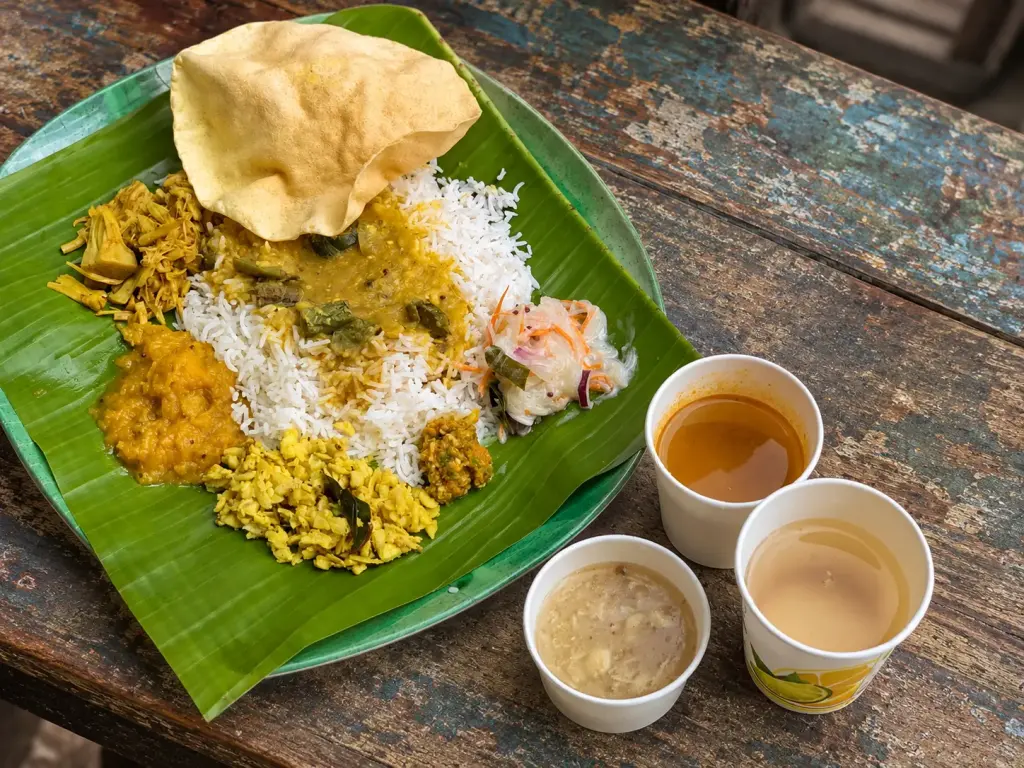
At many Hindu Mauritian weddings, there’s one meal that guests immediately associate with the Saffran ceremony: sept cari. A serving of small, freshly prepared puris accompanied by several vegetable curries, chutneys and pickles is a familiar part of these celebrations. For some families, it’s a meal they’ve been eating at weddings since childhood.
Sept cari, sometimes written as sept caris or seven curries, is one of Mauritius’ traditional vegetarian meals. Its roots lie in the Indian culinary traditions brought to the island over generations, but the ingredients and preparation have developed their own Mauritian character. Pumpkin, aubergine, green banana, butter beans, potatoes and other vegetables are cooked separately, each bringing a different flavour to the plate.
Although the name means seven curries, there isn’t one recipe followed by every Mauritian household. Some families prepare seven vegetable dishes, while others include additional accompaniments or change the selection according to the occasion. The meal served at a Bhojpuri Hindu wedding may also differ from the sept cari served during Tamil religious celebrations.
Here’s what goes into a traditional Mauritian sept cari, how the seven curries are prepared, why the meal is associated with Hindu weddings and where you can try it in Mauritius.
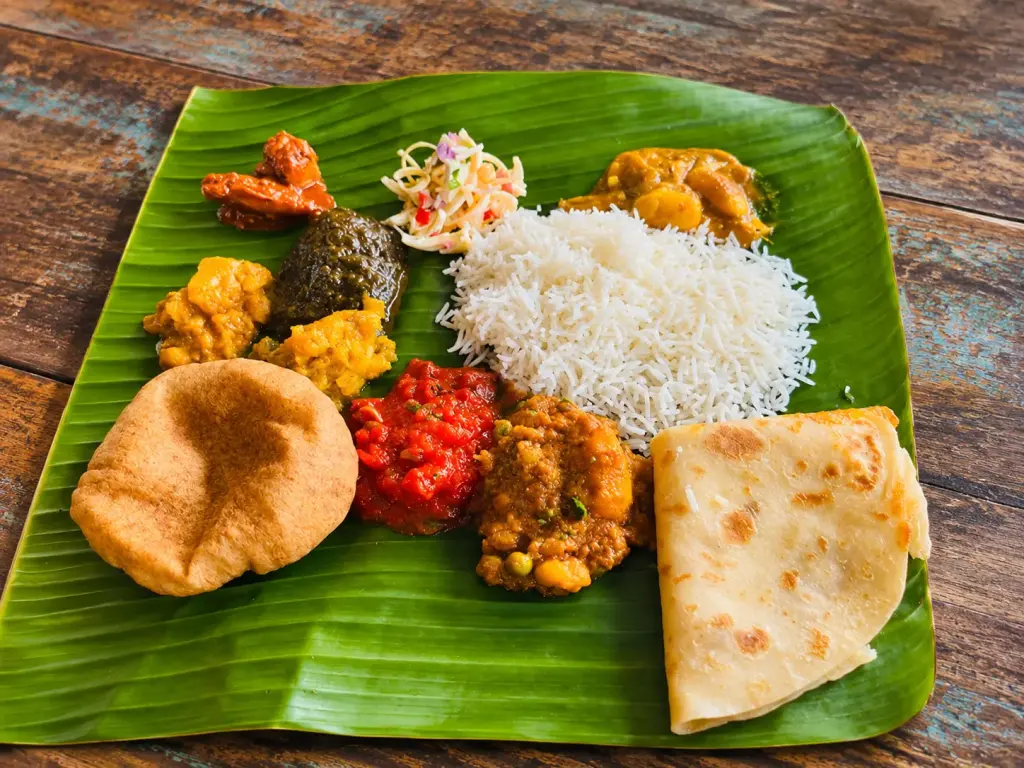
What Is Sept Cari in Mauritius?
Sept cari is a traditional vegetarian meal made up of several separately prepared vegetable curries, usually served with small puris or rice. The name comes from the French words sept (seven) and cari (curry), both familiar in Mauritian cooking and everyday language.
Unlike a single curry served over rice, sept cari is a complete meal built around variety. One preparation might be soft and mildly sweet, such as pumpkin, while another has the stronger flavour of mustard seeds, turmeric or masala. A tangy pickle or chutney is often added alongside the curries. Eating small portions together gives the meal its particular character.
The dish is closely connected with the culinary traditions of Mauritius’ Indian communities. During the nineteenth century, indentured workers arrived from different parts of India, bringing food customs, spices and ways of preparing vegetarian meals. Over time, these traditions adapted to the vegetables grown and eaten in Mauritius, creating dishes that became familiar at local religious ceremonies and family celebrations.
Sept cari is especially associated with Hindu weddings, particularly the Saffran or Haldi ceremony in many Bhojpuri Mauritian families. It is also prepared for certain religious occasions, including celebrations in Tamil Hindu communities. The selection of dishes and the way they’re served can differ, which is why there isn’t a single definitive sept cari recipe.
For a closer look at how Indian, African, European and Chinese traditions influenced everyday cooking on the island, read our history of Mauritian food.
What Are the Seven Curries in Sept Cari?
Ask different Mauritian families what belongs in sept cari and you’re unlikely to get exactly the same answer. Some people will mention gros pois and pumpkin first; others will think of dal brinzel, green banana or jackfruit. Recipes also change depending on the vegetables available, family preferences and whether the meal is being prepared for a wedding or a particular religious ceremony.
The following seven dishes are examples commonly associated with Mauritian sept cari. They make a useful introduction to the meal, but they shouldn’t be treated as a compulsory combination.
- Cari gros pois (butter bean curry): Large white butter beans are simmered with tomato, onion, garlic and spices until they become soft and the sauce thickens. This is a familiar Mauritian curry, also served with dholl puri and roti. Its creamy texture works particularly well with ti puri.
- Dal brinzel (aubergine and lentil curry): Brinzel is the Mauritian name for aubergine or eggplant. In this preparation, it is cooked with lentils and a seasoned curry base, creating a soft, slightly tangy dish. Versions of dal brinzel are especially associated with the Tamil-style seven-curry meal.
- Pomme de terre masala (potato curry): Potatoes are cooked with a masala mixture, often including turmeric, cumin, coriander and other spices. Some versions are fairly dry, with the potatoes coated in seasoning, while others have a little more sauce.
- Ziromon toufé (braised pumpkin): Pumpkin is gently cooked until tender, often with garlic, onion and mild spices. It becomes naturally soft and slightly sweet, providing a contrast to the stronger flavours elsewhere on the plate. This is one of the dishes that makes the combination of curries particularly satisfying.
- Cari banane (green banana curry): Unripe cooking bananas are peeled, chopped or grated, then cooked with spices such as turmeric, mustard seeds and curry leaves. Unlike ripe bananas, green bananas are firm and starchy, making them suitable for savoury dishes.
- Haricots masala (green bean curry): Green beans are cooked with a lightly spiced masala mixture. The beans may retain some texture rather than being cooked until completely soft, adding variety to a plate where several other dishes are tender or creamy.
- Cari zak (jackfruit curry): Young, unripe jackfruit is cooked with spices until tender. Its firm, fibrous texture absorbs seasoning well and makes it quite different from the other vegetables on the plate. Jackfruit may be replaced by another locally available vegetable in some family recipes.
Other versions include chouchou (chayote), brèdes or spinach, calebasse (bottle gourd), peas and different vegetable preparations. A plain vegetarian rougaille may also feature, especially in the style of sept cari familiar at some Mauritian family weddings.
Alongside the curries, you’ll often find achard, satini or other pickles and chutneys. These bring acidity and chilli to the meal, but they are accompaniments rather than necessarily being counted among the seven curries. Some ceremonial meals include additional items such as rasson, pachadi or sweet dishes.
The important distinction is that the vegetables are prepared separately rather than cooked together in one large pot. Each dish has its own seasoning and texture, which is what makes sept cari different from an ordinary mixed-vegetable curry.
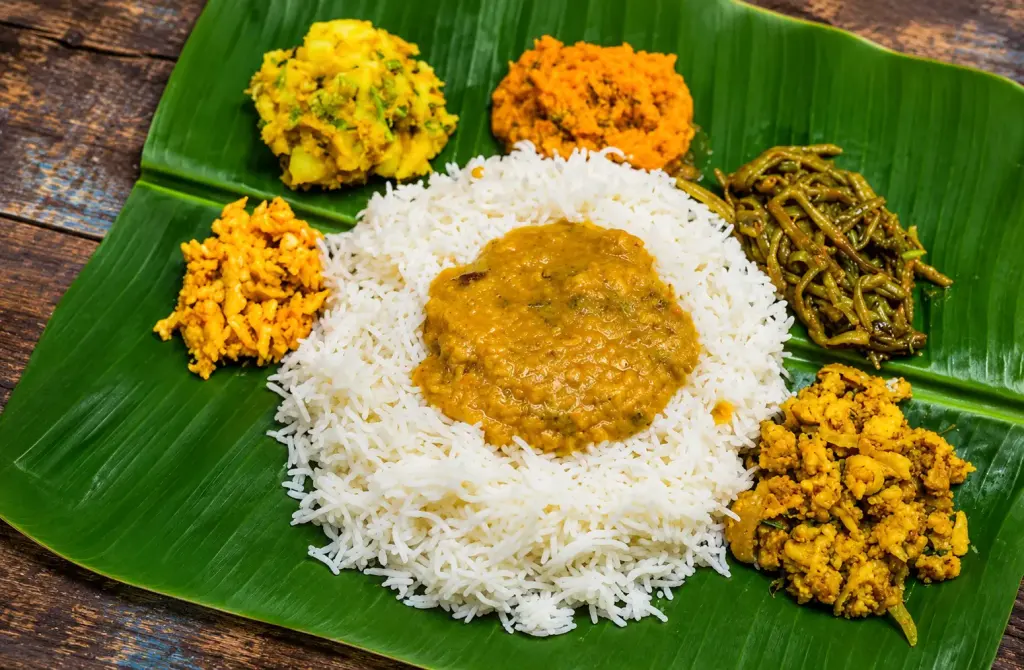
Ti Puri, Rice and Banana Leaves: How Sept Cari Is Served
For many Mauritians, sept cari is closely associated with ti puri. These are small, round flatbreads made from flour-based dough and fried in oil until they puff up. They are usually served warm, with the curries placed alongside them. You can tear off a piece of puri and use it to scoop up whichever curry you want to eat.
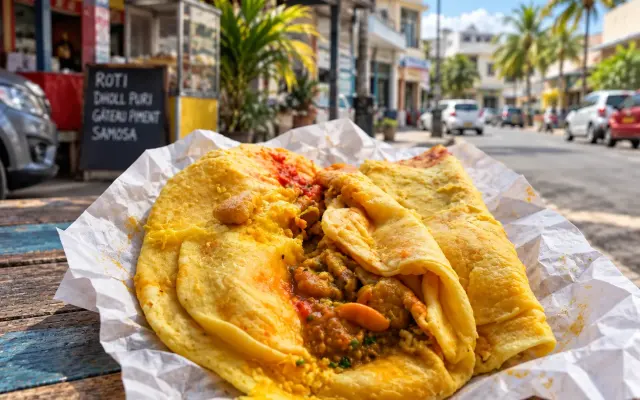
Ti puri is different from the dholl puri sold at street-food stalls. Mauritian dholl puri is a thin flatbread filled with ground yellow split peas and cooked on a hot griddle. Ti puri is smaller and fried in oil. Although both are familiar parts of Mauritian Indian cooking, they’re not interchangeable in terms of preparation.
In some traditions, particularly those associated with Tamil religious ceremonies, sept cari is served with white rice instead of ti puri. The rice may be accompanied by dal brinzel and a selection of vegetable dishes, with rasson, also known as rasam, served during the meal. Other accompaniments can include appalam, a crisp fried wafer, and sweet preparations such as payasson.
Traditionally, the food may be served on a fresh banana leaf. The leaf provides enough space for several small portions, and it is closely associated with ceremonial meals in South Indian and Mauritian Hindu traditions. Before serving, the leaf is cleaned and laid out for the guest. In many settings, the meal is eaten with the right hand, although practices vary and plates or cutlery may be provided.
Banana leaves are not compulsory. Weddings held in reception halls, modern catering venues or at home may use ordinary plates instead. What generally remains the same is the combination of several vegetarian preparations served together as one meal.
Why Sept Cari Is Served at Hindu Weddings
Sept cari has a particularly strong connection with the Saffran ceremony at Bhojpuri Hindu weddings in Mauritius. Saffran, also known as Haldi or Hardi, is held before the main wedding ceremony. A turmeric-based paste is ceremonially applied to the bride or groom by family members, with prayers, music and celebrations forming part of the occasion.
After the ceremony, guests are often served a vegetarian meal with ti puri and several curries. The food is an important part of the gathering, especially when relatives and friends have been helping with preparations throughout the day. Cooking and serving a large meal is one of the ways the family welcomes everyone who has come to take part.
This is also why sept cari brings back such familiar memories for many Mauritians. It’s not simply a restaurant dish ordered for lunch. It’s associated with wedding preparations, relatives gathered together, music playing in the background and food being served to everyone attending the ceremony.
The different days of a Mauritian Hindu wedding may have their own food traditions. Sept cari is especially linked to Saffran, while the main Shaadi or Vivah ceremony may feature vegetarian briyani in some families. Chawtari celebrations can have another menu altogether. These customs aren’t identical across every Hindu community or household.
Sept cari also has a place in Tamil Hindu religious celebrations, including Thaipoosam Cavadee. In these settings, the meal may follow South Indian banana-leaf serving traditions more closely, with rice, different curries, rasson and other accompaniments. It is worth distinguishing these practices rather than assuming that all seven-curry meals follow the same wedding menu.
The meal’s vegetarian character is important in these ceremonial settings. Vegetable curries, lentils, spices, rice and puris make it possible to prepare a generous spread without meat or fish. Individual dishes may still contain dairy ingredients such as yogurt or ghee, so anyone following a vegan diet should check how the food has been prepared.
If you’d like to understand the wedding ceremonies themselves, our guide to Hindu Mauritian wedding traditions explains Saffran, Geet Gawai, Shaadi and Chawtari in more detail.
How to Prepare a Simple Sept Cari Meal at Home
Preparing sept cari at home takes some organisation because the dishes need to be cooked separately. You don’t necessarily need seven complicated recipes, but you do need to plan the order of cooking so that everything can be served together.
For a manageable home version, you could prepare butter bean curry, spiced potatoes, braised pumpkin, aubergine, green beans, green banana and chouchou. This is an example of a seven-vegetable menu rather than a fixed ceremonial recipe. Add ti puri, rice or your preferred accompaniments depending on the style of meal you’re making.
Ingredients to prepare: You’ll need the seven chosen vegetables or pulses, together with basic seasonings such as onion, garlic, ginger, turmeric, cumin, coriander, mustard seeds, curry leaves, chilli, salt and cooking oil. Tomatoes and Mauritian masala can be used in some of the curries. Keep the ingredients for each dish separate so their flavours don’t all end up tasting the same.
- Start with the beans. If you’re using dried butter beans, soak them in advance and cook them until tender. Prepare the tomato and masala base separately before combining the ingredients.
- Prepare the slower vegetables. Potatoes, green bananas and other firm vegetables generally need more cooking time. Cut them into suitable pieces so they cook evenly.
- Cook the softer dishes. Pumpkin, aubergine and chouchou can be prepared while the other curries are cooking. Adjust the amount of liquid so each dish has the texture you want.
- Keep the seasoning varied. Some curries can be mildly spiced, while others use more mustard, cumin or chilli. The contrast between dishes is an important part of sept cari.
- Prepare the accompaniments. Make a small quantity of achard, satini or another chutney. If serving rice, cook it close to mealtime. If preparing ti puri, fry the puris shortly before serving so they remain soft and fresh.
- Serve the curries separately. Arrange small portions around the plate or banana leaf, rather than mixing everything together before serving.
For a family gathering, much of the work can be divided between people preparing different dishes. The ingredients also don’t need to be expensive. Potatoes, pumpkin, beans and other vegetables commonly used in Mauritian cooking form the basis of the meal, and the variety comes mainly from how they are prepared.
One thing worth avoiding is cooking all seven dishes with exactly the same masala sauce. If everything tastes identical, you lose one of the main pleasures of sept cari. A gently braised pumpkin, a firmer bean preparation, a tangy aubergine dish and a richer butter bean curry will give the plate more balance.
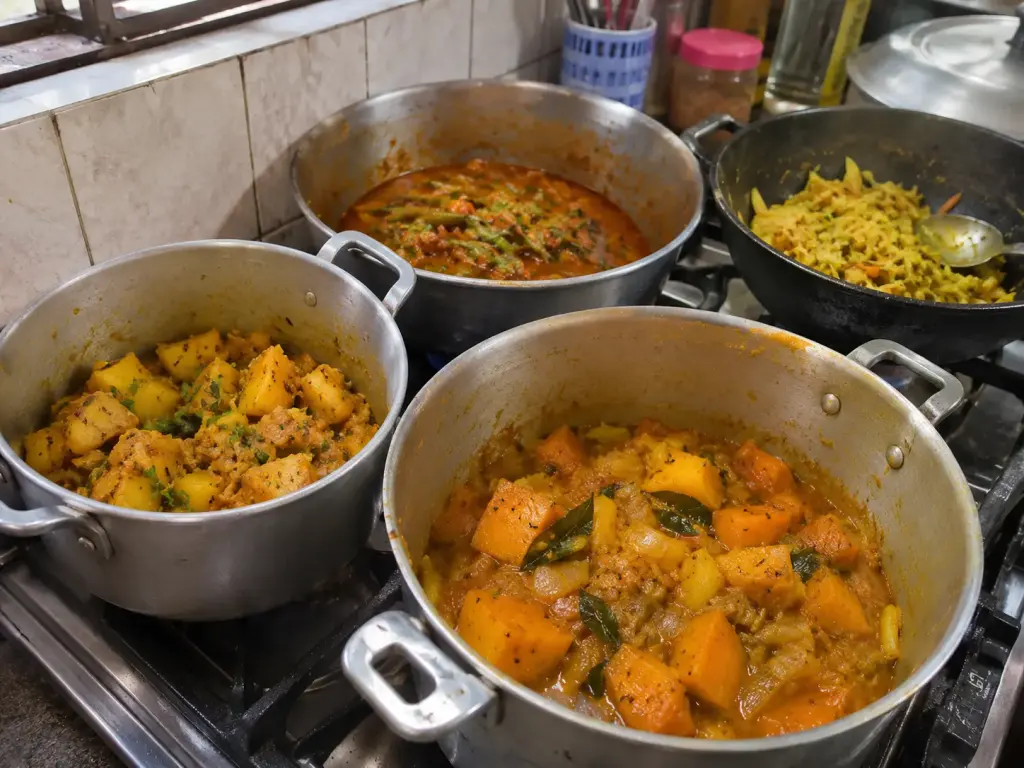
Where Can You Eat Sept Cari in Mauritius?
Sept cari is traditionally associated with Hindu weddings and religious celebrations, so it isn’t something you’ll find at every Mauritian restaurant. However, there are a few places where you can enjoy this traditional meal without waiting for a wedding invitation.
One place worth visiting is Ebony Table D’Hote, located along Royal Road in the La Marie area of Vacoas-Phoenix. The restaurant specialises in Mauritian cuisine and is particularly known for its generous, traditional meals served on banana leaves.
Its seven-curry meal brings together several vegetable preparations, rice, flatbread and accompaniments, giving visitors an opportunity to experience a style of eating closely associated with Mauritian Indian traditions. Vegetarian options are available, while the restaurant also serves meat and seafood dishes.
Ebony Table D’Hote – Practical Information
- Address: Royal Road, B64, La Marie, Vacoas-Phoenix, Mauritius
- Opening hours: Generally 11:00 AM to 5:00 PM daily; confirm before visiting.
- Telephone: +230 5773 8293
- Location: View Ebony Table D’Hote on Google Maps

The restaurant is a convenient lunch stop if you’re exploring central Mauritius, particularly around Curepipe, Trou aux Cerfs or Grand Bassin. Since menus and prices can change, it’s worth calling ahead to confirm that the seven-curry meal is available on the day of your visit and to check the current price.
Keep in mind that restaurant versions can differ from the sept cari prepared for a traditional Saffran ceremony. If you’re interested in the full wedding-style meal with ti puri, ask specifically about the preparation and accompaniments before ordering.
Whether you try it at a restaurant or during a family celebration, sept cari is an excellent introduction to Mauritian vegetarian cooking. The combination of different curries, textures and spices makes it a meal worth experiencing, especially if you enjoy discovering the food traditions behind Mauritius’ multicultural heritage.



Questions and tips