If you happen to be on our beautiful tropical island in the middle of March, you will notice something magical happening. Cars suddenly sprout little flags on their windows. Shops are draped in red, blue, yellow, and green. Everyone seems to be in a slightly better mood, and the smell of delicious street food seems to multiply. Welcome to the build-up for Mauritius Independence Day.
Celebrated every year on the 12th of March, this is not just a regular public holiday where we stay home and sleep. It is a massive, island-wide fete (party). But what exactly are we celebrating? Why are those four colors everywhere? And most importantly, how can you join in the fun?
Grab a cup of local vanilla tea, kas enn poz (relax), and let us dive into the ultimate Mauritius Independence Day guide. We will cover the history, the meaning behind the flag, and the unique traditions that make this day so special.
Contents
A Quick History Lesson: The Ultimate Real Estate
To understand history of Mauritius independence, we have to go back a few hundred years. Because of our strategic location in the Indian Ocean, our island was essentially the hottest piece of real estate for European powers. Everyone wanted a slice of paradise.
First, the Portuguese sailed by and said hello but didn’t stay long. Then the Dutch arrived, named the island after Prince Maurice of Nassau, and introduced us to sugarcane. After them, the French took over, bringing their language, their laws, and most importantly, their baking skills (thank you for the baguettes). Finally, the British arrived in 1810, taking control and setting up a plantation-based colony.
Over the centuries, enslaved Africans and later indentured laborers from India, China, and other parts of the world were brought to work on the vast sugar plantations. While the history is complex, this mix of people from different continents laid the foundation for the incredibly vibrant, multi-ethnic Mauritian culture we know and love today.
The Road to Freedom: 1950s to 1968
Fast forward to the mid-20th century. The world was changing. In 1959, British Prime Minister Harold Macmillan gave his famous “Winds of Change” speech, basically signaling that the era of empires was wrapping up.
In Mauritius, this sparked a massive wave of political energy. The locals wanted self-rule. After some intense political campaigning and the crucial 1966 elections, an alliance led by the Mauritius Labour Party, spearheaded by Sir Seewoosagur Ramgoolam, pushed forward. Following intense constitutional negotiations with the British in London, the deal was struck. Mauritius was going to steer its own ship.
12 March 1968: The Birth of a Nation
Midnight. The 12th of March, 1968.
Imagine the scene at the historic Champ de Mars racecourse in the capital city of Port Louis. The atmosphere was electric. Thousands of people gathered in the dark, holding their breath. The Union Jack was slowly lowered, ending 154 years of British colonial rule. In its place, the bright, four-colored Mauritius national flag was raised for the very first time.
Sir Seewoosagur Ramgoolam became the country’s first Prime Minister, and Mauritius officially became a constitutional monarchy within the Commonwealth (with Queen Elizabeth II still technically the head of state). It was a moment of immense fyerte (pride) for the nation. The first Mauritius Independence Day was born.
12 March 1992: Upgrading to a Republic
But wait, the story does not end there. Mauritians love a good double celebration.
Exactly twenty-four years later, on the 12th of March 1992, Mauritius decided to upgrade its status. We abolished the monarchy and officially became the Republic of Mauritius. The last Governor-General, Sir Veerasamy Ringadoo, transitioned to become the very first President of the Republic.
Because both of these massive historical milestones happened on the exact same calendar day, the 12th of March is officially known as Independence and Republic Day. It is a two-for-one holiday deal, which makes 12 March Mauritius the most patriotic day of the year.
Decoding the Mauritius National Flag
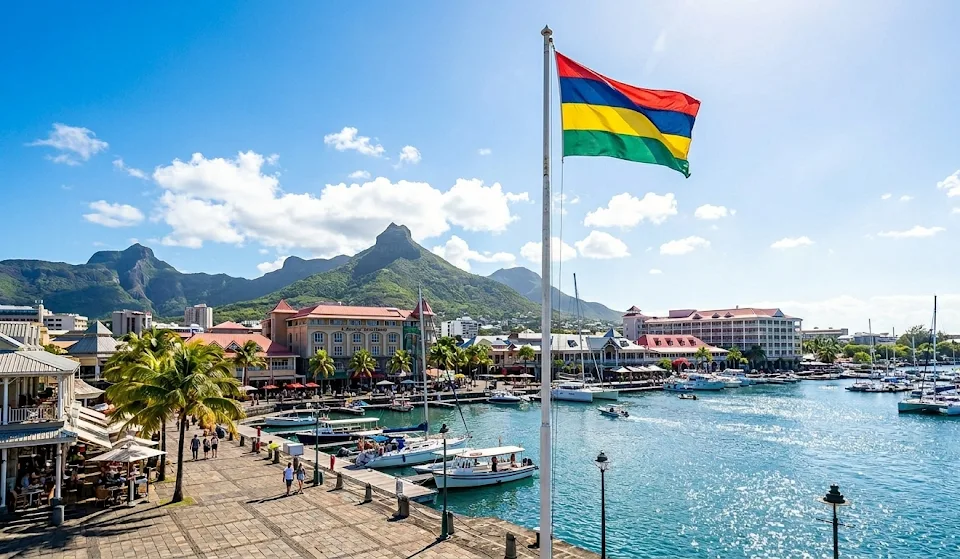
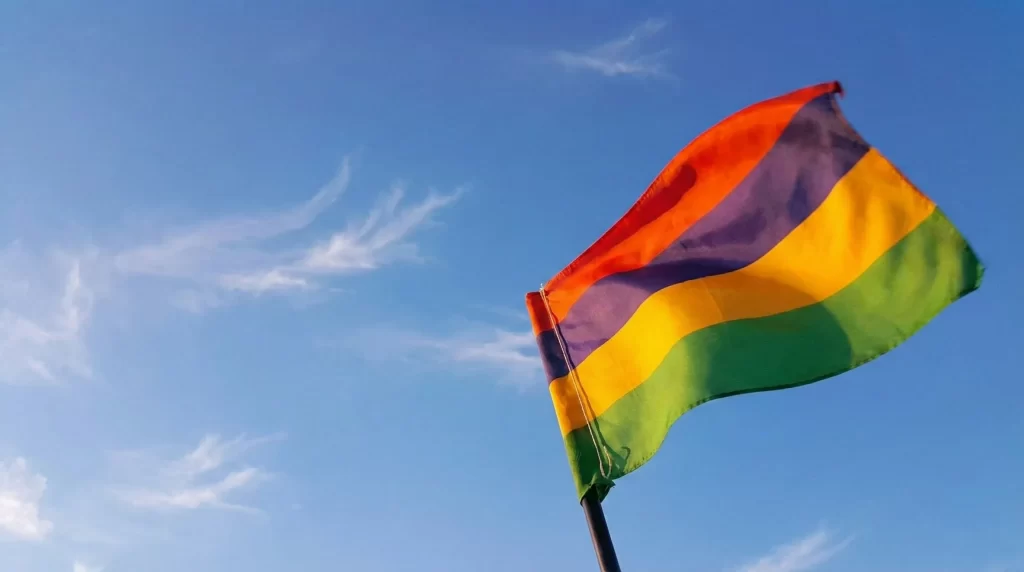
You cannot celebrate Mauritius Independence Day without knowing what you are waving. Our flag is affectionately known as the Les Quatre Bandes (The Four Bands). It consists of four horizontal stripes: Red, Blue, Yellow, and Green.
Here is what they mean:
- Red: Represents the struggle for freedom and independence. A nod to all the hard work and sacrifice that got us here.
- Blue: Represents the majestic Indian Ocean that surrounds our beautiful island. (And provides us with excellent seafood).
- Yellow: Represents the new light of independence shining over the island, symbolizing a bright, golden future.
- Green: Represents the lush, year-round agriculture and the beautiful tropical vegetation of Mauritius.
During independence celebrations, you will hear children reciting these meanings at the top of their lungs in school assemblies across the country.
How We Celebrate: Official Ceremonies
So, how do we actually celebrate Republic Day Mauritius?
The main official state ceremony is almost always held at the Champ de Mars in Port Louis, honoring the exact spot where the first flag was raised. If you love a good parade, this is the place to be.
The day kicks off with the raising of the flag to the tune of our national anthem, “Motherland.” (Fun fact: getting through the anthem without feeling a tiny bit emotional is practically impossible for a local). This is followed by perfectly synchronized military and police parades, marching bands, and sometimes even helicopters flying overhead carrying the national flag.
The President and the Prime Minister give speeches, dignitaries from around the world attend, and the whole event is broadcast live on national television. It is highly structured, very formal, and deeply patriotic.
How We Celebrate: The Public Party
While the politicians are doing their official duties in Port Louis, the rest of the island is throwing a party.
For the average citizen, Mauritius Independence Day is all about family, food, and fun. The streets are lined with flags. Local municipalities organize concerts, cultural shows, and sports tournaments.
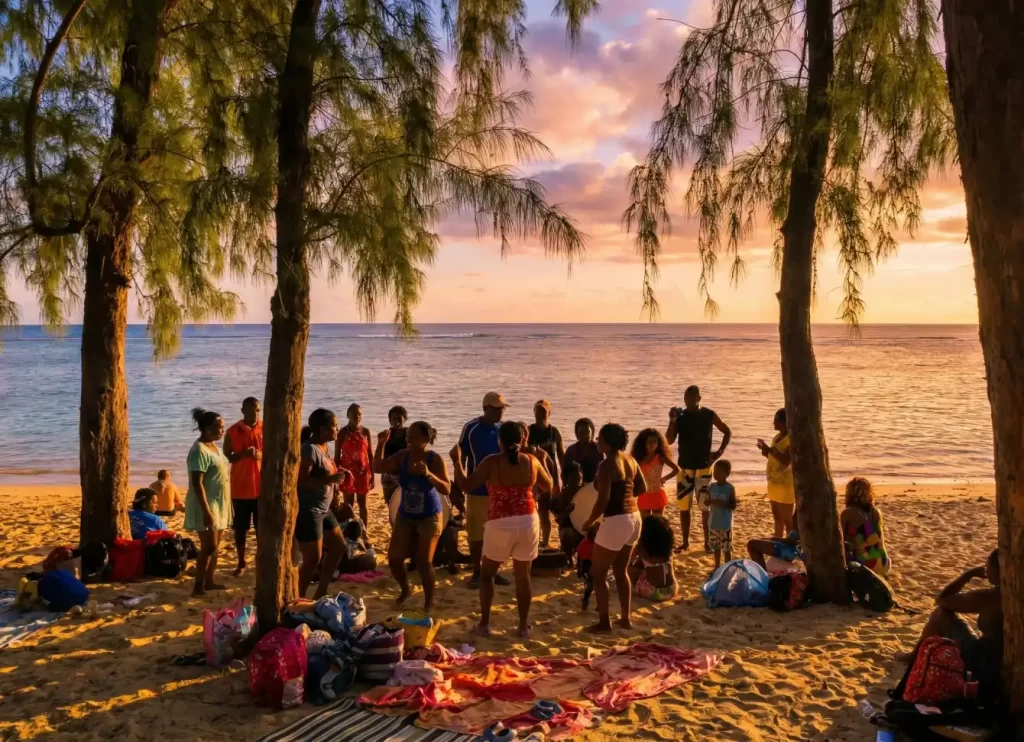
Many families use the public holiday to head to the beach. You will see massive setups with tents, barbecues, and giant pots of biryani. Music is a huge part of the day. You cannot walk far without hearing the rhythmic, infectious beat of the Ravanne drum. People will be dancing the Sega on the sand, celebrating their heritage.
If you want to understand more about our unique local beats, check out our guide on the history of Mauritian music.
The School Celebrations: Pure Chaos and Joy
Perhaps the most heartwarming part of Mauritius Independence Day happens the day before the actual holiday, in schools across the island.
Ask any Mauritian about their school days around the 12th of March, and they will smile. Children are asked to come to school dressed in the colors of the flag. There are special assemblies where kids perform short plays about history, recite poems, and sing patriotic songs.
The highlight for every child, however, is the distribution of the gato (cake) and juice box. It is a long-standing tradition that every student receives a special sweet treat and a juice to celebrate the day. It is a brilliant way to teach civic values, national pride, and unity to the younger generation while keeping them highly sugared and happy.
Unity in Diversity
One of the most beautiful things about Mauritius Independence Day is how it highlights our incredible cultural diversity. We are an island of people of Indian, African, Chinese, and European descent.
During the celebrations, this diversity is put front and center. You might watch a cultural program that features a traditional Indian Kathak dance, followed directly by a Chinese Lion Dance, ending with an energetic Creole Sega performance. We celebrate the fact that despite our different backgrounds, religions, and histories, we are all one nasion (nation).
If you want to dive deeper into how all these cultures blend together daily, read our comprehensive Guide to Mauritian Culture.
Modern Significance: Looking Forward
Of course, the history of Mauritius independence was not without its bumps. In the 1960s, there were tensions and fears about what self-rule would mean for the economy. Some people were worried about the future.
But looking back today, the national narrative is one of immense pride and resilience. We went from an isolated agricultural colony to a stable democracy with a booming economy driven by tourism, finance, and technology. Mauritius Independence Day is a time to look back and say, “Wow, we actually did a mari bon (very good) job.”
Official messages today focus on our democratic values and our shared aspirations. We celebrate our progress while acknowledging that we still have to protect our environment and continue building an inclusive society.
How You Can Join the Celebration
If you are an expat or a tourist visiting during 12 March Mauritius, do not just sit in your hotel room! Join the fun.
- Wear the Colors: Find a t-shirt that has red, blue, yellow, or green on it. The locals will love it.
- Eat Local: Independence Day is the perfect excuse to eat your body weight in local food. Grab some street food, order a massive plate of fried noodles, or dig into a local curry. For recommendations, explore our list of the top food spots to try in Mauritius.
- Attend a Local Event: Ask your hotel or check local listings for parades or concerts in your area. Every town usually has something going on.
- Learn to Sega: If you hear the music, just let loose and try to dance. Nobody cares if you are off-beat; it is all about having fun!
Conclusion
Mauritius Independence Day on the 12th of March is the ultimate celebration of who we are. It is a day that encapsulates two massive milestones: the end of colonial rule in 1968 and the proud proclamation of our republic in 1992.
Rooted in a complex history, the day has evolved into a beautiful, unifying celebration of our diverse cultures, our peaceful democracy, and our shared love for this little dot in the Indian Ocean. Whether you are watching the grand parade in Port Louis or just eating biryani on the beach with friends, the spirit of the day is infectious.
Happy Independence Day, Mauritius!
If you love learning about how we celebrate big events, you might also enjoy reading about how we celebrate Christmas and New Year in Mauritius.
External Links: