
Mauritius Bus Guide – Fares, Routes & Tips
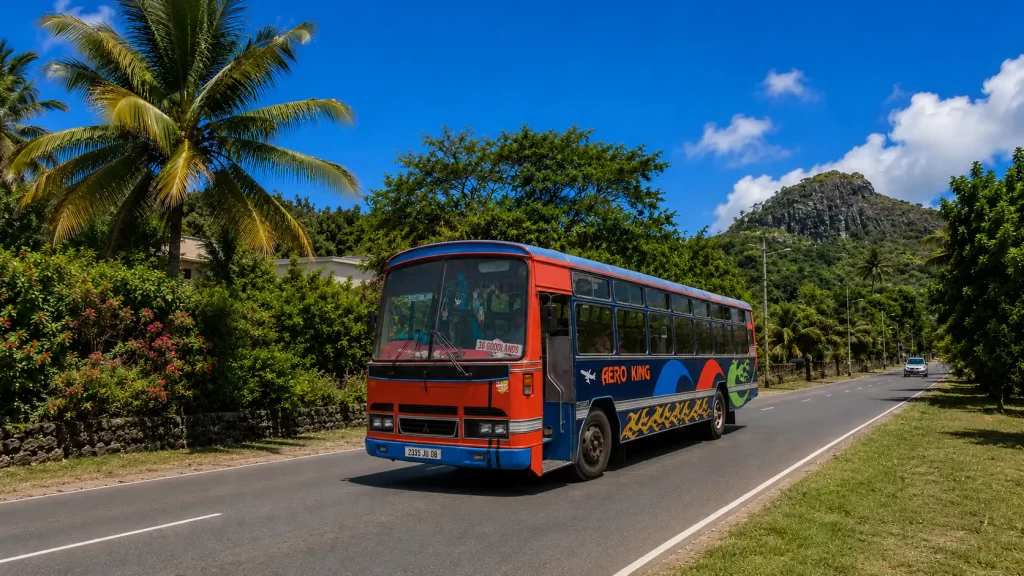
If you really want to understand Mauritius beyond the resorts, you have to ride the bus. It is still the cheapest way to get around the island, and for many routes it is the most practical option for travelers who want to reach beaches, towns, villages, and places the metro does not cover.
Last checked: April 2026. Bus routes, fares, and operating hours can change, so treat this guide as a practical travel resource and verify exact timings locally before long journeys.
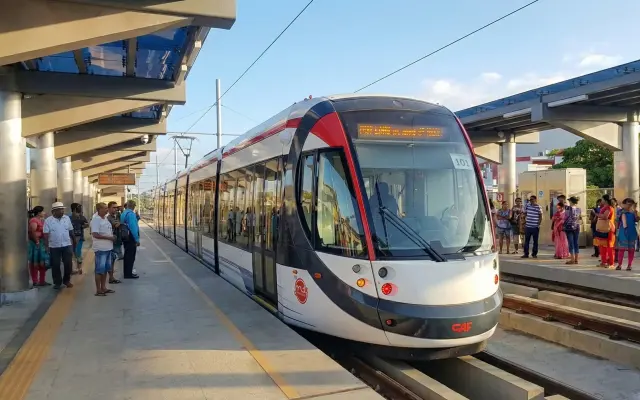
While the Metro Express is useful on the central corridor, the bus network is still the backbone of public transport in Mauritius. This guide covers fares, route types, operating hours, Port Louis terminals, and the main routes travelers actually use.
Quick answers
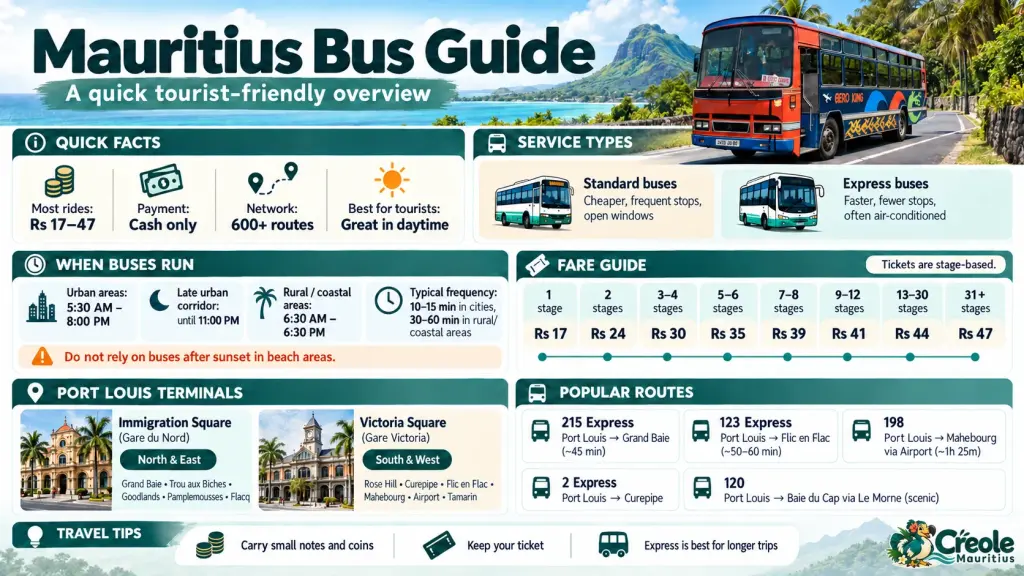
- How much is the bus in Mauritius? Most rides cost roughly Rs 17 to Rs 47 depending on distance.
- How do you pay? Cash only, directly to the conductor.
- Which Port Louis terminal goes north? Immigration Square (Gare du Nord).
- Which terminal goes south and west? Victoria Square (Gare Victoria).
- Are buses good for tourists? Yes, especially in the daytime. They are cheap and extensive, but less reliable for late-evening coastal travel.
Table of Contents
Overview of the Mauritius Bus System
The bus network in Mauritius is extensive, covering over 600 routes that connect major cities, towns, villages, and many rural areas. Unlike countries with a single national operator, Mauritius has a mix of companies regulated by the National Land Transport Authority (NLTA).
You will most commonly see buses from:
- NTC (National Transport Corporation): the well-known blue buses, often called “Blue Tata”.
- UBS (United Bus Service): generally associated with red buses.
- RHT (Rose Hill Transport): especially common on the Rose Hill–Port Louis corridor.
- TBS (Triolet Bus Service): heavily associated with northern routes.
- Smaller private operators: common on local and rural routes.
Service Types: Standard vs. Express
Understanding this difference will save you both time and discomfort.
- Standard buses: open windows, frequent stops, slower overall travel, and usually the cheapest fare. Best for short local trips or nearby villages.
- Express buses: fewer stops, usually air-conditioned, and noticeably faster on longer runs such as Port Louis to Grand Baie or Port Louis to Mahebourg. Expect to pay a small premium, often just a few rupees more.
Operating Hours and Schedule
Buses in Mauritius do not run 24/7. Service levels depend a lot on whether you are in the urban corridor or traveling to coastal and rural areas.
| Service area | Typical operating hours | Typical frequency |
|---|---|---|
| Urban areas (Port Louis, Curepipe, Rose Hill, Quatre Bornes) | 05:30 AM – 08:00 PM | Every 10–15 minutes on major routes |
| Rural and coastal areas (villages, beaches, smaller towns) | 06:30 AM – 06:30 PM | Every 30 minutes to 1 hour |
| Late-night urban corridor (Port Louis ↔ Curepipe) | 05:30 AM – 11:00 PM | Every 20–30 minutes |
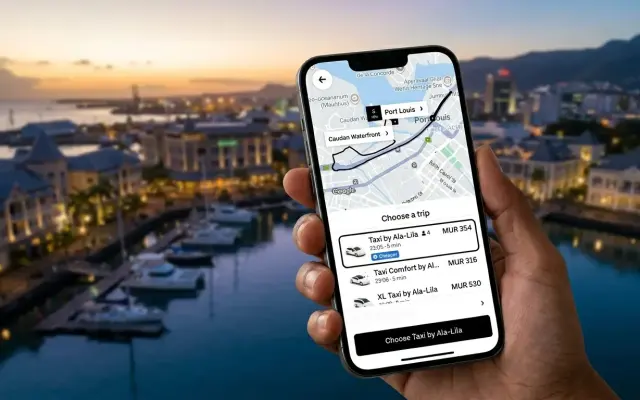
Travel tip: If you are staying in coastal areas such as Flic en Flac or Grand Baie, do not rely on buses after sunset. In practice, taxis or ride options such as those covered in our Uber in Mauritius guide become much more important later in the day.

Bus Fares: The “Stage” System
Unlike the Metro Express, the bus network uses a cash-only, stage-based fare system. A “stage” is essentially a distance segment. The longer the trip, the more stages you cross.
Current Fare Structure (Estimates)
| Number of stages | Fare (MUR) |
|---|---|
| 1 stage (short hop) | Rs 17 |
| 2 stages | Rs 24 |
| 3–4 stages | Rs 30 |
| 5–6 stages | Rs 35 |
| 7–8 stages | Rs 39 |
| 9–12 stages | Rs 41 |
| 13–30 stages | Rs 44 |
| 31+ stages (cross-island) | Rs 47 |
Typical tourist trip costs
- Short in-town trip: Rs 15–20
- Port Louis to Curepipe (Express): Rs 35–40
- Port Louis to Grand Baie (Express): Rs 40–50
- Port Louis to Mahebourg: Rs 40–50
Payment rules that matter
- Cash only: no bank cards, transport cards, or mobile payments on regular buses.
- Carry small notes and coins: conductors do give change, but large notes are a hassle.
- Keep your ticket: inspectors do check, and you may be asked to show it later in the journey.
Navigating the Hub: Port Louis
Port Louis is the central transport hub of Mauritius, but many travelers make the same mistake: they go to the wrong terminal. The capital has two main bus terminals, and they serve different parts of the island.
- Victoria Square (Gare Victoria)
Near the Caudan Waterfront and close to the metro connection.
Best for: south and west routes such as Rose Hill, Curepipe, Flic en Flac, Mahebourg, the airport area, and Tamarin.
Common routes: 2, 3, 123, 198. - Immigration Square (Gare du Nord)
Near the Central Market and Chinatown.
Best for: north and east routes such as Grand Baie, Trou aux Biches, Goodlands, Pamplemousses, and Flacq.
Common routes: 215, 20C, 21.
Simple rule: If you are heading to Grand Baie, Trou aux Biches, or other northern destinations, start at Immigration Square. If you are going to Flic en Flac, Curepipe, Mahebourg, or the airport corridor, start at Victoria Square.
Bus route finder
Type a town or beach to see the buses that go there. Fares last checked April 2026.
-
215Port Louis (Immigration Square) Grand Baie via Motorway Express TBS about 45 min every 30 min Fastest regular bus to the north.
-
20CPort Louis (Immigration Square) Cap Malheureux via Trou aux Biches, Mont Choisy, Grand Baie, Pereybere 1 h 15 min or more Slower coastal route, good for stopping at north coast beaches.
-
82Port Louis Grand Baie via Triolet Express Alternative fast route when the 215 is full.
-
95Pamplemousses (Botanical Garden) Grand Baie Links northern sights without going through Port Louis.
-
123Port Louis (Victoria Square) Flic en Flac via Bambous Express NTC 50 min express, 1 h standard Most direct bus from the capital to Flic en Flac.
-
57Quatre Bornes Wolmar via Flic en Flac Change here from the Metro Express at Quatre Bornes.
-
120Port Louis Baie du Cap via Le Morne One of the most scenic rides on the island.
-
198Port Louis (Victoria Square) Mahebourg via Airport about 1 h 25 min Main bus for the airport corridor.
-
9Curepipe Mahebourg about 1 h 30 min
-
18Central Flacq Mahebourg Links the east coast hotels with Mahebourg and the airport side.
-
2Port Louis Curepipe via Rose Hill, Phoenix Express
-
3Port Louis Vacoas via Rose Hill, Quatre Bornes
-
162Port Louis Curepipe via Motorway Express Often one of the quicker buses to the centre.
No route in this list matches. Try the official planners below, or ask at the terminal.
Fare by distance
| Stages | Fare |
|---|---|
| 1 stage (short hop) | Rs 17 |
| 2 stages | Rs 24 |
| 3–4 stages | Rs 30 |
| 5–6 stages | Rs 35 |
| 7–8 stages | Rs 39 |
| 9–12 stages | Rs 41 |
| 13–30 stages | Rs 44 |
| 31+ stages (cross-island) | Rs 47 |
Which terminal in Port Louis?
- Immigration Square (Gare du Nord)North and east: Grand Baie, Trou aux Biches, Goodlands, Pamplemousses, Flacq
- Victoria Square (Gare Victoria)South and west: Rose Hill, Curepipe, Flic en Flac, Mahebourg, the airport, Tamarin
Typical trips
- Rs 15–20Short trip within a town
- Rs 35–40Port Louis to Curepipe (express)
- Rs 40–50Port Louis to Grand Baie (express)
- Rs 40–50Port Louis to Mahebourg
Cash only, paid to the conductor. Official timetables: Official NLTA timetables · Mauritius-Buses.com route planner · CNT route finder
Detailed Routes by Region
These are the routes travelers are most likely to use. They are not every route on the island, just the ones most useful for planning common journeys.
The North (Grand Baie, Trou aux Biches, Pamplemousses)
Departing mainly from Immigration Square in Port Louis
- Route 215 (TBS Express): Port Louis → Grand Baie
Best if you want the fastest standard bus connection north. It takes the motorway and usually reaches Grand Baie in about 45 minutes.
Typical frequency: every 30 minutes. - Route 20C: Port Louis → Trou aux Biches → Mont Choisy → Grand Baie → Pereybere → Cap Malheureux
The more scenic coastal option. Slower, but useful if you want to stop along the north coast.
Typical duration: around 1 hour 15 minutes or more depending on traffic. - Route 82 (Express): Port Louis → Grand Baie via Triolet
A useful alternative fast route when 215 is full or delayed. - Route 95: Pamplemousses (Botanical Garden) → Grand Baie
Helpful if you are connecting attractions in the north rather than starting in Port Louis.
The West (Flic en Flac, Tamarin, Le Morne)
Departing mainly from Victoria Square in Port Louis or from Quatre Bornes
- Route 123 (NTC Express): Port Louis → Flic en Flac via Bambous
The most direct public bus option from the capital to Flic en Flac.
Typical duration: around 1 hour on standard service, or roughly 50 minutes on express. - Route 57: Quatre Bornes → Flic en Flac → Wolmar
Useful if you are already on the metro and want to switch at Quatre Bornes instead of going into Port Louis first. - Route 120: Port Louis → Baie du Cap via Le Morne
One of the most scenic bus rides on the island, especially if you want to approach Le Morne without driving.
The East & South (Mahebourg & Airport)
Departing from Victoria Square or Curepipe depending on your starting point
- Route 198: Port Louis → Mahebourg (via Airport)
A very useful long-distance route for travelers heading toward the airport corridor or Mahebourg.
Typical duration: about 1 hour 25 minutes. - Route 9: Curepipe → Mahebourg
A good option from the central plateau down to the south-east.
Typical duration: roughly 1.5 hours. - Route 18: Central Flacq → Mahebourg
Useful for travelers moving between the east coast hotel zone and the airport/Mahebourg side of the island.
The Central Plateau (The Urban Corridor)
This corridor is now heavily served by the Metro Express, but buses are still important for flexibility and local coverage.
- Route 2 (Express): Port Louis → Rose Hill → Phoenix → Curepipe
- Route 3: Port Louis → Rose Hill → Quatre Bornes → Vacoas
- Route 162: Port Louis → Curepipe via motorway, often one of the faster bus options to the center
If your journey stays mostly within the urban corridor, compare the bus with the Mauritius Metro Guide. In many cases, the metro is faster, while buses help with the last part of the trip.
How to Access Official Timetables
Finding exact bus times in Mauritius can still be a bit messy, because there is no single perfect journey planner covering every company and every route. The best approach is to use a mix of official sources, a route-planning website, and local confirmation at the terminal.
- Official NLTA bus timetable PDFs: The National Land Transport Authority publishes the official bus timetable files by route group. If you want the most direct source for route schedules, start here:
View official NLTA bus timetables - Mauritius-Buses.com: This is one of the most useful third-party tools for planning journeys between towns, especially if you are not sure which route number you need.
Mauritius-Buses.com - CNT Route Finder: If you are using National Transport Corporation buses, the official CNT route finder is worth checking as a second reference.
Open the official CNT Route Finder - MoBis app (for some CNT buses): MoBis is the official CNT passenger app. It can help with real-time bus locations, arrival estimates, and seat availability for participating CNT buses, but it does not cover every private operator on the island.
Download MoBis for Android
Download MoBis for iPhone - Ask locally before important trips: Even with the links above, local confirmation is still smart. If you are taking an early-morning airport bus, a Sunday route, or a long rural connection, ask at the terminal or with the conductor the day before. A simple “Ki lèr bis passé?” means “What time does the bus pass?”
Practical Tips for a Smooth Journey
1. Know how to stop the bus
Buses do not always stop automatically at every shelter. Press the buzzer before your stop, or tell the conductor where you want to get off when you pay.
2. Travel light if possible
Mauritian buses are not designed for airport-style luggage. Small bags are easy. Large suitcases can be awkward and may mean extra charges or a very uncomfortable journey.
- Small bags: generally no issue.
- Large suitcases: may require paying for extra space.
- Best advice: avoid rush hour with heavy luggage.
3. Avoid peak crowding if you can
Weekday rush hour is busiest roughly around 7:00–9:00 AM and 4:00–6:00 PM. If you have luggage or prefer a calmer ride, travel outside those windows.
4. Coastal journeys are a daytime thing
If you are using buses for beach areas or smaller coastal towns, treat them as a daytime option. After sunset, buses become less practical and alternatives like taxis, car hire, or ride options become more important. If you are comparing options, see our Mauritius Transport Guide.
5. Safety and comfort
- Reserved seating: offer seats to elderly passengers, pregnant women, and anyone who clearly needs one.
- Driving style: drivers are experienced, but sudden braking is common. Hold onto handrails if standing.
- Personal safety: buses are generally safe, but keep your bag close in crowded terminals. If you want a broader overview, read Is Mauritius Safe?.
6. Language
Most destination signs are in English or French. Still, even a few Creole words help. If you want to learn a little before you ride, your Mauritian Creole vocabulary page and lessons fit naturally here.
Summary
The bus network in Mauritius is not the fastest system on the island, and it is definitely not the most digital. But it is cheap, extensive, and still one of the best ways to move beyond the resort zones and see how the island actually works day to day.
If you want the simplest version:
- bring cash and small change,
- use Victoria Square for south and west routes,
- use Immigration Square for north and east routes,
- do not depend on coastal buses after sunset,
- and use the metro when your trip stays mostly in the central corridor.
FAQ
How much does a bus cost in Mauritius?
Most tourist-relevant rides fall roughly in the Rs 17 to Rs 47 range, depending on how many stages you travel.
Can you pay for Mauritius buses by card?
No. Regular buses are generally cash only, and paying with small notes makes life much easier.
Which Port Louis terminal should I use for Grand Baie?
Use Immigration Square (Gare du Nord) for Grand Baie and most northern routes.
Is there a bus from Port Louis to the airport or Mahebourg?
Yes. Route 198 is the main route highlighted in this guide for Port Louis to Mahebourg via the airport corridor.
Are buses in Mauritius good for tourists?
Yes, especially for daytime travel and budget-conscious sightseeing. They are less convenient late in the evening and less comfortable if you are carrying heavy luggage.
Disclaimer
This guide is an independent travel resource created for informational purposes only. We are not affiliated with, endorsed by, or officially connected to the National Land Transport Authority (NLTA), the National Transport Corporation (CNT / NTC), or any other public or private operator in Mauritius.
Routes, fares, operating hours, apps, and service patterns can change without notice. Always verify important journeys directly with official transport sources, local terminals, or the relevant operator before you travel.


Questions and tips