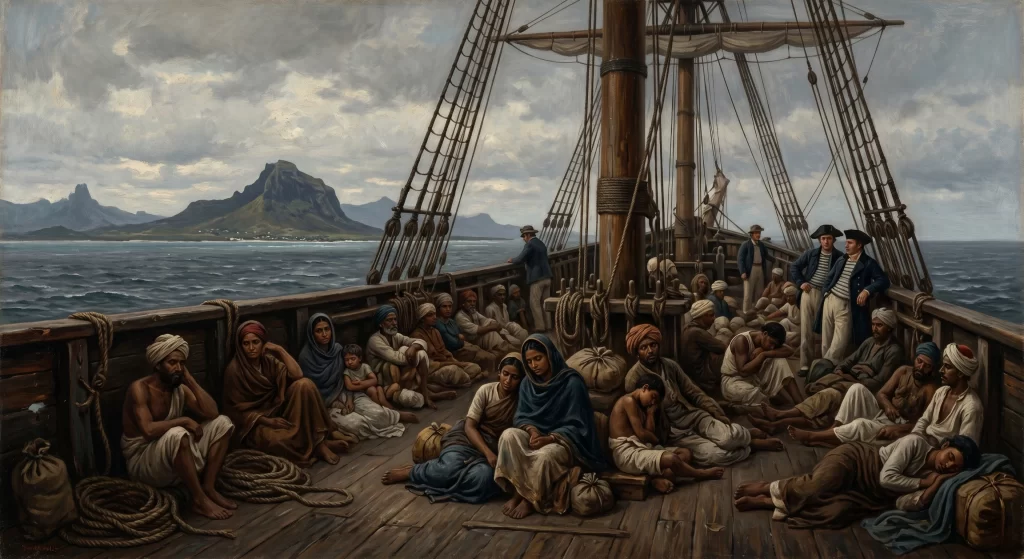
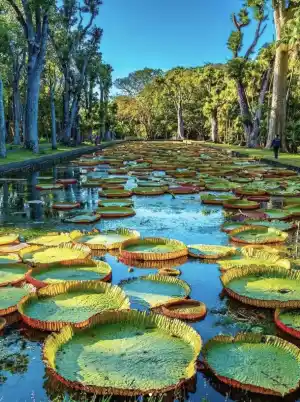
If you look at the photos of Mauritius you will see blue water and white sand. But if you look at the soul of Mauritius you will see Le Morne Brabant. This giant basaltic monolith rising 556 meters into the sky is not just a mountain. It is a monument. It is a silent witness to a past that is both tragic and heroic.
While many visitors come here to snap a selfie or burn off their breakfast buffet this site demands a deeper look. It represents the fight for dignity and the resilience of the human spirit. It is the place where the thirst for freedom was stronger than the fear of death.
Welcome to the story of Le Morne Brabant.
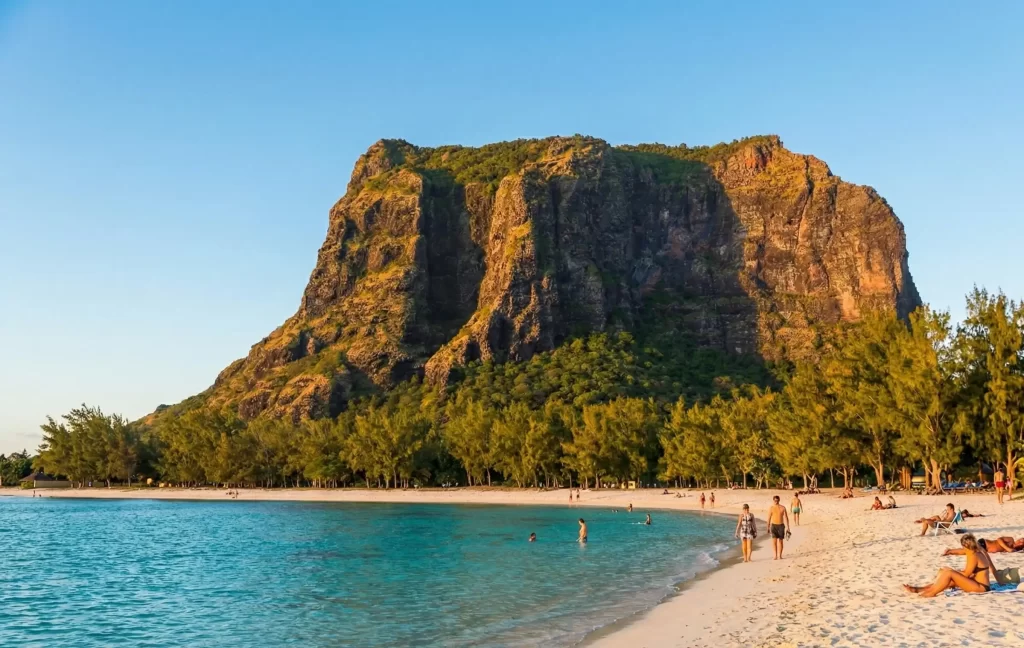
This is not just a hiking guide. This is a journey into the heart of our history. Whether you are a history buff or just someone who wants to understand the real Mauritius this sacred mountain has a story to tell you.
Allez! (Let’s go!)
Contents
The Fortress of the South West
Le Morne Brabant occupies a strategic position at the extreme southwestern tip of Mauritius. It sits on a peninsula that juts dramatically into the Indian Ocean like a defiant fist. The mountain is a natural fortress. It comprises a massive basaltic monolith with a summit spanning over 12 hectares.
For centuries this rugged terrain surrounded by the deep lagoon offered the only thing that mattered to the enslaved population. Safety.
The mountain gets its name from a Dutch East India Company ship called the Brabant which ran aground here in 1783. But long before the Dutch ship crashed on its cliffs the mountain was already serving a much more important purpose. It was a beacon of hope for those escaping the chains of colonial rule.
The Underwater Waterfall
You cannot talk about the geography of Le Morne Brabant without mentioning the famous optical illusion nearby. Mauritius was formed millions of years ago by volcanoes. The currents near Le Morne create an illusion of an “underwater waterfall” where sand is displaced into the deep ocean.
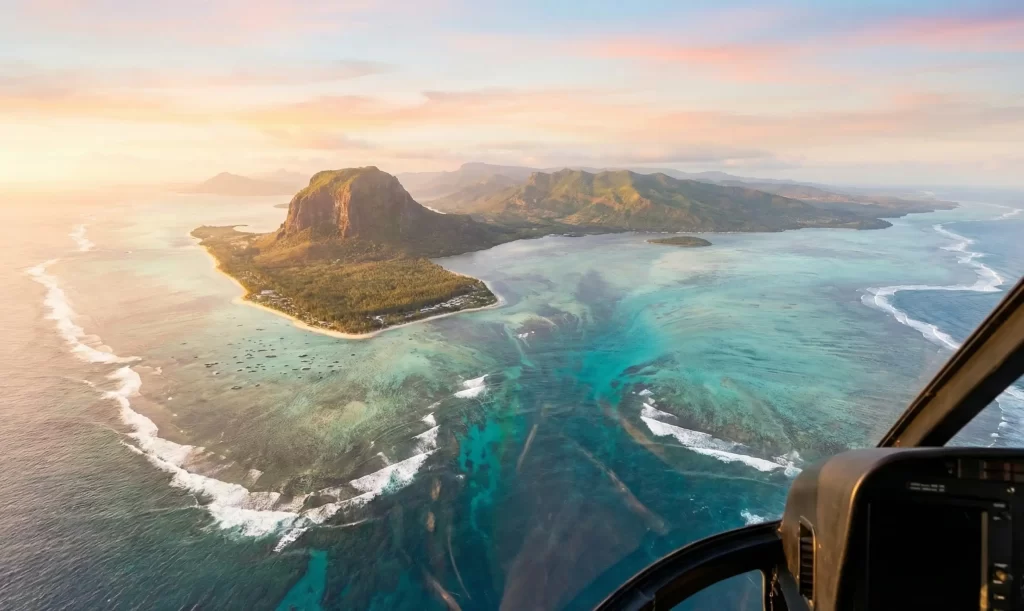
While it looks spectacular from a helicopter it serves as a reminder of the wild and untamable nature of this peninsula. It is a place where the earth and the ocean meet in a dramatic dance much like the history of the people who sought refuge here.
The Maroon Republic: A Sanctuary for Freedom
The true beauty of Le Morne Brabant lies in its history of resistance. Between the 1730s and the early 1830s this mountain served as the primary refuge for “maroons.” These were enslaved people who escaped their masters to live as free men and women in the wilderness.
They were not just runaways. They were resistance fighters.
The mountain offered isolated terrain and steep cliffs and dense vegetation. It had natural caves that provided shelter. Maroons from Madagascar and Mozambique and India established small settlements here. They created a life for themselves high above the brutal plantations. They formed what was essentially a “Maroon Republic” within the colony.
Historical documents from the Mauritius Archives reveal that this mountain was a well known haven. It was a place where the colonial laws did not apply. It was a place where dignity was restored.
The Legend of Bellaca
One name stands out in the oral traditions of Le Morne Brabant and that is Bellaca. He emerged as a legendary leader of the maroon community during the late 1790s. The colonial government was terrified of him.
In fact between 1797 and 1802 the colonial assembly offered freedom to any enslaved person who could capture him. The fact that the entire colonial machinery was focused on one man shows just how powerful the symbol of resistance had become. Bellaca was eventually killed but his spirit remained in the caves and the cliffs of the mountain.
The Tragedy of February 1, 1835
The most enduring and heartbreaking story of Le Morne Brabant is the legend of the mass sacrifice. It concerns the events of February 1, 1835. This was the date when slavery was officially abolished throughout the British Empire.
The legend tells us that a police expedition was sent to the mountain. Their mission was to tell the maroons that they were finally free. But the maroons watching from the cliffs saw only the uniforms and the guns. They did not know about the emancipation. They thought the soldiers were coming to drag them back to the sugar cane fields.
Faced with the choice between returning to chains or dying free they chose the latter. They reportedly climbed to the highest point of the cliff. They looked toward Africa their ancestral homeland. And they jumped.
This event is commemorated at the “Valley of Bones.” While archaeologists have debated the physical evidence of a mass suicide the narrative remains the emotional truth of the Mauritian people. It illustrates that for our ancestors freedom was not just a legal status. It was worth more than life itself.
UNESCO World Heritage Status
On July 6, 2008 Le Morne Brabant was inscribed on the UNESCO World Heritage List. This was a moment of immense national pride. It was not recognized for its pretty views or its rare flowers. It was recognized as an exceptional testimony to maroonage.
The designation confirms that this mountain is a memorial to the resistance against slavery. It is a symbol of the suffering and the sacrifice of the enslaved. The site is twinned with Robben Island Museum in South Africa connecting the struggle of the maroons with the struggle against apartheid.
Google Map: Get Directions to Le Morne Public Beach
A Living Monument: The Slave Route
At the foot of the mountain you will find the International Slave Route Monument. Unveiled on February 1, 2009 this site acts as an open air museum of memory.
It includes a central black granite block and sculptures representing the countries from which enslaved peoples originated. You will see representations of Mozambique and Madagascar and India and China and Malaysia. The monument faces the ocean serving as a spiritual compass pointing back to the lands of origin.
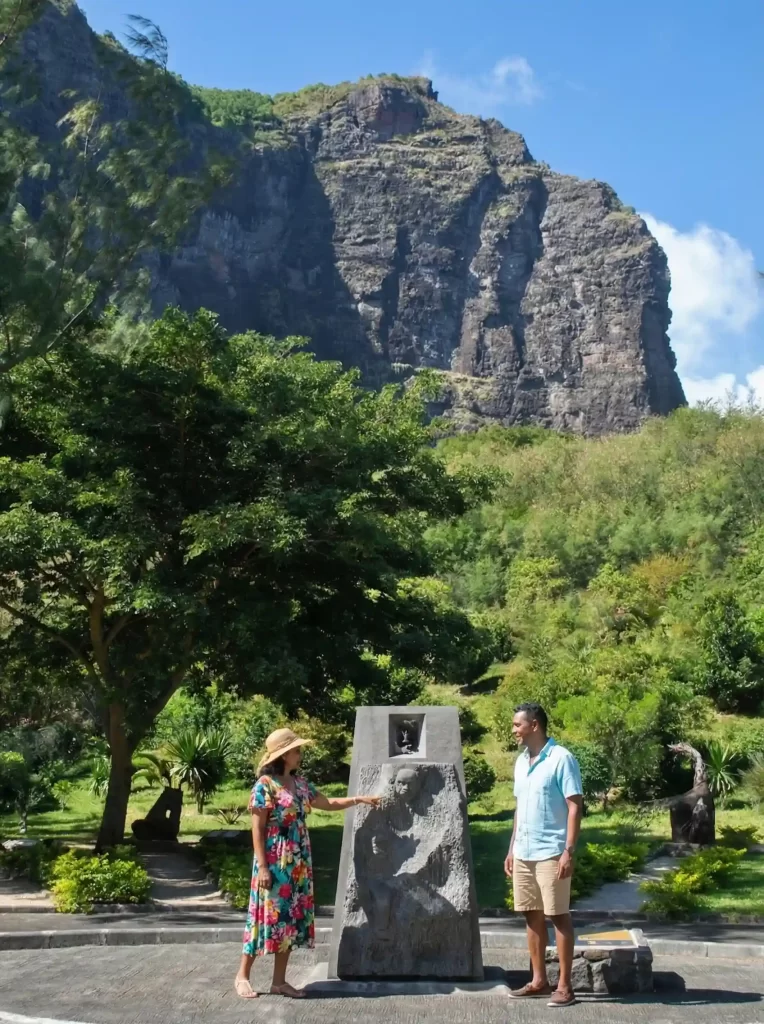
It is a place for quiet reflection. It sits near the “Passe des Marrons” which was historically used as an escape point. Standing here you can almost feel the presence of those who risked everything for liberty.
Walking in Their Footsteps
Today you can climb Le Morne Brabant. But we encourage you to think of it not as a hike but as a pilgrimage.
When access was restored to the public in 2016 it opened a path to understanding our past. The trail winds through nature that has reclaimed the sites of the maroon settlements.
The Experience
As you ascend the path the air gets thinner and the view gets wider. You realize how difficult life must have been up here. You realize the strength it took to carry water and food up these slopes.
- The Plateau: The first section leads to a plateau where maroons likely cultivated small crops. It is peaceful now but it was once a place of constant vigilance.
- The Summit: The climb to the cross at the summit is steep and requires scrambling over rocks. It is physically demanding. But the view from the top offers a perspective that is spiritual. You are standing on hallowed ground.
If you decide to make this climb please do so with respect. Wear proper shoes and bring water but also bring a sense of reverence. This is not just a workout. It is a walk through history.
If you are interested in other cultural experiences check out our Guide to Mauritian Culture.
Rare Flora: The Flowers of Freedom
The mountain is also a sanctuary for nature. The isolation that protected the maroons also protected rare plant species.
The most famous is the Trochetia boutoniana. We call it “Boucle d’Oreille” (earring tree) because of its bell shaped flowers. It is the national flower of Mauritius. The only known wild population of this flower lives exclusively on these slopes.
It is poetic that the national flower of our country grows only on the mountain that symbolizes our freedom. It is as if nature itself is honoring the history of the site.
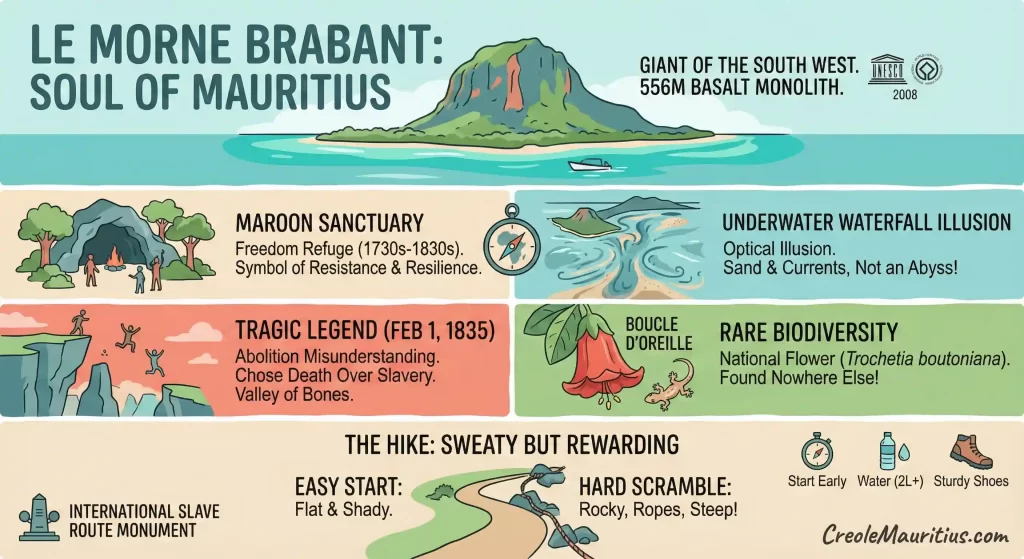
Final Thoughts
Le Morne Brabant is more than a postcard image. It is the anchor of Mauritian identity. It reminds us that our paradise island was built on the resilience of those who refused to be broken.
When you look at the mountain do not just see a rock. See the fortress. See the sanctuary. See the symbol of a freedom that was fought for and won.
It is a place of sadness but also of immense pride. It teaches us that the human spirit is unbreakable.
Ayo respect the mountain and remember the story.
External Links:
UNESCO World Heritage Centre: Le Morne Cultural Landscape