If you walk down the busy streets of Port Louis or visit a quiet village in Flacq, you will notice something immediately: the incredible diversity of the faces around you. Mauritius is often called a “rainbow nation,” but the story of how this happened is even more fascinating than its beautiful beaches.
A Land with No Native People Unlike many other countries, Mauritius had no indigenous population. For millions of years, the island was home only to birds and nature, including the famous Dodo. Arab sailors and Portuguese explorers visited the island on their maps, but they never stayed.
The first people to actually live here were the Dutch in 1598, who named the island “Mauritius.” However, they struggled with cyclones and pests, eventually abandoning the island. The real permanent settlement began when the French arrived in 1715, renaming it “Isle de France” and establishing the sugar plantations that would shape the country’s future.
To learn more about the spirit of the people who built this nation, you can read more on our About Us page.
The Great Migration The Mauritians you meet today are descendants of immigrants who arrived in different waves, each bringing their own story.
- The French settlers developed the economy and infrastructure.
- African and Malagasy ancestors were brought as enslaved people to work the fields. Their resilience and culture laid the foundation for the Creole community.
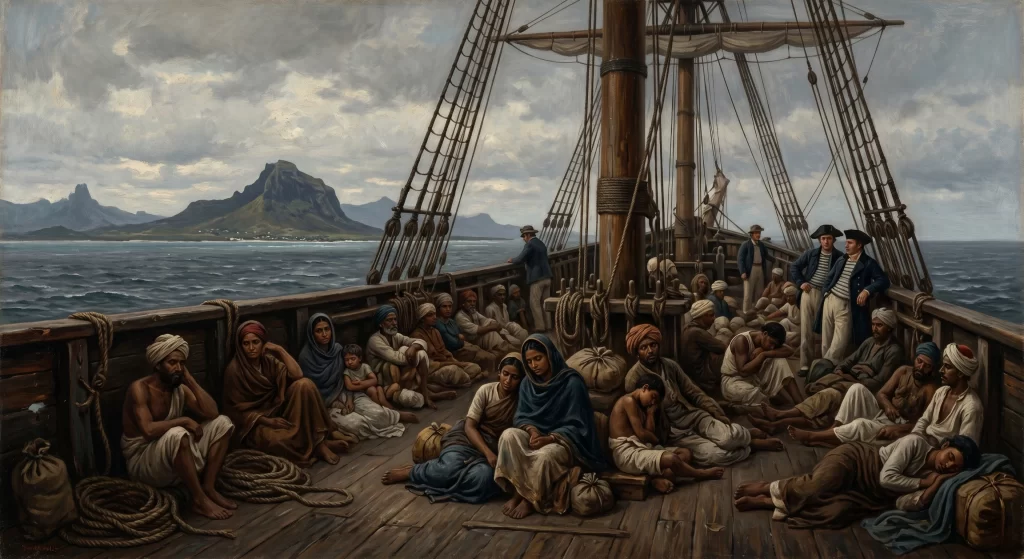
- Indian ancestors arrived later, after the British took over the island in 1810 and abolished slavery. Britain chose Mauritius for a “Great Experiment,” replacing slave labor with paid indentured laborers. Thousands of workers arrived from India, forever changing the demographics of the island.
- Chinese immigrants, mostly from the Hakka and Cantonese regions, arrived as traders and shopkeepers, setting up the corner shops that became a staple of village life.
The Language of Connection This mix of people needed a way to communicate, and that is how the Mauritian Creole language was born. It evolved from French but borrowed words, grammar, and rhythm from African, Malagasy, and Indian languages.
Today, while English is the official language of Parliament and French is widely used in media, Creole is the heart of the nation. It is the mother tongue that binds everyone together. If you want to understand the locals, learning a few phrases is a great idea. You can start with our vocabulary guide or dive deeper with our structured lessons.
A Melting Pot of Religions Because of its unique history, Mauritius is the only country in Africa where Hinduism is the main religion, practiced by about 52 percent of the population. However, the island is a shining example of religious harmony.
It is common to see a mosque, a church, and a temple on the same street. The festivals are spectacular and often shared by everyone.
- Maha Shivaratri sees thousands of pilgrims walking to the sacred lake of Grand Bassin.
- Cavadee is a vibrant Tamil festival famous for its colorful processions and rituals.
- Eid, Christmas, and Chinese New Year are celebrated nationally. When one community celebrates, the whole country joins in the joy (and the food!).
A Feast for the Senses You cannot talk about Mauritian history without talking about food. The cuisine is a direct result of this cultural mixing.
- Dholl Puri: Often called the unofficial national dish, this Indian-inspired flatbread stuffed with yellow split peas is a favorite street food.
- Boulettes: These are Chinese-style dumplings, but with a unique Mauritian twist, often served in a savory broth.
- Gateaux Piments: Crunchy chili cakes that are a popular snack, showing the love for spice.
Every bite tells a story of an ancestor who brought a recipe from home and adapted it to this new island life.
Discover More
The history of Mauritius is a reminder that people from different worlds can live together in peace. It is a complex, beautiful history that is still being written today. For more stories, tips, and insights into life on the island, be sure to check out our latest articles on the Creole Mauritius Blog.